PuniCodex

Extended Lore

Τάρταρος Tártaros

Etymology · Orthography · Cult · Iconography · Reception · Sources

Tier 2 Tártaros.com
Tártaros — The Primordial Abyss
01

Quick Facts

Essential information about Tártaros, The Primordial Abyss

Original ScriptΤάρταρος
Unicode RestorationTártaros
Reconstructed Pronunciation/tár.ta.ros/
PantheonGreek
DomainThe Primordial Abyss
MeaningDeep place (from τάρταρος)
ClassificationTier 2
Primary DomainTártaros.com
Sacred SymbolsBronze anvil, Iron gates, Triple night, Storm winds, Fettered Titan
02

Etymology & Word Family

From original script to Unicode restoration

Original Script Τάρταρος Tártaros — "Deep place (from τάρταρος)"
Unicode Restoration Tártaros Restored stress, length, and script
Modern ASCII tartaros Plain-ASCII fallback

Deep place (from τάρταρος)

03

Unicode Character Breakdown

Character-by-character philological analysis

CharacterUnicodeNameBlockPhonetic Role
TU+0054Latin Capital Letter TBasic LatinTau
áU+00E1Latin Small Letter A with AcuteLatin-1 SupplementAcute on alpha
rU+0072Latin Small Letter RBasic LatinRho
tU+0074Latin Small Letter TBasic LatinTau
aU+0061Latin Small Letter ABasic LatinAlpha
rU+0072Latin Small Letter RBasic LatinRho
oU+006FLatin Small Letter OBasic LatinOmicron
sU+0073Latin Small Letter SBasic LatinSigma

The Tier 2 classification reflects how much of the original phonology this restoration preserves — stress and vowel length for Greek names, distinctive letters and diacritics for every other tradition.

04

Cult & Worship

How the sacred was kept — rites, sanctuaries, remains

The Cult

No independent cult of Tártaros is attested. As the deepest prison of the cosmos in Hesiod and Homer, Tártaros was a place rather than a god, and no sanctuary, priesthood, or festival was devoted to it. Its cosmography surfaces in Orphic and Pythagorean texts such as the Derveni Papyrus (ca. 340 BCE), and in curse tablets that consign enemies “to Tartaros.” Volcanic landscapes—especially Mount Etna and the caves near Catania—were treated as visible gates to the abyss, but they were not organized cult sites. Modern visitors to Etna and Delphi sometimes treat the volcanic or chasmic setting as a kind of secular pilgrimage, yet this is landscape tourism, not ancient religion.

In the Earth

Tartaros has no independent cult, but its cosmography appears in texts and images. The Derveni Papyrus (ca. 340 BCE) discusses the underworld prison of the Titans. The Gigantomachy on the Pergamon Altar and the Siphnian Treasury at Delphi depict Zeus hurling enemies into Tartaros. Volcanic regions, especially Mount Etna, were later identified as mouths of Tartaros. A Linear B tablet from Knossos (Fp 14) may already attest the divine name in the second millennium BCE.

05

Iconography

How Tártaros was imaged across the ages

The Image

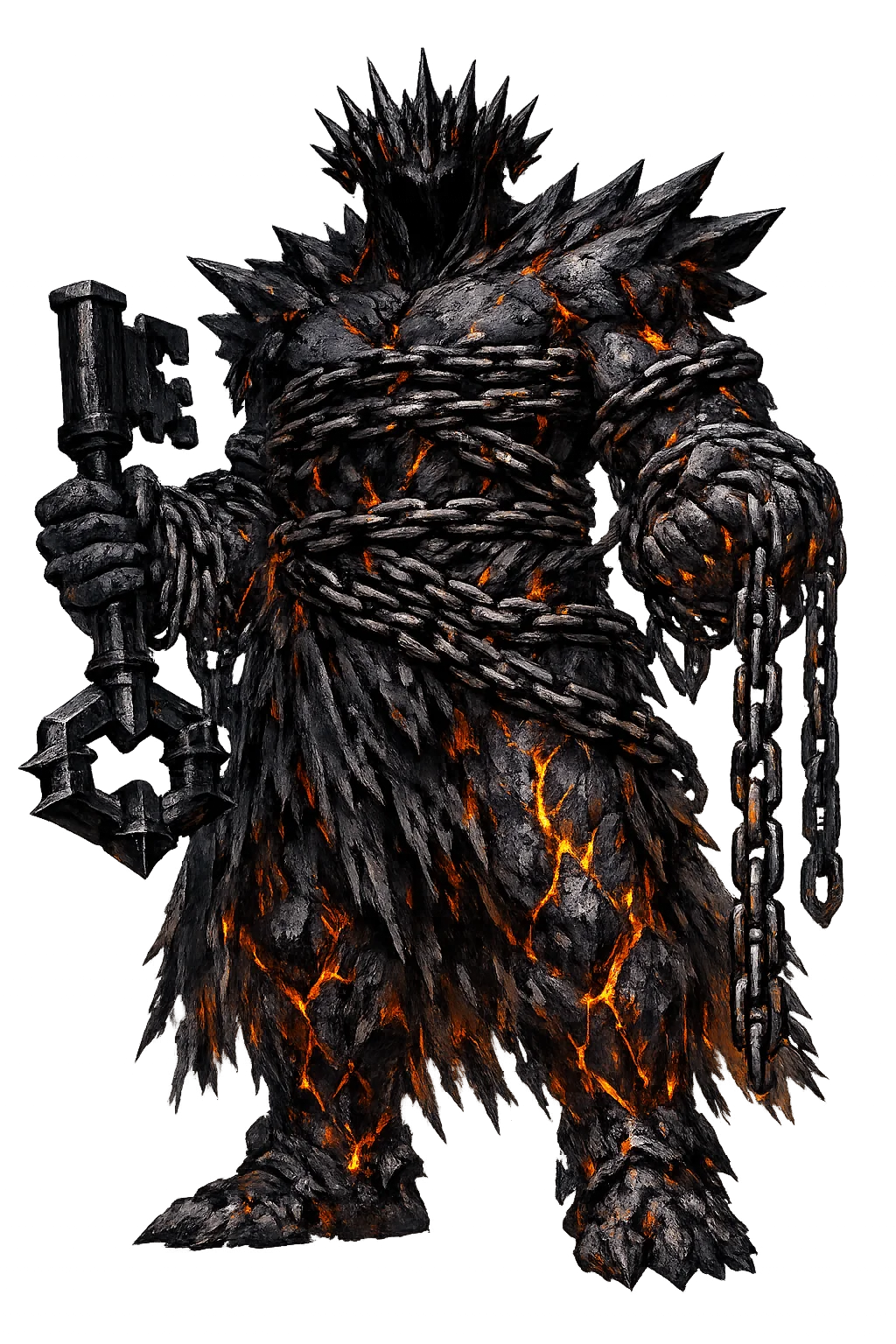
Tártaros appears in Greek art as a place of punishment rather than as a person. The Gigantomachy on the Great Altar of Pergamon and the Siphnian Treasury at Delphi show Zeus and the gods hurling snaky-legged enemies into a chasm, visualizing the imprisonment that poets locate in Tártaros. Apulian and South Italian vases place the defeated Titans or Typhon beneath Mount Etna, turning the volcano into a topographical icon of the abyss. There was no canonical statue or cult image of Tártaros itself; medieval manuscripts of Ovid and later illustrated mythologies rendered it as a dark pit or fiery cavern. Modern fantasy cartography and video-game underworlds continue that spatial convention.

06

Reception & Transformation

The name after its own age — transmission, translation, survival

Afterlives

Tártaros passed from epic poetry into the shared Mediterranean vocabulary of cosmic punishment. Hesiod placed it below Hades; Homer made it the prison of defeated gods; Orphic and Pythagorean texts mapped its geography for initiates. Roman poets—Virgil’s Aeneid and Ovid’s Metamorphoses among them—transmitted the abyss to medieval Europe, where it merged with Jewish and Christian ideas of Hell. Dante’s subterranean circles and Byzantine iconography of the damned owe something to the classical Tartaros, even when they rename it. Renaissance mythographers recovered the figure through Greek manuscripts, while Enlightenment geology demythologized its volcanic “gates” as natural phenomena. In modern popular culture, “Tartarus” names the lowest dungeon in fantasy games and science fiction, preserving the ancient idea of an inescapable pit at the bottom of the world.

Identifications Across Traditions

The Romans transliterated the name directly as Tartarus and made it the lowest region of the underworld, a place of torment distinct from the neutral infernum. In Virgil's Aeneid, the wicked are judged and cast into Tartarus, while the blessed ascend to Elysium. Christian writers — above all Milton in Paradise Lost — adopted Tartarus as a name for Hell or its precinct, completing a transformation from cosmic depth to moral prison. The word remains in theological vocabulary as a synonym for the deepest place of punishment, and 2 Peter 2:4 borrows the Greek name for the prison of the fallen angels.

Modern Legacy

Tártaros survives as the archetype of the inescapable prison. Video games, fantasy novels, and comic books use 'Tartarus' for the deepest dungeon, the final level, the place where ancient evils are chained. In astronomy, the exoplanet HD 80606 b was nicknamed 'Tartarus' for its extreme, hellish orbit. The abyss also shaped psychology and literature: the 'Tartarus' within is the unconscious depth where repressed forces rage. The name still carries its original weight: not merely death, but the bottom of everything.

07

The Meditation

What Tártaros means — beyond the dictionary

There is a depth beneath death, and the Greeks named it Tártaros. It is not hell in the modern sense, because it holds gods as well as sinners — the Titans, Typhōn, and the most monstrous hybrids of earth and abyss. It is the cosmic landfill, the place where order stores what it cannot destroy but dare not release.

Every culture has such a place: a pit, a dungeon, a black hole. Tártaros is the Greek version, measured with Homeric precision and built with bronze. To restore the accent on the first syllable is to hear the name as a falling thing — the sound of a stone dropped into a well so deep that it falls for nine days before it hits bottom.

08

Frequently Asked Questions

Common questions about Tártaros, The Primordial Abyss, and Unicode restoration

01How do you pronounce Tártaros?

In reconstructed pronunciation, Tártaros is /tár.ta.ros/ — approximately "TAR-ta-ross" — three syllables, the first pitched high like a stone dropping.

02What does Tártaros mean?

Tártaros means Deep place (from τάρταρος) in the greek tradition.

03What are the symbols of Tártaros?

Tártaros is associated with Bronze anvil (Hesiod's measure of its depth: nine days' fall from earth), Iron gates (The impassable boundary), Triple night (The darkness that wraps the abyss), Storm winds (The imprisoned forces that issue from its depths), Fettered Titan (The defeated gods chained below).

04Why restore Tártaros in Unicode?

Plain ASCII tartaros strips the stress, length, and script that make the name specific. Unicode restoration returns the name to its original written dignity.

05What is the most important myth about Tártaros?

“The Third Primordial” — the Theogony story that anchors the mythology of Tártaros, told in full on the lore page.

09

Scholarly Sources

The philological foundations of this restoration

Every claim on this page is grounded in established scholarship. The orthographic restorations follow disciplinary convention. The etymological chain follows the best available reference works. This is not invention — it is resurrection through scholarship.

◈

Lexicography & Philology

  • Liddell, H. G., Scott, R., & Jones, H. S. A Greek-English Lexicon. Oxford: Clarendon Press, 9th ed. 1996.
  • Pape, W., & Benseler, G. E. Wörterbuch der griechischen Eigennamen. Braunschweig: Vieweg, 1884.
  • Beekes, R. S. P. Etymological Dictionary of Greek. Leiden: Brill, 2010.
◎

Primary Texts

  • Hesiod, Theogony 116–120, 713–735, 820–822
  • Homer, Iliad 8.13–16, 478–481
  • Homer, Odyssey 11.576–600
  • Apollodorus, Library 1.6.1–3
  • Plato, Gorgias 523a–526d
  • Virgil, Aeneid 6.580–627
◉

Archaeology & Art History

  • Material evidence — iconography, inscriptions, and temple archaeology — for Tártaros and related cults.
✦

Religious Studies

  • Comparative studies of greek religion and the place of Tártaros within it.
Return

The Surface Awaits

You have traced the name from its earliest attestation to its Unicode restoration. Now return to the myth. The story is where the name lives.

Back to Lore
Tártaros mascot