
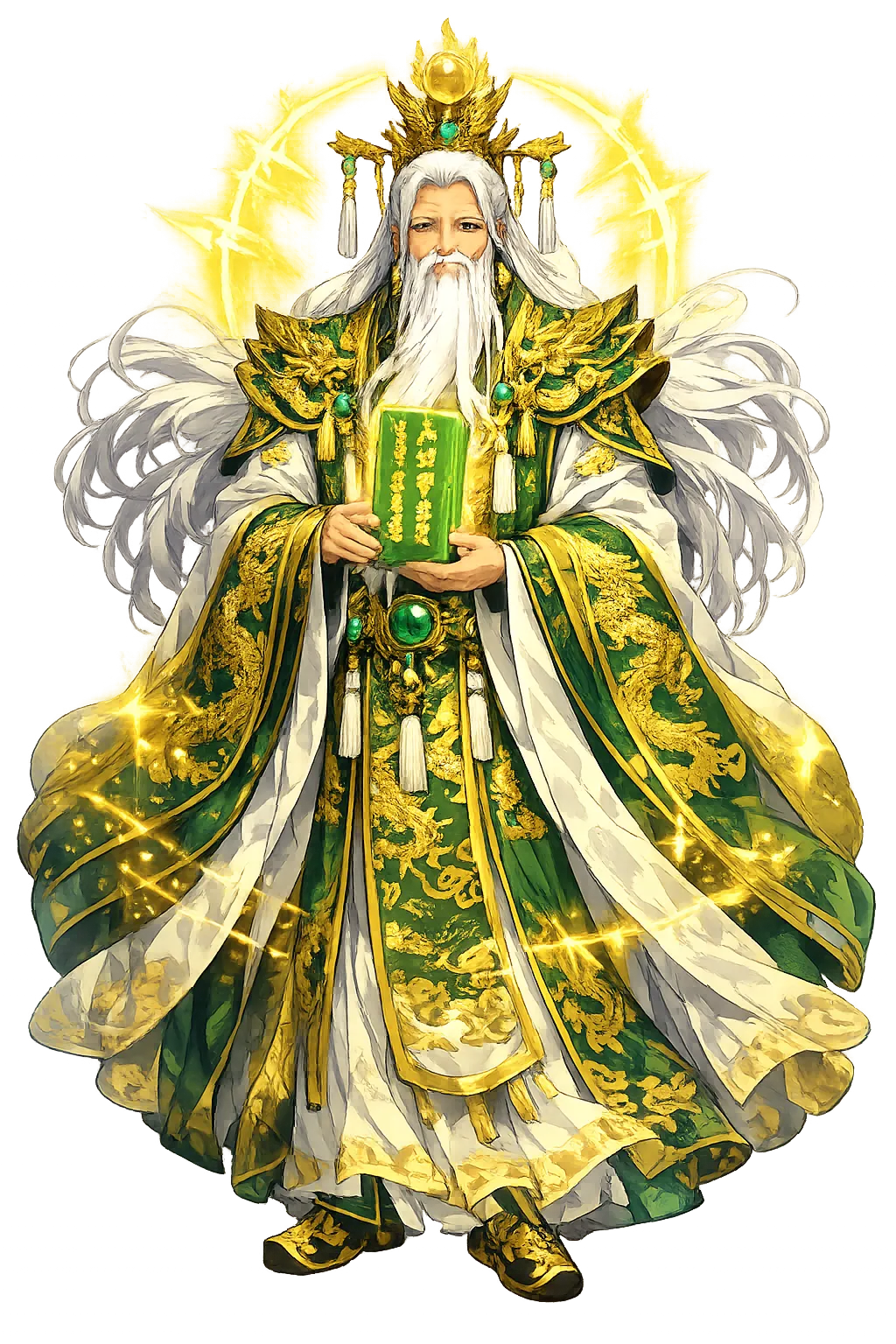
The Cult
Tàishàng's cult began as a biography and became an establishment. The earliest worship is the cult of Laozi as sage: Sima Qian's Shiji (c. 90 BCE) already knows him as keeper of the Zhou archives and author of the five thousand characters. The Han-era Huang-Lao movement made him a focus of devotion, and with the Way of the Celestial Masters in the second century CE, Tàishàng Lǎojūn stood as a revealed god, source of the religion's scriptures and registers. The cult peaked as state religion under the Tang, whose Li emperors claimed him as divine ancestor: Gaozong's honoring titles of 666 CE, Xuanzong's imperial commentary on the Dàodéjīng and its place in the civil examinations, and patronage of the Louguan temple in the Zhōngnán mountains — the shrine at the pass where the book was said to be written — made him, for a century, the nearest thing China had to a national god. Temples and birthday observances in the second lunar month persist to this day.