PuniCodex

Extended Lore

Tagaloa

Etymology · Orthography · Cult · Iconography · Reception · Sources

Tier 2 Tagaloa
Tagaloa — Creator, Ocean
01

Quick Facts

Essential information about Tagaloa, Creator, Ocean

Scholarly TransliterationTagaloa
Unicode RestorationTagaloa
Reconstructed Pronunciation/ta.ŋa.ˈlo.a/
PantheonPolynesian
DomainCreator, Ocean
MeaningThe lord
ClassificationTier 2
Primary DomainTagaloa
Sacred SymbolsThe Vine of the Isles, The Layered Heavens, The Coconut Palm, The Star-Path
02

Etymology & Word Family

From original script to Unicode restoration

Scholarly Transliteration Tagaloa Tagaloa — "The lord"
Unicode Restoration Tagaloa Canonical scholarly spelling — ASCII-identical
Modern ASCII tagaloa Plain-ASCII fallback

The name Tagaloa reaches the modern world through scholarly transliteration of the polynesian tradition. Because the conventional spelling uses only Latin letters, its Unicode and ASCII forms coincide — the tradition it carries is in the name itself, not in diacritics.

03

Unicode Character Breakdown

Character-by-character philological analysis

CharacterUnicodeNameBlockPhonetic Role
TU+0054Latin Capital Letter TBasic LatinSame, capitalized
aU+0061Latin Small Letter ABasic LatinSame
gU+0067Latin Small Letter GBasic LatinSame
aU+0061Latin Small Letter ABasic LatinSame
lU+006CLatin Small Letter LBasic LatinSame
oU+006FLatin Small Letter OBasic LatinSame
aU+0061Latin Small Letter ABasic LatinSame

The Tier 2 classification here reflects fidelity to the attested tradition, not recovered diacritics: every character of Tagaloa already survives in ASCII. What the restoration preserves is the canonical spelling itself — the form scholarship standardised.

04

Cult & Worship

How the sacred was kept — rites, sanctuaries, remains

The Cult

Tagaloa's cult was Samoa's state religion, and it left no temples in our sense: its sanctuaries were the malae — open ceremonial grounds fronting each village, some marked by stone platforms — where orators' formulas, the kava ceremony, and the great prayers rose toward Lani-uli. Turner (1861), Stair (1897), and Krämer (1902) all record prayers addressing the layered heavens by name, each storey announced on the way up to the Lord, and the creation chant grounded the paramount titles of Manu'a. Whether any single structure served him alone is unknown; the Pulemelei mound on Savai'i, the largest prehistoric monument in Polynesia, is a ceremonial platform whose dedication is beyond proof. Christian mission from the 1830s displaced the cult within a generation, but the malae and the honorifics survived, and formal oratory still opens with the sky's lordship.

In the Earth

No cult image of Tagaloa is known — Samoan religion, like Polynesian religion generally, was essentially aniconic, and its temples were open-air malae and stone platforms rather than statue houses. The material landscape nevertheless preserves his world: Pulemelei mound on Savai'i, the largest prehistoric monument in Polynesia (roughly 60 × 50 m, dated by some researchers to the first millennium CE), served as a ceremonial platform, though which god it served is beyond proof. Scattered stone platforms, star mounds for pigeon-snaring (tia seu lupe), and chiefly burial sites across 'Upolu and Savai'i map the sacred geography the myths describe. The 'archaeology' of Tagaloa himself is documentary: the creation accounts recorded by Turner (1861), Stair (1897), Krämer (1902), and in the Journal of the Polynesian Society remain the primary evidence.

05

Iconography

How Tagaloa was imaged across the ages

The Image

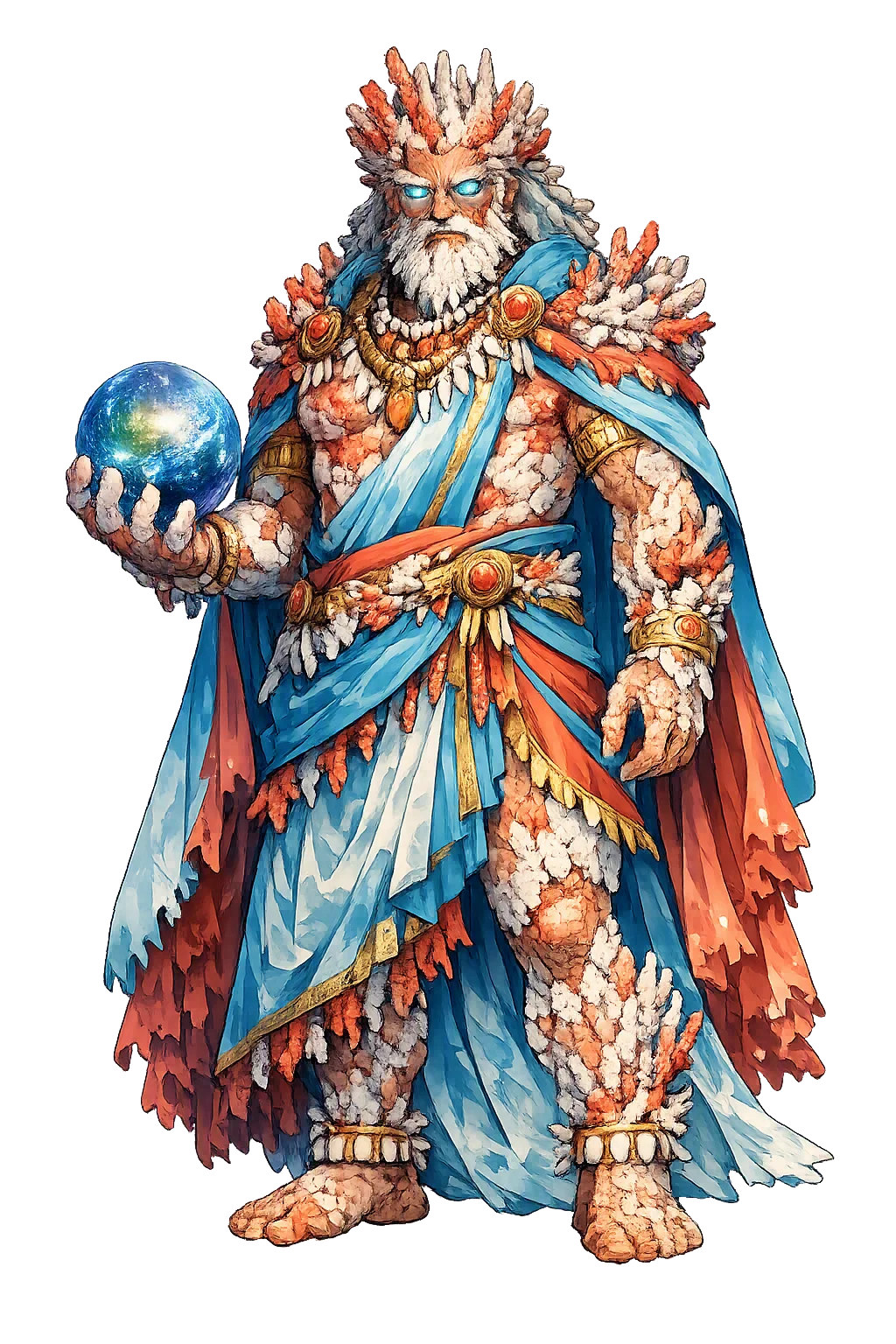
Samoan religion was aniconic, and Tagaloa was never imaged: no statue, relief, or carving of him is known, and the early missionaries — despite their appetite for idols — describe none. His portrait was vertical: the stacked heavens themselves, each storey named in prayer, with the Lord at the summit and the carved birds and marked stones of the malae standing on sacred ground below. Archaeology supplies the frame — stone platforms, star mounds for pigeon-snaring, the vast terraces of Pulemelei — but not the face. Where modern Samoan art gives him a body, it borrows the tiki conventions of the eastern islands: a retrospective gift from his own descendants' traditions.

06

Reception & Transformation

The name after its own age — transmission, translation, survival

Afterlives

Tagaloa's afterlife is the story of a people remembering its constitution through other people's books. The first witnesses were the missionaries themselves: Turner published the creation account in Nineteen Years in Polynesia (1861), Stair the fuller vine-and-islands version in Old Samoa (1897), and Krämer the prayers to the layered heavens in The Samoa Islands (1902); the Journal of the Polynesian Society carried the debates into the twentieth century. The comparative dictionary tradition — Tregear's Maori-Polynesian Comparative Dictionary above all — placed Tagaloa at the center of the reconstructed Proto-Polynesian pantheon, and Beckwith's Hawaiian Mythology closed the western circuit with Kanaloa. Conversion had absorbed him rather than erased him: 'Atua, his title, became the generic Samoan word for the Christian God, so the name never died but was re-accented. The late twentieth-century voyaging renaissance — the canoe Hōkūleʻa and its school of navigation — read the ocean road as Tangaroa's and Kanaloa's again, and modern Samoan oratory still opens with the Lord of the Heavens, as if the mission had merely changed his spelling.

Identifications Across Traditions

Christian missionaries arriving in Samoa in the 1830s found Tagaloa the principal rival of their God and absorbed rather than destroyed him: his title 'Atua' became the generic word for the Christian deity, and his mythology was pushed into folklore, where it survived. The pan-Polynesian evidence suggests an older unity: Tangaroa of Aotearoa, Ta'aroa of Tahiti, and Kanaloa of Hawai'i are cognate names with divergent portfolios, a pattern linguists explain by the settlement of the Pacific out of the Samoa–Tonga region (Tregear's comparative dictionary; Craig 1989). In Hawai'i, Kanaloa survives as the twin and companion of Kāne, the two wandering the islands together as culture-bringers — a pairing that arguably preserves Tagaloa's original creative role. In the twentieth century the Polynesian Voyaging Society's revival of long-distance navigation deliberately re-enshrined these sea-gods: Hōkūleʻa's ocean road was, in the crews' own framing, Tangaroa's and Kanaloa's road again.

Modern Legacy

Tagaloa's most durable legacy is genealogical. Samoan orators trace chiefly lines (gafa) to divine ancestors of his household, and the sacred honorifics of chiefly oratory still invoke the sky's lordship. His daughter Sina gave her name to one of the most widespread of all Polynesian story-cycles — found from Samoa to Mangaia to Hawaii — and the proverbial Sina remains a figure of beauty and longing in Samoan speech. The god's name lives quietly in the landscape: villages, titles, and the old name Savai'i-region traditions. Since the 1970s the Pacific-wide voyaging renaissance has restored Tagaloa–Tangaroa–Kanaloa to active cultural memory: the canoe is again read as the sea-god's vehicle, and the navigator's art, once missionized into silence, is once more taught as his inheritance.

07

The Meditation

What Tagaloa means — beyond the dictionary

What Tagaloa teaches is that creation can be an act of looking down. His world begins not with a battle or a body but with a lord in the highest heaven and an empty sea — and then a decision: to let something down. Polynesian cosmology is famously oceanic, yet its supreme god is a sky-dweller; the islands are the rope and bridge between the two. This is a theology suited to navigators: the world is made of layers — sky, sea, land, underworld — and authority flows along the vertical axis, from above downward, from the god to the chief to the people. Tagaloa is therefore less a 'god of' any one thing than the source of rank itself: where he acts, land appears; where his daughter descends, chiefs are born. To study him is to see how a non-literate society stored its constitution in cosmology, safe from conquest, until ethnographers wrote it down.

08

Frequently Asked Questions

Common questions about Tagaloa, Creator, Ocean, and Unicode restoration

01How do you pronounce Tagaloa?

In reconstructed pronunciation, Tagaloa is /ta.ŋa.ˈlo.a/ — approximately 'tah-ngah-LO-ah' — stress falls on the third syllable, and the g is a soft 'ng,' never a hard English g.

02What does Tagaloa mean?

Tagaloa means The lord in the polynesian tradition.

03What are the symbols of Tagaloa?

Tagaloa is associated with The Vine of the Isles (The heavenly vine Tagaloa let down into the sea, whose parts became the islands of Samoa), The Layered Heavens (Lani-uli and the descending storeys of the sky, his dwelling above all clouds), The Coconut Palm (Born from the body of the eel Tuna in the Sina cycle that belongs to Tagaloa's household), The Star-Path (In the wayfinding revival, the ocean road by which his dispersed namesakes are rejoined).

04Why restore Tagaloa in Unicode?

Tagaloa is written entirely in ASCII letters, so its restoration is about canonical fidelity rather than recovered diacritics: the temple fixes the name in its scholarly standard spelling, attested in the source tradition, instead of leaving it to drift.

05What is the most important myth about Tagaloa?

“The Vine Let Down into the Sea” — the The Making of the Isles story that anchors the mythology of Tagaloa, told in full on the lore page.

09

Scholarly Sources

The philological foundations of this restoration

Every claim on this page is grounded in established scholarship. The orthographic restorations follow disciplinary convention. The etymological chain follows the best available reference works. This is not invention — it is resurrection through scholarship.

◈

Lexicography & Philology

  • Kramer
  • Moyle
◎

Primary Texts

  • Primary sources in the polynesian tradition for Tagaloa.
◉

Archaeology & Art History

  • Material evidence — iconography, inscriptions, and temple archaeology — for Tagaloa and related cults.
✦

Religious Studies

  • Stair, Old Samoa; or Flotsam and Jetsam from the Pacific Ocean (1897)
  • Krämer, The Samoa Islands (1902), vol. I
  • Turner, Nineteen Years in Polynesia (1861)
  • Grey, Polynesian Mythology (1855)
  • Craig, Dictionary of Polynesian Mythology (1989)
  • Beckwith, Hawaiian Mythology (1970)
Return

The Surface Awaits

You have traced the name from its earliest attestation to its Unicode restoration. Now return to the myth. The story is where the name lives.

Back to Lore
Tagaloa mascot