PuniCodex

Extended Lore

Supay

Etymology · Orthography · Cult · Iconography · Reception · Sources

Tier 2 Supay
Supay — Underworld, Death
01

Quick Facts

Essential information about Supay, Underworld, Death

Scholarly TransliterationSupay
Unicode RestorationSupay
Reconstructed Pronunciation/supay/
PantheonIncan
DomainUnderworld, Death
MeaningThe spirit
ClassificationTier 2
Primary DomainSupay
Sacred SymbolsCave mouth or mine shaft, Coca and chicha, Funerary goods, The horned devil figure
02

Etymology & Word Family

From original script to Unicode restoration

Scholarly Transliteration Supay Supay — "The spirit"
Unicode Restoration Supay Canonical scholarly spelling — ASCII-identical
Modern ASCII supay Plain-ASCII fallback

The name Supay reaches the modern world through scholarly transliteration of the incan tradition. Because the conventional spelling uses only Latin letters, its Unicode and ASCII forms coincide — the tradition it carries is in the name itself, not in diacritics.

03

Unicode Character Breakdown

Character-by-character philological analysis

CharacterUnicodeNameBlockPhonetic Role
SU+0053Latin Capital Letter SBasic LatinSame, capitalized
uU+0075Latin Small Letter UBasic LatinSame
pU+0070Latin Small Letter PBasic LatinSame
aU+0061Latin Small Letter ABasic LatinSame
yU+0079Latin Small Letter YBasic LatinSame

The Tier 2 classification here reflects fidelity to the attested tradition, not recovered diacritics: every character of Supay already survives in ASCII. What the restoration preserves is the canonical spelling itself — the form scholarship standardised.

04

Cult & Worship

How the sacred was kept — rites, sanctuaries, remains

The Cult

Supay was propitiated, never housed: his sanctuaries were the cave mouths, springs, graves, and mine faces where the inner world broke the surface. The Huarochirí manuscript records the rites at the cavern of Tambillos near San Pedro de Huarochirí — coca and maize beer presented so the spirits of the rock would not take the children — and Polo de Ondegardo (1571) reports the funeral offerings that provisioned the dead for their descent into uku pacha. No priesthood served him; households and communities managed the payments, at death, at illness, at sowing. Under colonialism the cult migrated underground — literally: in the mines of Potosí and the Cerro Rico, miners fed El Tío coca, alcohol, and cigarettes on Tuesdays and Fridays, a practice documented from the colonial period to the present. Arriaga's extirpation manual of 1621 read the whole system as Satanism; the miners read it as rent.

In the Earth

No temple of Supay is known — he was propitiated at cave mouths, springs, graves, and mine faces rather than in built sanctuaries. The material record is therefore indirect: the rock shelters and cave shrines of the Huarochirí region, including Tambillos, where colonial extirpation records describe offerings of coca and maize beer; colonial-era dictionaries and confessionals that fixed supay as 'devil' (González Holguín 1608; Bertonio 1612); the Tío effigies and their offerings still maintained at Potosí and Olmillos; and the abundant documentary archive of the extirpation campaigns (Arriaga 1621; Duviols). The evidence honestly shows a cult of place rather than of monuments.

05

Iconography

How Supay was imaged across the ages

The Image

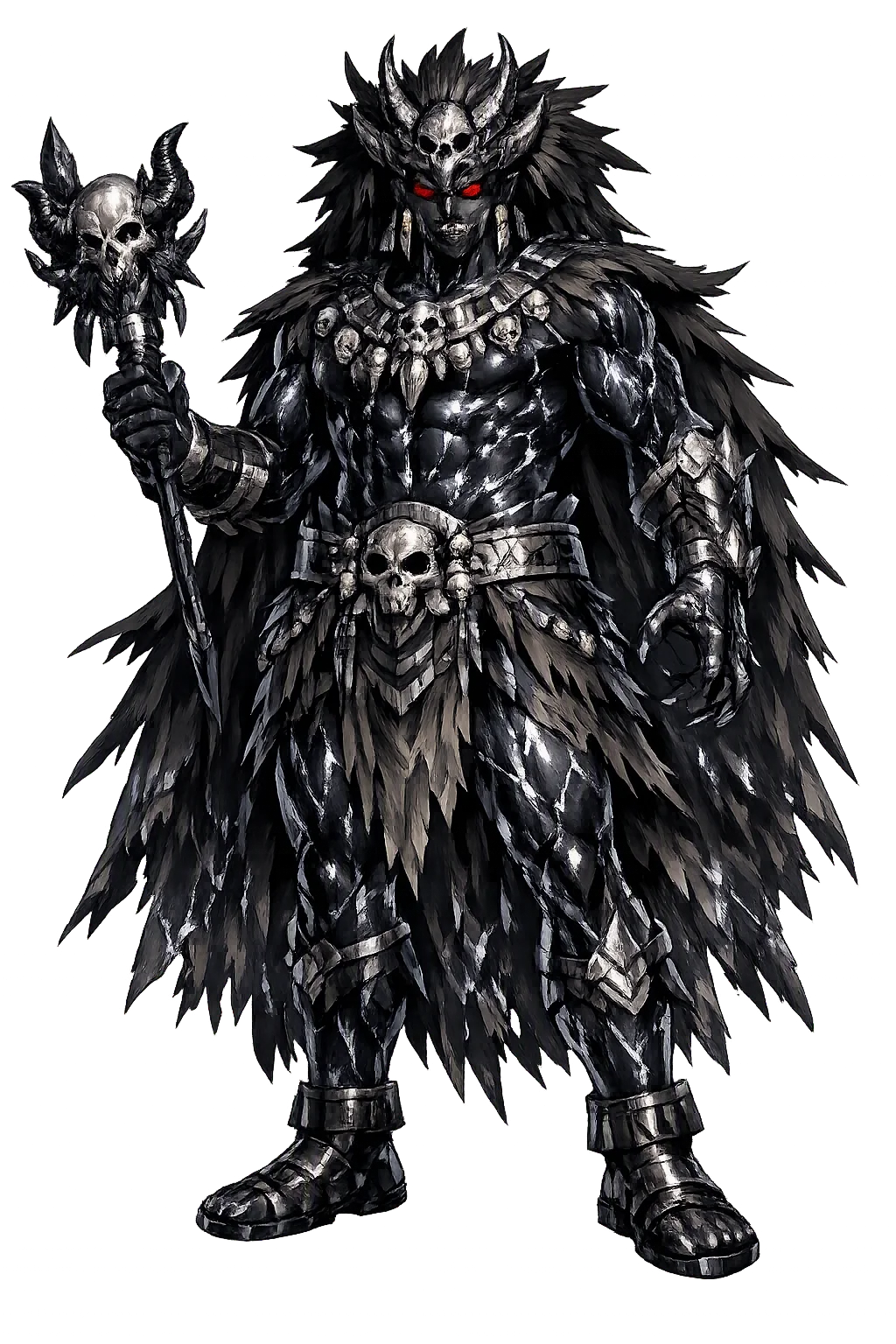
Pre-conquest Supay appears to have been aniconic: the lord of uku pacha was addressed at openings in the earth, not pictured in them, and no securely identified Inca image of him survives. The colonial extirpation campaigns then built him a face by force — the horned, cloven-hoofed Christian Devil painted and preached across the Andes as the true identity of the being the Indians called Supay. The most vivid surviving iconography belongs to his colonial afterlife: the Tío effigies of the Bolivian mines, clay figures with horns, seated in the deepest galleries of Potosí and smeared with offerings, and the masked devils of the Diablada dances. Modern museum displays of Inca religion often show generic underworld imagery; the honest statement is that Supay's image is a colonial mask laid over an older, invisible lord.

06

Reception & Transformation

The name after its own age — transmission, translation, survival

Afterlives

Supay's transmission is a case study in conversion by redefinition. The early witnesses — Polo de Ondegardo's report of 1571, Cobo's Historia, the Huarochirí manuscript — describe a lord of the dead; then the lexicographers closed the trap. González Holguín's Vocabulario (1608) glosses supay as 'devil', Bertonio's Aymara dictionary (1612) does the same for supaya, and within a generation the conquerors' meaning displaced the older one across two languages. Arriaga's Extirpación (1621) fixed the demonology, and modern Quechua and Aymara still say supay for devil. The scholarly recovery ran the other way: the Huarochirí manuscript resurfaced and was edited in the twentieth century, and Taussig's The Devil and Commodity Fetishism in South America (1980) — with Tristan Platt's work on Bolivian mine religion — read the miners' Tío as the old lord of uku pacha renegotiating under colonial capitalism, making Supay central to Andean studies. The name now carries both histories at once: the word the church stole, and the being it never caught.

Identifications Across Traditions

Supay's entire afterlife is a history of forced translations. The conquering church mapped him onto Satan, and the mapping was so successful that modern Quechua and Aymara use supay as the ordinary word for devil. Yet the older figure survived the translation in the mines, where El Tío — the Uncle — continues the uku pacha lord's contract with those who take wealth from below. Scholars such as Taussig (1980) and Tristan Platt have read this double life as the emblem of colonial capitalism: the indigenous underworld lord re-employed as the owner of the silver that fed Europe. The Diablada dance traditions of Oruro and the miner rites at Potosí keep both identities visible at once — Christian devil masks performing unmistakably pre-Christian obligations.

Modern Legacy

Supay remains embedded in Andean language itself: to this day supay means devil in Quechua and Aymara, a living fossil of the extirpation campaigns. In the mining regions of Bolivia the Tío effigies are still fed and still feared, and the Diablada festivals stage his masked dance before crowds of thousands. For scholarship, Supay is a key witness to how colonialism rewrote indigenous cosmology — studied by Taussig, Platt, and Duviols as the paradigmatic case of a deity demonized, renamed, and secretly retained. The name also circulates in global culture: Andean diaspora communities, museum exhibitions on Inca religion, and contemporary indigenous revival movements all return to the older, pre-Christian meaning of the word — spirit, not devil — as part of recovering what the extirpations tried to erase.

07

The Meditation

What Supay means — beyond the dictionary

Supay is the lord of the underground who was renamed but never dethroned. Colonial priests thought that calling him 'devil' would finish him; instead the name became a mask, and behind the mask the old contract continued in the dark of the mines. There is a lesson in the economics of belief here: a power that controls what you need — passage for your dead, safety for your labor, metal for your markets — cannot be argued away. It can only be paid.

The restoration of Supay is therefore more than philological courtesy. It returns to the figure his own name, before the extirpators rewrote it, and it asks the reader to hold both histories at once: the lord of uku pacha and the colonial devil, the cave offerings and the Tuesday cigarettes at Cerro Rico. The earth, this name insists, keeps its own accounts, and its oldest creditor is still collecting.

08

Frequently Asked Questions

Common questions about Supay, Underworld, Death, and Unicode restoration

01How do you pronounce Supay?

In reconstructed pronunciation, Supay is /supay/ — approximately SOO-pie — two syllables, stress on the first; the '-ay' is the 'y' of 'fly'.

02What does Supay mean?

Supay means The spirit in the incan tradition.

03What are the symbols of Supay?

Supay is associated with Cave mouth or mine shaft (The visible entrance to uku pacha; every shaft sunk into the earth is a doorway into Supay's jurisdiction), Coca and chicha (The standard offerings that made the underground lord generous toward the living who disturbed his realm), Funerary goods (Food, tools, and treasure interred with the dead as provision for the journey down to Supay's household), The horned devil figure (The post-conquest iconography in which the extirpation campaigns re-imagined Supay as the Christian Devil).

04Why restore Supay in Unicode?

Supay is written entirely in ASCII letters, so its restoration is about canonical fidelity rather than recovered diacritics: the temple fixes the name in its scholarly standard spelling, attested in the source tradition, instead of leaving it to drift.

05What is the most important myth about Supay?

“Lord of Uku Pacha” — the The Inner World story that anchors the mythology of Supay, told in full on the lore page.

09

Scholarly Sources

The philological foundations of this restoration

Every claim on this page is grounded in established scholarship. The orthographic restorations follow disciplinary convention. The etymological chain follows the best available reference works. This is not invention — it is resurrection through scholarship.

◈

Lexicography & Philology

  • D'Altroy
  • Bauer
◎

Primary Texts

  • Primary sources in the incan tradition for Supay.
◉

Archaeology & Art History

  • Material evidence — iconography, inscriptions, and temple archaeology — for Supay and related cults.
✦

Religious Studies

  • Polo de Ondegardo, De los errores y supersticiones de los indios (1571)
  • Cobo, Bernabé, Historia del Nuevo Mundo 13.10 (1653)
  • Salomon, Frank & Urioste, George (trans.), The Huarochirí Manuscript (1991)
  • González Holguín, Diego, Vocabulario de la lengua general de todo el Perú (1608)
  • Arriaga, Pablo José de, Extirpación de la idolatría del Pirú (1621)
  • Taussig, Michael, The Devil and Commodity Fetishism in South America (1980)
Return

The Surface Awaits

You have traced the name from its earliest attestation to its Unicode restoration. Now return to the myth. The story is where the name lives.

Back to Lore
Supay mascot