
Evidence dossier: Sleipnir
Evidence dossier 492 — Sleipnir. Every exhibit catalogued, every ruling stated with its grounds.
At a Glance
- Canonical form: Sleipnir
- Reconstructed form: ᛋᛚᛅᛁᛒᚾᛁᛦ (a normalized scholarly specimen)
- Pantheon: Norse
- Convention: the tradition's scholarly romanization, kept exactly as recorded
- False forms on record: 0
- Contested forms: none attested
- Series: The Canonical Register, No. 492 of 597
The Evidence
Exhibit 1 — the attestation. The reconstructed form is ᛋᛚᛅᛁᛒᚾᛁᛦ — a normalized scholarly specimen, not an attested inscription. The canonical transliteration is Sleipnir.
Exhibit 2 — the flattened form. The plain form sleipnir differs from the canonical Sleipnir only by convention of display — case, not content. It is acceptable everywhere: in legacy systems, in plain-text citation, in the DNS itself. What is not acceptable is what follows in the register: respellings that change the letters, not just their case.
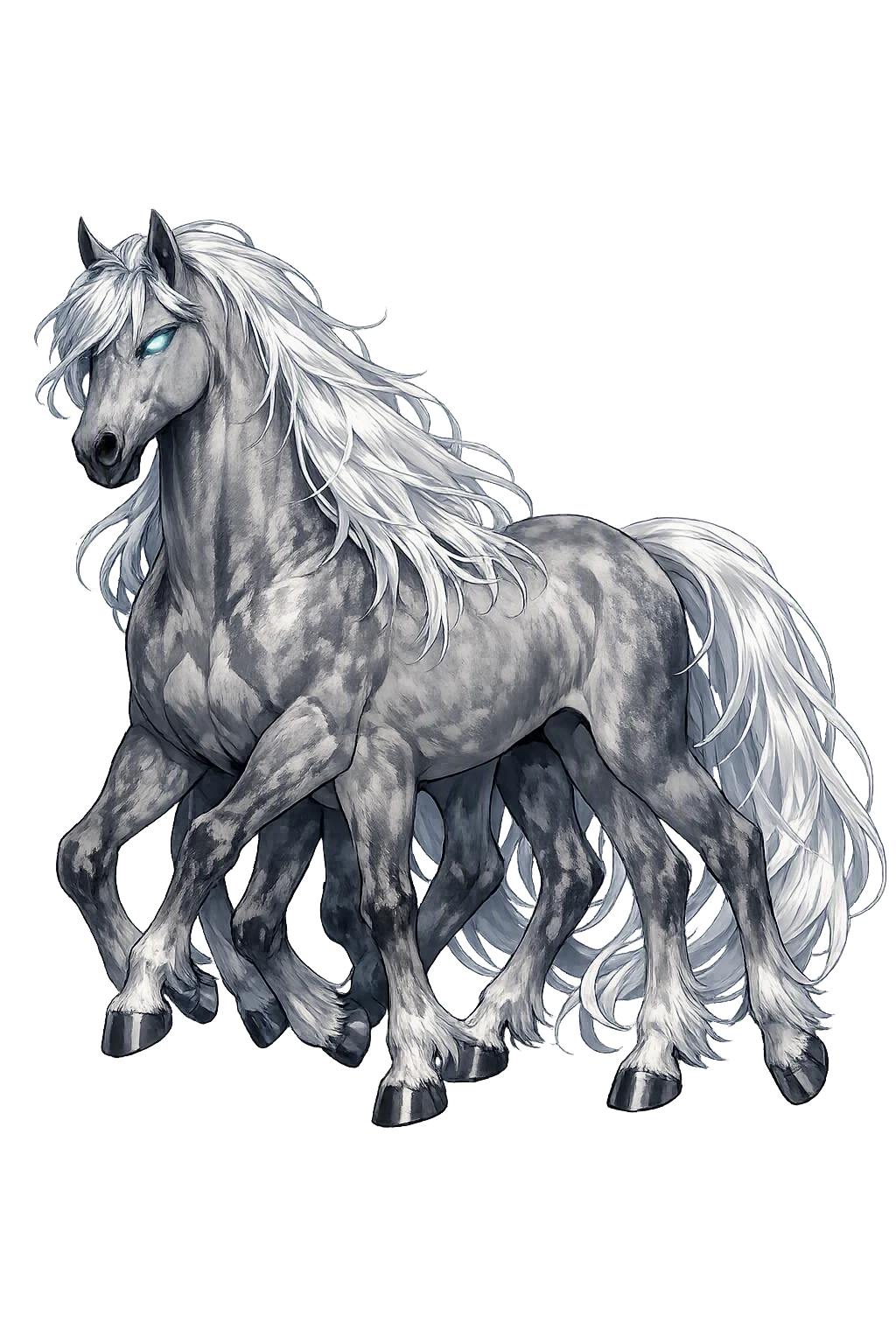
Exhibit 3 — the physical record. Sleipnir has the strongest material attestation of any horse in the corpus: the Gotland picture stones. The Tjängvide stone (Alskog parish) and Ardre VIII, carved in the eighth and ninth centuries, show an eight-legged horse bearing a rider toward a welcoming figure — an image the standard scholarship (Lindqvist; Simek s.v. Sleipnir) identifies as Óðinn carried by Sleipnir, centuries older than any written telling. No runic inscription names the horse, and no votive deposit can be tied to him — his cult, if any, was his master's. The textual witnesses are the Codex Regius and related codices of the Prose Edda for Gylfaginning 42 and 49, and the Codex Regius of the Poetic Edda for Grímnismál and Sigrdrífumál.
Exhibit 4 — the continuing record. Sleipnir's afterlife is the afterlife of the image: the eight-legged rider of the Gotland stones has become one of the most reproduced figures of Norse art, carried from nineteenth-century antiquarian plates into every modern handbook of the mythology. In the North itself the name never quite left the stables — Swedish and Norwegian kept Sleipner for engines and hulls, from locomotives to naval vessels, and Norway gave the name to the Sleipner gas field in the North Sea, the undersea treasure-house named for the underworld runner.
The Convention's Own History
The canonical spelling of Sleipnir rests on the tradition's own scholarly record, not on a marks convention: the name's forms are documented, compared, and one reference spelling is fixed so that citations agree across the temple, the lexicon, and this register. The principle that unifies every entry is the one the whole project stands on: a name is evidence, and evidence is not negotiable — not for keyboards, not for convenience, not for anyone.
The Address, Without an Encoding Detour
The canonical form Sleipnir already uses ordinary Latin letters, so the address bar needs no special encoding narrative. The digital temple can preserve the spelling exactly as the scholarly record presents it. That is the practical point here: consistency between the source, the citation, and the public address.
This does not make every romanization equally valid. A wrong letter remains wrong even when it is easy to type. Canonical status still depends on the attested convention, never on convenience or registrar inventory.
The Verdict
Case closed on Sleipnir: canonical, cited, and defended. The keyboard form sleipnir is the same name in another register of display — always acceptable. The register's files remain open: if a source surfaces that changes any line of this entry, the entry changes. Until then, the temple at /sleipnir/ holds the canonical form.
The docket for this ruling: no false forms on the docket; no contested forms attested; the attestation rests on 6 cited sources — Snorri Sturluson, Prose Edda: Gylfaginning 42 (the master builder, Svaðilfari, and the birth of the grey eight-legged foal) and 49 (Hermóðr's ride on Sleipnir down the Hel-road and the leap over Hel's gate); Skáldskaparmál þulur (jóa heiti), Poetic Edda: Grímnismál 44 (Sleipnir the best of horses); Sigrdrífumál 15 (runes carved on Sleipnir's teeth); Reginsmál prose (Grani of Sleipnir's lineage), trans. Carolyne Larrington, Völsunga saga (Grani's descent from Sleipnir's line), trans. Jesse L. Byock.
The Register Continues
This is one of 597 entries in the Canonical Register — the authoritative reference for every flagship temple. The temple's founding dispatch tells the name's story; its Restoration File details the marks; its Resonance File reads the archetype into the industries. The blog index holds the whole archive, and the Rulebook states the convention this register enforces.
Continue the register — previous entry: Skuld (read it) · next entry: Sbk (read it).
The Canonical Register is written from the same canonical record as the lexicon itself. If a false form is missing from this page, it is because the evidence does not support calling it false — or because we have not seen it yet. Show us, with a citation, and the register will answer.