
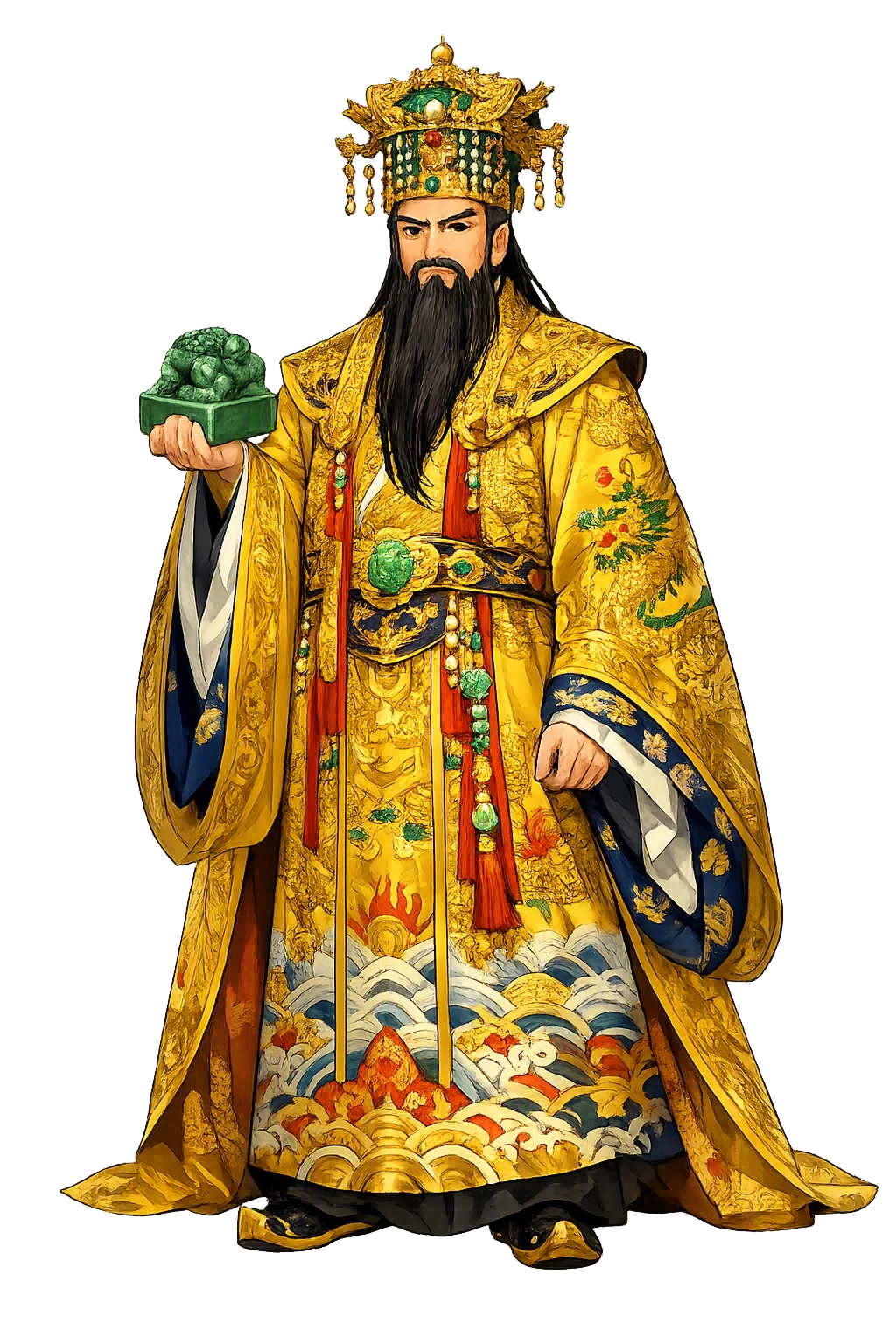
Where Yùhuáng works now: the myths behind the markets
The myths did not retire. They moved offices. This is the file on where Yùhuáng works now.
The stories of Yùhuáng circulate within the Chinese corpus, where the figure embodies jade emperor, heaven, sovereignty.
The pattern atlas — which maps every flagship temple to the industries its archetype demonstrably resonates with, each match argued and open to challenge — seats this temple in 3 industries. This file reads those seats the way they were earned: through the myths.
At a Glance
- Temple: Yùhuáng
- Pantheon: Chinese
- Domain of influence: Jade Emperor, Heaven, Sovereignty
- Pattern seats: 3
- Sectors touched: Culture & Entertainment · Technology & Innovation · Society & Spirit
- Strongest seat: Mythic Name Restoration
- Series: The Resonance Files, No. 395 of 397
The Myth at Work
Primary Attestation. Yùhuáng is attested in the canonical Chinese sources as a figure associated with jade emperor, heaven, sovereignty. — remember the shape of that act. You will see it again, wearing a logo.
Name and Meaning. The name means "Jade Emperor" and reflects the figure's role in the tradition. — that is not just a story. It is a business model, four thousand years early.
The Seats
Each of these is argued in the atlas with a weight and a why-line. What the atlas cannot fit in one line is the whole myth — so here is each seat with its story restored.
Mythic Name Restoration
Scholarly Unicode restorations of mythic names for modern identity. (Sector: Culture & Entertainment)
The Jade Emperor in toned pinyin, the canonical Chinese form. — the atlas stops there, out of discipline. The myth keeps going: the function Yùhuáng performs in the stories is precisely the function this industry sells.
Diacritic-First Domains
IDN domains where the restored marks are the entire point. (Sector: Technology & Innovation)
Grave and acute tones make Yùhuáng a true pinyin restoration. — the atlas stops there, out of discipline. The myth keeps going: the function Yùhuáng performs in the stories is precisely the function this industry sells.
Global Pantheon Brands
Cross-cultural deity and hero names as sovereign brand anchors. (Sector: Society & Spirit)
The Jade Emperor in toned pinyin, a supreme celestial ruler across Chinese religion. Swap the costume and the sentence is indistinguishable from the myth. That is what a resonance seat means.
The Long Employment
Yùhuáng continues to appear in scholarship, art, and popular reception as a significant figure of the Chinese tradition. Restoring the name in Unicode returns the original marks that ASCII removes. The age changed. The work did not.
The Method, Stated Plainly
Skeptical? Good — the system is built for you. Every seat in this file carries its why-line and its weight, the full derivation is public at the methodology page, and the challenge process is part of the design. Falsifiable is not a posture here; it is the mechanism.
For the Ones Who Work There
If you work in mythic name restoration, diacritic-first domains, or any trade this temple holds a seat in, this is the honest version of what a placement means: your industry beside the story it has been re-telling all along — on the temple floor itself, before an audience that came specifically to read it. The patron tier and the advertising terms describe the mechanics; the resonance above describes the fit.
The File Continues
One of 397 Resonance Files — the series where the pantheon goes to work. Read the founding dispatch for the name, the Restoration File for the spelling, or the whole archive end to end.
Continue the series — previous: Ymir (read it) · next: Zéphyros (read it).
The Resonance Files are argued from the same canonical record as the pattern atlas itself: the lexicon, the lore catalog, and the cited sources. Every seat can be challenged at the methodology page — and the challenge is the point.