
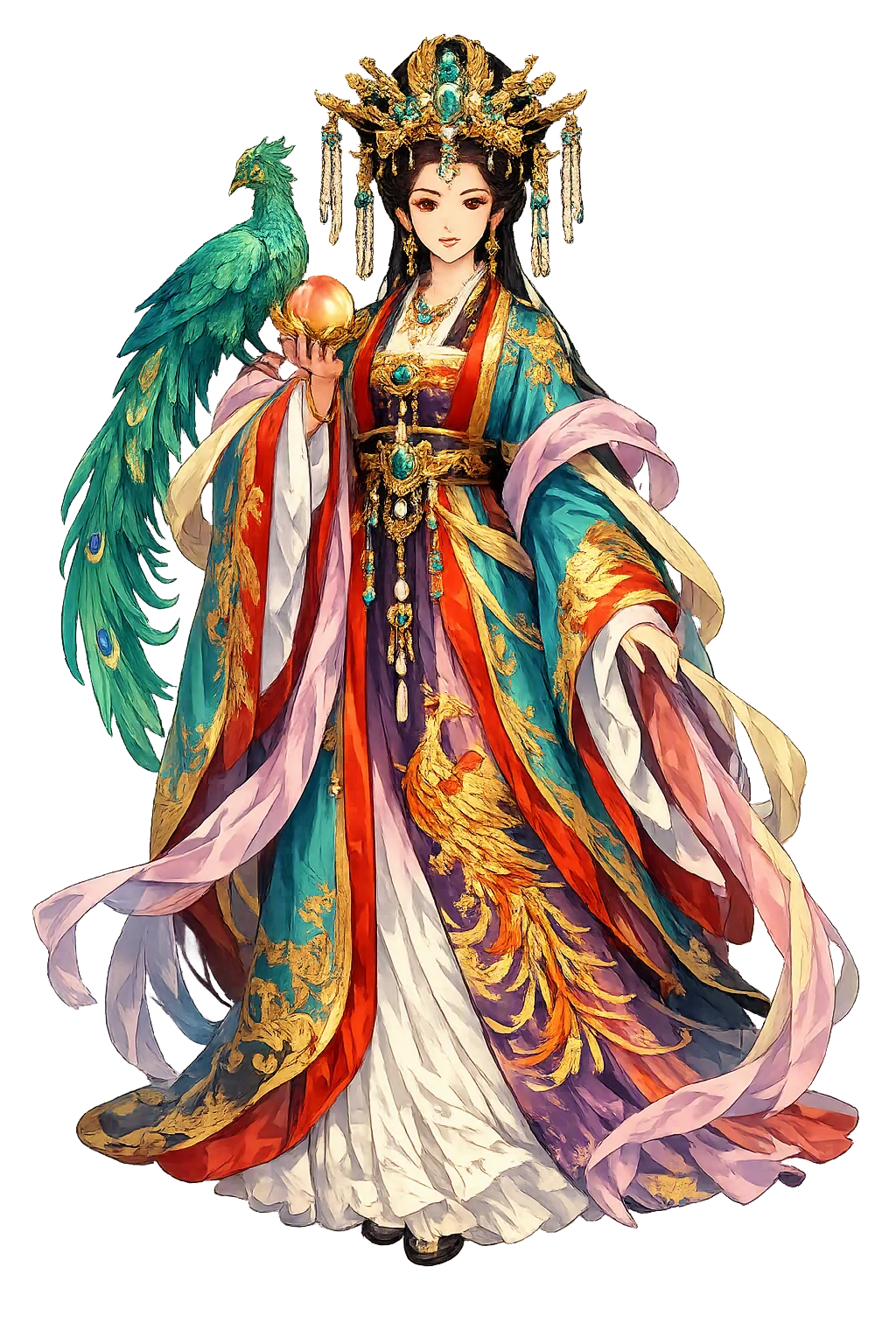
Ancient Domain
Xīwángmǔ, the Queen Mother of the West, has the strangest biography of any great goddess in the Chinese tradition. Her oldest portrait, in the Classic of Mountains and Seas, is fearsome: a figure with a tiger's teeth and a leopard's tail, her hair wild, wearing the shèng headdress, presiding over plague and calamity from Mount Kūnlún at the western edge of the world. She is not yet the serene sovereign of later ages — she is the numinous power of the untamed west itself.
Across the Han dynasty she was refined, age by age, into the great goddess of the western paradise: keeper of the Peaches of Immortality, which ripen once every three thousand years; host of the Peach Banquet; bestower of the elixir that lifts Cháng'é to the moon; and, in the fullness of Taoist theology, the sovereign of yin and the west, balanced against Dōngwánggōng, the King Father of the East. The wilderness was never banished from her — it was enthroned.