
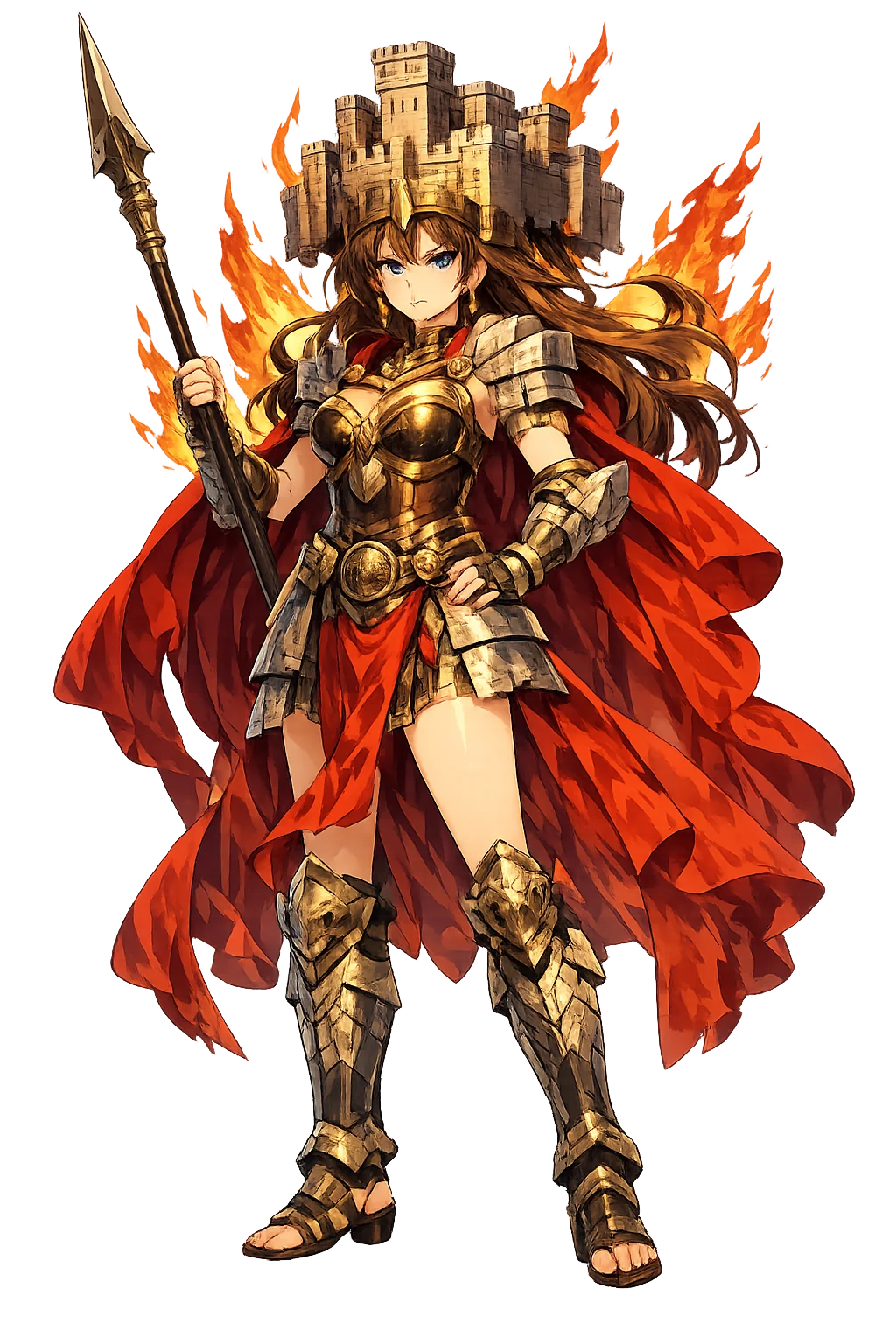
From Greek to Unicode: the journey of Troíā
Long before it was a domain, this name traveled through scripts. Troíā begins in Greek, passes through scholarly transliteration, and ends — for now — inside the punycode machinery of the global DNS. Each stage of that journey preserves some information and loses some, and the craft of restoration is knowing exactly which marks matter. This post follows the name stage by stage: the original script, the reconstructed pronunciation, the mythological record, the material evidence, and finally the Unicode form that carries all of it into the address bar. Think of it as a biography of a name, told through its spelling.
At a Glance
- Restored name: Troíā
- ASCII form: troia
- Meaning: "Unknown; possibly from Τρωός"
- Domain of influence: City of Priam
- Pantheon: Greek Location
- Classification: Tier 1
- Original script: Τροία (Greek)
- Live domain: troíā.com
Overview
Troía (troia) — The City That Fell Twice — belongs to the Greek tradition, where it is catalogued under the domain "City of Priam". The name means "Unknown; possibly from Τρωός".
Troíā is the city that fell once and rose forever: ten years of siege made it the template of Western war narrative, and its survivors — in Roman myth — sailed west to found the lineage of Rome itself. Every empire since has wanted to be Troy's heir rather than its conqueror.
PuniCodex restores the name as Troía and serves its temple at troíā.com. The original carries both stress and vowel length, and exactly one historically valid Unicode restoration exists, which places the name in Tier 1. The plain ASCII form troia survives as a modern convenience imposed by the early domain-name system; the restoration, not the fallback, is the form the project defends as philologically complete.
The Name
The name is attested in Greek as Τροία. Etymologically it means "Unknown; possibly from Τρωός".
The ASCII form troia survives only because the early domain-name system could not carry diacritics; it is a technological compromise, not an ancient spelling. The Unicode restoration Troía recovers the stress accent of the original directly in the address bar. The original carries both stress and vowel length, and exactly one historically valid Unicode restoration exists, which places the name in Tier 1.
The letter-by-letter transformation runs:
- t → T — Tau
- r → r — Rho
- o → o — Short omicron
- i → í — Acute on iota
- a → a — Short alpha
The project holds the domain troíā.com (xn--tro-tma4h.com) as the canonical home of this name.
The Original Script
The name is written in Greek as Τροία. This original script is the form against which the ASCII fallback troia and the PuniCodex restoration Troía are measured: the restoration preserves its pitch accent of the written form, so that a reader typing the modern address still speaks the ancient name.
Pronunciation
The reconstructed pronunciation of the name is /troí.aː/ — Attic Greek.
For the modern speaker, the closest approximation is: TROY-ah, with the stress on the final syllable and a long ā.
Kindred and historical forms of the name:
- Greek — Τροία
- Latin — Troia
- Hittite — Wilusa
- Owned form — Troíā
Greek Τροία bears the stress on the final syllable with a long diphthongal ending — Troíā — and Latin Troia keeps both the vowels and the fame. The form was already a place-name before it was a story: Hittite records call the land Wilusa, which most scholars now connect to (W)ilios, Troy's other Greek name.
Mythology
The Trojan cycle is the largest story the Greeks told: from the wedding of Pēleús and the Apple of Discord to the Returns of the heroes, it fills eight epics, of which the Iliad and Odyssey are only the surviving heart.
The Apple (The Judgment)
Eris, uninvited to the wedding of Pēleús and Thetis, threw a golden apple inscribed "for the fairest." Zeús delegated the verdict to the Trojan prince Paris, herding on Mount Ida: Hēra offered empire, Athēnā victory, Aphrodítē the most beautiful woman in the world. He chose the woman — Helen, wife of Menelaos — and the war became arithmetic.
Nine Years and a Quarrel (The Siege)
A thousand ships gathered at Aulis; nine years raided the Troad before the Iliad even begins. The poem's subject is a quarrel in the tenth year — Agamemnōn's seizure of Brisēis, Achilleús' withdrawal, and the chain of deaths from Pátroklos to Hektōr — yet behind it stands the city's doom, prophesied and accepted by every combatant.
The Last Night (The Horse)
The Odyssey and the Aeneid tell the end the Iliad never reaches: the Achaeans feign departure, leaving a wooden horse as an "offering to Athēnā." The priest Laokoōn warns against it and is destroyed by sea-serpents; the prophetess Kassandra is disbelieved, as always. At night the hidden warriors open the Scaean Gate, and Troíā burns in a single night after ten years of failure.
The Dispersal (The Survivors)
Greek myth disperses the Trojans across the map: Aeneas to Italy in the Roman telling, Antēnor to the Adriatic, Hektor's son — in the minority tradition — restored in a new Troy. The vanquished city thus colonizes the imagination of its conquerors: to be Troianos, "of Troy," becomes, paradoxically, a title of glory.
Symbols & Iconography
The iconography associated with Troía concentrates in a small set of recurring attributes, each a compressed statement about the name:
- The wooden horse — Ingenuity against fortification; the gift that conceals its content
- The Scaean Gate — The western gate where the heroes fought and the horse entered
- The Palladium — The heaven-fallen image of Athēnā on which the city's safety depended
Archaeology & Evidence
Hisarlık in northwest Anatolia preserves nine major settlement layers (Troy I–IX), ca. 3000 BCE–500 CE. The candidates for Homer's city are Troy VI (destroyed ca. 1250 BCE, by earthquake or war) and Troy VIIa (burned ca. 1180 BCE, with sling stones and arrowheads in the destruction debris). UNESCO listed the site in 1998. The "Treasure of Priam" Schliemann smuggled out is now split between Moscow and Istanbul, and the Hittite Tawagalawa letter mentioning a king of Ahhiyawa (Achaeans?) at Millawanda places Greek-Anatolian conflict in the right sea at the right century.
Realm & Domain
Troíā is the city that fell once and rose forever: ten years of siege made it the template of Western war narrative, and its survivors — in Roman myth — sailed west to found the lineage of Rome itself. Every empire since has wanted to be Troy's heir rather than its conqueror.
The Walls
Built by Poseidṓn and Apóllōn — walls only a trick could breach.
The Horse
Odysseus' stratagem: the gift that is a breach, the original Trojan horse.
The Ten Years
The Iliad covers fifty days; the full siege cycle filled the entire Epic Cycle.
The Exiles
Aeneas carries his father and his gods out of the fire — Troy's fall as Rome's first chapter.
Across Cultures
Rome adopted Troy as mother: the Aeneid makes Aeneas' refugees the seed of the Roman people, and Ilium Novum — New Troy — received Roman privileges as a symbolic ancestor. The Middle Ages multiplied the claim: the Franks, the Britons (through Brutus of Troy in Geoffrey of Monmouth), and half the dynasties of Europe forged Trojan genealogies. "Trojan" became a compliment — faithful, brave — even in the languages of the Greeks' heirs.
Within the Greek tradition, closely related names in the corpus include [[aigyptos|Aígyptos]], [[asia|Asía]], [[athenai|Athēnai]], [[atlantis|Atlantís]], [[delos|Dēlos]], and [[delphoi|Delphoí]].
Cultural Legacy
"Trojan horse" is now the universal term for a payload hidden inside a gift — the computing term is simply the myth recompiled. The question "was Troy real?" launched modern archaeology: Schliemann's excavations at Hisarlık (1870s–90s) proved a fortified Bronze Age citadel exactly where Homer put it. The Hittite archives' Wilusa and Taruisa, matched to (W)ilios and Troia by a century of scholarship, made Troy the test case for how myth and document corroborate each other.
The Scholarly Record
The account of Troía given in this edition rests on the witnesses and reference works listed below. Lexica and etymological dictionaries secure the form and meaning of the name; the literary and religious texts supply the narrative evidence.
- Homer, Iliad, Oxford Classical Texts (Monro & Allen); Loeb, 750 BCE. Full text
- Homer, Iliad / Odyssey, Loeb Classical Library / Oxford Classical Texts, 750 BCE. Full text
- Euripides, Tragedies, Loeb Classical Library / Oxford Classical Texts, 406 BCE. Full text
- Apollodorus, Bibliotheca, Loeb Classical Library (Frazer), 150.
- Corpus of Hittite Texts (CTH), Catalogue des Textes Hittites / Hethitologie Portal Mainz, 1971. Full text
- Cambridge Ancient History, Multiple volumes, 1970. Full text
A Meditation
Troíā is the city that teaches what walls cannot do. Gods built hers; a story breached them. Every culture that has traced its ancestry to her fall has understood the lesson: the defeated city outlived all its conquerors because it alone became a story that everyone, including its enemies, needed to tell.
Her deepest lesson is the one the victors learned first: that a story is stronger than a wall. The Greeks won the war and spent three thousand years inside the city's aftermath — and Rome, wiser than all of them, simply claimed to be her. Every culture since has faced the same choice at her gate: to besiege the past, or to inherit it.
The Hittite letter and the burned layer do not prove the Iliad — nothing could — but they do the more valuable thing: they give the song an address. Every retelling since has been a kind of excavation, brushing the myth to find the memory underneath, and every excavator has found what Schliemann found: that a story told long enough and loved enough becomes true in the only way that finally matters — people build on it.
Every autumn the plain floods a little, as the Scamander remembers its old bed, and the mound stands in the water-meadow like the ship of the story it carries — nine cities deep, one name, and still unsinkable.
And the plain is quiet now, the way famous battlefields are — which is its own testimony: the war ended, the song did not.
The Unicode Restoration
Troíā is classified as Tier 1: the original carries both stress and length, and only one valid Unicode restoration exists. The ASCII fallback troia still resolves everywhere, but it is the restored form that carries the name's full information. Across the 5 characters of the name, the restoration adjusts 1: 1 mark of stress (í). That is the whole thesis of this temple: the marks are the message.
Character by Character
The journey from troia to Troíā, one character at a time:
- t → T — Tau
- r → r — Rho
- o → o — Short omicron
- i → í — Acute on iota
- a → a — Short alpha
The Domain Name
The restored name is live as a working domain: troíā.com, which the DNS carries in punycode form as xn--tro-tma4h.com — an ASCII-compatible encoding that lets a non-ASCII name travel the global network without breaking older infrastructure. The visitor sees Troíā; the machines see the encoding. That duality is the engineering compromise on which the entire restoration rests, and it is why a name written the way its own tradition wrote it in Greek can now be typed into any browser on earth.
The Greek Location Pantheon
Troíā is one of 24 entries the PuniCodex lexicon catalogues under the Greek Location pantheon. The Pantheon page gathers the tradition's major figures in one place, and the Lexicon lets you filter all 915 restorations by tradition, tier, or script — the fastest way to see where this name sits among its kin.
Frequently Asked Questions
What does Troíā mean? The traditional gloss is "Unknown; possibly from Τρωός."
Which tradition does Troíā belong to? Troíā is catalogued in the Greek Location pantheon of the PuniCodex lexicon.
Why is Troíā classified as Tier 1? Because the original carries both stress and length, and only one valid Unicode restoration exists — and the marks in the restored spelling preserve exactly that evidence.
Is Troíā a working domain? Yes — troíā.com resolves today and routes to this temple.
What is the punycode for troíā.com? The DNS encoding is xn--tro-tma4h.com; browsers perform the translation automatically, so visitors only ever see the restored name.
Typing Troíā
You do not need a special keyboard to use this restoration. The PuniCodex Type Tool converts the ASCII form troia into Troíā as you type, and the browser extension offers the same conversion inside any text field. Copy the restored form, paste it into the address bar, and the DNS does the rest.
Sister Temples
Other temples in the Greek Location pantheon include Asía, and Atlantís — each with its own restoration story, its own scholarly record, and its own place in the lexicon.
Why This Restoration Matters
Every stage of the journey from Greek to Unicode was an act of care: the scribe who first wrote the name, the lexicographer who glossed it, the engineer who taught the DNS to carry it. The PuniCodex restoration is the latest stage, not the last word — the Scholarly Edition is revised as the evidence improves. What does not change is the principle: a name deserves to be written the way its own tradition wrote it. Troíā in the address bar is that principle, made routable.
Explore Further
This post is one doorway into the temple. The home page carries the full character breakdown and the ambient canvas; the lore page tells the myths in long form; the Scholarly Edition preserves the sources, pronunciation data, and revision history; and the patron wall supports the restoration directly. For the wider map, browse the Lexicon, explore the Pantheon, or return to the PuniCodex blog.
Related Names
Sources
The full scholarly apparatus — every citation, revision, and review — lives in the Scholarly Edition. Key references for this post:
- Homer, Iliad, Oxford Classical Texts (Monro & Allen); Loeb, 750 BCE.
- Homer, Iliad / Odyssey, Loeb Classical Library / Oxford Classical Texts, 750 BCE.
- Euripides, Tragedies, Loeb Classical Library / Oxford Classical Texts, 406 BCE.
- Corpus of Hittite Texts (CTH), Catalogue des Textes Hittites / Hethitologie Portal Mainz, 1971.
- Cambridge Ancient History, Multiple volumes, 1970.
- Apollodorus, Bibliotheca, Loeb Classical Library (Frazer), 150.
- Korfmann & Mannsperger, Troia: ein historischer Überblick; Latacz, Troy and Homer.
- Herodotus 7.43; Hittite letter corpora (Wilusa); Strabo 13.
- UNESCO listing 849 (1998); Korfmann excavation reports.
- Lexicon authorities for this entry: Pape-Benseler, Barrington.