
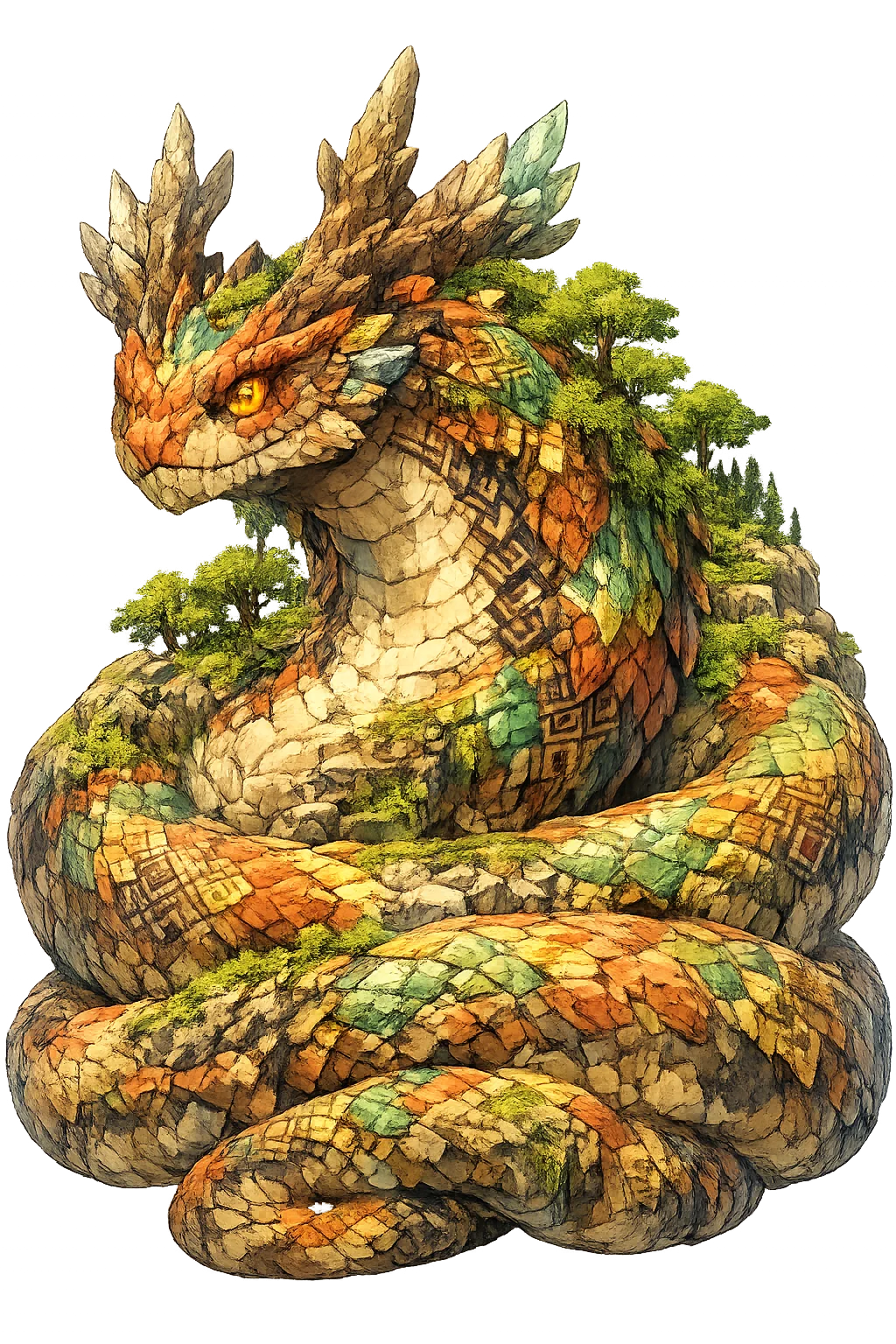
The name Trengtreng and the world it opens
A name is a door. Trengtreng opens onto an entire world: the domain of thunder, war, a Incan tradition, and centuries of storytelling, worship, and scholarship. This post walks through that world room by room — the name and its roots, the original script, the sound of it, the myths, the symbols, the sites, the afterlife across cultures — and ends at the newest room of all: a Unicode domain that makes the whole structure addressable. trengtreng gets you to the same building, but only the restored form tells you why it was built.
At a Glance
- Restored name: Trengtreng
- ASCII form: trengtreng
- Meaning: "Mapuche thunder and war god"
- Domain of influence: Thunder, War
- Pantheon: Incan
- Classification: Tier 2
- Live domain: trengtreng.com
Overview
Trengtreng — glossed in the PuniCodex lexicon as 'Mapuche thunder and war god' and catalogued under the domain 'Thunder, War' — names one of the central powers of Mapuche cosmology in south-central Chile: the high earth that thunders, rises, and saves. In the fullest form of the legend the name belongs at once to a serpent-spirit, Trentren Vilu (vilu, 'snake'), and to the sacred refuge-mountain that shares it: when the sea-serpent Caicai Vilu drove the ocean up to drown humankind, Trentren lifted the hills faster than the waters, and those who reached the summits lived to become the ancestors of the Mapuche. The name enters writing through the colonial record — Diego de Rosales has the refuge-peaks Tenten in the mid-seventeenth century, and Juan Ignacio Molina preserves Thegtheg, 'the thundering, or the sparkling', a three-pointed mountain that rode upon the flood. Although the project files this entry in its Andean ('incan') collection, the tradition is Mapuche, not Inca: the Inca frontier stopped at the Maule river, well north of Araucanía. The restoration Trengtreng bears no diacritics — the scholarly transliteration coincides with the ASCII form — so the name stands in Tier 2, its temple served at trengtreng.com.
The Name
No indigenous written attestation survives: Mapudungun was an unwritten language, and Trengtreng is a modern scholarly transliteration of a spoken theonym. The documentary trail preserves the name in a revealing spread of spellings. Rosales writes Zenten and Tenten for the sacred refuge-mountains and for the speaking serpent that inhabits them; the Jesuit Andrés Febrés notes hills 'llamados Theg-theg o Chegcheg' where the ancestors escaped the flood; Molina prints Thegtheg and glosses it 'the thundering, or the sparkling'.
All of these spellings circle the same Mapudungun sounds: an alveolar onset, the close vowel e, and a final velar nasal [ŋ] that Spanish orthography could only approximate as th, g, gh, or n. The formation is reduplicative — treng-treng — an onomatopoeic doubling of the thunder-roll; no external cognates are demonstrated, and the etymology is best read as sound-symbolic within Mapudungun itself, remaining speculative in detail. In compound the being is Trentren Vilu, the Trentren-snake, opposed to Caicai Vilu of the waters.
Because the scholarly transliteration requires no diacritic marks, the restoration Trengtreng and the ASCII fallback trengtreng are identical strings: the letter-by-letter transformation is an identity mapping. The project's Tier 2 classification reflects the absence of restorable marks rather than any weakness of attestation.
Etymology & Roots
The recorded derivation reads: A Mapuche theonym for the thunder-and-war god; its formation is best explained as onomatopoeic or descriptive within Mapuche oral tradition, with no known external cognates.
The reconstruction is classed as speculative.
The Original Script
No pre-Columbian writing system is attested for the Mapuche: Mapudungun was an unwritten language, and no indigenous notational record of this theonym survives from before the Spanish contact. The name reached letters through missionary-linguists. Luis de Valdivia printed the first grammar of the language — an Arte together with a vocabulary and confessional — at Lima in 1606; in the eighteenth century the Jesuit Andrés Febrés fixed much of its early lexicography, and it is in his Calepino chileno-hispano that the flood-hills appear as 'Theg-theg o Chegcheg'. Colonial scribes rendered the velar nasal [ŋ] variously as th, g, gh, or n — whence Thegtheg, Chegcheg, Zenten, Tenten — so the modern form Trengtreng is a normalized scholarly transliteration rather than an attested ancient spelling; every letter in it encodes a reconstructed sound, and none is decorative. Twentieth-century standardization proposals such as the Alfabeto Mapuche Unificado (1986) write the serpent pair Trengtreng filu and Kaykay filu.
Pronunciation
The reconstructed pronunciation of the name is /tɾeŋˈtɾeŋ/ — the edition's Mapudungun reconstruction, built on the colonial spellings.
Phoneme by phoneme:
- tɾeŋ — Alveolar onset followed by close-mid [e] and a velar nasal [ŋ]; the first syllable of the reduplicated thunder name.
- - — Reduplication divider; the name is doubled to intensify sound and power.
- tɾeŋ — Repeated syllable, producing the rattling, drum-like effect of rolling thunder.
For the modern speaker, the closest approximation is: TRENG-TRENG — a rattling, drum-like reduplication that mimics successive thunderclaps.
Kindred and historical forms of the name:
- Mapuche — Trengtreng / Pillán, the thunder-and-volcano spirit complex in Mapudungun oral tradition
- Incan cognate — Illapa / Ilyap'a, the Andean thunder-and-lightning deity who wields a sling
- Colonial record — Thegtheg, 'the thundering, or the sparkling' (Molina, 1809); Tenten / Zenten (Rosales, lib. I); Theg-theg o Chegcheg (Febrés)
Trengtreng is a reduplicated, onomatopoeic Mapuche name for thunder; reduplication is a productive device for intensification in Mapudungun. Because the Latin alphabet renders all of its sounds without diacritics, the Unicode restoration coincides with the ASCII form, so the name is Tier 2 by tradition rather than by restored marks.
Mythology
Trengtreng is a sacred volcanic height in Mapuche cosmology — and, in the fullest telling, the serpent-spirit who dwells upon it. In the account preserved by Rosales, each province kept its own Tenten, a high mountain held sacred because the ancestors escaped the deluge on its summit; on the peak dwelt a serpent of the same name who warned the people to climb.
The Flood and the Serpent Pillars (Flood)
Mapuche tradition tells of a primordial deluge driven by the water-serpent Caicai Vilu, enemy of the land-serpent Trentren and of humankind. As Caicai made the sea rise, Trentren raised the hills in answer, each power straining against the other until the mountains out-topped the waters. Those who climbed were saved; those who disbelieved or lingered were transformed into whales and fish, left swimming above their former country.
Pillan and the Sacred Heights (Theophany)
Above the serpents stands Pillán, the celestial power of thunder and volcano: Molina records his titles — Guenu-pillan, 'the spirit of heaven', and Thalcove, 'the thunderer' — and his editors note that pillan is itself the Araucanian word for thunder. The voice of the volcano is his voice; storms on the cordillera were heard as battles of souls, the thunder their drums. Trengtreng, as one of his raised places, is therefore not merely a mountain but a seat of divine presence.
The Ancestors on the Heights (Ancestry)
The survivors who climbed the sacred peaks became the ancestors of later communities — the colonial witnesses already record that on those heights 'some escaped, from whom the human lineage was multiplied'. The mountain thus functions as an origin place, a point where the present people connect to a mythic past of catastrophe and renewal.
The Living Mountain (Legacy)
The tradition remained active as practical disaster-lore: whenever a violent earthquake struck, Molina reports, the people fled to mountains of similar shape, carrying provisions and wooden plates lest the peak, raised by the waters, should lift them scorching toward the sun. Recorded from the seventeenth century onward — Tenten in Rosales, Theg-theg o Chegcheg in Febrés, Thegtheg in Molina — the name remains a landmark of Mapuche oral geography, and communities continue to honour the mountains as kin, witnesses, and protectors.
Symbols & Iconography
The iconography associated with Trengtreng concentrates in a small set of recurring attributes, each a compressed statement about the name:
- Volcanic peak — The living mountain raised against the flood; its eruption and thunder are the visible body of the power.
- Reduplicated thunder name — The doubled treng-treng mimics the rolling of successive thunderclaps and signals intensified power.
- Three-pointed floating summit — In Molina's record the refuge-mountain Thegtheg 'had three points, and possessed the property of moving upon the water'.
- Thunder-drum — Storms on the Andes were heard as battles of souls, 'the noise of the thunder that of their drums': the drum-voice of the war-host is itself an attribute of the thunderer.
- War club / macana — A hardwood club associated with Mapuche warriors and the thunderer's striking force.
Archaeology & Evidence
Mapuche material culture is attested at fortified pukará sites in the Araucanía and at the sacred hill of Cerro Ñielol near Temuco; the active volcanic chain — Villarrica, Llaima, Lonquimay — supplies the geological anchor of the thunder-mountain tradition. The legend itself has been read as earth-memory from the first witnesses onward: Rosales connects it with the seashells found on very high peaks of the cordillera, and Molina infers 'some volcanic eruption, accompanied by terrible earthquakes'. Lyell later cited the Araucanian deluge tradition in his review of flood legends in the Principles of Geology, and modern commentators continue to set the myth against the documented seismic and tsunami history of the Chilean coast. Dillehay's excavations of the earthen kuel mounds and his reconstruction of the Araucanian ritual polity place the myth's geography of height and assembly in a datable ceremonial landscape.
Realm & Domain
Trengtreng is the Mapuche thunder-and-war spirit whose name crackles like the storms that roll across the southern Andes. Together with Kai-Kai, the volcanic peak that bore survivors above the primordial flood, he embodies the living power of the earth and the warrior spirit that protected the first Mapuche communities.
Thunder
The reduplicated name is onomatopoeic for rolling thunder; the spirit's voice is heard in storms and volcanic eruptions.
Sacred Mountain
Trengtreng is one of the volcanic peaks raised by Pillan to save the people from the primordial deluge.
Warrior Spirit
As a war deity, Trengtreng lends strength to Mapuche fighters and is associated with the striking power of the macana.
Flood Survivor
Those who climbed the sacred peaks during the flood became the ancestors of later Mapuche communities.
Across Cultures
Spanish churchmen received the legend through the interpretatio christiana: a flood survived on high mountains was too close to Genesis to be coincidence, and colonial authors treated it as a corrupted memory of Noah — though Molina himself demurs, judging from the story's volcanic and seismic frame that this deluge 'is probably very different from that of Noah'. Mapuche communities, for their part, kept the serpent geography in oral tradition and ritual rather than surrendering it, and in Chiloé the pair was re-grounded as Tenten-Vilu and Caicai-Vilu, credited with shaping the archipelago. The reduplicated thunder-name also belongs to an Andean grammar of storm onomatopoeia — compare the Quechua thunder-and-lightning deity Illapa, the sling-bearing storm of the Inca state cult. Kindred figures in the PuniCodex cross-tradition index include Baꜥal, Enlīl, Ọya, Perkūnas, Ṣàngó, and Þórr, each linked through thunder and storm sovereignty.
Cultural Legacy
For the Mapuche the flood legend is not an antiquarian curiosity but what scholarship calls the myth that grants identity of origin: the survivors of the waters are the ancestors, and the hills that saved them remain sacred points of reference. It long functioned as lived disaster-lore — Molina records that after every strong earthquake the people climbed to similar peaks with provisions, in fear that the sea would return — and modern commentators still read it against the seismic and tsunami history of the Chilean coast. In Chiloé the pair survives as Tenten-Vilu and Caicai-Vilu, credited with splitting the mainland into the archipelago, and the story has become a set text of Chilean school readers and museum retellings. Modern Mapuche writers, musicians, and territorial movements invoke Pillán and the flood mountains as emblems of resilience and sacred land, and the name persists in local toponymy from the Biobío to the cordillera of Araucanía.
The Scholarly Record
No indigenous written corpus exists for this tradition; the record is necessarily colonial and ethnographic, and it must be read with source criticism — soldier-chroniclers writing under the interpretatio christiana, Jesuit naturalists, and the nineteenth-century scholarship that collated them. The witnesses actually used in this edition are:
- Alonso de Góngora Marmolejo, Historia de Chile (events to 1575) — soldier-chronicler of the Arauco War.
- Pedro Mariño de Lobera, Crónica del Reino de Chile (c. 1595) — early description of Araucanian belief.
- Alonso de Ovalle, Histórica relación del reyno de Chile (Rome, 1646), lib. III, cap. II — the Indians' god Guenupillán, who 'also commands the volcanoes'.
- Diego de Rosales, Historia General del Reino de Chile (written mid-17th c.; pub. Valparaíso, 1877), lib. I — the fullest early telling of the Tenten flood legend.
- Juan Ignacio Molina, The Geographical, Natural and Civil History of Chili, vol. 2 (London, 1809) — Pillán's titles; the Thegtheg deluge.
- José Toribio Medina, Los aboríjenes de Chile (Santiago, 1882), cap. III — collates Febrés, Pérez García, Córdoba y Figueroa, and Rosales.
- Tomás Guevara, El pueblo mapuche — 'Trentren o tenten, mito antiguo del diluvio'.
- José Bengoa, Historia de los antiguos mapuches del sur (2003) — the modern standard history of the early Mapuche.
- Tom D. Dillehay, Monuments, Empires, and Resistance (2007) — archaeology of the Araucanian ritual polity.
A Meditation
The name itself instructs: treng-treng is a doubled beat, the ear's imitation of thunder rolling along the cordillera. To hold it is to rehearse the myth's single motion — the sea rising, and the earth rising faster — and to consider what a people stores in a name when it has no books: a warning, a refuge, a direction of flight. Molina records that after every earthquake the people climbed, carrying provisions and wooden plates against the scorching ascent; the name was not a tale about the past but a standing instruction for the next catastrophe. Contemplating Trengtreng therefore means attending to the idea of high ground — in landscape, in memory, and in a voice that says the word twice, so that it cannot be mistaken for anything smaller.
The Unicode Restoration
Trengtreng is classified as Tier 2: the original preserves at least one philological feature that ASCII cannot encode. The ASCII fallback trengtreng still resolves everywhere, but it is the restored form that carries the name's full information. That is the whole thesis of this temple: the marks are the message.
The Domain Name
The restored name is live as a working domain: trengtreng.com, which the DNS carries in punycode form as trengtreng.com — an ASCII-compatible encoding that lets a non-ASCII name travel the global network without breaking older infrastructure. The visitor sees Trengtreng; the machines see the encoding. That duality is the engineering compromise on which the entire restoration rests, and it is why a name written the way its own tradition wrote it in Incan transcription can now be typed into any browser on earth.
Why This Restoration Matters
A door only matters if people walk through it. trengtreng.com is open, and everything behind it — the myths, the scholarship, the canvas, the patrons — hangs on the restored spelling. The PuniCodex project bets that the web will make room for names as they were actually written, and Trengtreng is one of its standing proofs. Visit, share, cite, type it yourself: each use is a small rehearsal for a web where no name has to hide its marks to be found.
Explore Further
This post is one doorway into the temple. The home page carries the full character breakdown and the ambient canvas; the lore page tells the myths in long form; the Scholarly Edition preserves the sources, pronunciation data, and revision history; and the patron wall supports the restoration directly. For the wider map, browse the Lexicon, explore the Pantheon, or return to the PuniCodex blog.
Related Names
Sources
The full scholarly apparatus — every citation, revision, and review — lives in the Scholarly Edition. Key references for this post:
- Medina, José Toribio, Los aboríjenes de Chile (Santiago, 1882), cap. III 'Tradiciones', pp. 28–30, quoting Rosales and Córdoba y Figueroa.
- Molina, Juan Ignacio, The Geographical, Natural and Civil History of Chili, vol. 2 (London, 1809), pp. 93–94.
- Hervás Fernández, Gloria, Comentario de textos literarios: teoría y práctica (Temuco: Ediciones Universidad de La Frontera, 2015), on 'Trenten y Caicavilu'.
- Guevara, Tomás, El pueblo mapuche, 'Trentren o tenten, mito antiguo del diluvio'.
- Bengoa, José, Autonomía o ciudadanía incompleta: el pueblo mapuche en Chile y Argentina (Santiago: CEPAL, 2015).
- Lyell, Charles, Principles of Geology (6th ed., London, 1840), vol. 1, citing Molina's account of the Araucanian deluge.
- Bengoa, José, Historia de los antiguos mapuches del sur (Santiago: Catalonia, 2003).
- Valdivia, Luis de, Arte y gramática general de la lengua que corre en todo el Reyno de Chile (Lima: Francisco del Canto, 1606).
- Mapuche oral tradition, Oral tradition, various.
- Dillehay, Tom D., Monuments, Empires, and Resistance: The Araucanian Polity and Ritual Narratives (Cambridge: Cambridge University Press, 2007).
- Lexicon authorities for this entry: Mapuche oral tradition.