
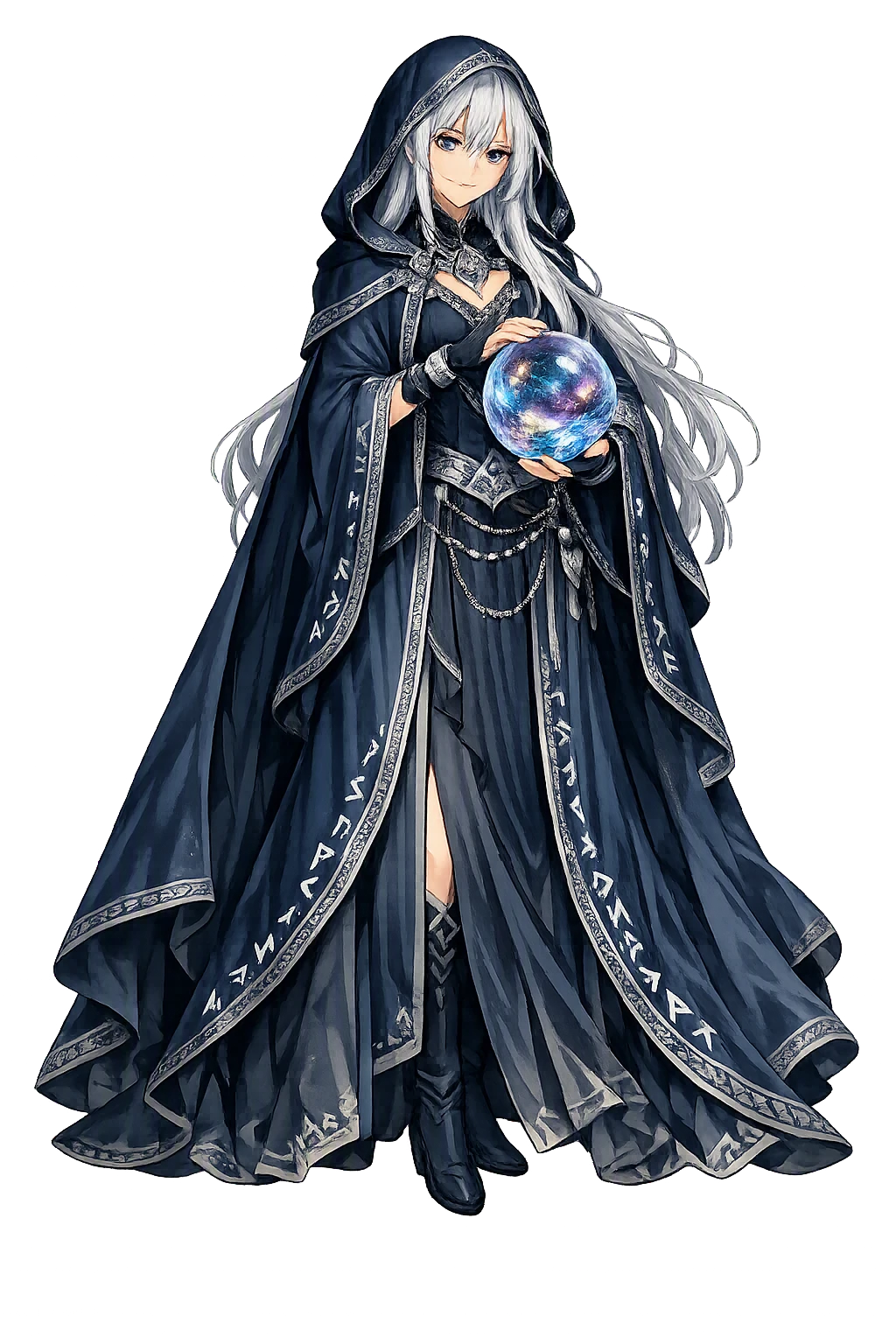
From Younger Futhark to Unicode: the journey of Skuld
Long before it was a domain, this name traveled through scripts. Skuld begins in Younger Futhark, passes through scholarly transliteration, and ends — for now — inside the punycode machinery of the global DNS. Each stage of that journey preserves some information and loses some, and the craft of restoration is knowing exactly which marks matter. This post follows the name stage by stage: the original script, the reconstructed pronunciation, the mythological record, the material evidence, and finally the Unicode form that carries all of it into the address bar. Think of it as a biography of a name, told through its spelling.
At a Glance
- Restored name: Skuld
- ASCII form: skuld
- Meaning: "Debt, future"
- Domain of influence: Valkyrie / Norn of Future
- Pantheon: Norse
- Classification: Tier 2
- Original script: ᛋᚴᚢᛚᛏ (Younger Futhark)
Overview
Skuld (skuld) — Valkyrie / Norn of Future · Debt, future — is the third of the three norns who dwell at Urðarbrunnr beneath the heavenward root of Yggdrasill, the maiden whose name is the Old Norse common noun for 'debt, what is owed' — and therefore, in the grammar of the language itself, what is still to come: the future conceived as an obligation not yet discharged.
She is the only figure in the Norse corpus counted in two companies at once. Völuspá names her among the three maidens beneath the tree who lay laws and choose lives for the children of men — Urðr, Verðandi, Skuld the third — and names her again in the tally of valkyries riding to the gods' host, bearing a shield beside Skögul, Gunnr, Hildr, Göndul and Geirskögul. Snorri fuses the two offices in a single clause: with Gunnr and Rota always rides 'the youngest norn, who is called Skuld', to choose the slain and decide the battle.
PuniCodex restores the name as Skuld — identical to the ASCII input, because normalized Old Norse writes no diacritic in this name. The mechanical rule therefore places the name in Tier 2: nothing distinctive is lost in transit, a statement about orthography and never about the figure. The temple is domain-less: no form of the name is held in the collection, and the plain-ASCII skuld.com is watched for release.
The Name
The name is attested in Old Norse as Skuld — the theonym is the common noun skuld (f.) 'debt, what is owed, obligation', made personal. Its etymology is among the most transparent in the northern onomasticon: the noun derives from the modal verb skulu 'shall' (preterite skyldi 'should'), from the Indo-European root skel- 'to owe' — the same root that gives English shall and should and German Schuld 'debt, guilt'. Cleasby–Vigfusson gloss the noun 'debt, duty; what is due' and record the mythological use under the same headword: a Norn. The traditional gloss 'debt, future' is therefore not a punning extension but the word's own logic: what is owed is what is still to come.
The ASCII form is not a fallback here but the form itself: normalized Old Norse writes five plain Latin letters and a capital. The Unicode restoration Skuld therefore preserves nothing the ASCII alphabet loses, and the mechanical rule classifies the name Tier 2 — an orthographic fact, not a judgment on the figure.
The letter-by-letter transformation runs:
- s → S — Same, capitalized
- k → k — Same
- u → u — Same
- l → l — Same
- d → d — Same
The project holds no domain for this name. The plain-ASCII skuld.com is watched for release; this temple claims nothing it does not hold.
The Original Script
The name is preserved in medieval Icelandic manuscripts in the Latin alphabet as Skuld — Old Norse (North Germanic), attested 13th c. CE in the Codex Regius of the Poetic Edda and the principal codices of Snorri's Edda, recording material centuries older. Before the Latin bookhand, Old Norse names were carved in the Younger Futhark; no runic attestation of this theonym survives, so the manuscript form is the primary witness. The runic rendering is ᛋᚴᚢᛚᛏ (s-k-u-l-t).
The scholarly rendering proceeds step by step:
- ᛋ (sól) writes /s/.
- ᚴ (kaun) writes both /k/ and /g/ (and the ng cluster).
- ᚢ (úr) writes the rounded back vowels /u, o, ø, ǫ, y/ and /w/.
- ᛚ (lögr) writes /l/; the final ᛏ (Týr) writes /t/ and /d/ alike, so the carved form skult is a normalized phonetic reconstruction — Younger Futhark does not distinguish voiced and voiceless stops or separate short and long vowels.
- The Unicode restoration Skuld is therefore identical to the ASCII form — the restoration is a matter of canonical reference, not rescued orthography.
- The name's etymology — the noun skuld 'debt' from the modal skulu 'shall', Indo-European skel- 'to owe' — is among the most transparent in the onomasticon.
Pronunciation
The reconstructed pronunciation of the name is /skuld/ — Old Norse Reconstruction.
Phoneme by phoneme:
- Sk- — Voiceless sibilant plus velar stop [sk], plain and unpalatalized, as in English 'skull'; both sounds fully articulated
- -u- — Short close back rounded [u], brief and dark, like German 'und' or the clipped vowel of 'book'; Old Norse short u, not the diphthong of English 'few'
- -l — Clear alveolar lateral [l], as in 'low'; Old Norse l is always clear, never dark
- -d — Voiced alveolar stop [d], audibly released; Old Norse final stops are fully sounded, not devoiced
For the modern speaker, the closest approximation is: 'SKULD' — one short beat: say English 'skull' and release a d at the end; the word sits exactly between 'skull' and 'should' spoken with a k.
Kindred and historical forms of the name:
- Old Norse — Skuld, the third norn and, in the same corpus, a shield-bearing valkyrie
- Younger Futhark — ᛋᚴᚢᛚᛏ (s-k-u-l-t), the Viking-Age runic rendering
- The name as word — skuld (f.), 'debt, what is owed; that which shall be', from the modal skulu 'shall'
- Cognates — English shall and should, German Schuld 'debt, guilt': the same Indo-European root, skel- 'to owe'
Skuld is Tier 2 because the restoration preserves nothing the ASCII form loses: no diacritic, no distinctive letter, no vowel length. English and Old Norse write the name identically.
Mythology
Skuld's dossier is short and of the highest rank: she appears where the world's frame is described, never in anecdote. The Poetic Edda names her twice — once beneath the tree, once in the air above the battlefield — and Snorri stitches the two sightings into one figure.
The Three Beneath the Tree (Völuspá 19–20)
The seeress surveys the world's frame: the ash Yggdrasill, tall, drenched with white loam, whence come the dews that fall in the valleys, ever green, standing over Urðarbrunnr. Thence come maidens, deep in wisdom, three from the lake that stands beneath the tree: one was called Urðr, the second Verðandi — they carved on slips of wood — Skuld the third. They laid laws, they chose lives for the children of men, the fates of men. The stanza is the foundation text of northern fate-doctrine, and it fixes Skuld's place without explaining it: the poem gives her no act, no speech, no attribute but her position — the third, the last named, the one whose name is a debt.
The Shield in the Tally (Völuspá 30)
Late in the same poem the seeress looks up from the roots to the sky: she saw valkyries come from far away, ready to ride to the gods' host — Skuld bore a shield, and Skögul followed her, Gunnr, Hildr, Göndul and Geirskögul; now the tally of Herjan's maidens is told, valkyries ready to ride over the earth. No other norn appears in a valkyrie list. The double office is the interpretive crux of the whole figure: the maiden who allots life at the root is the same maiden who collects death in the field — the two ends of one ledger.
The Maidens Who Shape Men's Lives (Gylfaginning 15–16)
Snorri's survey pauses at the tree's heavenward root: beneath it lies the very holy well called Urðarbrunnr, and there the gods hold their court each day; by that well stand three maidens named Urðr, Verðandi and Skuld — these maidens shape men's lives, Snorri says, and we call them norns. He adds that there are other norns besides, who come to each child at birth to shape its life, of the races of gods, elves and dwarves — but the three at the well are the triad the tradition never enlarged. Snorri also preserves the tree's upkeep: the norns take water from the well and the mud around it and pour it over the ash so that its limbs do not wither or rot, and that water is so holy that all that comes within the well turns white as the membrane within an eggshell. Fate, in this picture, is not only decree but the daily maintenance of the world's fabric.
The Youngest Norn Rides (Gylfaginning 36)
In the chapter on the valkyries Snorri closes the roster with the sentence that completes Skuld's dossier: Óðinn's shield-maidens ride to every battle, choose who shall fall, and decide the victory — and with them always ride Gunnr and Rota and the youngest norn, who is called Skuld, to choose the slain and govern the engagements. The designation is precise: of the three at the well, she is the youngest — and she rides. The tradition hands the future its own grim office: what is owed is collected on the battlefield, where every life's account comes due.
Symbols & Iconography
The iconography of Skuld is drawn from the two scenes that define her — the well beneath the tree and the ride over the field:
- Urðarbrunnr — the holy well beneath Yggdrasill's heavenward root where the three maidens dwell and the gods hold their council: fate's spring at the world's root
- The carved wood-slips — the lots the norns cut as they lay laws and choose lives for the children of men: destiny written before it is lived
- The shield — her valkyrie gear in Völuspá's tally: the one norn who rides, allotment armed and mounted
- The white clay of the well — the mud and water the norns pour over the ash so its limbs do not rot: fate also as the world's daily maintenance
- The laws and the lots — what the three maidens lay and cast for every child of men: ordinance and chance, both in their hands
Archaeology & Evidence
Skuld is a wholly textual figure: no runestone invokes her, no votive deposit names her, and no image can be securely identified with her — a silence she shares with her sisters, since the norns belong to the corpus's theological frame rather than to any named cult.
Her attestation hangs on the manuscript witnesses of the fate-doctrine: the Codex Regius of the Poetic Edda for Völuspá 19–20 and 30, and the Codex Regius, Codex Wormianus and Codex Upsaliensis of Snorri's Edda for Gylfaginning 15–16 and 36 and the þulur lists preserved with Skáldskaparmál. The nearest material context is indirect: the valkyrie figures on Gotland picture-stones and on small Viking-Age brooches and pendants give the visual world her rider-form belongs to, though none names her.
Realm & Domain
Skuld is catalogued under Valkyrie / Norn of Future — and the double title is the sources' own, not an editor's synthesis: Völuspá seats her beneath the tree and mounts her in the host, and Snorri keeps both postings.
The Third Norn
At Urðarbrunnr stand three maidens — Urðr, Verðandi, Skuld — who lay laws, choose lives, and carve fates on slips of wood. Skuld is the third named and, in Snorri's later phrase, the youngest: the portion of the weave still on the loom.
The Shield-Bearing Valkyrie
In Völuspá's tally of Óðinn's riders, Skuld heads the roll with a shield in hand, ahead of Skögul, Gunnr, Hildr, Göndul and Geirskögul. No other norn appears in a valkyrie list: she alone keeps both offices.
Debt
Her name is the noun skuld, 'debt, what is owed' — from the modal skulu 'shall'. The domain she governs is therefore not the future as empty time but the future as obligation: an account already running, due to be settled.
The Decision of Battle
Snorri's clause is precise: with Gunnr and Rota the youngest norn always rides to choose the slain and decide the engagement. What is owed is collected in the field — the debt delivered in person, at the point of a spear.
Across Cultures
The comparison that shaped Skuld's modern reading is with the Roman Parcae and the Greek Moirai — three allotters of fate matched to past, present and future. The mapping was a favourite of nineteenth-century mythography, and it is only half right: the names do not divide time so neatly. Urðr is 'what has become', Verðandi 'what is becoming', but Skuld is not 'what will be' in the same tense-logic — she is 'what is owed', a category of obligation rather than of tense; de Vries and Simek both warn that the clean past–present–future scheme is likely a learned schematization laid over older material.
Within the corpus her truest kin are her own sisters and the valkyrie sisterhood she alone joins — Brynhildr among the named riders of the heroic lays — and, at one remove, the English fate-word wyrd, cognate with Urðr, through which the whole northern doctrine of allotted doom entered English speech. What can be said cleanly is that no other figure of the northern fate-complex holds two offices at once: Skuld alone is seated at the root and mounted for the field, the one allotment that collects itself.
Cultural Legacy
Skuld's most pervasive legacy is grammatical: her name's root is the English modal shall — and its past, should — so that every English sentence about obligation or the future conjugates, unknowingly, the youngest norn's name; German Schuld keeps the same root in its senses of debt and guilt.
In mythography the three norns became the fixed northern counterpart of the Parcae in every retelling of the Eddas, and Skuld's double office — fate at the well, shield in the field — made her the standing emblem of fate that acts rather than merely decrees. Modern Heathen and Ásatrú practice honours the norns at birth-rites and at the turning of the year, with Skuld named as the portion not yet come due; the name also survives as a rare Scandinavian given name, its ominous register intact.
The Scholarly Record
The account of Skuld given in this edition rests on the witnesses and reference works listed below. Völuspá supplies the twin sightings — beneath the tree and in the tally of riders; Gylfaginning the fused figure of the youngest norn; the þulur the catalogues; Hrólfs saga kraka the legendary echo of the name; Cleasby–Vigfusson, Zoëga and de Vries the name's transparent etymology, with Simek, Orchard and Lindow arbitrating the double office and the fate-doctrine's interpretation.
- The Poetic Edda, trans. Carolyne Larrington, 2nd ed. (Oxford: Oxford University Press, 2014): Völuspá 19–20 (the ash, the well, and the three maidens who lay laws and choose lives) and 30 (Skuld bearing a shield in the tally of valkyries).
- Snorri Sturluson, Edda, Gylfaginning 15–16 (Urðarbrunnr; the three norns; the white clay that preserves the tree) and 36 (Gunnr and Rota and the youngest norn, who is called Skuld, ride to choose the slain), ed. and trans. Anthony Faulkes (London: Everyman, 1987).
- Snorri Sturluson, Edda, Skáldskaparmál, þulur (norna heiti; valkyrja heiti), trans. Anthony Faulkes (London: Viking Society for Northern Research, 1998).
- Hrólfs saga kraka (Skuld, daughter of King Aðils, and the battle of Fýrisvellir), trans. Jesse L. Byock, The Saga of King Hrolf Kraki (London: Penguin, 1998).
- Cleasby, Richard, and Guðbrandur Vigfússon, An Icelandic-English Dictionary, 2nd ed. (Oxford: Clarendon Press, 1957), s.v. skuld.
- Zoëga, Geir T., A Concise Dictionary of Old Icelandic (Oxford: Clarendon Press, 1910), s.v. skuld.
- de Vries, Jan, Altnordisches etymologisches Wörterbuch, 2nd ed. (Leiden: Brill, 1962), s.v. skuld, skulu.
- Simek, Rudolf, Dictionary of Northern Mythology, trans. Angela Hall (Cambridge: D. S. Brewer, 1993), s.v. Skuld, norns, valkyries.
- Orchard, Andy, Dictionary of Norse Myth and Legend (London: Cassell, 1997), s.v. Skuld.
- Lindow, John, Norse Mythology: A Guide to the Gods, Heroes, Rituals, and Beliefs (Oxford: Oxford University Press, 2001), s.v. norns, valkyries.
- Gordon, E. V., An Introduction to Old Norse, 2nd ed. rev. A. R. Taylor (Oxford: Clarendon Press, 1957).
A Meditation
Of the three sisters, Skuld is the one the grammar of Old Norse could not leave alone. Urðr names what has become — a fact, settled, already part of the weave. Verðandi names what is becoming — the present, unrolling. But Skuld names a debt, and a debt is the strangest tense of all: it is real now, binding now, though it falls due later. The North's deepest intuition about the future is stored in this one word — that what is coming is not empty time but an obligation already incurred, an account running toward settlement.
And then the corpus does something harsher still: it gives the debt a shield. The youngest norn does not wait at the well for the future to arrive; she rides out to collect it, choosing the slain, deciding the battle. Every life, in this theology, ends in a payment — and the collector is fate's youngest daughter, who has been counting since the slip of wood was carved.
The Unicode Restoration
Skuld is classified as Tier 2: the restoration needs no distinctive letters or diacritics its ASCII form would lose. The ASCII fallback skuld still resolves everywhere, but it is the restored form that carries the name's full information. That is the whole thesis of this temple: the marks are the message.
Why This Restoration Matters
Every stage of the journey from Younger Futhark to Unicode was an act of care: the scribe who first wrote the name, the lexicographer who glossed it, the engineer who taught the DNS to carry it. The PuniCodex restoration is the latest stage, not the last word — the Scholarly Edition is revised as the evidence improves. What does not change is the principle: a name deserves to be written the way its own tradition wrote it. Skuld in the address bar is that principle, made routable.
Explore Further
This post is one doorway into the temple. The home page carries the full character breakdown and the ambient canvas; the lore page tells the myths in long form; the Scholarly Edition preserves the sources, pronunciation data, and revision history; and the patron wall supports the restoration directly. For the wider map, browse the Lexicon, explore the Pantheon, or return to the PuniCodex blog.
Related Names
Sources
The full scholarly apparatus — every citation, revision, and review — lives in the Scholarly Edition. Key references for this post:
- Snorri Sturluson, Edda, Gylfaginning 15–16 and 36, ed. and trans. Anthony Faulkes (London: Everyman, 1987).
- Völuspá 19–20 and 30 (Poetic Edda), trans. Carolyne Larrington, The Poetic Edda, 2nd ed. (Oxford: Oxford University Press, 2014).
- Cleasby, Richard, and Guðbrandur Vigfússon, An Icelandic-English Dictionary, 2nd ed. (Oxford: Clarendon Press, 1957), s.v. skuld.
- de Vries, Jan, Altnordisches etymologisches Wörterbuch, 2nd ed. (Leiden: Brill, 1962), s.v. skuld, skulu.
- Lexicon authorities for this entry: Poetic Edda, Cleasby-Vigfusson.