The Authentic Orthography
Enlightenment, Teaching, Historical Buddha · Sage of the Śākyas · The Awakened One
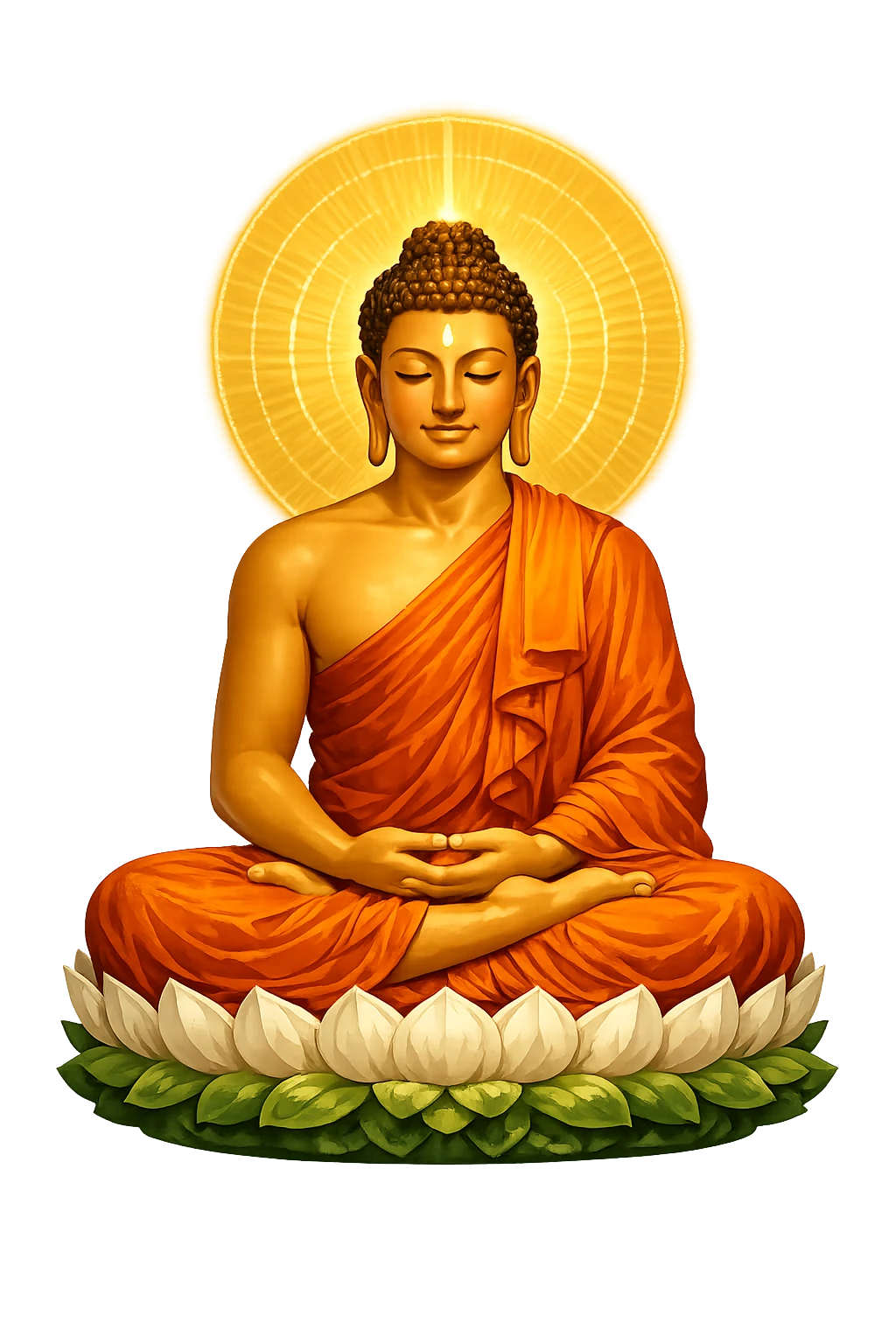
Unicode restoration and ASCII comparison
शाक्यमुनि
The name in its original Buddhist form. Śākyamuni (शाक्यमुनि) is attested in the source tradition — “‘sage of the Śākya clan’, epithet of the historical Buddha Siddhārtha Gautama, MW.”. Its macron-length vowels carry the full phonetic and orthographic weight of the source tradition.
shakyamuni
Reduced to plain shakyamuni, the name loses everything that made it specific: macron-length vowels. What remains is an ASCII string that machines can parse but that no longer speaks with its original voice.
Śākyamuni
The Unicode restoration recovers what ASCII flattened. Śākyamuni restores macron-length vowels, returning the name to its original written dignity. The domain encodes to Punycode, but the browser displays the truth.
Śākyamuni.com → xn--kyamuni-r3a32f.com
The non-ASCII characters in Śākyamuni are encoded while the ASCII remains visible. To the DNS, it is Punycode. To humanity, it is Śākyamuni.
How Śākyamuni travels from ancient script to the modern URL
How Śākyamuni was spoken
The Renunciation, the Awakening, and the Turning of the Wheel
Śākyamuni is the historical Buddha: Siddhārtha Gautama of the Śākya clan, who left a palace at twenty-nine, awoke under the Bodhi tree at thirty-five, taught for forty-five years across the Ganges plain, and died at eighty between two sāla trees — the one teacher of antiquity whose birthplace an emperor certified in stone.
The aśvattha at Uruvelā under which the ascetic became the Buddha — Bodh Gayā to this day.
The Dhammacakra set turning at Sarnath: the first sermon, the middle way, the four noble truths.
Buddhapāda — the earliest art dared not show him; his footprints stood for the one who had gone.
The couch between two sāla trees at Kusinārā, where the teaching ended in flowers out of season.
Stories of Śākyamuni
The life of Śākyamuni is the best-attested sacred biography of the ancient world — told in the Pāli Nikāyas, versified by Aśvaghoṣa, expanded in the Nidānakathā and the Lalitavistara, and anchored in the ground by Aśoka's own inscriptions.
Queen Māyā, traveling to her father's house, gave birth standing in the grove at Lumbinī, holding the branch of a sāla tree; the child took seven steps and declared this his last birth. The legends multiplied — the shower of blossoms, the two streams of water, the prophecy of the sage Asita — but the place is fixed in stone: Aśoka's pillar at Rummindei, raised in his twentieth regnal year, reads in plain Prakrit, hida budhe jāte sakyamuni — "here the Buddha Śākyamuni was born." It is the only birthplace of a world teacher certified by a contemporary emperor.
Sheltered in three palaces, the young Śākyan saw what his father had fenced out: an old man, a sick man, a corpse, and a wandering ascetic — the four sights the later tradition makes the hinge of his life. In the Majjhima Nikāya's Ariyapariyesanā Sutta (MN 26) he tells it himself: he shaved his hair, put on the ochre robe, and went forth from home into homelessness while still young, in the prime of life, with his parents weeping. The great renunciation — the night ride on Kaṇṭhaka with the groom Channa — became Buddhist art's first epic scene.
Six years of austerities on the Nairañjanā brought him to the edge of death and the discovery of the middle way; seated under the Bodhi tree at Uruvelā he withstood Māra's assault, touched the earth as his witness, and by dawn saw the four noble truths and the chain of dependent arising. Weeks later, in the deer park at Ṛṣipatana near Benares — Sarnath — he taught the five ascetics the Dhammacakkappavattana Sutta (SN 56.11), the setting-in-motion of the wheel: suffering, its origin, its cessation, and the eightfold path. The sermon is preserved in every Buddhist canon; the wheel he turned has not stopped.
The Dīgha Nikāya's Mahāparinibbāna Sutta (DN 16) follows his last journey with a chronicler's eye: the meal offered by the smith Cunda, the sickness, the couch laid northward between twin sāla trees in the Mallas' grove at Kusinārā, which burst into blossom out of season. His last instruction was a refusal of permanence itself: "All conditioned things are of a nature to decay — strive on with diligence." The Mallas cremated him as a universal monarch, and his relics were divided into eight shares and enshrined in stupas — the beginning of Buddhist sacred architecture.
Śākyamuni's whole authority rests on a refusal: he would not call the palace enough, and he would not call the ashes enough either. The middle way is not a compromise but a discovery — that comfort and punishment are the same evasion — and it is walked, not believed. He left no creed to sign, only a path to test and a closing sentence: everything conditioned decays; be diligent.
Enter Extended Lore