
How Ọya got its accent back
The ASCII form oya is missing something. Ọya restores the marks the source language used to distinguish this name from a thousand others — and those marks change how the name is read, pronounced, and understood. This post explains, with the full scholarly record behind it, what each restored mark preserves: the Yoruba transcription evidence, the reconstructed sound, the myths the name carries, and the classification logic that separates Tier 1 restorations from Tier 2. By the end, the marks in Ọya will look less like ornaments and more like what they are — recovered evidence, pinned back in its proper place.
At a Glance
- Restored name: Ọya
- ASCII form: oya
- Meaning: "She who tore"
- Domain of influence: Wind, Storms, Change
- Pantheon: Yoruba
- Classification: Tier 2
- Live domain: ọya.com
Overview
Ọya (oya) — Wind, Storms, Change · She who tore — belongs to the Yoruba tradition, where it is catalogued under the domain "Wind, Storms, Change". The name means "She who tore".
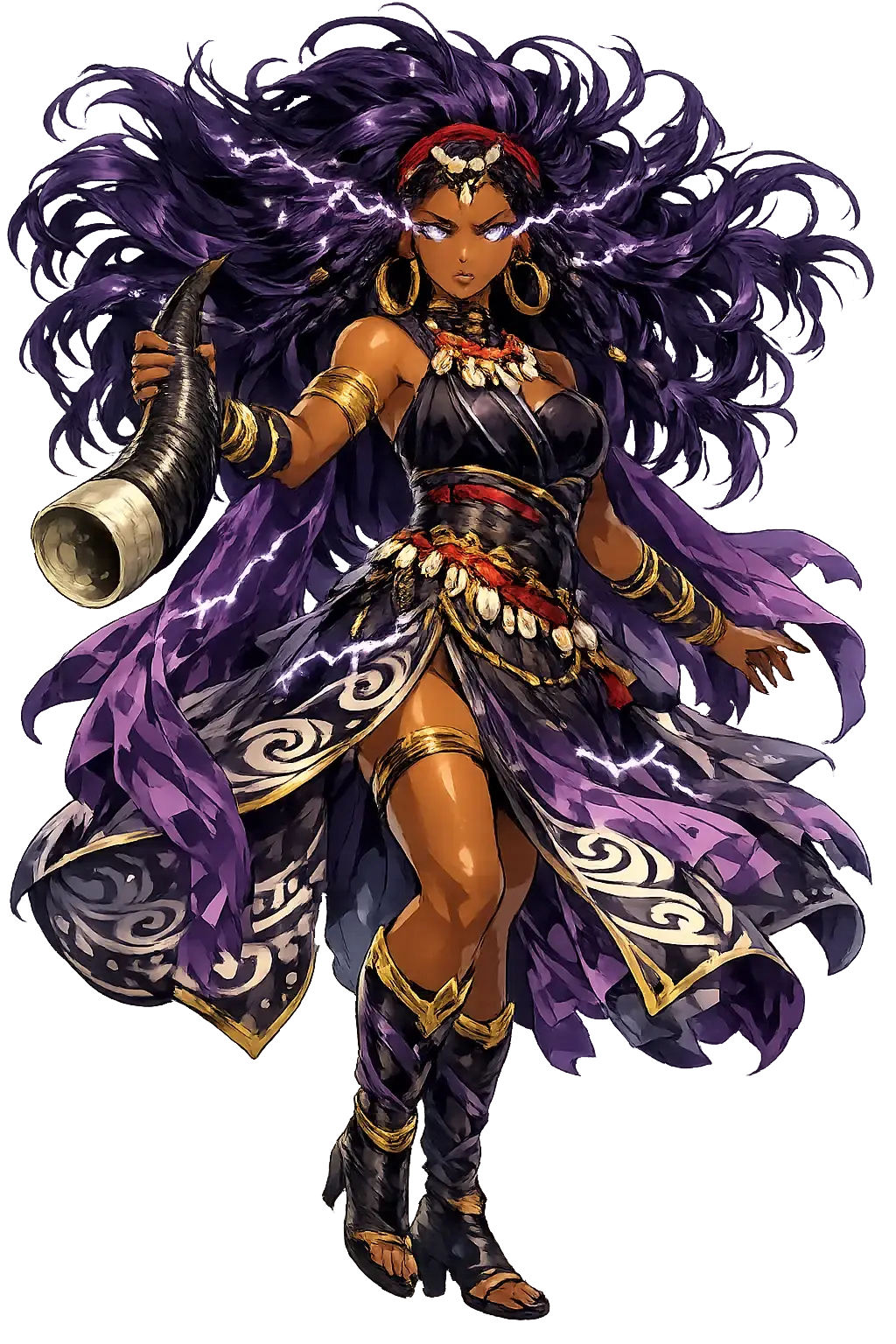
Ọya is the orixá of wind, lightning, and radical change. She tears down what is finished so that something new can grow. In Yoruba cosmology she is the only female warrior to ride into battle alongside the thunder-god Ṣàngó, and she guards the threshold between the marketplace and the grave.
PuniCodex restores the name as Ọya and serves its temple at ọya.com. The original preserves one prosodic feature — stress or vowel length — rather than both, which places the name in Tier 2. The plain ASCII form oya survives as a modern convenience imposed by the early domain-name system; the restoration, not the fallback, is the form the project defends as philologically complete.
The Name
No indigenous written attestation survives for this name; Ọya is a scholarly transliteration of the reconstructed spoken form. Etymologically the name means "She who tore".
The ASCII form oya survives only because the early domain-name system could not carry diacritics; it is a technological compromise, not an ancient spelling. The Unicode restoration Ọya recovers the full diacritic detail of the scholarly transliteration directly in the address bar. The original preserves one prosodic feature — stress or vowel length — rather than both, which places the name in Tier 2.
The letter-by-letter transformation runs:
- o → Ọ — O with dot below
- y → y — Same
- a → a — Same
Attested and derived spellings of the name:
- Oya — ASCII form: Plain ASCII form
The project holds the domain ọya.com (xn--ya-58s.com) as the canonical home of this name.
The Original Script
No indigenous writing system is securely attested for individual yoruba names. The form shown is a modern scholarly transliteration.
The form Ọya is therefore a scholarly transliteration rather than an attested ancient spelling; it encodes the reconstructed sound of the name for modern use, and no mark in it is decorative.
The name is Yoruba: Ọya. Yoruba is a tonal language; the standard written form uses a dot below ọ to distinguish open [ɔ] from close [o]. The full tonal spelling is Òyá (low tone, then high tone), but tone marks are not registrable in the DNS root zone. The meaning 'she tore' derives from the verb yà. PUNICODEX therefore registers Ọya with the dot below, preserving the distinctive open vowel.
Pronunciation
The reconstructed pronunciation of the name is /ɔ̀.já/ — Yoruba Reconstruction.
Phoneme by phoneme:
- Ọ- — Open-mid back rounded vowel [ɔ] with low tone, written with a dot below in standard Yoruba orthography.
- -ya — Palatal approximant [j] followed by open [a] with high tone; the name means 'she tore'.
For the modern speaker, the closest approximation is: 'aw-YAH' — begin low in the chest on 'aw', then rise sharply to 'YAH'.
Kindred and historical forms of the name:
- Yoruba — Ọya (also Òyá with tone marks), goddess of wind, storm, and transformation.
- Brazilian Candomblé — Iansã, the whirlwind orixá of change and fire.
- Cuban Santería — Oyá, syncretised with La Virgen de la Candelaria and Santa Teresa.
Ọya is Tier 2: the dot below marks a phonemic vowel distinction (open o versus close o) but not vowel length or stress in the Greek sense. Tonal variation, though crucial to Yoruba meaning, is not registrable in the DNS root zone.
Mythology
Ọya's stories are told in Ifá divination, Candomblé praise-songs, and the oral traditions of the Yoruba and their diaspora. She is change embodied, and her myths turn on thresholds.
Ọya and Ṣàngó (Marriage)
Ọya was once married to the thunder-god Ṣàngó, or in some accounts she was his favourite companion in war. She learned the secrets of fire and lightning from him, but she is not his subordinate. When Ṣàngó fled in disgrace, Ọya tore apart the cloth of the sky with her winds, and some say she threw herself into the river that bears her name.
The Niger and the Winds (River)
Ọya is the goddess of the Niger River (Odò-Ọya). She raises the winds that churn its surface and the storms that announce the rainy season. Fishermen and traders invoke her when they must cross her waters, for she can overturn a boat as easily as she can speed it home.
She Who Tore (Transformation)
Her very name means 'she tore'. In myth she tears the fabric of ordinary life to let the sacred through. To be possessed by Ọya in ritual is to be unmade and remade, to dance the destruction that clears the field for new growth. Those who fear her are usually those who cling too long to what is dying.
Symbols & Iconography
The iconography of Ọya concentrates in a small set of recurring attributes, each a compressed statement about her power. In cult they are handled, not merely depicted: the fly-whisk is raised during possession, the sword is carried in her war-dances, and her beads are strung to her sacred number.
- Irukere (fly-whisk) — Her emblem of authority, used to summon and direct the winds; a horsetail wand of the kind borne by chiefs and orisha priests as a sign of delegated power.
- Sword or machete — The blade that cuts away the obsolete and defends the community; she is one of the very few female orishas shown armed for war.
- Buffalo horns — Her connection to the buffalo, the animal whose ferocity and maternal power she assumes in myth and possession.
- Nine colours — Her necklaces and cloth are often nine-coloured, especially burgundy and brown; nine is her ritual number, remembered in her diaspora salutation as mother of nine.
Archaeology & Evidence
No monument, inscription, or artifact in the current PuniCodex corpus is yet assigned to Ọya with certainty. That absence should be read honestly: for a Yoruba name of this type the material record is expected to be thin, and the primary evidence remains the textual testimony gathered in the Scholarly Sources section.
Were such evidence to surface, it would take recognizable forms: votive or dedicatory inscriptions naming Ọya, sanctuary or cult remains tied to wind and iconography matching its traditional attributes (irukere (fly-whisk) and sword or machete). Each candidate would be weighed against the reconstructed form of the name before entering the scholarly record.
Realm & Domain
Ọya is the orixá of wind, lightning, and radical change. She tears down what is finished so that something new can grow. In Yoruba cosmology she is the only female warrior to ride into battle alongside the thunder-god Ṣàngó, and she guards the threshold between the marketplace and the grave.
Whirlwind
She arrives as a sudden gust that uproots trees and old assumptions.
Warrior Queen
Wife of Ṣàngó and fearless general, she carries a sword and the irukere fly-whisk.
Guardian of the Dead
She rules the cemetery gate and guides souls through transformation.
Marketplace
Crossroads and markets are her terrain, where chance and commerce meet change.
Across Cultures
In the Afro-Atlantic religions, Ọya became Iansã in Brazilian Candomblé and Oyá in Cuban Santería, syncretised with Catholic saints associated with fire and protection. She is also linked to the spirits of the dead in New Orleans Voodoo. Wherever Yoruba people were dispersed, Ọya travelled as the orixá of necessary upheaval, her winds crossing the Atlantic itself.
Kindred figures in the PuniCodex cross-tradition index include [[baal|Baꜥal]], [[enlil|Enlīl]], [[perkunas|Perkūnas]], [[shango|Ṣàngó]], [[thor|Þórr]], and [[trengtreng|Trengtreng]], each linked through thunder / storm sovereignty.
Cultural Legacy
Ọya remains one of the most honoured orixás in the African diaspora. She appears in literature, dance, and feminist theology as a figure of female power that is not domesticated. Her colours fly at Candomblé ceremonies; her winds are invoked at crossroads. In an age of climate change and social upheaval, Ọya speaks with uncomfortable relevance: the storm is not cruelty; it is the only way the forest can renew itself.
Her feast days follow the calendar of the saints who mask her: in Cuba she is honoured on 2 February with the Virgen de la Candelaria and on 15 October with Santa Teresa, while in Brazil Iansã shares 4 December with Santa Bárbara, whose legend ends with her persecutor struck by lightning. Modern Yoruba and diaspora writers invoke her as the patroness of women who refuse subordination, and her whirlwind has become a standard figure in Afro-Atlantic feminist thought for change that cannot be negotiated away.
The Scholarly Record
The account of Ọya given in this edition rests on the witnesses and reference works listed below; each contributes a distinct stratum of evidence, from lexicography to fieldwork to liturgy.
- Abraham, R. C., Dictionary of Modern Yoruba (University of London Press, 1958). — Fixes the lexical form and tone of the name and glosses the verb yà, 'to tear', from which the tradition derives it.
- Bascom, William, Ifa Divination: Communication Between Gods and Men in West Africa (Indiana University Press, 1969). — Records the Ifá verses in which Ọya appears, including the tradition that she once owned divination and exchanged the palm nuts for the sixteen cowries.
- Drewal, Margaret Thompson, Yoruba Ritual: Performers, Play, Agency (Indiana University Press, 1992). — Analyses the performance of orisha possession and the ritual agency of female powers such as Ọya.
- Mason, John, Four New World Yoruba Rituals (Yoruba Theological Archministry, 1985). — Documents the New World liturgy of the orishas, including Ọya's beads, tools, and salutations.
- Verger, Pierre, Notes sur le Culte des Orisa et Vodun (IFAN, 1957). — The classic comparative study of orisha and vodun cults in West Africa and Brazil, tracking Ọya's transformation into Iansã.
A Meditation
Ọya is the goddess we pray to when we are afraid of what must end. She does not promise gentle transformation. Her winds tear roofs from houses and uproot trees that have stood for decades. Yet without her, the air would stagnate and the soil would never clear for new seed.
To sit with Ọya is to ask what in your life has completed its season. She does not answer with comfort. She answers with a gust that slams the door and a flash of lightning that shows, for one instant, exactly what must go. Her gift is not the storm itself; it is the cleared ground that remains after it passes. Her worshippers do not ask her for a calm sky; they ask to be still standing when the sky clears.
The Unicode Restoration
Ọya is classified as Tier 2: the original preserves at least one philological feature that ASCII cannot encode. The ASCII fallback oya still resolves everywhere, but it is the restored form that carries the name's full information. Across the 3 characters of the name, the restoration adjusts 1: 1 further adjustment (Ọ). That is the whole thesis of this temple: the marks are the message.
Name Variations
The lexicon records 1 additional form of the name:
- Oya (ascii) — Plain ASCII form
The temple uses Ọya as the primary form: it is the spelling that best balances philological accuracy with the practical limits of DNS.
Character by Character
The journey from oya to Ọya, one character at a time:
- o → Ọ — O with dot below
- y → y — Same
- a → a — Same
The Domain Name
The restored name is live as a working domain: ọya.com, which the DNS carries in punycode form as xn--ya-58s.com — an ASCII-compatible encoding that lets a non-ASCII name travel the global network without breaking older infrastructure. The visitor sees Ọya; the machines see the encoding. That duality is the engineering compromise on which the entire restoration rests, and it is why a name written the way its own tradition wrote it in Yoruba transcription can now be typed into any browser on earth.
The Yoruba Pantheon
Ọya is one of 30 entries the PuniCodex lexicon catalogues under the Yoruba pantheon. The Pantheon page gathers the tradition's major figures in one place, and the Lexicon lets you filter all 895 restorations by tradition, tier, or script — the fastest way to see where this name sits among its kin.
Frequently Asked Questions
What does Ọya mean? The traditional gloss is "She who tore."
Which tradition does Ọya belong to? Ọya is catalogued in the Yoruba pantheon of the PuniCodex lexicon.
Why is Ọya classified as Tier 2? Because the original preserves at least one philological feature that ASCII cannot encode — and the marks in the restored spelling preserve exactly that evidence.
Is Ọya a working domain? Yes — ọya.com resolves today and routes to this temple.
What is the punycode for ọya.com? The DNS encoding is xn--ya-58s.com; browsers perform the translation automatically, so visitors only ever see the restored name.
Typing Ọya
You do not need a special keyboard to use this restoration. The PuniCodex Type Tool converts the ASCII form oya into Ọya as you type, and the browser extension offers the same conversion inside any text field. Copy the restored form, paste it into the address bar, and the DNS does the rest.
Sister Temples
Other temples in the Yoruba pantheon include Olódùmarè, and Ọṣumàrè — each with its own restoration story, its own scholarly record, and its own place in the lexicon.
Why This Restoration Matters
The marks in Ọya were never lost; they were only waiting for a carrier that could hold them. Now that the carrier exists, the burden flips: every use of oya is a choice to leave evidence on the table. The PuniCodex temple keeps the restored form in circulation — as a domain, a dataset entry, and a scholarly argument — so that the choice to use it stays easy. Accent by accent, macron by macron, that is how the original names come back: not with a single grand gesture, but with a spelling that finally works everywhere.
Explore Further
This post is one doorway into the temple. The home page carries the full character breakdown and the ambient canvas; the lore page tells the myths in long form; the Scholarly Edition preserves the sources, pronunciation data, and revision history; and the patron wall supports the restoration directly. For the wider map, browse the Lexicon, explore the Pantheon, or return to the PuniCodex blog.
Related Names
Sources
The full scholarly apparatus — every citation, revision, and review — lives in the Scholarly Edition. Key references for this post:
- Abraham, Dictionary of Modern Yoruba.
- Bascom, Ifa Divination.
- Drewal, Yoruba Ritual.
- Drewal, Margaret Thompson, Yoruba Ritual: Performers, Play, Agency (Indiana University Press, 1992).
- Lexicon authorities for this entry: Abraham.