
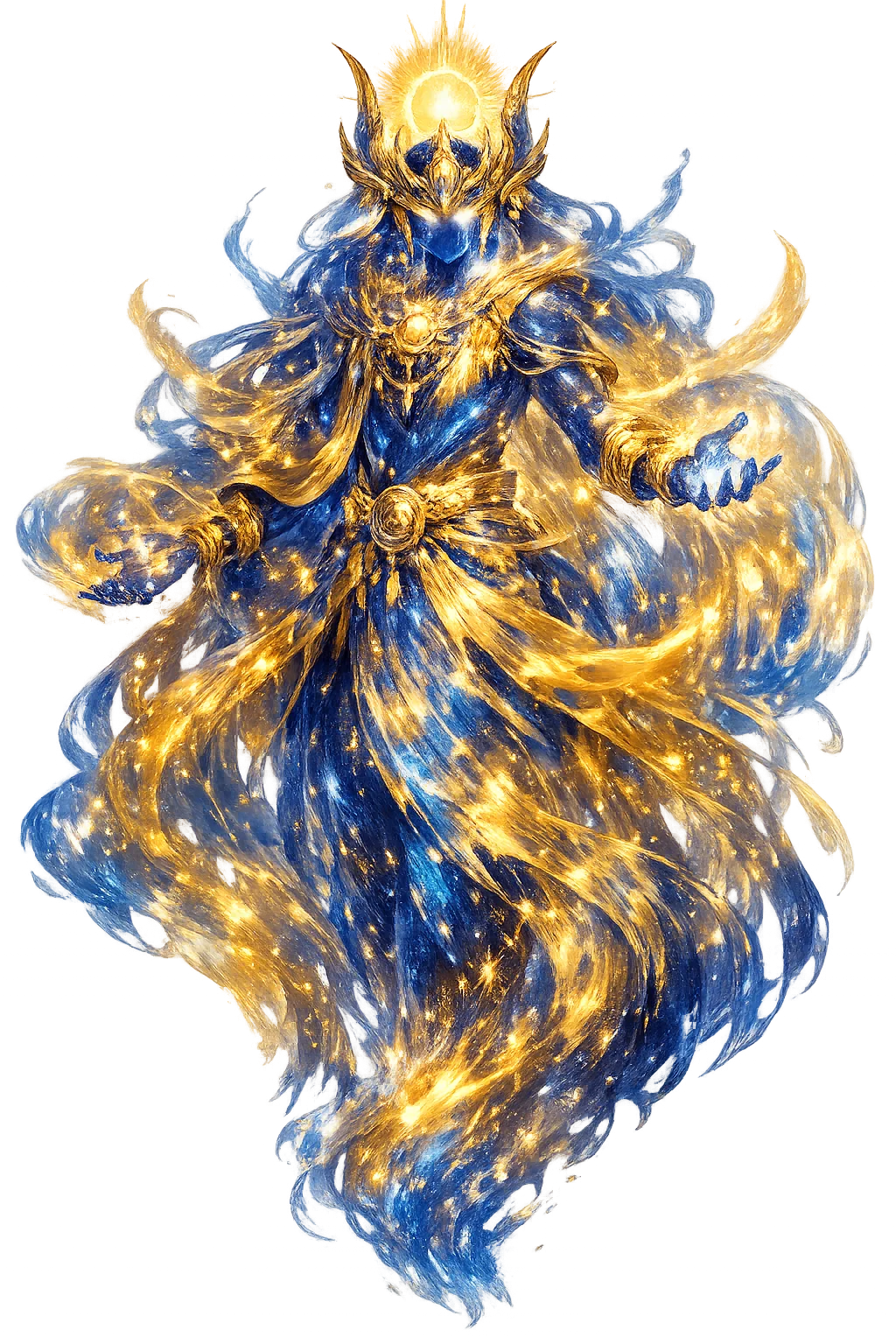
The many faces of Ọrun
No important name has only one face. Ọrun appears as a figure of myth, a scholarly reconstruction, a piece of material culture, a memory carried across languages, and — most recently — a Unicode domain. This post looks at each face in turn: the name and its roots, the Yoruba transcription original, the reconstructed pronunciation, the mythological record, the symbols and sanctuaries, the cross-cultural afterlife, and the engineering that lets the restored spelling resolve in a browser. Taken together, those faces explain why orun was never going to be enough — and why the restored form is worth a domain of its own.
At a Glance
- Restored name: Ọrun
- ASCII form: orun
- Meaning: ""Heaven" — the sky-realm of the orisha, the divine order above the world"
- Domain of influence: Sky, Heaven, Destiny
- Pantheon: Yoruba
- Classification: Tier 1
- Live domain: ọrun.com
Overview
Ọrun (orun) — Sky, Heaven, Destiny · "Heaven" — the sky-realm of the orisha, the divine order above the world — belongs to the Yoruba tradition, where it is catalogued under the domain "Sky, Heaven, Destiny". The name means ""Heaven" — the sky-realm of the orisha, the divine order above the world".
Ọrun is the Yoruba name of heaven itself: the sky-realm where Olódùmarè and the orisha dwell, from which every soul descends to earth (ayé) — and to which every destiny (orí) is assigned before birth. It is not a god but the address of the gods.
PuniCodex restores the name as Ọrun and serves its temple at ọrun.com. The original carries both stress and vowel length, and exactly one historically valid Unicode restoration exists, which places the name in Tier 1. The plain ASCII form orun survives as a modern convenience imposed by the early domain-name system; the restoration, not the fallback, is the form the project defends as philologically complete.
The Name
No indigenous written attestation survives for this name; Ọrun is a scholarly transliteration of the reconstructed spoken form. Etymologically the name means ""Heaven" — the sky-realm of the orisha, the divine order above the world".
The ASCII form orun survives only because the early domain-name system could not carry diacritics; it is a technological compromise, not an ancient spelling. The Unicode restoration Ọrun recovers the full diacritic detail of the scholarly transliteration directly in the address bar. The original carries both stress and vowel length, and exactly one historically valid Unicode restoration exists, which places the name in Tier 1.
The letter-by-letter transformation runs:
- o → Ọ — Open-mid o with underdot
- r → r — Same
- u → u — Same
- n → n — Same
The project holds the domain ọrun.com (xn--run-slz.com) as the canonical home of this name.
The Original Script
No indigenous writing system is securely attested for individual yoruba names. The form shown is a modern scholarly transliteration.
The form Ọrun is therefore a scholarly transliteration rather than an attested ancient spelling; it encodes the reconstructed sound of the name for modern use, and no mark in it is decorative.
Pronunciation
The reconstructed pronunciation of the name is /ɔ̀.rún/ — Standard Yoruba.
For the modern speaker, the closest approximation is: aw-ROON — open o (dot-below), low-high melody.
Kindred and historical forms of the name:
- Yoruba — Ọ̀run
- Owner of heaven — Olóòrun
- Owned form — Ọrun
Ọrun is Yoruba for "heaven": the precomposed dot-below Ọ is the domain-maximal form — the full tone marks (Ọ̀run, low-high) cannot be registered as a domain, so the temple preserves the tone in text while the address bar carries what the DNS allows. The dot-below is the open-mid vowel — the open aw of law — distinct from the close o; the tone is low-high, falling then rising.
Mythology
Ọrun's myths are the architecture of Yoruba cosmology: how heaven was made, and how souls travel its road to earth.
The Chain to Earth (The Descent)
In the beginning there was only Ọrun above and the waters below. Olódùmarè sent Odùduwà down with a chain, a rooster, and a handful of earth: the rooster scattered the soil on the water, and the land of Ilé-Ifẹ̀ spread — earth founded beneath heaven, the two realms joined by the road of the orisha. Every Yoruba city thereafter is a point on that first chain's route.
The Choosing of Orí (The Choice)
Before birth, each soul kneels in Ọrun before Olódùmarè and receives its orí — its inner head, its portion of destiny. The Ifá corpus teaches that the choice, once made, is erased from memory but not from life: every fortune and misfortune on earth is the heaven-chosen head working out its own plot. To pray for a good orí is to negotiate with one's own prenatal self.
Souls on the Road (The Traffic)
The Yoruba cosmos runs on commuting: the orisha descend to possess their priests, the ancestors visit in dreams and Egúngún masquerades, and the dead return as children ("abíkú" are souls who commute too often). Ọrun is not distant but adjacent — the sky-realm whose door opens in every shrine, every trance, and every correctly cast palm-nut of Ifá.
Symbols & Iconography
The iconography associated with Ọrun concentrates in a small set of recurring attributes, each a compressed statement about the name:
- The white cloth — Heaven's color — purity and the unblemished sky
- The palm nuts — Ifá's instruments — heaven's messages read on earth
- The head — Orí, the chosen destiny — heaven carried inside the skull
Archaeology & Evidence
Ilé-Ifẹ̀, the city Odùduwà founded on the scattered earth, keeps the creation-site shrines: the Oke Itase hill and the palace of the Ọọni, whose crown descends from heaven's own. The bronze heads of Ifẹ̀ (12th–15th c.), among Africa's supreme artworks, are the faces of heaven's first citizens. The Ifá corpus — the great oral archive — is preserved by the babaláwo lineages of Yorubaland and the diaspora.
Realm & Domain
Ọrun is the Yoruba name of heaven itself: the sky-realm where Olódùmarè and the orisha dwell, from which every soul descends to earth (ayé) — and to which every destiny (orí) is assigned before birth. It is not a god but the address of the gods.
Ọrun and Ayé
Heaven and earth: the two halves of reality, with the soul commuting between them.
Orí
The inner head — the personal destiny each soul chooses (or receives) in Ọrun before birth.
Olódùmarè
The Owner of Heaven — the supreme being whose realm Ọrun is.
The Descent
Every birth is an emigration from heaven; every death, the return journey.
Orí
The inner head — the personal destiny each soul chooses (or receives) in Ọrun before birth.
Across Cultures
The Ọrun-ayé structure traveled with the diaspora: Candomblé's Oxalá-realm, Santería's heaven of Olófin, and Haiti's lwa-cosmology all keep the two-world map. Christian heaven merged with Ọrun in the New World without ever absorbing it: the Yoruba sky remains a realm of traffic and traffic-officers (the orisha), not of distant thrones — heaven as the next city over, not the next world.
Within the Yoruba tradition, closely related names in the corpus include [[aganju|Aganjú]], [[babaluaye|Ọbalúayé]], [[eshu|Ẹṣu]], [[oba|Ọba]], [[obatala|Ọbatálá]], and [[ogun|Ògún]].
Cultural Legacy
The word lives in a thousand names: Ọrunmila (heaven-knows-salvation), Ọlọrun (owner-of-heaven), Ọrúnmìlà, Ọba-Ọrun. Ifá divination — UNESCO-listed — is its daily news service, and the Egúngún festivals keep the ancestors' visits on the calendar. Every Yoruba funeral says the same thing in ten thousand voices: "the journey to Ọrun is well-traveled" — heaven as home, not as hope.
The Scholarly Record
The account of Ọrun given in this edition rests on the witnesses and reference works listed below. Lexica and etymological dictionaries secure the form and meaning of the name; the literary and religious texts supply the narrative evidence.
- E. Bolaji Idowu, Olódùmarè: God in Yoruba Belief, Longmans, Green & Co., 1962.
- William Bascom, Ifa Divination: Communication Between Gods and Men in West Africa, Indiana University Press, 1969.
- Abraham (biblical patriarch / Genesis narrative), Book of Genesis, 1000 BCE.
- Folklore (traditional oral narrative), Oral traditions, various.
- Cambridge Ancient History, Multiple volumes, 1970. Full text
- Oxford Classical Dictionary, 4th ed., Oxford University Press, 2012. Full text
A Meditation
Ọrun is the heaven that answers letters. It is not a place you hope to reach but the place you came from — with your destiny already in your pocket, unread. It asks the Yoruba question, which is also everyone's: the head you chose is the life you are living — so what, this morning, will you do with the heaven you brought with you?
And the traffic never stops: the babaláwo casts the nuts at dawn, the Egúngún dance at noon, a child is named for heaven by evening. Ọrun is the least distant heaven ever conceived — next door, upstairs, on the phone. The question is never whether it answers; it is whether we are still calling.
The Ifá verses insist the choosing of orí is both gift and contract: heaven offers, the soul accepts, memory is wiped, and life is the slow reading of the agreement. It is the most humane theory of destiny ever written — you signed it yourself, so stop complaining and start reading. The babaláwo is only the notary.
Every naming ceremony in Yorubaland quietly re-ratifies the architecture: a child arrives from Ọrun with a head already chosen, and the parents spend the child's lifetime reading it. The babaláwo's nuts, the Egúngún's visits, the funeral's road-home — one system, no gaps. Heaven is not the distant answer here; it is the standing arrangement.
And the names go on arriving: Ọlọ́run for the owner, Ọ̀rúnmìlà for the knowing, Ọba-Ọrun for the kingly — heaven filed into a thousand birth certificates, each child a new piece of the sky on earth. The Yoruba answer to 'where is heaven?' was never a direction. It was a custody arrangement, and the paperwork is the people.
So the traffic continues, both ways, always: the sky is not empty, it is staffed — and the commute is the oldest institution in Yorubaland.
Every dawn the road opens again: the sun climbs from the same heaven, and the first prayer goes up by the same old chain, intact.
The rooster that scattered the first earth still crows in the Ifẹ̀ dawn — creation, the tradition says, is a daily event, and heaven signs for every delivery.
The Unicode Restoration
Ọrun is classified as Tier 1: the original carries both stress and length, and only one valid Unicode restoration exists. The ASCII fallback orun still resolves everywhere, but it is the restored form that carries the name's full information. Across the 4 characters of the name, the restoration adjusts 1: 1 further adjustment (Ọ). That is the whole thesis of this temple: the marks are the message.
Character by Character
The journey from orun to Ọrun, one character at a time:
- o → Ọ — Open-mid o with underdot
- r → r — Same
- u → u — Same
- n → n — Same
The Domain Name
The restored name is live as a working domain: ọrun.com, which the DNS carries in punycode form as xn--run-slz.com — an ASCII-compatible encoding that lets a non-ASCII name travel the global network without breaking older infrastructure. The visitor sees Ọrun; the machines see the encoding. That duality is the engineering compromise on which the entire restoration rests, and it is why a name written the way its own tradition wrote it in Yoruba transcription can now be typed into any browser on earth.
The Yoruba Pantheon
Ọrun is one of 32 entries the PuniCodex lexicon catalogues under the Yoruba pantheon. The Pantheon page gathers the tradition's major figures in one place, and the Lexicon lets you filter all 924 restorations by tradition, tier, or script — the fastest way to see where this name sits among its kin.
Frequently Asked Questions
What does Ọrun mean? The traditional gloss is ""Heaven" — the sky-realm of the orisha, the divine order above the world."
Which tradition does Ọrun belong to? Ọrun is catalogued in the Yoruba pantheon of the PuniCodex lexicon.
Why is Ọrun classified as Tier 1? Because the original carries both stress and length, and only one valid Unicode restoration exists — and the marks in the restored spelling preserve exactly that evidence.
Is Ọrun a working domain? Yes — ọrun.com resolves today and routes to this temple.
What is the punycode for ọrun.com? The DNS encoding is xn--run-slz.com; browsers perform the translation automatically, so visitors only ever see the restored name.
Typing Ọrun
You do not need a special keyboard to use this restoration. The PuniCodex Type Tool converts the ASCII form orun into Ọrun as you type, and the browser extension offers the same conversion inside any text field. Copy the restored form, paste it into the address bar, and the DNS does the rest.
Sister Temples
Other temples in the Yoruba pantheon include Ẹṣu, Mamaragan, and Ọbatálá — each with its own restoration story, its own scholarly record, and its own place in the lexicon.
Why This Restoration Matters
Myth, script, sound, cult, legacy, domain: the faces of Ọrun add up to a single argument — that a name is a record, and records deserve fidelity. The PuniCodex restoration keeps that record in working order: the temple presents it, the Scholarly Edition footnotes it, the lexicon catalogs it, and the domain makes it addressable. orun will always exist as a fallback. But fallback is not identity. Ọrun is the name; everything else is a convenience.
Explore Further
This post is one doorway into the temple. The home page carries the full character breakdown and the ambient canvas; the lore page tells the myths in long form; the Scholarly Edition preserves the sources, pronunciation data, and revision history; and the patron wall supports the restoration directly. For the wider map, browse the Lexicon, explore the Pantheon, or return to the PuniCodex blog.
Related Names
Sources
The full scholarly apparatus — every citation, revision, and review — lives in the Scholarly Edition. Key references for this post:
- Cambridge Ancient History, Multiple volumes, 1970.
- Oxford Classical Dictionary, 4th ed., Oxford University Press, 2012.
- Bascom, Ifa Divination; the ogundá verses.
- Idowu, Olodumare; the oríkī collections.
- Bascom, Shango in the New World; the diaspora Egúngún records.
- E. Bolaji Idowu, Olódùmarè: God in Yoruba Belief, Longmans, Green & Co., 1962.
- Lexicon authorities for this entry: Idowu, Bascom, Abraham, Folklore, Cambridge, Oxford.