
Orpheús in 2026: why scholars still care
In 2026, names are treated as data points. Orpheús is a reminder that they are also cultural artifacts — and that the difference matters for search engines, AI training corpora, and anyone who types the name of a Greek figure into a browser. Scholars never stopped caring about the difference between orpheus and Orpheús; the web simply made that care actionable. What follows is the full scholarly picture — name, script, sound, myth, cult, and legacy — followed by the engineering compromise that lets a restored spelling live at a real address. The question is not whether the name is old. It is whether the digital world is old enough to hold it.
At a Glance
- Restored name: Orpheús
- ASCII form: orpheus
- Meaning: "Darkness of the night"
- Domain of influence: Poet, Musician, Underworld
- Pantheon: Greek
- Classification: Tier 1
- Original script: Ὀρφεύς (Greek)
- Live domain: orpheús.com
Overview
Orpheús (orpheus) — Poet, Musician, Underworld · Darkness of the night — belongs to the Greek tradition, where it is catalogued under the domain "Poet, Musician, Underworld". The name means "Darkness of the night".
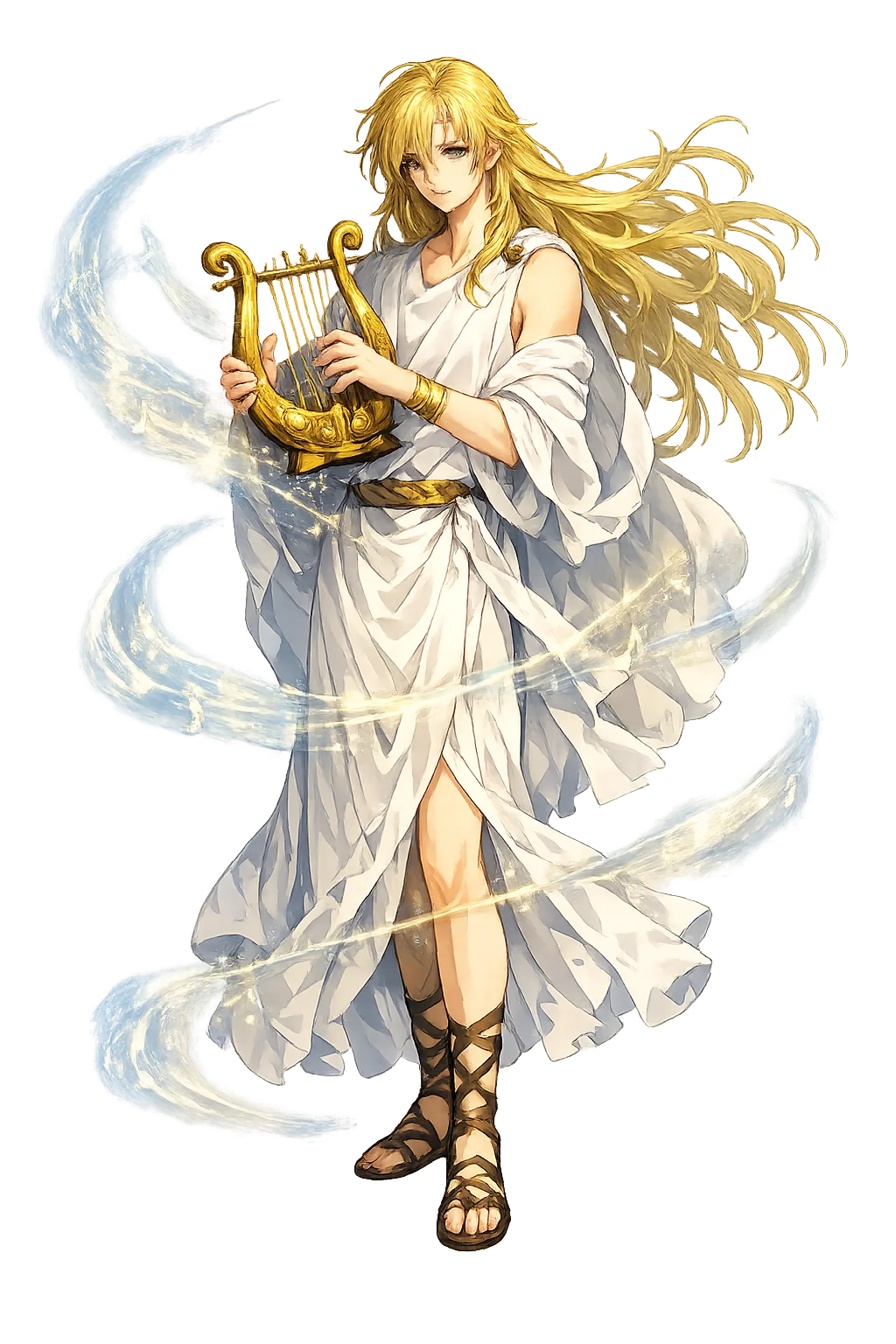
Orpheús is the archetype of art itself: the Thracian singer whose lyre moved stones and stopped rivers, who went down living into the underworld for his wife, and whose single look back is the West's permanent parable of love and loss.
PuniCodex restores the name as Orpheús and serves its temple at orpheús.com. The original carries both stress and vowel length, and exactly one historically valid Unicode restoration exists, which places the name in Tier 1. The plain ASCII form orpheus survives as a modern convenience imposed by the early domain-name system; the restoration, not the fallback, is the form the project defends as philologically complete.
The Name
The name is attested in Greek as Ὀρφεύς. Etymologically it means "Darkness of the night".
The ASCII form orpheus survives only because the early domain-name system could not carry diacritics; it is a technological compromise, not an ancient spelling. The Unicode restoration Orpheús recovers the full diacritic detail of the scholarly transliteration directly in the address bar. The original carries both stress and vowel length, and exactly one historically valid Unicode restoration exists, which places the name in Tier 1.
The letter-by-letter transformation runs:
- o → O — Same
- r → r — Same
- p → p — Same
- h → h — Same
- e → e — Same
- u → u — Same
- s → s — Same
The project holds the domain orpheús.com (xn--orphes-tya.com) as the canonical home of this name.
The Original Script
The name is written in Greek as Ὀρφεύς. This original script is the form against which the ASCII fallback orpheus and the PuniCodex restoration Orpheús are measured: the restoration preserves its full diacritic detail of the written form, so that a reader typing the modern address still speaks the ancient name.
Pronunciation
The reconstructed pronunciation of the name is /or.pʰeús/ — Attic Greek Reconstruction.
For the modern speaker, the closest approximation is: or-FEWS — the stress lands on the last syllable.
Kindred and historical forms of the name:
- Greek — Ὀρφεύς
- Latin — Orpheus
- Owned form — Orpheús
Greek Ὀρφεύς stresses the final syllable — Orpheús — and the restoration keeps the acute where the tradition puts it. The etymology is debated (perhaps from a root for "orphan" or the "darkness" of his descent); the name is older than its explanations, which is exactly right for the singer who is all voice.
Mythology
Orpheús' myths are all about what music can and cannot do: it charms everything, and it saves nothing except itself.
The Song that Moves Stones (The Power)
The tradition is unanimous: when Orpheús played, the trees uprooted themselves to follow, the rivers halted, the wild beasts lay down beside the sheep. Simonides' line — "the birds flew above him, the fish leapt from the water" — is the oldest surviving witness. His mother was the Muse Kalliopē; his lyre, some say, Apóllōn's own gift: music as the one power that rivals the gods'.
The Singer on the Argo (The Voyage)
Apollonius Rhodius gives him the heroic use: on the Argo, his song timed the rowers, calmed the quarrels, and — at the Seirḗnes' shore — drowned the death-song in a nobler one. He is the epic's proof that the hero's tool is not always the sword: the Argonauts' most dangerous passage was survived by a string, not a blade.
The Look Back (The Descent)
Eurydikē died of a snake's bite on their wedding day, and Orpheús did what no one does: went after her, alive. His song charmed Charon, Cerberus, and the Furies' whips to stillness; Hádēs himself relented — on one condition: she follows behind, and he must not look back until both stand in the light. At the threshold, he looked. She fell back, saying only "farewell." The West has been writing the sentence ever since: love almost defeats death — almost.
The Head that Sang (The End)
The Maenads of Dionysos tore him apart — for refusing their god, or their beds, the versions disagree. His head, still singing, floated down the Hebrus to the sea and came ashore at Lesbos, where it prophesied until Apóllōn silenced it; his lyre was set among the stars. Even dismembered, the singer does not stop: the myth's last mercy is that the song survives the man.
Symbols & Iconography
The iconography associated with Orpheús concentrates in a small set of recurring attributes, each a compressed statement about the name:
- The lyre — Art as the measure of the world — the cosmos tuned to a string
- The laurel — His prophetic-grove crown at Pieria
- The nightingale — His bird — song persisting through darkness
Vase-painting fixes his biography in three acts: the Thracian singer charming the Greeks (dressed as a northerner among Athenians), the singer charming the animals (the world's oldest concert poster, from black-figure onward), and the descent (Orpheus among the underworld's figures, the Romans' favorite). The great Naples relief of Orpheus among the Maenads shows the death; the Lyre constellation charted on star-maps is his instrument; and every opera-house curtain since 1607 has risen, in a sense, on his lyre.
Epithets & Cult Titles
The singer's titles are all offices of the lyre.
- ὁ Κιθαρῳδός — 'the lyre-singer'; the profession become a name.
- Θρᾴξ — 'the Thracian'; his people, the northern singers.
- Μουσαῖος' teacher — the lineage-title of the Orphic succession.
- ὁ καταβάς — 'the one who went down'; the descent as epithet.
- Apollo's son — the genealogy the poets preferred over Oeagrus.
The Homeric Hymns
No Homeric Hymn addresses him — the singer predates the hymnists' calendar — but the Orphic corpus took up the hymnic form in his name: the eighty-seven Orphic Hymns of late antiquity invoke the gods in the meter his tradition made sacred, and the hymns' preface addresses Musaios, "Orpheús' companion," as the priest of the mysteries. His true hymn is the one he never sang: the Derveni commentary's exegesis of the Orphic theogony, the oldest philosophy of song in Europe.
Oracle Sites & Sanctuaries
His head kept prophesying: washed down the Hebrus to Lesbos, it was set in a cave-shrine and gave oracles until Apóllōn claimed the silence — the strangest posthumous cult in Greece, attested by Philostratus and the antiquarians. Pieria, below Olympos, kept his birthplace-grove where the nightingales still sang sweeter than elsewhere (Pausanias heard the difference). The Orphic initiates' graves — the gold-tablet burials of Thurii, Petelia, and Pelinna — are his religion's true sanctuaries: the dead, instructed, carrying the song underground.
Archaeology & Evidence
The Orphic gold tablets — thin gold leaves buried with initiates from Thessaly to South Italy, instructing the dead ("say: I am a child of Earth and starry Heaven") — are his cult's material archive. Vase-painting shows him in Thracian dress charming the Greeks, then charming the animals, then (favorite Roman motif) playing to underworld figures. The Piraeus relief of Orpheus among the Maenads (Naples) and the Thracian singers' cult sites at Pangaion mark his geography.
Realm & Domain
Orpheús is the archetype of art itself: the Thracian singer whose lyre moved stones and stopped rivers, who went down living into the underworld for his wife, and whose single look back is the West's permanent parable of love and loss.
The Lyre
His instrument: the gift of Apóllōn, the sound that made nature stop to listen.
The Argonauts
His song steadied the Argo's crew past the Seirḗnes — art as navigation.
The Descent
The katabasis for Eurydikē — the only route out of death that music ever opened.
The Look Back
The one forbidden glance, at the threshold — and the second, final loss.
Across Cultures
The mystery-religion that took his name — Orphism — made him the patron of the soul's journey: the gold tablets, the egg, Phánēs, the afterlife's map all carry the Orphic brand, though the historical singer and the theology are centuries apart. Christianity read him as a type of Christ (the descent, the harrowing, the animal-charming); the Renaissance made him the emblem of poetry itself; and opera was effectively invented for him — Monteverdi's Orfeo (1607) is the first great opera, and there have been hundreds since.
Kindred figures in the PuniCodex cross-tradition index include [[anubis|ꜣnpw]] (psychopomp / soul guide), [[hades|Hádēs]] (underworld / death), [[hermes|Hermês]] (psychopomp / soul guide), [[kanaloa|Kānāloa]] (underworld / death), [[ker|Kēr]] (underworld / death), and [[mot|Mōt]] (underworld / death).
Cultural Legacy
"Orphic" is the word for haunting, entrancing beauty; the lyre constellation (Lyra) is his; and the look-back is literature's most quoted failure — from Virgil to Rilke's Sonnets to Orpheus to Cocteau's Orphée and Baz Luhrmann's Moulin Rouge. Every artist who has tried to retrieve something from loss — and failed at the threshold of the work — is his descendant. Music's power to move the world is his biography; its limits are his lesson.
The Scholarly Record
The account of Orpheús given in this edition rests on the witnesses and reference works listed below. Lexica and etymological dictionaries secure the form and meaning of the name; the literary and religious texts supply the narrative evidence.
- Apollonius Rhodius, Argonautica, Loeb Classical Library, 200 BCE. Full text
- Euripides, Tragedies, Loeb Classical Library / Oxford Classical Texts, 406 BCE. Full text
- Ovid (Publius Ovidius Naso), Metamorphoses / Fasti / Heroides, Loeb Classical Library, 17. Full text
- Apollodorus, Bibliotheca, Loeb Classical Library (Frazer), 150.
- Pindar, Victory Odes (Olympian, Pythian, Nemean, Isthmian), Loeb Classical Library, 438 BCE. Full text
- Cambridge Ancient History, Multiple volumes, 1970. Full text
A Meditation
Orpheús is the patron of the almost. He got her back — almost. He sang the Furies to tears — and still lost. His question is the one every artist and every lover knows: when the rule is "do not look back," and the one thing you have is the looking — what are you willing to lose for one glimpse of what you love?
The Unicode Restoration
Orpheús is classified as Tier 1: the original carries both stress and length, and only one valid Unicode restoration exists. The ASCII fallback orpheus still resolves everywhere, but it is the restored form that carries the name's full information. That is the whole thesis of this temple: the marks are the message.
Character by Character
The journey from orpheus to Orpheús, one character at a time:
- o → O — Same
- r → r — Same
- p → p — Same
- h → h — Same
- e → e — Same
- u → u — Same
- s → s — Same
The Domain Name
The restored name is live as a working domain: orpheús.com, which the DNS carries in punycode form as xn--orphes-tya.com — an ASCII-compatible encoding that lets a non-ASCII name travel the global network without breaking older infrastructure. The visitor sees Orpheús; the machines see the encoding. That duality is the engineering compromise on which the entire restoration rests, and it is why a name written the way its own tradition wrote it in Greek can now be typed into any browser on earth.
The Greek Pantheon
Orpheús is one of 268 entries the PuniCodex lexicon catalogues under the Greek pantheon. The Pantheon page gathers the tradition's major figures in one place, and the Lexicon lets you filter all 924 restorations by tradition, tier, or script — the fastest way to see where this name sits among its kin.
Frequently Asked Questions
What does Orpheús mean? The traditional gloss is "Darkness of the night."
Which tradition does Orpheús belong to? Orpheús is catalogued in the Greek pantheon of the PuniCodex lexicon.
Why is Orpheús classified as Tier 1? Because the original carries both stress and length, and only one valid Unicode restoration exists — and the marks in the restored spelling preserve exactly that evidence.
Is Orpheús a working domain? Yes — orpheús.com resolves today and routes to this temple.
What is the punycode for orpheús.com? The DNS encoding is xn--orphes-tya.com; browsers perform the translation automatically, so visitors only ever see the restored name.
Typing Orpheús
You do not need a special keyboard to use this restoration. The PuniCodex Type Tool converts the ASCII form orpheus into Orpheús as you type, and the browser extension offers the same conversion inside any text field. Copy the restored form, paste it into the address bar, and the DNS does the rest.
Sister Temples
Other temples in the Greek pantheon include Machaṓn, Melpoménē, and Moîra — each with its own restoration story, its own scholarly record, and its own place in the lexicon.
Why This Restoration Matters
In 2026 the stakes are practical. Search indexes, language models, and localization pipelines all inherit whatever spelling the web normalizes — which means every Unicode domain is also a training signal. Orpheús teaches the machinery that the restored form exists, that it is used, and that it points to a real place. That is why a project built on philology ends up caring about DNS: the infrastructure decides which names the future sees. This restoration makes sure the future sees the whole name.
Explore Further
This post is one doorway into the temple. The home page carries the full character breakdown and the ambient canvas; the lore page tells the myths in long form; the Scholarly Edition preserves the sources, pronunciation data, and revision history; and the patron wall supports the restoration directly. For the wider map, browse the Lexicon, explore the Pantheon, or return to the PuniCodex blog.
Related Names
Sources
The full scholarly apparatus — every citation, revision, and review — lives in the Scholarly Edition. Key references for this post:
- Apollonius Rhodius, Argonautica, Loeb Classical Library, 200 BCE.
- Euripides, Tragedies, Loeb Classical Library / Oxford Classical Texts, 406 BCE.
- Ovid (Publius Ovidius Naso), Metamorphoses / Fasti / Heroides, Loeb Classical Library, 17.
- Pindar, Victory Odes (Olympian, Pythian, Nemean, Isthmian), Loeb Classical Library, 438 BCE.
- Cambridge Ancient History, Multiple volumes, 1970.
- The Orphic Hymns (Athanassakis); the Derveni Papyrus.
- Pindar; Apollodorus; the Orphic succession texts.
- Philostratus, Heroicus (the Lesbos oracle); Pausanias 9.30 (Pieria).
- LIMC VII.1, s.v. Orpheus; the Naples relief; the star atlases.
- Lexicon authorities for this entry: LSJ, Pape-Benseler, Beekes.