
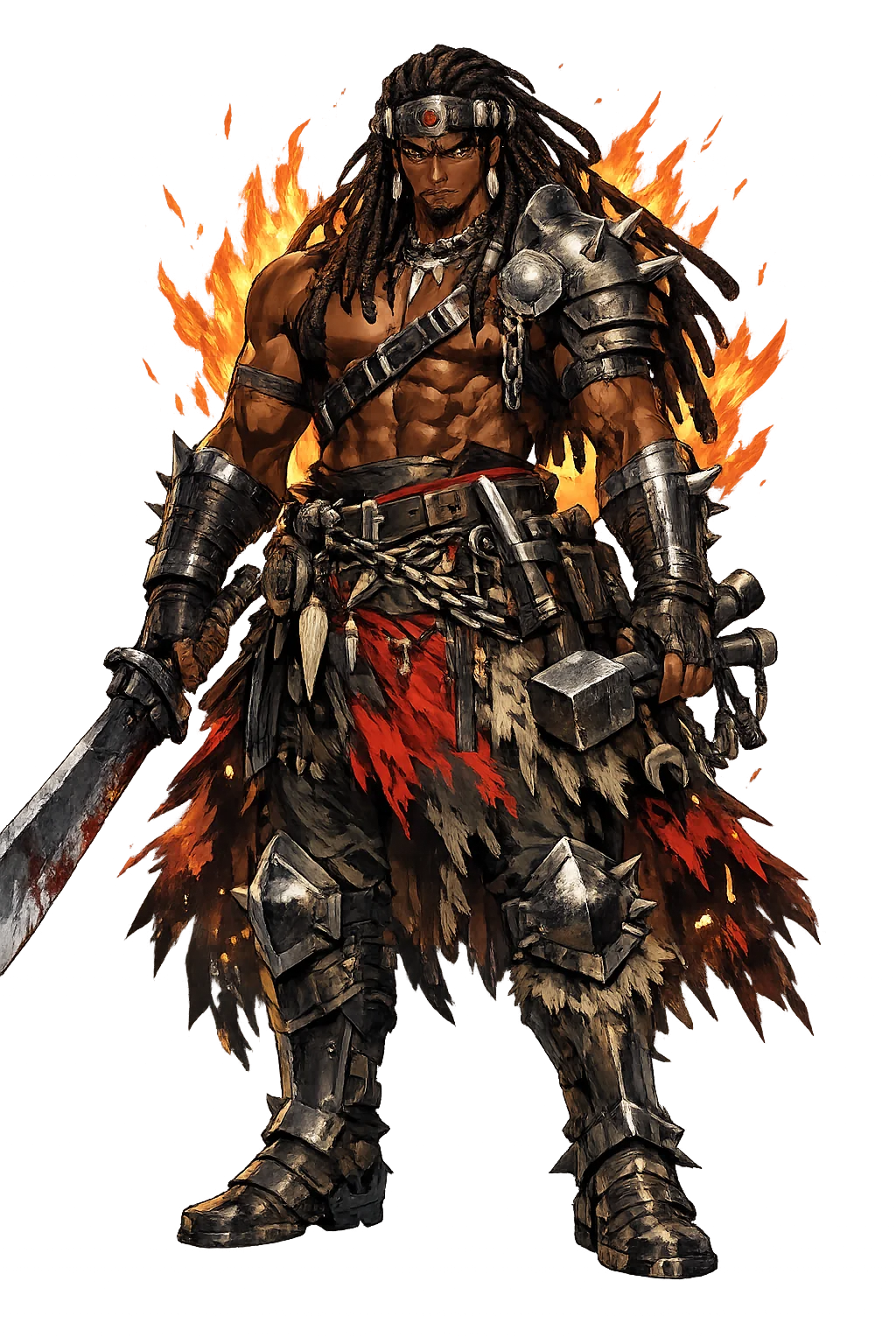
Why Ògún is spelled that way — and what it costs to get it right
There is a version of this name the early internet had to settle for: ogun. This is the file on how Ògún replaced it.
Ògún's myths are the Yoruba meditation on power: the strength that clears the way for everyone, and the rage that, unmastered, turns on its own town.
At a Glance
- Restored name: Ògún
- ASCII form: ogun
- Meaning: "God of iron"
- Domain of influence: Iron, War, Labour
- Pantheon: Yoruba
- Classification: Tier 1
- Original script: —
- Series: The Restoration Files, No. 174 of 271
The Name Before the Marks
Spoken, the name runs `/ò.gṹ/` — aw-GOON, low tone on the first syllable, high on the last.
The Temple That Stands Now
The restored name is not a plaque; it is an address. The temple of Ògún lives at /sites/ogun/, with its mythology in the lore halls, its peer-reviewed record in the Scholarly Edition, and its place in the pattern atlas on the patterns floor.
The restoration preserves more than the ASCII form can express — stress, length, or a letter the Latin keyboard lost — which places it, mechanically, in Tier-1.
Where the Name Stood First
Yorubaland is one of Africa's oldest iron-working regions: the smelting furnaces of the Nsukka plateau (Lejja) date the craft back over two thousand years, and the guild-smithies of the forest belt kept the ritual side — the first iron of a furnace smelted with prayers to Ògún. His shrines are often the anvil itself; the great festivals of Ire and of Ọndó preserve the masquerades and the dog-sacrifice described in the earliest ethnographies, and the odù Ogunda verses are still divined daily by babaláwo across the Yoruba world. The temple on the web is the newest of these addresses — the first one that fits in a pocket.
The Archetype at Work
The pattern atlas seats this temple in 3 industries, each match argued and weighted: Defense, Military & Security (war and iron are one craft in his cult; the cutlass that clears the road.); Manufacturing, Craft & Automation (the iron master; every smithy and mechanics’ yard his chapel.); Communication, Messaging & Logistics (the road-opener; infrastructure’s cutting edge, literally.). The Resonance File reads those seats through the myths themselves.
In the Sacred Texts
The Yoruba tradition is not a vibe; it is a library. The Sacred Texts collection holds Nigerian Studies — The Orisha Myths — the primary sources the temple's scholarship is built on. The temple is the argument; the texts are the evidence.
The File Continues
The temple's founding dispatch tells the name's story; its Resonance File reads the myths into the industries; the blog index holds the whole archive.
Continue the series — previous file: Odysseús (read it here) · next file: Ōkeanós (read it here).
The Restoration Files are written from the same canonical record as the temples themselves: the lexicon, the lore catalog, the pattern atlas, and the cited scholarly sources. If a file ever disagrees with its temple, the temple is right — tell us, and the file will be corrected.