The Authentic Orthography
Creation, Purity, Peace · King of the white cloth
Unicode restoration and ASCII comparison
Ọbatálá
The name survives only in scholarly transliteration. Ọbatálá is the standard Yoruba romanisation, documented in academic sources — “King of the white cloth”. Its acute stress marks preserve distinctions lost in plain ASCII.
No indigenous writing system is securely attested for individual yoruba names. The form shown is a modern scholarly transliteration.
obatala
Reduced to plain obatala, the name loses everything that made it specific: acute stress marks. What remains is an ASCII string that machines can parse but that no longer speaks with its original voice.
Ọbatálá
The Unicode restoration recovers what ASCII flattened. Ọbatálá restores acute stress marks, returning the name to its original written dignity. The domain encodes to Punycode, but the browser displays the truth.
Ọbatálá.com → xn--batl-7nab8274c.com
The non-ASCII characters in Ọbatálá are encoded while the ASCII remains visible. To the DNS, it is Punycode. To humanity, it is Ọbatálá.
How Ọbatálá is preserved in writing
No indigenous writing system is securely attested for individual yoruba names. The form shown is a modern scholarly transliteration.
Contribute scholarly provenance →How Ọbatálá was spoken
Creation, Purity, and Peaceful Judgment
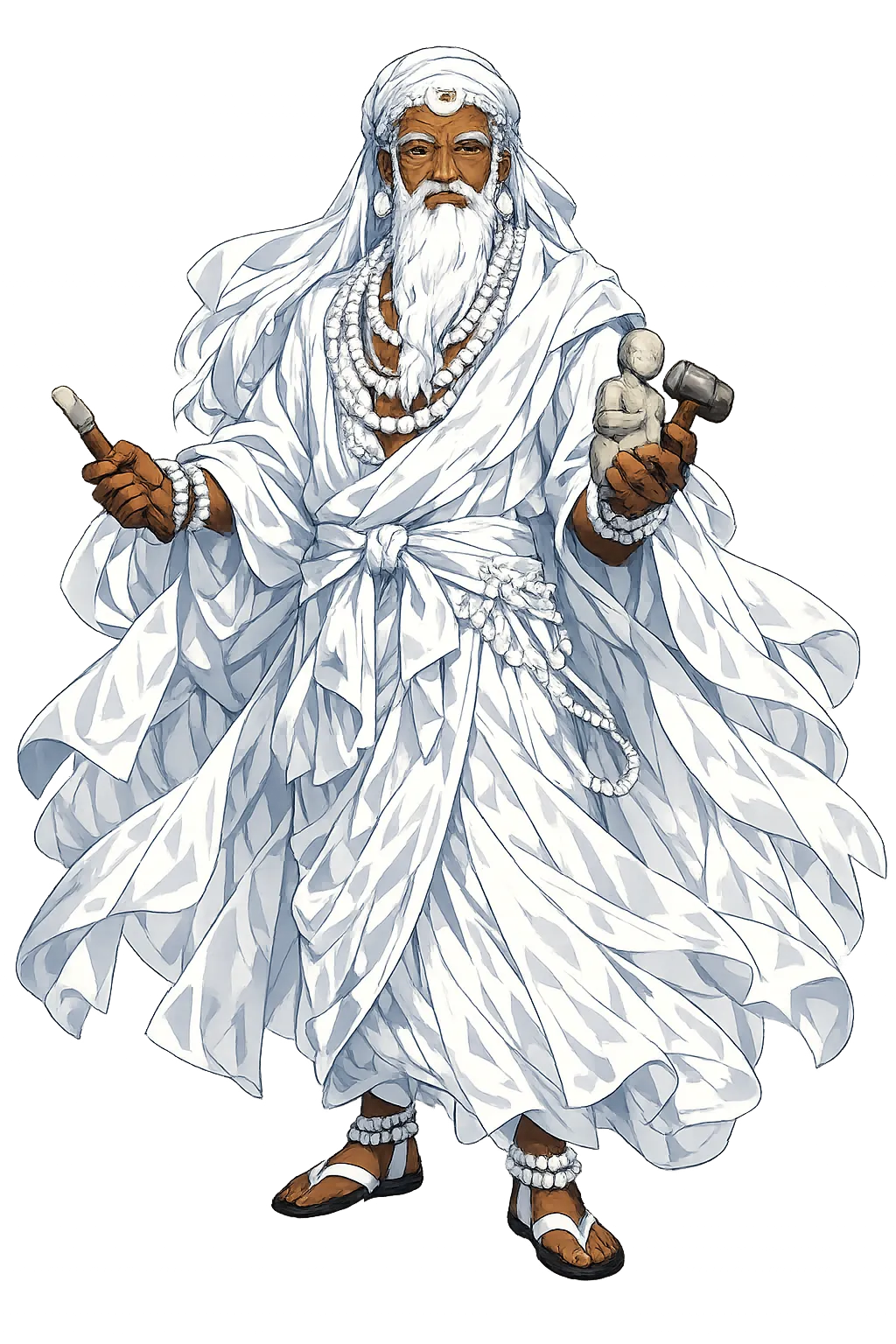
Ọbatalá is the orixá who shapes humanity. While Olódùmarè breathes the soul into the body, Ọbatalá is the sculptor who moulds the limbs, the one whose hands first pressed cool clay into human form. He is the eldest of the orishas in many accounts, the patron of white cloth, purity, peace, and the aged. His voice is soft, his judgments slow, and his anger terrible precisely because it is so rare.
He is also the guardian of those whom the world calls imperfect: the disabled, the deformed, the albino. In Yoruba thought, these are not mistakes; they are Ọbatalá's own children, marked by his hand.
He moulds human form from earth; Olódùmarè alone gives it breath.
Spotless garments, white beads, and cool water mark his altars and his devotees.
He settles disputes with patience; his curses fall on the unjustly proud.
The disabled and the elderly are his special children; harming them offends him directly.
Stories of Ọbatálá
Ọbatalá's mythology turns on creation, sobriety, and the cost of pride. He is the elder who knows that making life is more difficult than destroying it.
When Olódùmarè decided to populate the earth, he sent Ọbatalá down with a lump of clay. Ọbatalá shaped the first human bodies with care, but one day he drank too much palm wine and some of his figures came out twisted or incomplete. Olódùmarè breathed life into them anyway, and ever since Ọbatalá has forbidden palm wine to his devotees and taken the deformed as his own special children.
In many Ifá verses, Ọbatalá is the eldest orixá, the one who remembers the beginning of things. He does not compete for followers with the flashier gods of thunder and rivers; his authority rests on age, clarity, and the fact that every human body was once clay in his hands. Kings consult him when force has failed.
Ọbatalá's stories often warn against arrogance. Those who mock the disabled, the old, or the poor invite his punishment, which usually takes the form of confusion or paralysis — the loss of the very clarity they thought they possessed. His justice is cool, slow, and inescapable.
Ọbatalá is the god of the second look. The first glance sees deformity, age, weakness, or strangeness; the second glance, his glance, sees the hand of the maker. He asks us to slow down — to judge slowly, to speak softly, to remember that every body was once unformed clay.
Enter Extended Lore