Unicode restoration and ASCII comparison
Méngpó
The name survives only in scholarly transliteration. Méngpó is the standard Chinese romanisation, documented in academic sources — “'Old Lady Meng' (孟婆), the goddess who brews the tea of forgetfulness”. Its acute stress marks preserve distinctions lost in plain ASCII.
The original script for this chinese name has not yet been added to PUNICODEX. The form shown is a scholarly transliteration.
mengpo
Reduced to plain mengpo, the name loses everything that made it specific: acute stress marks. What remains is an ASCII string that machines can parse but that no longer speaks with its original voice.
Méngpó
The Unicode restoration recovers what ASCII flattened. Méngpó restores acute stress marks, returning the name to its original written dignity. The domain encodes to Punycode, but the browser displays the truth.
Méngpó.com → xn--mngp-bpa7d.com
The non-ASCII characters in Méngpó are encoded while the ASCII remains visible. To the DNS, it is Punycode. To humanity, it is Méngpó.
How Méngpó is preserved in writing
A bespoke provenance study for Méngpó is being prepared by the PUNICODEX scholarly team.
Contribute scholarly provenance →How Méngpó was spoken
The Bridge, the Brew, and the Mercy of Forgetting
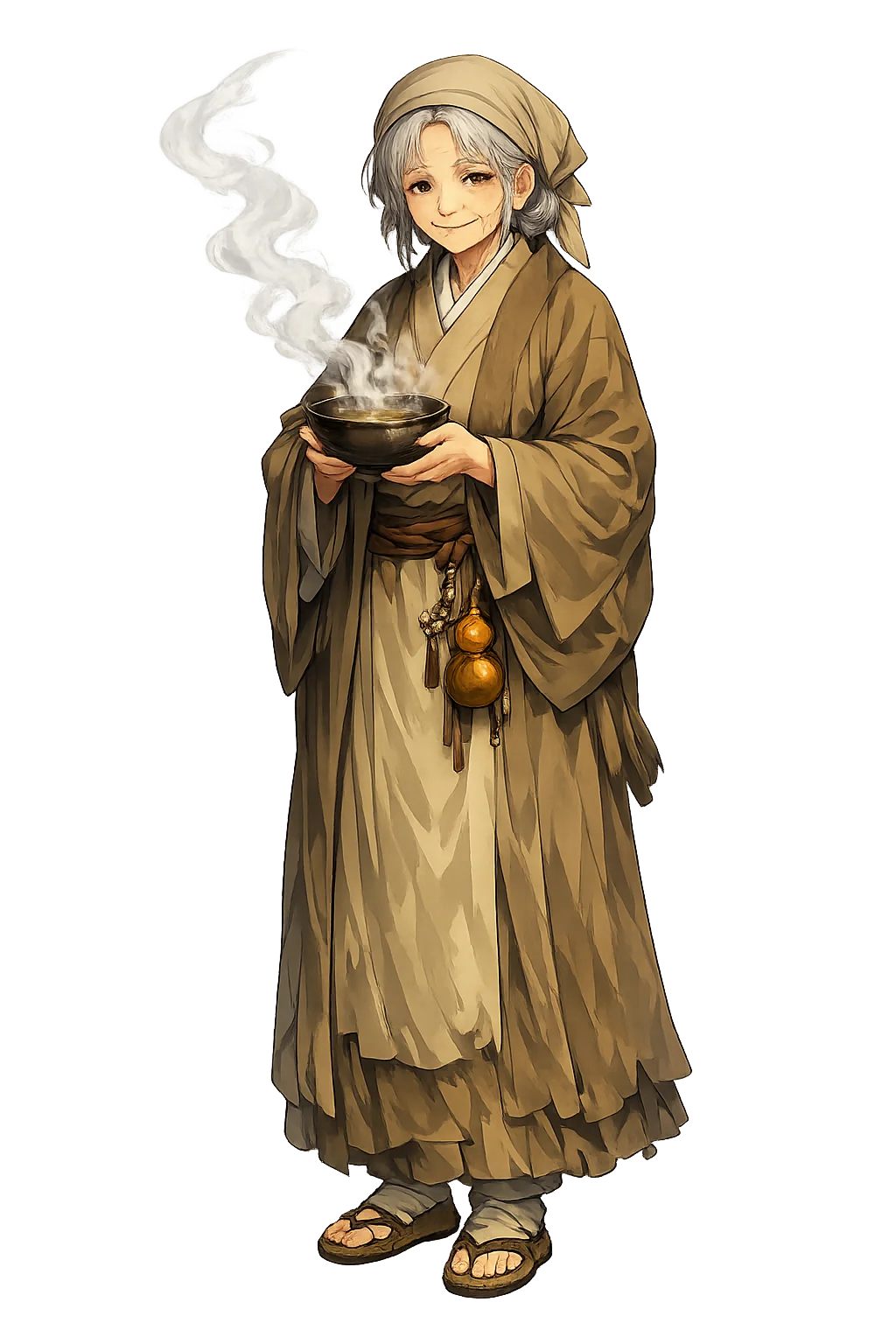
Mèngpó keeps the last station of the Chinese underworld: at the Nàihé Bridge, where souls cross to rebirth, she serves her five-flavored tea — and every soul that drinks forgets its life, its loves, and its griefs, clean for the next beginning.
Sweet, sour, bitter, pungent, salty — the whole of a life, steeped into one last cup.
The "Bridge of No Alternative": every soul crosses, and none crosses back remembering.
Yánluó's courts judge the life; her tea releases it — bureaucracy's final kindness.
China's own Lethe — the waters beneath the bridge that wash the old self away.
Stories of Méngpó
Mèngpó's myth is a single scene, retold for centuries: the old woman, the bridge, the bowl — the gentlest moment in the whole machinery of the afterlife.
Chinese folk cosmology orders the underworld like an administration: Yánluó's ten courts judge the deeds of the life, assign the punishments and the repayments — and then send the soul to Mèngpó. At the Nàihé Bridge she ladles her tea of five flavors; the soul drinks, and the record of the life — the loves, the hatreds, the unfinished business — dissolves. Only then is it fit to be reborn.
Folk tellings give her a biography: she was, some say, a woman of the mortal world who grieved her dead so deeply that heaven gave her this office — that no other soul need carry grief across the boundary. Others make her a wind-spirit of antiquity, or a servant of the underworld's lord promoted for her gentle hand. The variants agree on the point: the one who erases memory does it out of mercy, having known what memory costs.
The tales always leave a door: a soul that refuses the tea, or spills it, carries fragments across — and is born with a birthmark, a déjà vu, a face it cannot forget. Chinese fiction is full of such revenants: lovers recognizing lovers across lifetimes, enemies resuming ancient quarrels, all because one soul at the bridge would not finish the bowl. Memory, in the folklore, is a debt carried by the stubborn.
Mèngpó is the goddess of letting go. Every tradition knows that some memories are poison; she alone made the antidote an act of hospitality — a cup of tea, served by a grandmother, at the bridge. She asks the question every grief eventually reaches: what would it cost you to forget — and what would it cost you to remember forever?
Enter Extended Lore