PuniCodex

Extended Lore

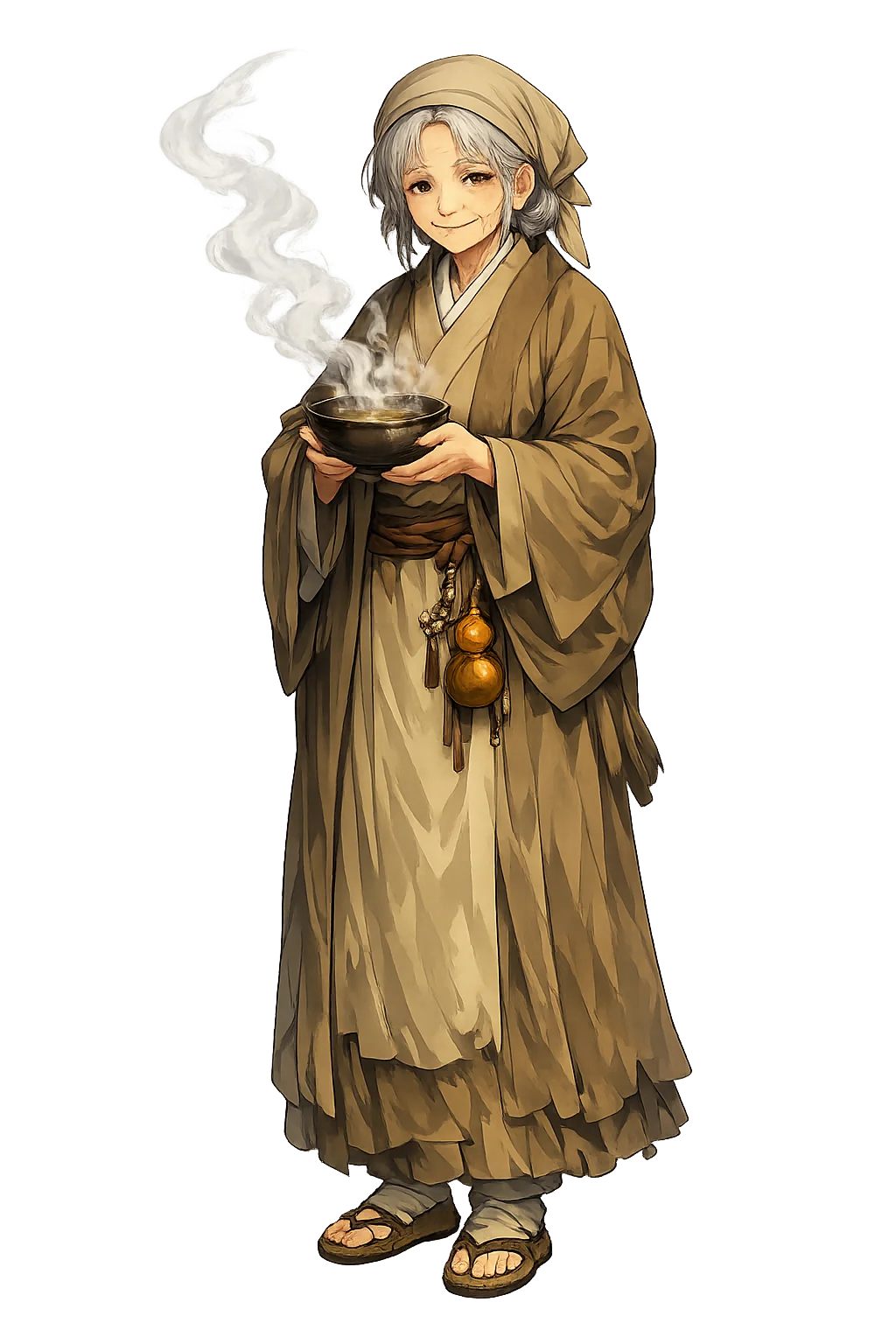
Méngpó

Etymology · Phonology · Orthography · Cultural Legacy · Primary Sources

Tier 1 Méngpó.com
Méngpó — Forgetting, Passage, Tea
01

Quick Facts

Essential information about Méngpó, Forgetting, Passage, Tea

Scholarly TransliterationMéngpó
Unicode RestorationMéngpó
Reconstructed Pronunciation/məŋ˥˩ pʰwo˧˥/
PantheonChinese
DomainForgetting, Passage, Tea
Meaning'Old Lady Meng' (孟婆), the goddess who brews the tea of forgetfulness
ClassificationTier 1
Primary DomainMéngpó.com
Sacred SymbolsThe teapot, The bowl, The bridge
02

Etymology & Word Family

From original script to Unicode restoration

Scholarly Transliteration Méngpó Méngpó — "'Old Lady Meng' (孟婆), the goddess who brews the tea of forgetfulness"
Unicode Restoration Méngpó Restored stress, length, and script
Modern ASCII mengpo Plain-ASCII fallback

Mèngpó 孟婆 means "Old Lady Meng": mèng in the falling tone, a surname suggesting seniority; pó, "grandmother, old woman," in the rising tone. The name belongs to folk religion rather than scripture — which is why its spelling never needed the scholar's precision the goddess herself so carefully erases.

03

Unicode Character Breakdown

Character-by-character philological analysis

CharacterUnicodeNameBlockPhonetic Role
MU+004DLatin Capital Letter MBasic LatinSame letter
éU+00E9Latin Small Letter E with AcuteLatin-1 SupplementStress mark (acute/tone)
nU+006ELatin Small Letter NBasic LatinSame letter
gU+0067Latin Small Letter GBasic LatinSame letter
pU+0070Latin Small Letter PBasic LatinSame letter
óU+00F3Latin Small Letter O with AcuteLatin-1 SupplementStress mark (acute/tone)

The Tier 1 classification reflects which ancient features stress, length, or script are preserved in this restoration.

04

Cultural Significance

From ancient cult to modern Unicode

Ancient Domain

Mèngpó keeps the last station of the Chinese underworld: at the Nàihé Bridge, where souls cross to rebirth, she serves her five-flavored tea — and every soul that drinks forgets its life, its loves, and its griefs, clean for the next beginning.

Méngpó in Later Traditions

She is the folk fusion at its most organic: Buddhist rebirth doctrine, Daoist underworld bureaucracy, and village storytelling meet in her bowl. Comparative scholars line her up beside Lethe — the Greek river of forgetfulness the dead must drink — noting that two civilizations independently decided memory cannot survive rebirth. In modern Chinese media she has become a star: films, songs, and web novels cast her as the melancholy romantic of the underworld, the goddess who remembers everything precisely so that others may forget.

Modern Legacy

"Mèngpó's soup" (孟婆汤) is a living idiom for oblivion — offered ruefully at partings and breakups across the Chinese internet. Her imagery saturates East Asian popular culture: the Nàihé Bridge scene is a fixture of afterlife drama from opera to anime-adjacent fantasy. The deeper legacy is conceptual: she embodies a mercy the modern world debates — whether healing requires forgetting — and gives the debate a face, a bridge, and a bowl.

Unicode Restoration as Cultural Act

Restoring Méngpó in a domain name is more than orthographic accuracy. It is a statement that the internet should recognize the full range of human writing — not only the ASCII keyboard.

05

Frequently Asked Questions

Common questions about Méngpó, Forgetting, Passage, Tea, and Unicode restoration

01How do you pronounce Méngpó?

In reconstructed pronunciation, Méngpó is /məŋ˥˩ pʰwo˧˥/ — approximately mung-pwoh, falling tone on Meng, rising on Po..

02What does Méngpó mean?

Méngpó means 'Old Lady Meng' (孟婆), the goddess who brews the tea of forgetfulness in the chinese tradition.

03What are the symbols of Méngpó?

Méngpó is associated with The teapot (Her instrument: oblivion brewed with care, not inflicted), The bowl (The single serving every soul receives — neither more nor less), The bridge (The crossing between judgment and rebirth, where memory ends).

04Why restore Méngpó in Unicode?

Plain ASCII mengpo strips the stress, length, and script that make the name specific. Unicode restoration returns the name to its original written dignity.

05What is the most important myth about Méngpó?

Chinese folk cosmology orders the underworld like an administration: Yánluó's ten courts judge the deeds of the life, assign the punishments and the repayments — and then send the soul to Mèngpó. At the Nàihé Bridge she ladles her tea of five flavors; the soul drinks, and the record of the life — the loves, the hatreds, the unfinished business — dissolves. Only then is it fit to be reborn.

06

Scholarly Sources

The philological foundations of this restoration

Every claim on this page is grounded in established scholarship. The orthographic restorations follow disciplinary convention. The etymological chain follows the best available reference works. This is not invention — it is resurrection through scholarship.

Lexicography & Philology

  • Journey to the West
  • Chinese folk religion
  • Werner

Primary Texts

  • Primary sources in the chinese tradition for Méngpó.

Archaeology & Art History

  • Material evidence — iconography, inscriptions, and temple archaeology — for Méngpó and related cults.
  • A folk goddess has no canonical temple archive, but her cosmology has monuments: the Fengdu ghost city on the Yangtze — China's "capital of the underworld" — preserves the Nàihé Bridge in stone, crossed by pilgrims and tourists for centuries, with its three arches for the virtuous, the ordinary, and the damned. Ming-Qing underworld scroll-paintings and the woodblock illustrations of the Jade Record (Yùlì) show her at her station, ladle in hand, among the ten courts' bureaucrats.

Religious Studies

  • Chinese folk religion
  • Chinese folklore
  • Teiser
  • Birrell
  • Chinese Buddhist texts
  • Fengshen Yanyi
Return

The Surface Awaits

You have traced the name from its earliest attestation to its Unicode restoration. Now return to the myth. The story is where the name lives.

Back to Lore
Méngpó mascot