
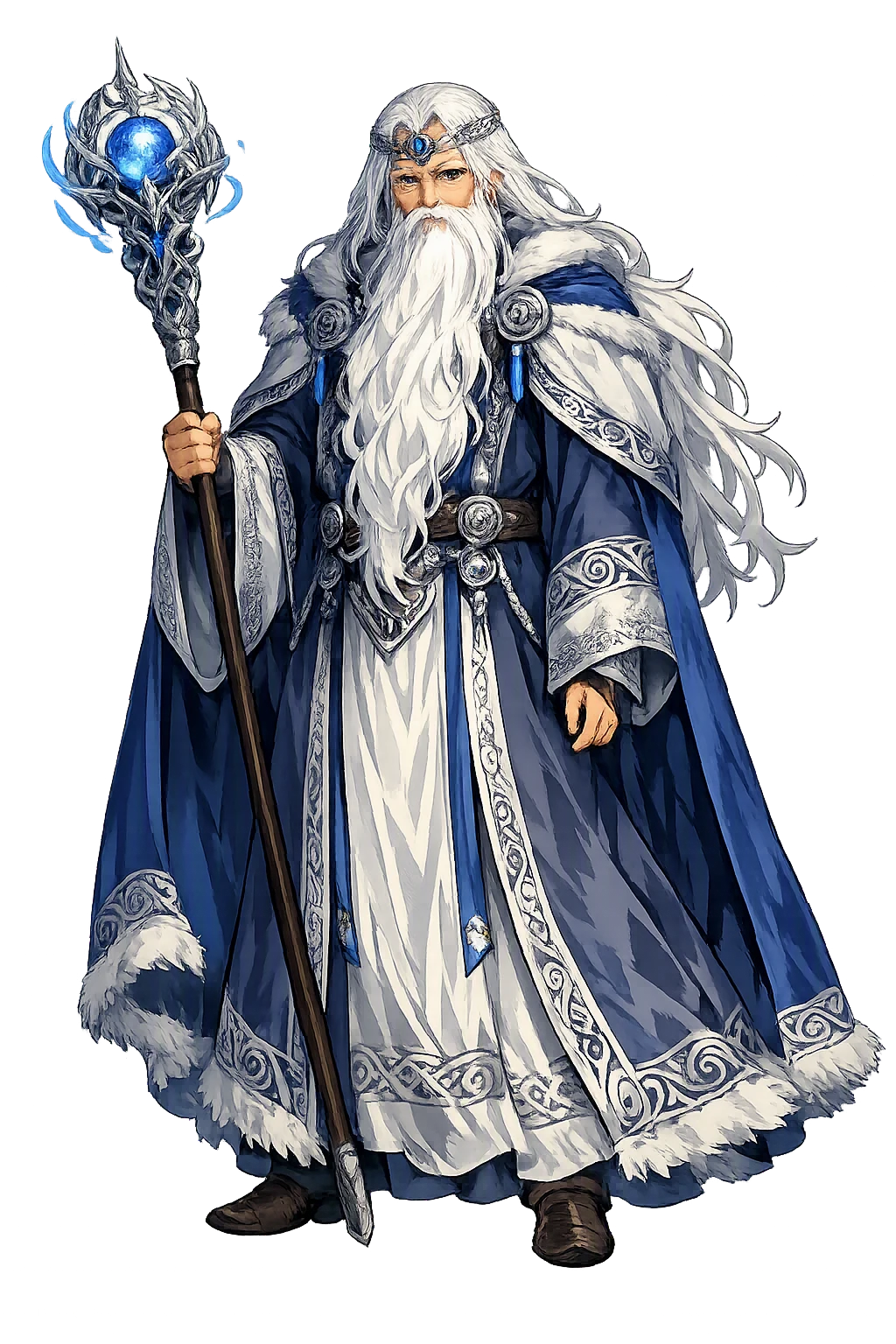
The many faces of Math
No important name has only one face. Math appears as a figure of myth, a scholarly reconstruction, a piece of material culture, a memory carried across languages, and — most recently — a Unicode domain. This post looks at each face in turn: the name and its roots, the Celtic transcription original, the reconstructed pronunciation, the mythological record, the symbols and sanctuaries, the cross-cultural afterlife, and the engineering that lets the restored spelling resolve in a browser. Taken together, those faces explain why math was never going to be enough — and why the restored form is worth a domain of its own.
At a Glance
- Restored name: Math
- ASCII form: math
- Meaning: "Bear"
- Domain of influence: Magic, Kingship
- Pantheon: Celtic
- Classification: Tier 2
Overview
Math (math) — Magic, Kingship · Bear — is the lord of Gwynedd in the Fourth Branch of the Mabinogi, Math fab Mathonwy: the king whose life is bound by the strangest condition in Welsh literature — he cannot live except with his feet in the lap of a virgin, unless the turmoil of war releases him — master of the magic wand that tests, punishes, and creates, and uncle of Gwydion and Gilfaethwy, whose crimes and crafts drive the branch.
The tale opens with his office and its machinery: Goewin daughter of Pebin of Dôl Pebin in Arfon holds the office of footholder, and the nephews rule the realm while the king keeps the lap. Gwydion's war for the swine of Annwfn is contrived precisely to move Math out of the geas; the wrong done to Goewin in his absence is answered by Math with redress — he makes her his queen — and by the most exact justice in the Mabinogi, three years of animal transformation for the two offenders. The branch closes its account with him silently: no death is recorded, and the restored Lleu rules Gwynedd after.
PuniCodex restores the name as Math — identical to the ASCII input, because normalized Middle Welsh writes no diacritic in this name. The mechanical rule therefore places it in Tier 2: nothing distinctive is lost in transit, a statement about orthography and never about the king. No domain is claimed: the plain-ASCII math.com is registered to a third party outside the collection and is watched for release.
The Name
The name is attested in Middle Welsh as Math — the manuscripts write Math uab Mathonwy, 'Math son of Mathonwy' — and the standard etymology derives it from Proto-Celtic matu-, 'bear'. The root is well attested in Celtic onomastics: Old Irish knows math, 'bear', chiefly in the compound mathgamain; the Irish name Mathgen — borne by the seer of the Túatha Dé Danann in Cath Maige Tuired — continues Matu-genos, 'bear-born', a compound the Gaulish inscriptions also attest. The father's name Mathonwy is built on the same element, so that the Fourth Branch's first family is, in effect, a bear-kindred.
The etymology matters for how the figure is read: a king named Bear whose rule is hedged by taboo sits comfortably in the older stratum of Celtic sacral kingship, and the handbooks register the bear-derivation as the best-supported reading while noting that no interpretation of the name is beyond dispute.
The ASCII form math loses nothing, because the Middle Welsh spelling is already plain Latin letters; the restoration is therefore a matter of canonical reference, not rescued diacritics, and the name is classified Tier 2 by the project's mechanical rule.
The letter-by-letter transformation runs:
- m → M — Same, capitalized
- a → a — Same
- t → t — Same
- h → h — Same
The project holds no domain for this name: math.com is registered to a third party outside the PuniCodex collection and is watched for release. The temple lives at its canonical lexicon address.
The Original Script
The name is preserved in Middle Welsh manuscripts in the Latin alphabet as Math — Math uab Mathonwy in the White Book of Rhydderch and the Red Book of Hergest, the two codices in which the Fourth Branch survives. Middle Welsh orthography writes the voiceless dental fricative as th, exactly as Modern Welsh does; the spelling Math requires no diacritic and no reconstruction.
The scholarly rendering proceeds step by step:
- Middle Welsh was written in the Latin alphabet from the earliest prose; the White Book and Red Book hands write Math with the plain letters M-a-t-h.
- The vowel is long by the Welsh rule for monosyllables before a single fricative, giving Modern Welsh /maːθ/; the th is [θ], the sound of English thin.
- The etymological dictionaries derive the name from Proto-Celtic *matu- 'bear', with Old Irish math and Gaulish Matugenos as the comparative witnesses.
- The Unicode restoration Math is therefore identical to the ASCII form apart from the capital; the temple form is a canonical reference, not a rescued spelling.
One caution attaches to the record: the plain-ASCII math.com is held outside the collection, so no domain form of the name is owned; the manuscript spelling remains the primary witness.
Pronunciation
The reconstructed pronunciation of the name is /maːθ/ — Modern Welsh.
Phoneme by phoneme:
- Ma- — Long open [aː]: Welsh monosyllables lengthen the stressed vowel before a single final fricative — a long, open 'ah'
- -th — Voiceless dental fricative [θ], the sound of English thin, spelled th in Welsh from the medieval period onward
For the modern speaker, the closest approximation is: 'MAATH' — one syllable, the length on the vowel, the hush on the end.
Kindred and historical forms of the name:
- Middle Welsh — Math uab Mathonwy, the manuscript form in the White Book and the Red Book
- Old Irish — math, 'bear', in the compound mathgamain
- Irish onomastics — Mathgen, 'bear-born', the seer of the Túatha Dé Danann
- Gaulish — Matugenos, 'bear-born', the epigraphic cognate
- Attested form — Math, plain ASCII, identical to the manuscript spelling
Math is Tier 2 because the restoration preserves nothing ASCII loses: the letters of the manuscript form are the letters of the keyboard. The capital alone marks the temple form.
Mythology
Math's mythology is one story — the Fourth Branch of the Mabinogi, which bears his name: Math fab Mathonwy.
The Geas of the Footholder
Math son of Mathonwy was lord over Gwynedd, and he could not live except with his feet in the lap of a virgin, unless the turmoil of war prevented him. The footholder was Goewin daughter of Pebin of Dôl Pebin in Arfon, the fairest maiden of her generation; and while Math kept the lap, his sister's sons Gwydion and Gilfaethwy ruled the land in his stead. When Gilfaethwy sickened with love for Goewin, Gwydion read the geas like a statute: the king leaves the lap for war — therefore there will be a war.
The War for the Swine
Pryderi fab Pwyll of Dyfed held the hobeu, the swine sent him from Annwfn by its king Arawn — the first pigs in Wales. Gwydion went south disguised as a poet, conjured twelve stallions with golden harness, twelve greyhounds with golden collars, and twelve golden shields, and traded the day's glamour for the herd. Pryderi mustered and came north, and Math led Gwynedd out to meet him — out of the lap, as the condition required. Pryderi demanded single combat, and at the maenor of Penardd Gwydion slew him 'by strength and valour and by magic and enchantment'; Dyfed gave hostages and went home. While Math marched, the brothers forced Goewin in his own chamber.
The Queen and the Three Skins
Goewin told the king what had been done to her, and Math's first act was redress: he took her as his wife and queen, so that the disgrace should not fall on her. Then he judged. He struck Gwydion and Gilfaethwy with his wand into a stag and a hind for a year; when they came back with a fawn, he made them a boar and a sow for the second year, and a wolf and a she-wolf for the third. Each year's offspring — Hyddwn, Hychddwn Hir, and Bleiddwn — he took in beast-shape, restored to human form, baptized, and raised. After the third year he struck the brothers back into men: they had had punishment enough, he said, and been greatly shamed — and he received them back into honour.
The Stepping over the Wand
Asked to name a new footholder, Gwydion named his own sister, Arianrhod daughter of Dôn. Math put the question and set the test — step over the wand — and as she stepped she dropped a sturdy yellow-haired boy, who was baptized Dylan and went straight to the sea and its nature; and as she turned to go she dropped 'something small', which Gwydion hid in a chest at the foot of his bed. From the chest came Lleu Llaw Gyffes, and the branch's second half began.
The Bride Made of Flowers
When Arianrhod's third tynged denied Lleu any wife of the races then on earth, Math joined Gwydion in the one answer left: they took their wands and made a woman from the flowers of the oak, the broom, and the meadowsweet, baptized her Blodeuwedd, and gave her to Lleu. The tale records no death for Math; the branch ends with Lleu avenged and ruling Gwynedd, and the old king withdraws from the record.
Symbols & Iconography
Math's regalia are one tool, one office, and one menagerie — the most juridical attribute-set in the Welsh corpus:
- The magic wand (hutlath) — The rod that tests Arianrhod, transforms the brothers, and helps weave Blodeuwedd: proof, punishment, and creation in one instrument
- The footholder's lap — The office at the centre of the geas: the king's feet in a virgin's lap, unless war calls him out
- Goewin ferch Pebin — The footholder of Dôl Pebin in Arfon, wronged in the king's own house and made his queen in redress
- The three beast-sons — Hyddwn, Hychddwn Hir, and Bleiddwn — stag, pig, and wolf born of the punished brothers and baptized as men
- The swine of Annwfn — The otherworld herd whose engineered theft broke the geas: the war was always about the lap
- Oak, broom, and meadowsweet — The three flowers from which Math and Gwydion made Blodeuwedd
Archaeology & Evidence
Math is a textual figure: no inscription names him, no votive object invokes him, and the pagan past of the Fourth Branch is a literary survival rather than an epigraphic one. His manuscript witnesses are exact: the Fourth Branch survives in the White Book of Rhydderch (Aberystwyth, NLW Peniarth 4–5, c. 1350) and the Red Book of Hergest (Oxford, Jesus College MS 111, c. 1382–c. 1410), the two great codices of medieval Welsh prose.
The epigraphic evidence belongs to the name's root rather than the king: Gaulish personal names such as Matugenos, 'bear-born', attest the matu- element on stone and metal across the continental Celtic world. The tale's geography is walkable terrain — Dôl Pebin in Arfon, Goewin's home; the maenor of Penardd in the south, where Pryderi fell; and the Gwynedd of the medieval princes, whose later court culture preserved the branch that bears Math's name.
Realm & Domain
Math is catalogued under the domain 'Magic, Kingship' — and the Fourth Branch fuses the two terms so completely that neither can be told without the other.
Kingship
He is lord of Gwynedd, and his kingship is sacral in the strictest sense: his life is bound by a condition — feet in a virgin's lap, unless war releases him — and the office of footholder is a standing institution of his court. While he keeps the lap, his nephews govern; the realm runs on the king's stillness. The geas places him in the pan-Celtic dossier of the taboo-bound ruler, the figure Irish tradition knows through the gessi of kings.
Magic
The wand — the hutlath — is his alone. It tests virginity (Arianrhod's stepping), executes sentences (the three animal years), and creates life (Blodeuwedd from the flowers). No other figure in the Mabinogi wields so many kinds of power through a single instrument, and Gwydion — the branch's working enchanter — performs his greatest acts with, or under the licence of, his uncle's craft.
Justice
Between the two domains stands the third thing the tale makes of them: judgment. Math's transformations are not spectacle but sentence — measured in years, fitted to the offence, and closed with full restoration.
Across Cultures
Math's clearest cross-border kinship is institutional rather than personal. Irish tradition knows the taboo-bound king intimately: the gessi of Conaire Mór in Togail Bruidne Da Derga hedge his reign with prohibitions, and the tale is the slow account of their breaking — the same machinery as the footholder geas, a kingship valid only while its condition holds. The name itself crosses the water on its own root: Cath Maige Tuired names Mathgen as the seer of the Túatha Dé Danann, and Gaulish epigraphy attests Matugenos — both 'bear-born', from the matu- that gives Math his name. Mac Cana reads the Children of Dôn as the Welsh counterpart of the Túatha Dé Danann, which would make Math the elder statesman of the Welsh divine race.
Within the Mabinogi the root echoes across the branches: Matholwch, the ill-fated Irish king of the Second Branch, carries the same Math- element. His household ties are the branch's own: his sister Dôn's children — Gwydion, Gilfaethwy, Arianrhod — supply his officers, his criminals, and his successor, and the co-made bride Blodeuwedd is his one act of creation.
Cultural Legacy
The Fourth Branch rode the twentieth century better than any other part of the Mabinogi, and Math rode with it. Evangeline Walton's The Virgin and the Swine (1936) — her retelling of Math fab Mathonwy — made the geas and the three animal years the moral engine of a modern novel of old religion and new. Lloyd Alexander's Chronicles of Prydain (1964–68) gave young readers a Math son of Mathonwy as the aged High King of Prydain, the geas laid aside and the grave authority kept. Alan Garner's The Owl Service (1967) drew its haunting from the Blodeuwedd strand that Math's wand set in motion — the branch repeating itself down a Welsh valley's generations.
In scholarship he stands at the centre of the Mabinogi industry: Ifor Williams's Pedeir Keinc y Mabinogi (1930) fixed the text on which all modern work rests, Sioned Davies's Oxford translation (2007) is the standard English voice of the tale, and the footholder geas remains one of the most-discussed cruxes in Celtic studies — the point where kingship ideology, taboo, and narrative machinery meet.
The Scholarly Record
The account of Math given in this edition rests on the witnesses and reference works listed below. The Fourth Branch of the Mabinogi supplies the narrative whole; Williams's edition fixes the text and Davies's translation the English voice; the Irish material is cited for comparison only — the geis institution and the name-kin Mathgen — and the Gaulish epigraphy for the root of the name.
- Williams, Ifor, ed., Pedeir Keinc y Mabinogi (Caerdydd: Gwasg Prifysgol Cymru, 1930).
- Davies, Sioned, trans., The Mabinogion (Oxford: Oxford University Press, 2007).
- Mac Cana, Proinsias, The Mabinogi, 2nd ed. (Cardiff: University of Wales Press, 1992).
- Mac Cana, Proinsias, Celtic Mythology (London: Hamlyn, 1970).
- Koch, John T., ed., Celtic Culture: A Historical Encyclopedia, 5 vols. (Santa Barbara: ABC-CLIO, 2006), s.v. Math fab Mathonwy, Dôn.
- Matasović, Ranko, Etymological Dictionary of Proto-Celtic (Leiden: Brill, 2009), s.v. *matu- 'bear'.
- Dictionary of the Irish Language (Dublin: Royal Irish Academy, 1913–76; electronic ed. eDIL 2019), s.v. math, mathgamain, mathgen.
- Delamarre, Xavier, Dictionnaire de la langue gauloise, 2nd ed. (Paris: Errance, 2003), s.v. matu-.
- Gray, Elizabeth A., ed. and trans., Cath Maige Tuired: The Second Battle of Mag Tuired, Irish Texts Society 52 (Naas: Irish Texts Society, 1982).
- Knott, Eleanor, ed., Togail Bruidne Da Derga, Mediaeval and Modern Irish Series 8 (Dublin: Dublin Institute for Advanced Studies, 1936).
- Huws, Daniel, Medieval Welsh Manuscripts (Cardiff: University of Wales Press; London: British Library, 2000).
- Evans, D. Simon, A Grammar of Middle Welsh (Dublin: Dublin Institute for Advanced Studies, 1964).
- Morris-Jones, John, A Welsh Grammar, Historical and Comparative (Oxford: Clarendon Press, 1913).
- Walton, Evangeline, The Virgin and the Swine (Chicago: Willett, Clark & Co., 1936).
- Alexander, Lloyd, The Book of Three (New York: Holt, Rinehart and Winston, 1964).
A Meditation
Math is the proof that a story's most powerful figure can be its stillest. He does not trick, march, or seduce; he sits, and the sitting is the kingship — feet in a maiden's lap, the realm held by nephews, the whole arrangement waiting for someone to notice that war is the one door out of the geas. What makes him great is what he does after the door is used against him: redress before revenge, a wronged girl made queen, a sentence fitted exactly to the crime and limited exactly to it, and then — the rarest thing in any mythology of punishment — restoration without residue.
His wand does everything the tale needs: it tests, it transforms, it creates. But its deepest work is juridical. Math is the king whose magic is law and whose law has a measure — three years, three skins, and then the account is closed. In a corpus full of geases broken and fates fulfilled, he is the one ruler whose condition, once broken, teaches him to govern the breaking.
The Unicode Restoration
Math is classified as Tier 2: the restoration needs no distinctive letters or diacritics its ASCII form would lose. The ASCII fallback math still resolves everywhere, but it is the restored form that carries the name's full information. That is the whole thesis of this temple: the marks are the message.
Why This Restoration Matters
Myth, script, sound, cult, legacy, domain: the faces of Math add up to a single argument — that a name is a record, and records deserve fidelity. The PuniCodex restoration keeps that record in working order: the temple presents it, the Scholarly Edition footnotes it, the lexicon catalogs it, and the domain makes it addressable. math will always exist as a fallback. But fallback is not identity. Math is the name; everything else is a convenience.
Explore Further
This post is one doorway into the temple. The home page carries the full character breakdown and the ambient canvas; the lore page tells the myths in long form; the Scholarly Edition preserves the sources, pronunciation data, and revision history; and the patron wall supports the restoration directly. For the wider map, browse the Lexicon, explore the Pantheon, or return to the PuniCodex blog.
Related Names
Sources
The full scholarly apparatus — every citation, revision, and review — lives in the Scholarly Edition. Key references for this post:
- Davies, Sioned, trans., The Mabinogion (Oxford: Oxford University Press, 2007), Fourth Branch.
- Williams, Ifor, ed., Pedeir Keinc y Mabinogi (Caerdydd: Gwasg Prifysgol Cymru, 1930).
- Koch, John T., ed., Celtic Culture: A Historical Encyclopedia, 5 vols. (Santa Barbara: ABC-CLIO, 2006), s.v. Math fab Mathonwy.
- Matasović, Ranko, Etymological Dictionary of Proto-Celtic (Leiden: Brill, 2009), s.v. matu- 'bear'.
- Lexicon authorities for this entry: Mabinogion, MacKillop.