
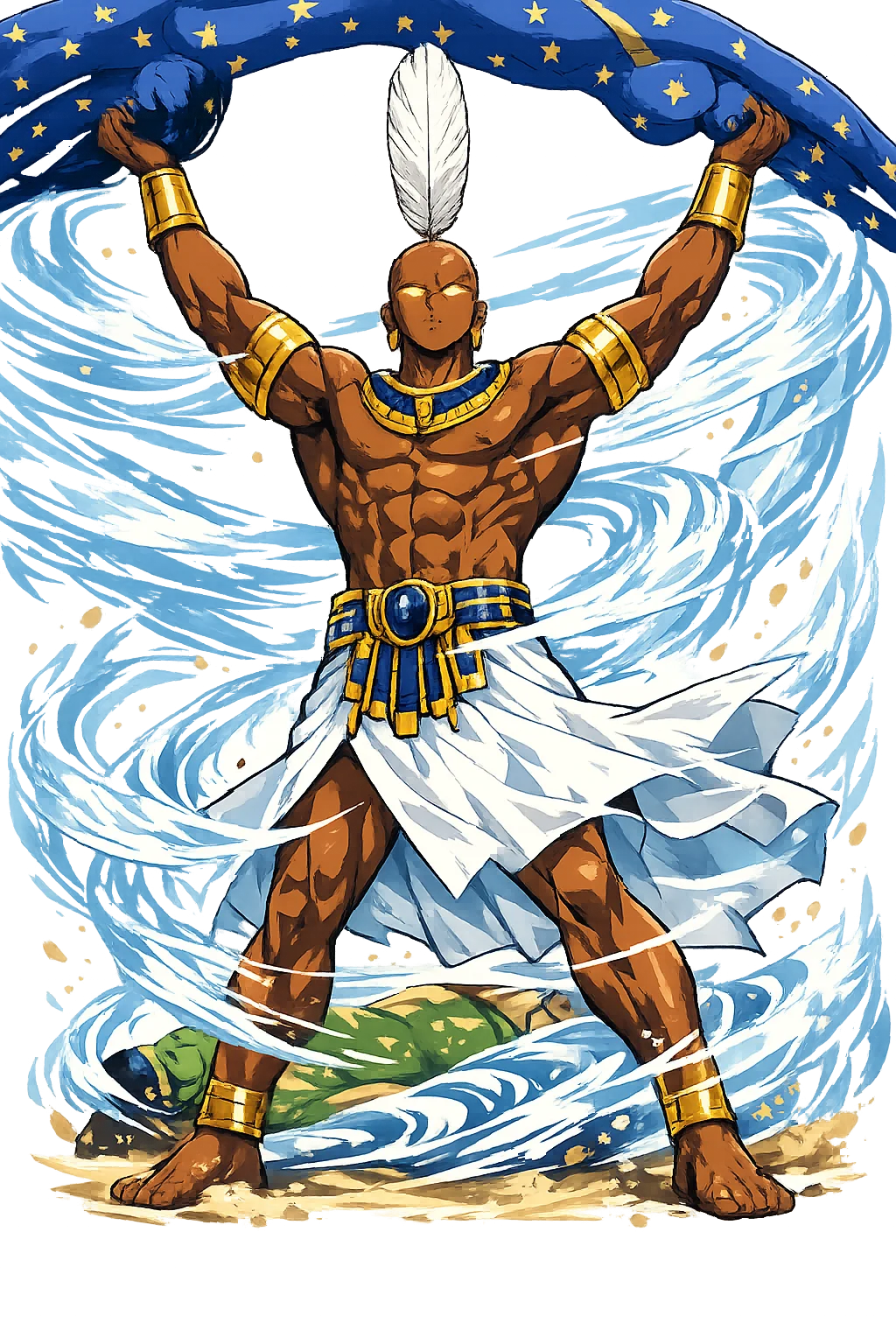
Mꜣ in 2026: why scholars still care
In 2026, names are treated as data points. Mꜣ is a reminder that they are also cultural artifacts — and that the difference matters for search engines, AI training corpora, and anyone who types the name of a Egyptian figure into a browser. Scholars never stopped caring about the difference between ma and Mꜣ; the web simply made that care actionable. What follows is the full scholarly picture — name, script, sound, myth, cult, and legacy — followed by the engineering compromise that lets a restored spelling live at a real address. The question is not whether the name is old. It is whether the digital world is old enough to hold it.
At a Glance
- Restored name: Mꜣ
- ASCII form: ma
- Meaning: "Truth, rightness, correctness, measure. Root of Maat (mꜣꜥt), the cosmic principle of truth and order"
- Domain of influence: Truth, Rightness, Correctness, Measure
- Pantheon: Egyptian
- Classification: Tier 2
- Original script: 𓌴𓏤 (Hieroglyphs)
- Live domain: mꜣ.com
Overview
Mꜣ (ma) — Truth, Rightness, Correctness, Measure · Truth, rightness, correctness, measure. Root of Maat (mꜣꜥt), the cosmic principle of truth and order — belongs to the Egyptian tradition, where it is catalogued under the domain "Truth, Rightness, Correctness, Measure". The name means "Truth, rightness, correctness, measure. Root of Maat (mꜣꜥt), the cosmic principle of truth and order".
Mꜣ is the Egyptian root for what is straight, true, right, and in measure. It is not merely an abstract virtue; it is the line against which the cosmos, society, and the individual life are tested. From this root comes Mꜣꜥt, the goddess of truth, whose feather is weighed against the heart of the dead. To say mꜣ is to invoke the standard by which all things are judged.
PuniCodex restores the name as Mꜣ and serves its temple at mꜣ.com. The original preserves one prosodic feature — stress or vowel length — rather than both, which places the name in Tier 2. The plain ASCII form ma survives as a modern convenience imposed by the early domain-name system; the restoration, not the fallback, is the form the project defends as philologically complete.
The Name
The name is attested in Hieroglyphs as 𓌴𓏤. Etymologically it means "Truth, rightness, correctness, measure. Root of Maat (mꜣꜥt), the cosmic principle of truth and order".
The ASCII form ma survives only because the early domain-name system could not carry diacritics; it is a technological compromise, not an ancient spelling. The Unicode restoration Mꜣ recovers the full diacritic detail of the scholarly transliteration directly in the address bar. The original preserves one prosodic feature — stress or vowel length — rather than both, which places the name in Tier 2.
The letter-by-letter transformation runs:
- m → M — Same, capitalized
- a → ꜣ — Special phonetic character
The project holds the domain mꜣ.com (xn--m-yw3e.com) as the canonical home of this name.
The Original Script
The name is preserved in Hieroglyphs as 𓌴𓏤 — Egyptian hieroglyphic, attested Old Kingdom – Late Antiquity, c. 2600 BCE – 400 CE, in Egypt. The script is written right-to-left / top-to-bottom.
The scholarly transliteration is Mꜣ (Egyptological conventional), giving the normalized reading Original vocalisation unknown; Egyptological /maːʕ/..
The rendering proceeds step by step:
- The Egyptian name is written 𓌴𓏤 in hieroglyphs.
- Hieroglyphs combine logograms, phonograms, and determinatives; the exact function of each sign depends on context.
- Egyptian writing does not record vowels; the vocalised form is a modern convention reconstructed from Coptic and Greek evidence.
- The Unicode restoration Mꜣ uses Egyptological alef/ayin and other registrable characters; the hieroglyphic form is not registrable in .com.
Pronunciation
The reconstructed pronunciation of the name is /maːʕ/ — Egyptological Reconstruction.
Phoneme by phoneme:
- m — Bilabial nasal [m], the first consonant of the root for truth, straightness, and measure
- ꜣ — Egyptological alef, a glottal stop or voiced pharyngeal placeholder; the exact value is debated, but it closes the root mꜣ
- a — Long open vowel [aː], supplied by convention; the hieroglyphs record only m-ꜣ
For the modern speaker, the closest approximation is: MAH-ʿA — a prolonged 'ma' followed by a slight catch in the throat where the alef sits.
Kindred and historical forms of the name:
- Egyptian hieroglyphs — 𓌳𓂝𓏏𓆇 (mꜣꜥt), the feather of truth upon the hieroglyph for 'straight'
- Coptic — ⲙⲉ (me), the late Egyptian word for truth, measure, and what is right
- Expanded divine form — Mꜣꜥt (Maat), the goddess who personifies the cosmic order rooted in mꜣ
Mꜣ is the monosyllabic root from which the goddess Mꜣꜥt ('Maat') is derived. The Unicode form preserves the Egyptological alef (ꜣ) as the registrable stand-in for the final consonant. It is Tier 2: a single consonantal-plus-vowel restoration without stress or length marking on the final root consonant.
Mythology
Mꜣ has no independent mythic biography because it is the principle that makes biography possible. It appears in every major Egyptian funerary and royal text as the standard against which lives, deeds, and even gods are measured. Its personification, Mꜣꜥt, sits in the solar barque and stands at the throne of every legitimate king.
The Weighing of the Heart (Book of the Dead)
In Spell 125 of the Book of the Dead, the deceased enters the Hall of the Two Truths and declares before Osiris and the forty-two assessors that he has not committed theft, murder, falsehood, or any of the sins that disturb mꜣꜥt. His heart is placed on the scales opposite the feather of Mꜣꜥt. If the heart is light, he passes into the blessed west; if heavy, the monster Ammit devours it and the soul is annihilated.
Mꜣꜥt in the Barque of Ra (Solar Theology)
Temple texts place Mꜣꜥt beside Ra in the solar barque. She is the ordering power that steadies the sun's journey through the night hours of the Duat, ensuring that chaos does not swallow the light. Kings offer small statues of Mꜣꜥt to the gods to renew the cosmic contract each day.
The King as Upholder of Mꜣꜥt (Royal Ideology)
Every pharaoh rules as the earthly guardian of mꜣꜥt. Temple reliefs show the king presenting an image of Mꜣꜥt to the gods, a gesture that says: 'I have kept the world in balance.' Coronation rites, festival processions, and the daily temple cult all rehearse this offering, making kingship an act of cosmic maintenance.
Symbols & Iconography
The iconography of Mꜣ concentrates in a small set of recurring attributes, each a compressed statement about the name:
- Ostrich feather — Worn upright on the goddess's head; the feather sign (Gardiner H6) also writes the word mꜣꜥt logographically, so that her emblem and her name are the same grapheme.
- Set-square or plummet line — The builder's instrument that makes a wall true, extended metaphorically to moral straightness
- Scales of judgment — The balance on which the heart is weighed against the feather in Spell 125 of the Book of the Dead
- Kneeling goddess with feather — Mꜣꜥt personified, present at the enthronement of kings and the judgment of the dead
- Outspread wings — On coffins and stelae Maat mantles the dead with her wings as Isis and Nephthys do, extending the same feathered protection to the justified.
Archaeology & Evidence
The concept of mꜣꜥt is ubiquitous in Pharaonic material culture. The judgment vignette — scales, feather, and waiting monster — appears on tomb walls and on Book of the Dead papyri of the New Kingdom and later; the Papyrus of Ani (British Museum EA 10470) and the Book of the Dead of Hunefer (British Museum EA 9901) are the most famous witnesses. Feather-shaped amulets carried the sign onto the mummy, and temple reliefs from Karnak to Edfu endlessly repeat the scene of the king presenting a small figure of Maat to the gods. Maat also held cultic space of her own: a small temple dedicated to her stands in the Montu precinct at North Karnak, built by Hatshepsut on earlier New Kingdom foundations, and under the later Ramessides it served as a venue of the court that tried the royal-tomb robberies. From the Old Kingdom onward, judges and viziers wore her feather pendant and bore the title 'priest of Maat' (ḥm-nṯr mꜣꜥt).
Realm & Domain
Mꜣ is the Egyptian root for what is straight, true, right, and in measure. It is not merely an abstract virtue; it is the line against which the cosmos, society, and the individual life are tested. From this root comes Mꜣꜥt, the goddess of truth, whose feather is weighed against the heart of the dead. To say mꜣ is to invoke the standard by which all things are judged.
The Feather of Truth
The ostrich feather of Mꜣꜥt is weighed against the deceased's heart in the judgment hall of Osiris.
Straightness and Measure
Mꜣ governs geometry, law, and the moral axis that keeps maat from slipping into isfet (chaos).
Cosmic Order
Kings rule by upholding mꜣꜥt; the sun's daily course, the Nile's flood, and justice on earth all depend on it.
Judicial Testimony
In temple oaths and legal documents, one swears by mꜣꜥt; to lie is to throw the cosmos out of alignment.
Across Cultures
Mꜣ is almost always expanded into the goddess Mꜣꜥt in cult and art, yet the root itself underlies Egyptian ethics, law, and cosmology. Greeks and Romans identified Mꜣꜥt with Dike or Justitia, and the image of the heart weighed against a feather influenced later Mediterranean and Christian ideas of post-mortem judgment. In modern discussions of ancient Egyptian philosophy, mꜣꜥt is often cited as one of the earliest systematic concepts of cosmic justice.
Within the Egyptian tradition, closely related names in the corpus include [[ab|Ꜣb]], [[akh|Ꜣḫ]], [[amun|Ꜣmun]], [[ankh|ꜥnḫ]], [[apep|Ꜥpp]], and [[ba|Bꜣ]].
Cultural Legacy
The root mꜣ survives in every museum exhibit of the Book of the Dead and in every account of Egyptian ethics. The judgment vignette of the Papyrus of Ani — feather against heart — is among the most widely reproduced images in Egyptian art, and it has fixed Maat's feather in the global imagination as the very shape of justice; comparisons between her scales and the blindfolded Justitia of Western courts are a staple of legal iconography. Modern scholarship has made the concept a cornerstone of the study of Egyptian law, kingship, and ethics: Jan Assmann's monograph treats maat as the hinge between Egyptian religion and justice, while Maulana Karenga's study presents it as a classical African ethical system that has become foundational in contemporary African and diaspora philosophy. Contemporary Kemetic movements that speak of 'living in maat' draw on the same ancient idea: truth is not merely verbal honesty but the active maintenance of order against entropy and deceit.
The Scholarly Record
The account of Mꜣ given in this edition rests on the witnesses and reference works listed below. Lexica and etymological dictionaries secure the form and meaning of the name; the literary and religious texts supply the narrative evidence.
- Book of the Dead, Spell 125 (Negative Confessions and the weighing of the heart).
- Faulkner, A Concise Dictionary of Middle Egyptian.
- Wb, mꜣꜥt (Erman & Grapow).
- Allen, Middle Egyptian: An Introduction to the Language and Culture of Hieroglyphs.
- Assmann, Ma'at: Gerechtigkeit und Unsterblichkeit im Alten Ägypten.
- Hornung, Conceptions of God in Ancient Egypt.
- Teeter, Religion and Ritual in Ancient Egypt.
- Karenga, Maat: The Moral Ideal in Ancient Egypt.
A Meditation
Mꜣ is the Egyptian word for the straight line in a crooked world. It asks not only that we tell the truth but that we measure our lives against a standard larger than desire or power. In the Hall of Judgment it is not wealth or fame that is weighed; it is the lightness of a heart that did not lie, steal, or break the social bond.
The scale does not ask what a person believed, only how a life sat against the feather. That is the severity and the clarity of the concept: order is not a theory to be held but a weight to be carried — in the granary, the courtroom, and the heart. Egyptian thought could imagine a king failing the test as readily as a farmer, because maat answers to no one; the gods themselves 'live on maat' as much as mortals do. The feather judges upward as well as downward, which is how a word of three consonants became the conscience of a civilization. To restore mꜣ in Unicode is to restore a word that still judges us.
The Unicode Restoration
Mꜣ is classified as Tier 2: the original preserves at least one philological feature that ASCII cannot encode. The ASCII fallback ma still resolves everywhere, but it is the restored form that carries the name's full information. Across the 2 characters of the name, the restoration adjusts 1: 1 further adjustment (ꜣ). That is the whole thesis of this temple: the marks are the message.
Character by Character
The journey from ma to Mꜣ, one character at a time:
- m → M — Same, capitalized
- a → ꜣ — Special phonetic character
The Domain Name
The restored name is live as a working domain: mꜣ.com, which the DNS carries in punycode form as xn--m-yw3e.com — an ASCII-compatible encoding that lets a non-ASCII name travel the global network without breaking older infrastructure. The visitor sees Mꜣ; the machines see the encoding. That duality is the engineering compromise on which the entire restoration rests, and it is why a name written the way its own tradition wrote it in Hieroglyphs can now be typed into any browser on earth.
The Egyptian Pantheon
Mꜣ is one of 66 entries the PuniCodex lexicon catalogues under the Egyptian pantheon. The Pantheon page gathers the tradition's major figures in one place, and the Lexicon lets you filter all 895 restorations by tradition, tier, or script — the fastest way to see where this name sits among its kin.
Frequently Asked Questions
What does Mꜣ mean? The traditional gloss is "Truth, rightness, correctness, measure. Root of Maat (mꜣꜥt), the cosmic principle of truth and order."
Which tradition does Mꜣ belong to? Mꜣ is catalogued in the Egyptian pantheon of the PuniCodex lexicon.
Why is Mꜣ classified as Tier 2? Because the original preserves at least one philological feature that ASCII cannot encode — and the marks in the restored spelling preserve exactly that evidence.
Is Mꜣ a working domain? Yes — mꜣ.com resolves today and routes to this temple.
What is the punycode for mꜣ.com? The DNS encoding is xn--m-yw3e.com; browsers perform the translation automatically, so visitors only ever see the restored name.
Typing Mꜣ
You do not need a special keyboard to use this restoration. The PuniCodex Type Tool converts the ASCII form ma into Mꜣ as you type, and the browser extension offers the same conversion inside any text field. Copy the restored form, paste it into the address bar, and the DNS does the rest.
Sister Temples
Other temples in the Egyptian pantheon include Ḫnmw, Ḫp, and Mꜥ — each with its own restoration story, its own scholarly record, and its own place in the lexicon.
Why This Restoration Matters
In 2026 the stakes are practical. Search indexes, language models, and localization pipelines all inherit whatever spelling the web normalizes — which means every Unicode domain is also a training signal. Mꜣ teaches the machinery that the restored form exists, that it is used, and that it points to a real place. That is why a project built on philology ends up caring about DNS: the infrastructure decides which names the future sees. This restoration makes sure the future sees the whole name.
Explore Further
This post is one doorway into the temple. The home page carries the full character breakdown and the ambient canvas; the lore page tells the myths in long form; the Scholarly Edition preserves the sources, pronunciation data, and revision history; and the patron wall supports the restoration directly. For the wider map, browse the Lexicon, explore the Pantheon, or return to the PuniCodex blog.
Related Names
Sources
The full scholarly apparatus — every citation, revision, and review — lives in the Scholarly Edition. Key references for this post:
- James P. Allen, Middle Egyptian: An Introduction to the Language and Culture of Hieroglyphs, Cambridge University Press, 2000.
- Book of the Dead, Spell 125 (Negative Confessions and the weighing of the heart).
- Faulkner, A Concise Dictionary of Middle Egyptian.
- Wb, mꜣꜥt (Erman & Grapow).
- Wilkinson, Reading Egyptian Art: A Hieroglyphic Guide to Ancient Egyptian Painting and Sculpture (1992).
- Lexicon authorities for this entry: Faulkner, Wb.