
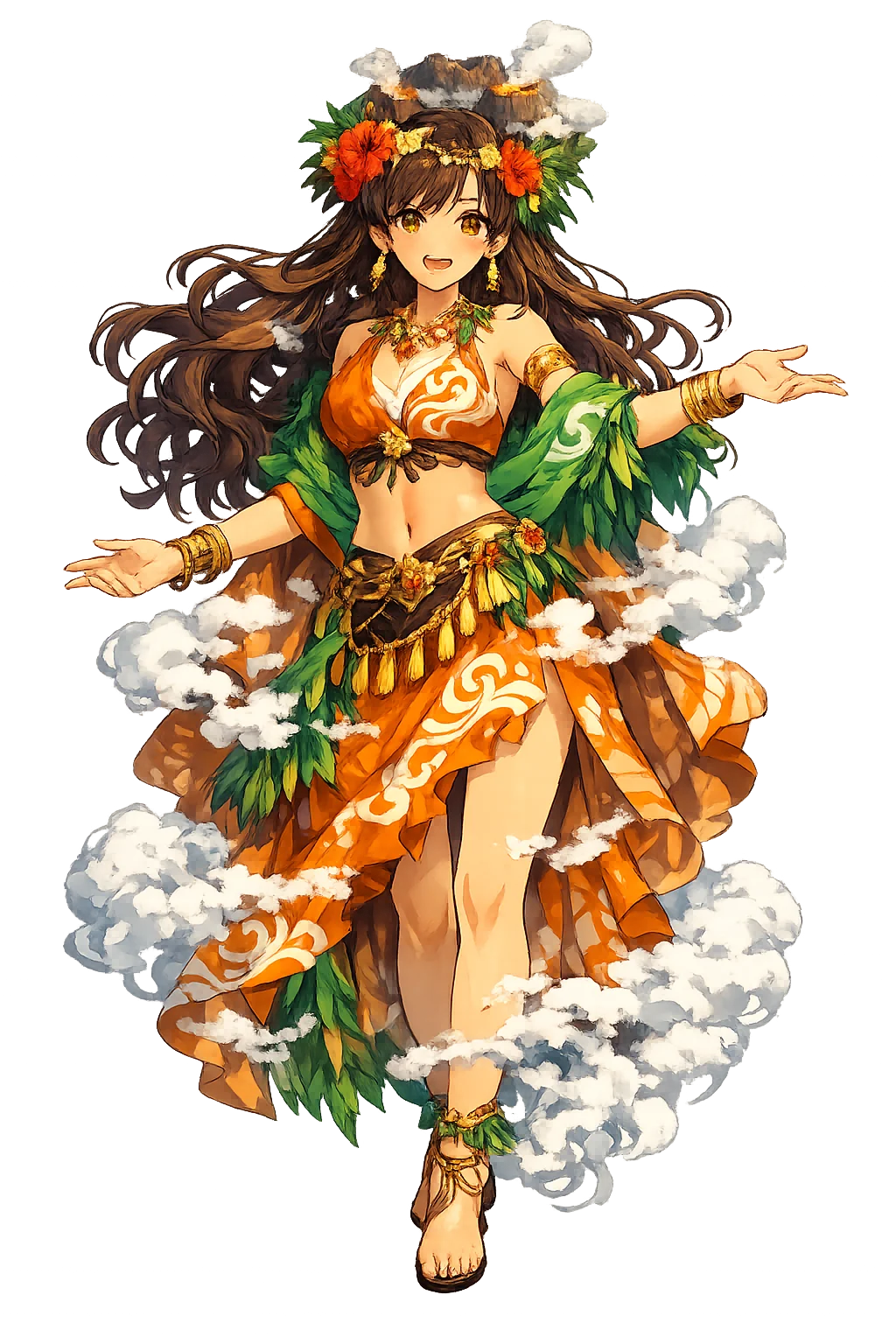
Pronouncing Kyūshū: a guide for the curious
Saying Kyūshū aloud is harder than reading it on a screen, and more rewarding. The restored spelling is a compressed pronunciation guide: every accent and macron is an instruction. This post unpacks those instructions — the reconstructed sound, the phoneme-by-phoneme record, the kindred forms in neighboring languages — and then zooms out to the full record around the name: its Japanese characters writing, its mythology, its cult, and its modern life as a Unicode domain. Whether you arrive as a linguist, a reader of myth, or a domainer, you will leave able to say the name the way the evidence suggests it was said — and able to type it the way it was written.
At a Glance
- Restored name: Kyūshū
- ASCII form: kyushu
- Meaning: "'Nine provinces' (九州)"
- Domain of influence: South, Volcanoes, Origins
- Pantheon: Japanese
- Classification: Tier 2
- Live domain: kyūshū.com
Overview
Kyūshū (kyushu) — The Nine Provinces — belongs to the Japanese tradition, where it is catalogued under the domain "South, Volcanoes, Origins". The name means "'Nine provinces' (九州)".
Kyūshū is Japan's front door: the island facing Korea and China across the narrowest straits, where the continent's rice, Buddhism, and iron first arrived — and where the Mongol fleets, the Portuguese traders, and the Jesuit fathers all made their landfall. The gateway of Japan has always stood open on this shore, even when the country tried to shut it.
PuniCodex restores the name as Kyūshū and serves its temple at kyūshū.com. The original preserves one prosodic feature — stress or vowel length — rather than both, which places the name in Tier 2. The plain ASCII form kyushu survives as a modern convenience imposed by the early domain-name system; the restoration, not the fallback, is the form the project defends as philologically complete.
The Name
No indigenous written attestation survives for this name; Kyūshū is a scholarly transliteration of the reconstructed spoken form. Etymologically the name means "'Nine provinces' (九州)".
The ASCII form kyushu survives only because the early domain-name system could not carry diacritics; it is a technological compromise, not an ancient spelling. The Unicode restoration Kyūshū recovers the vowel length of the original directly in the address bar. The original preserves one prosodic feature — stress or vowel length — rather than both, which places the name in Tier 2.
The letter-by-letter transformation runs:
- k → K — Same letter
- y → y — Same letter
- u → ū — Macron marks the long vowel
- s → s — Same letter
- h → h — Same letter
- u → ū — Macron marks the long vowel
The project holds the domain kyūshū.com (xn--kysh-w7ac.com) as the canonical home of this name.
The Original Script
The original script for this japanese name has not yet been added to PUNICODEX. The form shown is a scholarly transliteration.
The form Kyūshū is therefore a scholarly transliteration rather than an attested ancient spelling; it encodes the reconstructed sound of the name for modern use, and no mark in it is decorative.
Written 九州: kyū (nine) plus shū (province). The island's ancient name 筑紫 (Tsukushi) is preserved in the Kojiki's island-birth account — "Kyūshū" is the administrative name that replaced the mythic one and quietly kept the older island's memory of division.
Pronunciation
The reconstructed pronunciation of the name is /kjɯː.ɕɯː/ — Japanese (Hepburn).
For the modern speaker, the closest approximation is: KYOO-shoo, with the compressed ky- onset and long vowels.
Kindred and historical forms of the name:
- Japanese — 九州
- Ancient name — Tsukushi
- Owned form — Kyūshū
Kyūshū 九州 — "Nine Provinces" — carries the long ū in both syllables, both preserved in the restoration. The name remembers the island's ancient division into nine provinces; its older name, Tsukushi, appears in the earliest chronicles as the gateway of the gods' descent. Both syllables are long in kana (きゅうしゅう); the two macrons of the restoration are the two doubled vowels.
Mythology
Kyūshū claims the mythology of beginnings: the chronicles land the sun goddess's grandson on its peaks, and its storms wrote themselves into the national soul.
Ninigi on Takachiho (The Descent)
The Kojiki and Nihon Shoki bring the heavenly grandson Ninigi down to earth on the peak of Takachiho — placed by tradition in Kyūshū's mountains — where he marries the blossom-princess Konohanasakuya-hime. She proves her divine conception by setting fire to the birthing hut and delivering three sons amid the flames; their line leads to Jimmu, the first emperor. The imperial charter myth is, geographically, a Kyūshū story.
The Divine Wind (The Storm)
Twice the Mongol-Chinese fleets of Kublai Khan reached Kyūshū — 1274 and 1281, the second numbering thousands of ships — and twice, after hard fighting on the Hakata beaches, typhoons destroyed the armadas. The shrines had prayed for deliverance, and the nation named the storm kamikaze, "divine wind": weather as providence, and the coast of Hakata Bay as the sacrificial altar of the world's largest seaborne invasions.
The Kirishitan Century (The Hidden Faith)
Francis Xavier landed at Kagoshima in 1549; within decades Kyūshū had a quarter-million Christians, daimyō baptized with their domains, and seminaries at Arima and Azuchi. Then came the turn: persecution, crucifixions at Nagasaki, the Shimabara-Amakusa rising of 1637 — and 250 years of hidden Christians keeping Latin prayers in corrupted Japanese, baptizing in secret, venerating statues of Kannon as Maria. Their revelation in 1865, when farmers of Urakami knelt before a French priest, stunned the mission world.
Symbols & Iconography
The iconography associated with Kyūshū concentrates in a small set of recurring attributes, each a compressed statement about the name:
- The kamikaze banner — The storm as protector — weather enlisted in the national myth
- The Aso caldera — One of the world's great volcanic craters — the island's fiery heart
- The Dejima fan — The tiny artificial island that carried Europe into Japan for 200 years
Archaeology & Evidence
Yoshinogari, in Saga, is East Asia's great Yayoi site: a moated, towered settlement of two thousand years ago, with mass jar-burials and bronze-weapon caches — the archaeological face of the Wa people whom Chinese chronicles describe. The underwater archaeology of Takashima's Mongol wrecks — anchor stones, bombs, and hulls preserved in Imari Bay — has recovered the kamikaze fleets themselves. The hidden Christian sites of the Amakusa islands and Nagasaki's Ōura Cathedral (1864, built for the returned faith) are UNESCO-listed as the "Hidden Christian Sites in the Nagasaki Region."
Realm & Domain
Kyūshū is Japan's front door: the island facing Korea and China across the narrowest straits, where the continent's rice, Buddhism, and iron first arrived — and where the Mongol fleets, the Portuguese traders, and the Jesuit fathers all made their landfall. The gateway of Japan has always stood open on this shore, even when the country tried to shut it.
The Straits
Tsushima and Korea are a day's sail — Asia has always been closer here than Tōkyō.
The Kamikaze
The "divine wind" typhoons of 1274 and 1281 that shattered two Mongol invasion fleets off this coast.
Nagasaki
The one window kept open in the closed country: two centuries of Dutch and Chinese trade through a single fan-shaped island.
The Christian Century
Xavier's 1549 landing, a quarter-million converts, the Shimabara rising, and the hidden Christians' 250-year secret.
Across Cultures
Kyūshū is Japan's syncretic laboratory: Korean potters founding Arita porcelain, Chinese merchant quarters at Nagasaki, Portuguese words entering the language (pan, tempura, kappa), Dutch learning (Rangaku) flowing through Dejima into Japanese science — anatomy, astronomy, and artillery smuggled in translation. The island's cuisine, dialects, and crafts all carry the gateway's mark: everything Japanese that came from outside came here first.
Within the Japanese tradition, closely related names in the corpus include [[fujin|Fūjin]], [[hokkaido|Hokkaidō]], [[honshu|Honshū]], [[jizo|Jizō]], [[kobe|Kōbe]], and [[kyoto|Kyōto]].
Cultural Legacy
The kamikaze of 1281 gave the 20th century its most terrible word; Nagasaki's 1945 atomic bombing made the island a symbol of the nuclear age's cost, and its peace park one of the world's pilgrimage sites of memory. Arita and Imari porcelain conquered European markets and imitators for three centuries. Today the island's universities and semiconductor fabs continue the oldest pattern: the gateway as Japan's technology shore.
The Scholarly Record
The account of Kyūshū given in this edition rests on the witnesses and reference works listed below. Lexica and etymological dictionaries secure the form and meaning of the name; the literary and religious texts supply the narrative evidence.
- Kojiki (Records of Ancient Matters), Translated by Basil Hall Chamberlain, 712. Full text
- Nihon Shoki (Chronicles of Japan), Translated by W. G. Aston (excerpts), 720. Full text
- Shinto, Kojiki, Nihon Shoki, shrine rituals, and folk practice, various.
- Kokugo dictionaries (Nihon Kokugo Daijiten / Kōjien / Daijisen), Shōgakukan / Sanseidō, various.
- Japanese folklore, Kojiki, Nihon Shoki, and folk tale collections, various.
- Cambridge Ancient History, Multiple volumes, 1970. Full text
A Meditation
Kyūshū is the island that opens. Rice, writing, Buddhism, gunpowder, Christianity, Western science — all knocked on this shore, and Japan answered differently each time: embrace, storm, secrecy, translation. It asks the gateway's question, which is every border's question: what do you let in — and what does the letting-in make of you?
The gateway's pattern persists in silicon: the island that took in rice, iron, scripture, and surgery now takes in the semiconductor supply chain, and Kumamoto's fabs are Tsukushi's old role in new matter. Every borderland knows its double exposure — first to the gift, first to the invasion — and Kyūshū's answer has been constant for two thousand years: translate everything, fear nothing twice, and keep the door's hinges oiled.
And the island's two great memories — the divine wind and the atomic one — face each other across eight centuries: the storm that saved and the bomb that burned, both arriving from the same sky over the same coast. Kyūshū carries them without resolving them, which is the gateway's last lesson: the shore that opens to the world must be ready for everything the world brings, the sutra and the cannonball, the virus and the vaccine, the answer arriving, as always, by sea.
The straits have not moved; the gateway still opens each morning to the same west. What changes is only the cargo — sutras once, silicon now — and the island's ancient readiness to receive it, translate it, and make it Japanese.
The Unicode Restoration
Kyūshū is classified as Tier 2: the original preserves at least one philological feature that ASCII cannot encode. The ASCII fallback kyushu still resolves everywhere, but it is the restored form that carries the name's full information. Across the 6 characters of the name, the restoration adjusts 2: 2 marks of length (ū, ū). That is the whole thesis of this temple: the marks are the message.
Character by Character
The journey from kyushu to Kyūshū, one character at a time:
- k → K — Same letter
- y → y — Same letter
- u → ū — Macron marks the long vowel
- s → s — Same letter
- h → h — Same letter
- u → ū — Macron marks the long vowel
The Domain Name
The restored name is live as a working domain: kyūshū.com, which the DNS carries in punycode form as xn--kysh-w7ac.com — an ASCII-compatible encoding that lets a non-ASCII name travel the global network without breaking older infrastructure. The visitor sees Kyūshū; the machines see the encoding. That duality is the engineering compromise on which the entire restoration rests, and it is why a name written the way its own tradition wrote it in Japanese characters can now be typed into any browser on earth.
The Japanese Pantheon
Kyūshū is one of 45 entries the PuniCodex lexicon catalogues under the Japanese pantheon. The Pantheon page gathers the tradition's major figures in one place, and the Lexicon lets you filter all 915 restorations by tradition, tier, or script — the fastest way to see where this name sits among its kin.
Frequently Asked Questions
What does Kyūshū mean? The traditional gloss is "'Nine provinces' (九州)."
Which tradition does Kyūshū belong to? Kyūshū is catalogued in the Japanese pantheon of the PuniCodex lexicon.
Why is Kyūshū classified as Tier 2? Because the original preserves at least one philological feature that ASCII cannot encode — and the marks in the restored spelling preserve exactly that evidence.
Is Kyūshū a working domain? Yes — kyūshū.com resolves today and routes to this temple.
What is the punycode for kyūshū.com? The DNS encoding is xn--kysh-w7ac.com; browsers perform the translation automatically, so visitors only ever see the restored name.
Typing Kyūshū
You do not need a special keyboard to use this restoration. The PuniCodex Type Tool converts the ASCII form kyushu into Kyūshū as you type, and the browser extension offers the same conversion inside any text field. Copy the restored form, paste it into the address bar, and the DNS does the rest.
Sister Temples
Other temples in the Japanese pantheon include Inari, and Kagutsuchi — each with its own restoration story, its own scholarly record, and its own place in the lexicon.
Why This Restoration Matters
Pronunciation turns out to be the heart of the matter. The marks in Kyūshū are instructions for the voice, and a web that strips them is a web that mispronounces the past at scale. The restoration hands the instructions back: say it as the evidence suggests, type it as the tradition wrote it, and let the punycode machinery do the quiet translation in between. That is all the PuniCodex project asks of the infrastructure — and everything it asks of you, the reader, is to use the whole name.
Explore Further
This post is one doorway into the temple. The home page carries the full character breakdown and the ambient canvas; the lore page tells the myths in long form; the Scholarly Edition preserves the sources, pronunciation data, and revision history; and the patron wall supports the restoration directly. For the wider map, browse the Lexicon, explore the Pantheon, or return to the PuniCodex blog.
Related Names
Sources
The full scholarly apparatus — every citation, revision, and review — lives in the Scholarly Edition. Key references for this post:
- Kojiki (Records of Ancient Matters), Translated by Basil Hall Chamberlain, 712.
- Nihon Shoki (Chronicles of Japan), Translated by W. G. Aston (excerpts), 720.
- Cambridge Ancient History, Multiple volumes, 1970.
- Shinto, Kojiki, Nihon Shoki, shrine rituals, and folk practice, various.
- Kokugo dictionaries (Nihon Kokugo Daijiten / Kōjien / Daijisen), Shōgakukan / Sanseidō, various.
- Japanese folklore, Kojiki, Nihon Shoki, and folk tale collections, various.
- Kojiki and Nihon Shoki (Tsukushi); the provincial records (fudoki).
- Lexicon authorities for this entry: Nihon Shoki, Kokugo dictionaries.