PuniCodex

Extended Lore

Κλειώ Kleió

Etymology · Phonology · Orthography · Cultural Legacy · Primary Sources

Tier 1 Kleiṓ.com
Kleió — History
01

Quick Facts

Essential information about Kleió, History

Original ScriptΚλειώ
Unicode RestorationKleió
Reconstructed Pronunciation/kleː.ɔ́ː/
PantheonGreek
DomainHistory
MeaningProclaimer, glorifier
ClassificationTier 1
Primary DomainKleiṓ.com
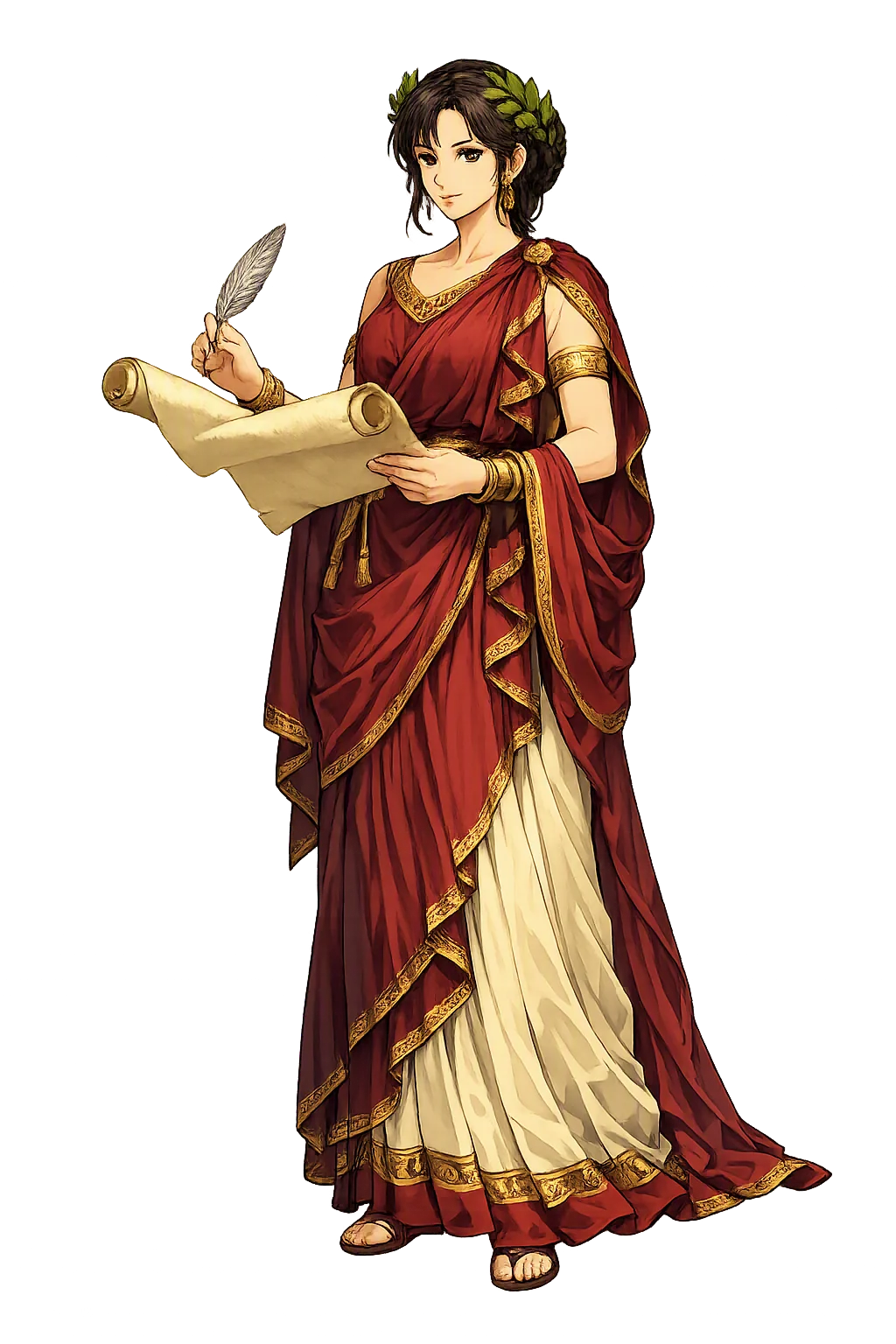
Sacred SymbolsOpen scroll (volumen), Chest of books (capsa), Writing tablets and stylus, Laurel wreath, Trumpet of Fame
02

Etymology & Word Family

From original script to Unicode restoration

Original Script Κλειώ Kleió — "Proclaimer, glorifier"
Unicode Restoration Kleió Restored stress, length, and script
Modern ASCII kleio Plain-ASCII fallback

Kleiṓ is Tier 1: the Greek original Κλειώ carries both acute stress and the long vowel ω. The restoration preserves both features — the macron marking the long ō and the acute marking the accented syllable — which the ASCII form 'Kleio' loses.

03

Unicode Character Breakdown

Character-by-character philological analysis

CharacterUnicodeNameBlockPhonetic Role
KU+004BLatin Capital Letter KBasic LatinK uppercase
lU+006CLatin Small Letter LBasic Latinl same
eU+0065Latin Small Letter EBasic Latine same
iU+0069Latin Small Letter IBasic Latini same
óU+00F3Latin Small Letter O with AcuteLatin-1 SupplementAcute on o

The Tier 1 classification reflects how much of the original phonology this restoration preserves — stress and vowel length for Greek names, distinctive letters and diacritics for every other tradition.

04

Cultural Significance

From ancient cult to modern Unicode

Ancient Domain

Kleiṓ is the Muse of history — in Greek terms, of ἱστορία, 'inquiry, research'. First-named of the nine daughters of Zeus and Mnēmosýnē, her name is her office: from κλέος, 'glory', she is she who proclaims fame, the power that keeps great deeds from being erased by time. In art she sits with an open scroll or a chest of books — the archive made divine.

Kleió in Later Traditions

Rome received the Muses wholesale and gave them no new names: Kleiṓ became Clio, invoked by Latin poets and pictured on sarcophagi with her scroll. The native Camenae — Italic spring-nymphs equated with the Muses since Livius Andronicus rendered the Odyssey's 'Musa' as 'Camena' — absorbed the cult but never the individual names. In the Renaissance, Clio was lifted out of the sisterhood altogether and made the personification of History itself, book and trumpet in hand, in iconographic manuals such as Cesare Ripa's Iconologia.

Modern Legacy

She is the one Muse whose name became a discipline's nickname: historians still speak of 'Clio' when they mean their craft personified. The quantitative school of history that rose in the 1960s called itself cliometrics — her name wedded to measurement. The asteroid 84 Klio, discovered in 1865, carries her into the sky, and the Clio Awards borrow her proclamation for advertising. The word 'history' itself descends from her Greek province, ἱστορία, 'inquiry'.

Unicode Restoration as Cultural Act

Restoring Kleió in a domain name is more than orthographic accuracy. It is a statement that the internet should recognize the full range of human writing — not only the ASCII keyboard.

05

Frequently Asked Questions

Common questions about Kleió, History, and Unicode restoration

01How do you pronounce Kleió?

In reconstructed pronunciation, Kleió is /kleː.ɔ́ː/ — approximately 'kleh-OH' — two syllables; keep the first short and bright, then rise and linger on the long final ō. Not the modern 'KLY-oh'..

02What does Kleió mean?

Kleió means Proclaimer, glorifier in the greek tradition.

03What are the symbols of Kleió?

Kleió is associated with Open scroll (volumen) (Her constant attribute in Roman Muse-sarcophagi and later art: the unrolled record of human deeds.), Chest of books (capsa) (The archive she guards — history as something collected, ordered, and kept.), Writing tablets and stylus (The instruments of the recorder; ἱστορία begins as inquiry set down in notes.), Laurel wreath (The crown of poet and victor alike — kleos is the immortality that song confers.), Trumpet of Fame (A post-classical addition to her iconography: renown proclaimed across the ages.).

04What is the difference between Kleiṓ.com?

Each is a historically defensible restoration. Kleiṓ.com is the owned form: Owned domain form — the stacked marks echoing the circumflex of Κλειώ.

05Why restore Kleió in Unicode?

Plain ASCII kleio strips the stress, length, and script that make the name specific. Unicode restoration returns the name to its original written dignity.

06What is the most important myth about Kleió?

In the Theogony (53–62) Hesiod tells how Zeus lay with Mnēmosýnē, Memory, for nine nights, and how she bore nine daughters in Pieria 'of one mind, whose hearts are set upon song'. At 76–79 he names them, and Kleiṓ stands first: 'Κλειώ τ᾽ Εὐτέρπη τε…'. Their purpose is stated plainly (Theogony 55): they were born to be 'forgetfulness of evils and rest from cares' — memory, paradoxically, as the cure of sorrow.

06

Scholarly Sources

The philological foundations of this restoration

Every claim on this page is grounded in established scholarship. The orthographic restorations follow disciplinary convention. The etymological chain follows the best available reference works. This is not invention — it is resurrection through scholarship.

Lexicography & Philology

  • Hesiod
  • Liddell, H. G., Scott, R., & Jones, H. S. A Greek-English Lexicon. Oxford: Clarendon Press, 9th ed. 1996.

Primary Texts

  • Hesiod
  • Theogony
  • Apollodorus
  • Pausanias
  • Ovid
  • Orphic Hymns

Archaeology & Art History

  • Material evidence — iconography, inscriptions, and temple archaeology — for Kleió and related cults.
  • Kleiṓ never had a sanctuary of her own; her cult is the collective cult of the Muses. Pausanias (9.29–31) walked the Valley of the Muses below Mount Helicon and describes the sacred grove, the statues of the nine, and the springs Aganippe and Hippokrene near the festival ground where the Thespians held the Mouseia. Beyond Greece, the great Mouseion of Alexandria — literally a 'shrine of the Muses' — made the sisterhood the patronesses of scholarship itself, while Roman sarcophagi identify Kleiṓ within the Muse-choir by her unrolled scroll.

Religious Studies

  • Herodotus
Return

The Surface Awaits

You have traced the name from its earliest attestation to its Unicode restoration. Now return to the myth. The story is where the name lives.

Back to Lore
Kleió mascot