
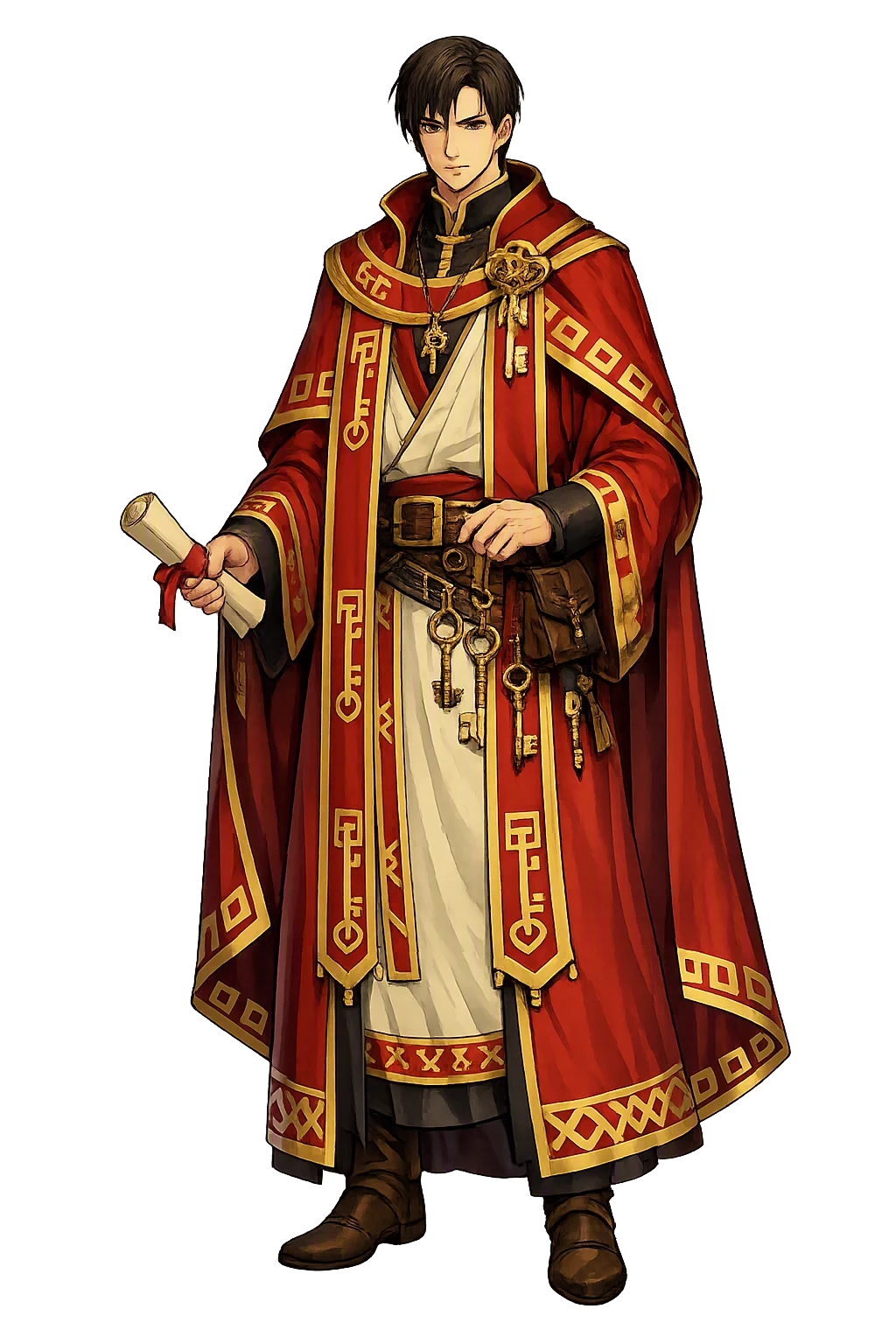
Why Kai is spelled that way — and what it costs to get it right
There is a version of this name the early internet had to settle for: kai. This is the file on how Kai replaced it.
Kai's mythology lives in the oldest stratum of Welsh Arthurian tradition: Culhwch ac Olwen gives him the tale's largest dossier after Arthur himself, and the fragmentary dialogue poem Pa Gur remembers exploits the prose never told. The later Latin and French traditions kept the man and quietly spent the magic.
At a Glance
- Restored name: Kai
- ASCII form: kai
- Meaning: "Unknown"
- Domain of influence: Seneschal, Steward
- Pantheon: Celtic
- Classification: Tier 2
- Original script: —
- Series: The Restoration Files, No. 188 of 397
The Name Before the Marks
Spoken, the name runs `/kəi/` — 'KAY' — one syllable, exactly the English name Kay; the diphthong glides from a neutral 'uh' to 'ee' inside a single beat.
The Temple That Stands Now
The restored name is not a plaque; it is an address. The temple of Kai lives at /sites/kai/, with its mythology in the lore halls, its peer-reviewed record in the Scholarly Edition, and its place in the pattern atlas on the patterns floor.
One decisive feature survives — a single, honest mark — which places the restoration in Tier-2: exact, and exactly labeled.
Where the Name Stood First
Kai is a literary figure: no inscription, ogham stone, or Romano-British dedication names him, and Welsh tradition generally left texts rather than cult monuments for its heroes. His manuscript witnesses are exact and early. The dialogue poem Pa Gur survives in the Black Book of Carmarthen (c. 1250), the oldest substantial manuscript of Welsh verse; Culhwch ac Olwen survives in a fragmentary copy in the White Book of Rhydderch (Peniarth 4–5, c. 1350) and complete in the Red Book of Hergest (Jesus College MS 111, c. 1375–1425); and the Otherworld-raid poem Preiddeu Annwn, the companion witness to this stratum, is preserved in the Book of Taliesin (Peniarth 2, early 14th c.). Geoffrey of Monmouth's Historia Regum Britanniae (c. 1136) and Lifris of Llancarfan's Vita Cadoci (c. 1100) carry the Latin attestations. The places of the tales — Caer Loyw on the Severn, the Anglesey of Cath Palug — remain on the map, but the tall man himself left nothing in stone. The temple on the web is the newest of these addresses — the first one that fits in a pocket.
The Archetype at Work
The pattern atlas seats this temple in 3 industries, each match argued and weighted: Defense, Military & Security (the tall man whose sword-stroke cannot be healed — Culhwch's first companion in every battle.); Agriculture, Food & Harvest (the steward's fire — heat from his hands to cook for the whole company; seneschal as service.); History, Archives & Records (welsh wonder-hero to Malory's Sir Kay — four centuries of the same man, documented.). The Resonance File reads those seats through the myths themselves.
The File Continues
The temple's founding dispatch tells the name's story; its Resonance File reads the myths into the industries; the blog index holds the whole archive.
Continue the series — previous file: Kꜣ (read it here) · next file: Kālī (read it here).
The Restoration Files are written from the same canonical record as the temples themselves: the lexicon, the lore catalog, the pattern atlas, and the cited scholarly sources. If a file ever disagrees with its temple, the temple is right — tell us, and the file will be corrected.