The Authentic Orthography
Light, Heavenly Watch · Light, Heavenly Watch · He who goes above (from ὑπέρ)
Unicode restoration and ASCII comparison
Ὑπερίων
The name in its original Greek form. Hyperiōn (Ὑπερίων) is attested in the source tradition — “He who goes above (from ὑπέρ)”. Its long vowels and acute accents carry the full phonetic and orthographic weight of the source tradition.
hyperion
Reduced to plain hyperion, the name loses everything that made it specific: long vowels and acute accents. What remains is an ASCII string that machines can parse but that no longer speaks with its original voice.
Hyperiōn
The Unicode restoration recovers what ASCII flattened. Hyperiōn restores long vowels and acute accents, returning the name to its original written dignity. The domain encodes to Punycode, but the browser displays the truth.
Hyperiōn.com → xn--hyperin-bmb.com
The non-ASCII characters in Hyperiōn are encoded while the ASCII remains visible. To the DNS, it is Punycode. To humanity, it is Hyperiōn.
How Hyperiōn is preserved in writing
A bespoke provenance study for Hyperiōn is being prepared by the PUNICODEX scholarly team.
Contribute scholarly provenance →Owned, ideal, and ASCII forms of Hyperiōn
Hyperíōn
Restores Ὑπερίων. The live temple domain — hyperíōn.com.
hyperion
Flattens Ὑπερίων. The plain ASCII fallback — what DNS and legacy systems see.
How Hyperiōn was spoken
Light, Heavenly Watch
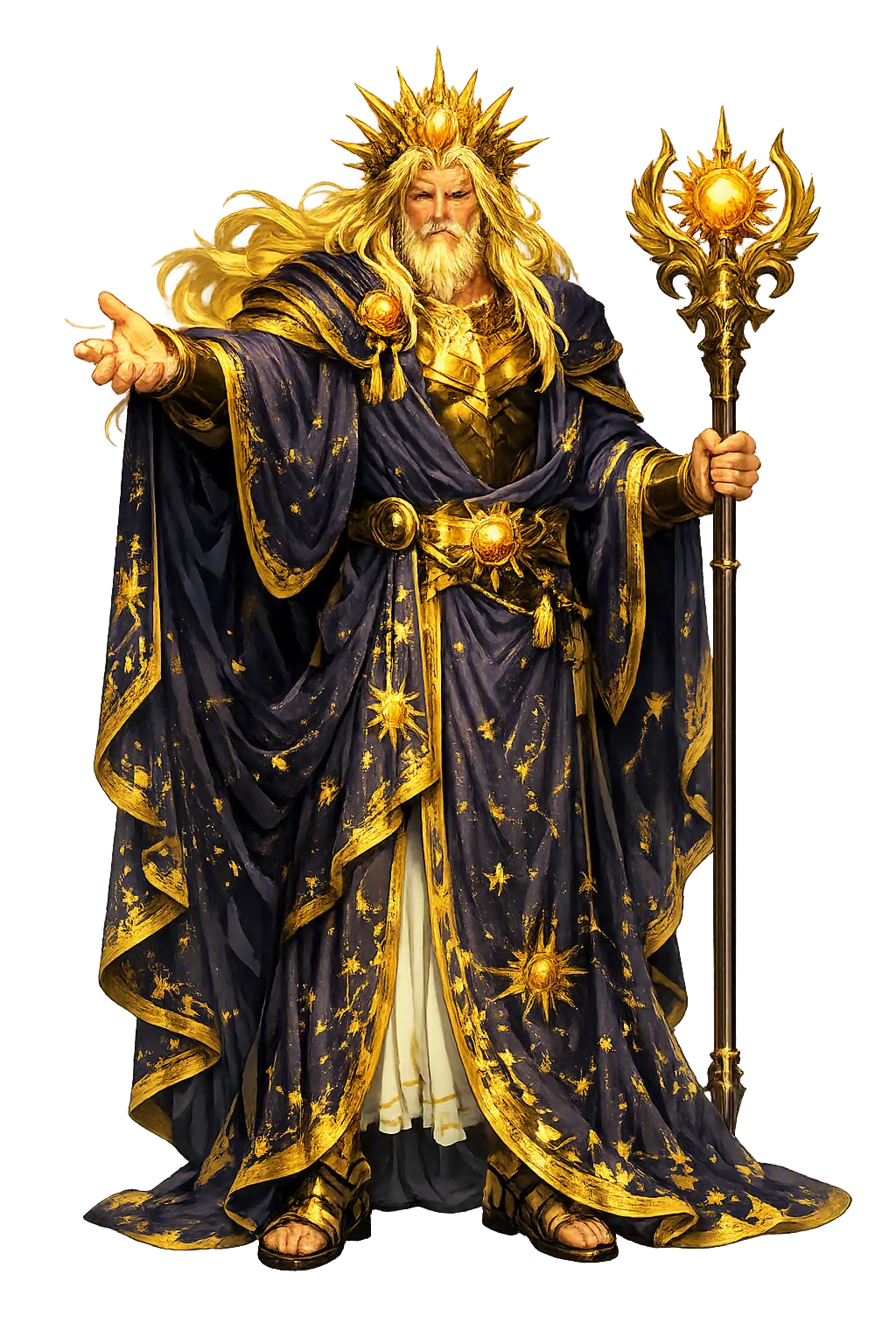
Hyperíōn is the High One — the Titan whose very name, from ὑπέρ, means 'he who goes above'. Hesiod makes him the bridge between the raw sky and its fires: son of Ouranos and Gaia, husband of Theía, and father of every light that crosses the heavens — Hēlios the Sun, Selḗnē the Moon, and Ēṓs the Dawn (Theogony 371–374). He has almost no story of his own; he is the genealogy of light itself, and in Homer his name is already spoken as a name of the sun.
Hesiod names him father of the three lights that cross the sky — Hēlios the Sun, Selḗnē the Moon, Ēṓs the Dawn (Theogony 371–374).
His name runs from ὑπέρ, 'he who goes above', and Homer already speaks Hyperíōn as a name of the sun itself (Iliad 8.480).
With Theía he begets every luminary; later poets fold his name into his son’s until Titan and Sun are spoken as one.
Stories of Hyperiōn
Hyperíōn is a Titan of lineage rather than adventure: Hesiod gives him a birth, a marriage, three luminous children, and a fall — and almost nothing else. His myths are the myths of what his name means and of what his name became.
In Theogony (132–136), Hesiod catalogues the children Gaia bore to Ouranos: the deep-swirling Ocean, then Coeus, Crius, Hyperion, and Iapetus, and with them the Titanesses — Theía, Rheía, Thémis, Mnēmosýnē, Phoíbē, and Tēthýs — and finally Krónos, 'crooked-counselled, the most terrible of her children'. Hyperíōn enters the poem with no deed attached, only a station: his name already declares it, from ὑπέρ, 'above'. He is born of the union of Sky and Earth and belongs to the sky's own house. Hesiod's silence about his character is itself telling — this Titan is a fixture of the high order of things, not a personality.
In Theogony (371–374), Hyperíōn takes his sister Theía — 'the divine one' — to wife, and she bears him Hēlios the Sun, Selḗnē the Moon, and Ēṓs the Dawn, 'who shines on all that dwell on the earth and on the deathless gods who hold broad heaven'. The marriage is a small cosmology in itself: the High One wed to the Divine produces every light that crosses the sky. Pindar opens Isthmian 5 by addressing Theía as 'mother of the Sun, of many names', the hymn-like acknowledgement of this same union. Through his children, Hyperíōn is present at every sunrise, moonrise, and daybreak — he never leaves the sky he fathered onto it.
Homer never treats Hyperíōn as a separate god: the name arrives already fused with the sun. In Iliad 8 (479–481), Zeus pictures the nether gloom where Iápetos and Krónos sit 'rejoicing neither in the rays of Hyperion the Sun (Ὑπερίονος Ἠελίοιο) nor in the winds', and Odyssey 1 (8) opens the Thrinakía story with the same compound, 'Hyperion the Sun'. Scholars divide honestly on the grammar: is Ὑπερίων here a patronymic — the Sun as 'son of Hyperion' — or an epithet — the Sun himself as 'the one above'? Both readings have ancient defenders, and later Greek and Roman poets simply settle it by usage, letting 'Hyperion' stand alone as the sun. The ambiguity is old and probably unresolvable; it is also the whole point — the Titan's name was always tending toward the light.
In Theogony (717–720), after ten years of war between the Titans and the Olympians, Zeus and his allies bind the defeated Titans and hurl them into Tartarus, 'as far beneath the earth as heaven is above the earth; for so far is it from earth to murky Tartarus'. Hyperíōn, who stood with the Titans against Zeus, shares that fall; Hesiod names the prisoners collectively and gives him no individual scene. The poetic logic is stark: the one called 'he who goes above' is sent to the deepest below, where the rays that Homer calls his cannot reach. His children ride free overhead — the lights of the sky survive their father's imprisonment.
The Greeks gave Hyperíōn almost no cult, no temple, and no character — and that absence is the datum a scholar should trust. He is less a god one worshipped than a piece of the world's grammar: the name that lets Hesiod explain why the sky has lights, and lets Homer call the sun by its noblest title. There is a quiet ambivalence in him: a defeated Titan, chained in the dark below Tartarus' gates, whose name nevertheless means the summit and whose children are the daily proofs of heaven's order. In Hyperíōn the Greeks caught a truth about succession — the old order falls, but what it fathered goes on shining. He endures as the rare Titan whose legacy is not a deed but a direction: upward.
Enter Extended Lore