
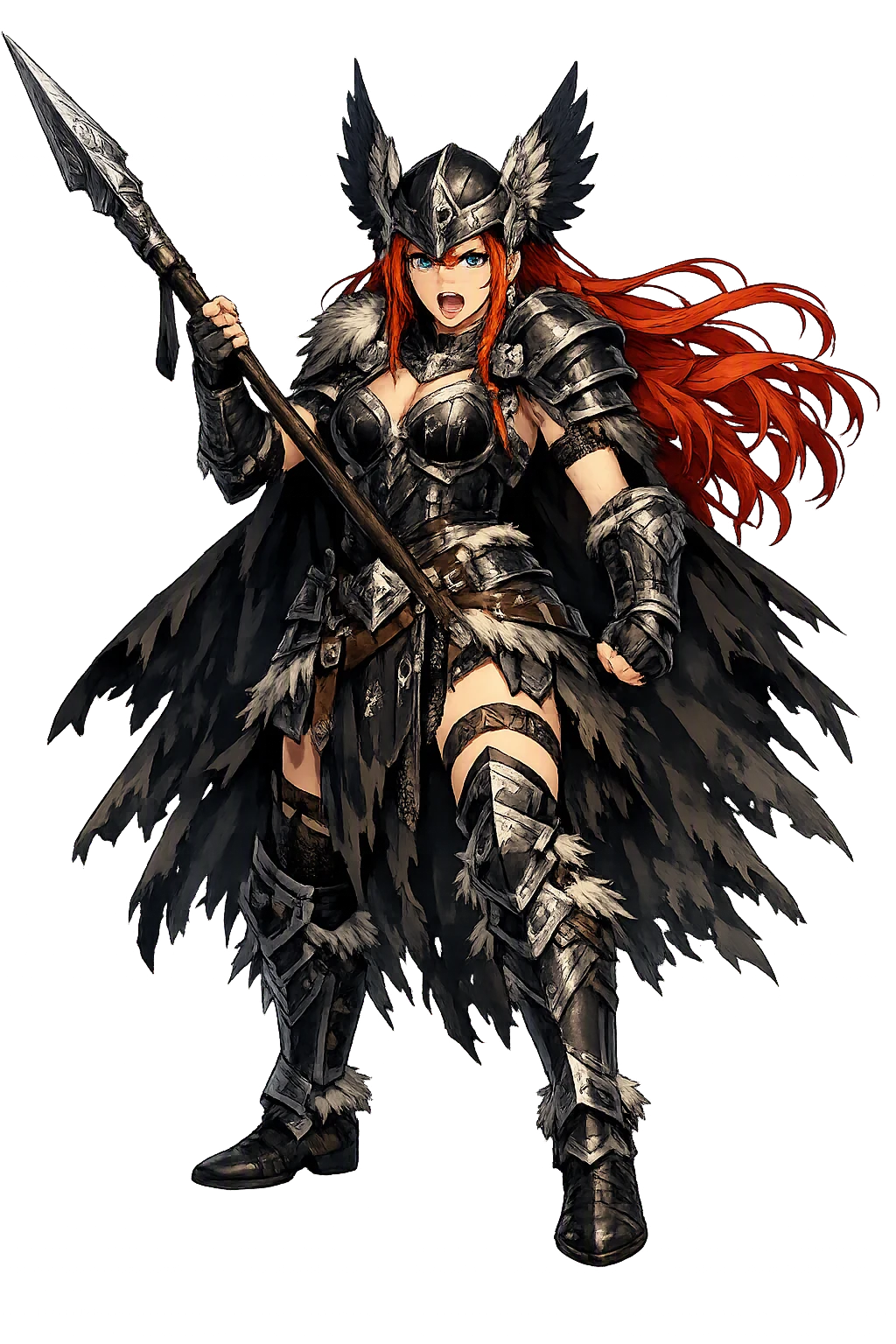
The register rules: Gunnr
Evidence dossier 145 — Gunnr. Every exhibit catalogued, every ruling stated with its grounds.
At a Glance
- Canonical form: Gunnr
- Original script: ᚴᚢᚾᚾᚱ
- Pantheon: Norse
- Convention: normalized Old Norse spelling — þ, ð, ǫ, æ and length marks preserved as the editions print them
- False forms on record: 0
- Contested forms: none attested
- Series: The Canonical Register, No. 145 of 406
The Evidence
Exhibit 1 — the attestation. The attested form is ᚴᚢᚾᚾᚱ, from the tradition's own record. The canonical transliteration is Gunnr.
Exhibit 2 — the flattened form. The plain form gunnr differs from the canonical Gunnr only by convention of display — case, not content. It is acceptable everywhere: in legacy systems, in plain-text citation, in the DNS itself. What is not acceptable is what follows in the register: respellings that change the letters, not just their case.
Exhibit 3 — the physical record. Gunnr is a wholly textual figure: no runestone invokes her, no votive deposit names her, and no cult site is hers — she shares this silence with nearly all the valkyries, who were functions of Óðinn's household rather than objects of cult. The material record knows the office if not the name. Gotlandic picture stones repeatedly show a mounted warrior received by a female figure bearing a drinking horn — the so-called valkyrie-welcome motif — and small female armed figurines, above all the gilt-silver valkyrie with sword and shield found at Hårby on Funen (Denmark), prove the image's currency in the Viking Age. The textual witnesses are the Codex Regius (GKS 2365 4to, c. 1270) for Völuspá and the principal manuscripts of the Prose Edda for Gylfaginning and the þulur; the noun gunnr itself is carved on runestones within personal names, where the battle-element lives on in the anthroponymy.
Exhibit 4 — the continuing record. Gunnr's afterlife flows through two channels. The first is the word itself: gunnr lived on as the battle-element of Scandinavian naming — Gunnarr ('warrior of battle'), Gunnhildr ('battle-fight'), and the living Icelandic and Faroese women's name Gunnur — so that the valkyrie's name is still spoken daily in the North, worn by ordinary people.
The Convention's Own History
The Poetic Edda survives essentially in one manuscript — the Codex Regius, c. 1270 — and normalized Old Norse spelling descends from what that manuscript and its siblings actually write. Þ and ð are not decorations: they are letters of the alphabet the skalds used (and English later abandoned), and ǫ is a nasal vowel the normalization preserves because the sources carry it. The register's rule is the manuscript's rule: spell the names the way the tradition that sang them wrote them down.
The Protocol's Position
Can the canonical form live in the address bar? Almost always, yes. IDNA 2008 admits every mark this register defends — the DNS stores them as `xn--` punycode and modern browsers render them natively. The real frictions are practical, not legal: some registrars stock only part of the IDN space, so a theoretically valid name can be temporarily unbuyable; and stacked combinations (an acute riding a macron) remain awkward to type on mobile keyboards even where the protocol accepts them.
The project's answer is a ranked ladder, not a compromise: the full restoration first, then attested fallbacks in descending order of completeness. The ladder's lowest rung, plain ASCII, is a vehicle for legacy systems — sanctioned, but never presented as the scholarly form.
The Verdict
Case closed on Gunnr: canonical, cited, and defended. The keyboard form gunnr is the same name in another register of display — always acceptable. The register's files remain open: if a source surfaces that changes any line of this entry, the entry changes. Until then, the temple at /gunnr/ holds the canonical form.
The docket for this ruling: no false forms on the docket; no contested forms attested; the attestation rests on 7 cited sources — Poetic Edda: Völuspá 30 (the valkyrie ride: Skuld, Skögul, Gunnr, Hildr, Göndul, Geirskögul), trans. Carolyne Larrington, Snorri Sturluson, Prose Edda: Gylfaginning 36 (Gunnr, Rota and Skuld ride to choose the slain and decide battles), trans. Anthony Faulkes, Snorri Sturluson, Prose Edda: Skáldskaparmál, þulur of valkyrie names, trans. Anthony Faulkes.
The Register Continues
The register holds 406 entries like this one — each temple with its own ruling. Read the temple's founding dispatch for the story, its Restoration File for the philology, its Resonance File for the industries, or the whole archive end to end.
Continue the register — previous entry: Guānyīn (read it) · next entry: Gwydion (read it).
The Canonical Register is written from the same canonical record as the lexicon itself. If a false form is missing from this page, it is because the evidence does not support calling it false — or because we have not seen it yet. Show us, with a citation, and the register will answer.