
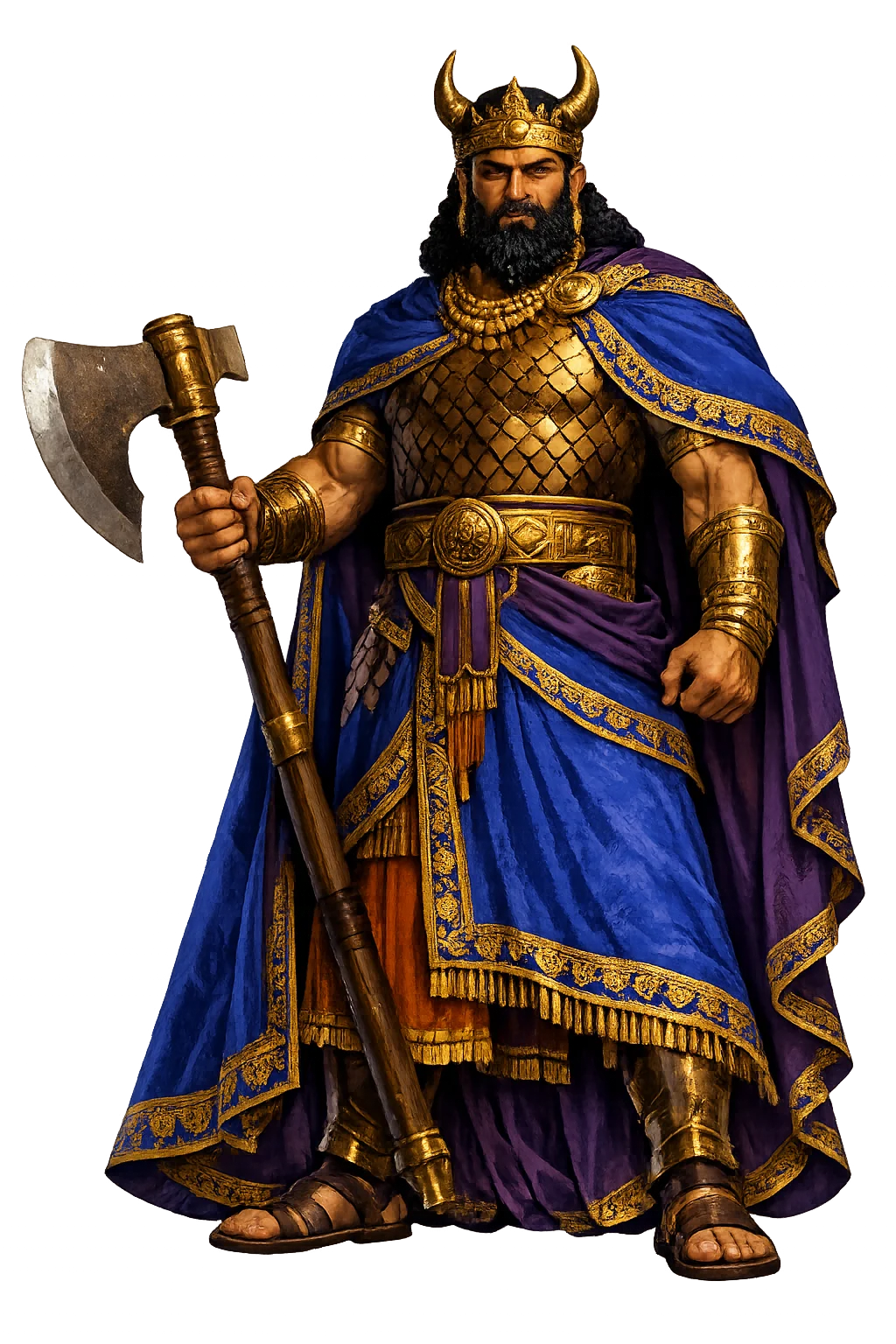
From Cuneiform to Unicode: the journey of Gilgameš
Long before it was a domain, this name traveled through scripts. Gilgameš begins in Cuneiform, passes through scholarly transliteration, and ends — for now — inside the punycode machinery of the global DNS. Each stage of that journey preserves some information and loses some, and the craft of restoration is knowing exactly which marks matter. This post follows the name stage by stage: the original script, the reconstructed pronunciation, the mythological record, the material evidence, and finally the Unicode form that carries all of it into the address bar. Think of it as a biography of a name, told through its spelling.
At a Glance
- Restored name: Gilgameš
- ASCII form: gilgamesh
- Meaning: "The old man became young"
- Domain of influence: Hero, King of Uruk
- Pantheon: Mesopotamian
- Classification: Tier 1
- Original script: 𒄑𒂆𒈦 (Cuneiform)
- Live domain: gilgameš.com
Overview
Gilgameš (gilgamesh) — King of Uruk · He Who Saw the Deep — belongs to the Mesopotamian tradition, where it is catalogued under the domain "Hero, King of Uruk". The name is interpreted as "The old man became young."
Gilgameš, king of Uruk, 'two-thirds god and one-third man', is the hero of the oldest great epic we possess. He builds walls, slays the guardian of the Cedar Forest, spurns a goddess, loses his friend, and walks to the end of the world to ask the flood's survivor the only question that matters: must we die?
PuniCodex restores the name as Gilgameš and serves its temple at gilgameš.com. The restoration preserves a distinctive letter the ASCII form loses — the sibilant š — which places the name in Tier 1 under the non-Greek rule. The plain ASCII form gilgamesh survives as a modern convenience; the restoration, not the fallback, is the form the project defends as philologically complete.
The Name
The name is attested in Akkadian as Gilgameš, the standard form in the language of the epic, and behind it stands the older Sumerian Bilgames — written with signs scholars transliterate as Bil₃-ga-mes₃ and commonly interpreted 'the old man became young'. In later Mesopotamian tradition the name was written with the divine determinative, the wedge that marks gods: the hero had been numbered among them, a judge of the dead. The final sound is the postalveolar sibilant š, the hushing 'sh' of the epic's own language. English scholarship long wrote 'Gilgamesh', adding an h as a crutch for readers; the restoration writes the sound the way Assyriologists write it everywhere else — with the caron.
Etymology & Roots
The name's family, as the canonical sources give it:
- Sumerian: Bilgames (Bil₃-ga-mes₃), the older form of the name, interpreted as 'the old man became young'
- Akkadian: Gilgameš, the standard form of the epic's language — the name the epic itself echoes in its plant of youth
- Learned tradition: written with the divine determinative in later texts — the hero reckoned among the gods and a judge of the dead
The etymology is one of those rare cases where the poem itself plays on the name. When Utnapishtim tells Gilgameš of the thorny plant at the bottom of the sea, the plant that restores lost youth, its name is 'the old man becomes young' — the very meaning scholars read in Bilgames. The hero carries his quest in his own name: rejuvenation is what he is called, and rejuvenation is what the serpent takes from him.
The Original Script
The original is cuneiform: the name pressed in wedges on clay, written in the Sumerian tradition with the sign cluster scholars transliterate as dBil₃-ga-mes₃ — the temple displays the cuneiform rendering 𒄑𒂆𒈦 — and in the Akkadian of the epic with syllabic spellings of Gilgameš. There is no alphabet here, no stress mark to restore: the work of the restoration lies in one letter, the š. The caron is the standard Assyriological notation for the sibilant the ASCII form writes 'sh', a sound as characteristic of Akkadian as the epic itself. Dropping the redundant h and marking the sibilant is not decoration; it is the difference between a newspaper spelling and the name as the tablets' readers say it.
Pronunciation
Gilgameš is Tier 1 by the non-Greek rule: the restoration preserves the caron š, a distinctive letter the ASCII 'Gilgamesh' loses along with its redundant h. The name is Sumerian at root; the Akkadian epic made it the most famous royal name of Mesopotamia.
The Assyriological reconstruction is /ɡil.ɡa.mɛʃ/ — 'gil-ga-MESH', three even, heavy syllables; the final 'sh' is soft, like sand through fingers. Three phonemes carry the name:
- Gil- — voiced velar stop with close front vowel: firm, like the name of a builder.
- -ga- — the second velar with open a: the name's hinge.
- -meš — the final hushing sibilant š, 'sh' as in 'ship': the sound the ASCII spelling loses.
Mythology
The Standard Babylonian epic, 'He who saw the deep', runs from the streets of Uruk to the waters of death. Its twelve tablets hold the first full arc of friendship, loss, and wisdom in world literature.
Enkidu Comes from the Wild (The Friend)
Uruk groans under its restless young king, and the gods answer by fashioning Enkidu from clay — a wild man who runs with gazelles and frees the trapper's game. The harlot Šamhat civilizes him with bread and beer; he comes to Uruk and blocks Gilgameš at the wedding-house door. They wrestle until the doorframe shakes, and the struggle ends in embrace: from that day the king has a second self.
The Cedar Forest and Humbaba (The Journey)
Hungry for a lasting name, Gilgameš proposes the expedition to the Cedar Forest, where the monstrous Humbaba guards the trees for the god Enlil. Through dream-omens and terror the two friends go on; with the aid of Šamaš's thirteen winds they bring Humbaba down and fell the great cedar. The glory is real — and fatal. For this, and for the spurned Ištar's Bull of Heaven, the gods decree that one of the two must die: Enkidu sickens, and dies.
Across the Waters of Death (The Quest)
Clothed in a lion's skin, Gilgameš wanders beyond the world: through the twin mountain where scorpion-men guard the sun's road, along the tunnel of darkness to the garden of jeweled trees, to Šiduri the ale-wife, who tells him what every wisdom text will say after her — eat, drink, hold your child's hand. He crosses the waters of death with the ferryman Ur-šanabi and finds Utnapishtim, the flood's survivor, who tells him the story of the ark and sets him the test of staying awake. He fails.
The Old Man Becomes Young (The Plant)
Utnapishtim gives him one last chance: a thorny plant at the bottom of the sea, 'the old man becomes young'. Gilgameš ties stones to his feet, dives, and wins it — then stops to bathe at a pool, and a serpent smells the plant, takes it, and sheds its skin. The king sits down and weeps. Then he returns to Uruk, brings Ur-šanabi up onto the wall, and shows him the brickwork: this, the epic says, is what a man leaves.
Symbols & Iconography
The objects the epic hangs on Gilgameš map his whole journey:
- The wild bull — his own title: the goring wild bull, son of Lugalbanda and the goddess Ninsun.
- The walls of Uruk — his true immortality, named in the epic's first and last lines.
- The cedar — the timber of the Cedar Forest, cut for the great door of Uruk.
- The plant of youth — 'the old man becomes young': rejuvenation won from the sea's floor and lost to the serpent.
- The deluge — the flood of Utnapishtim, the deep he alone among men saw and survived to tell.
The Sumerian Bilgames Poems
The Akkadian epic had Sumerian ancestors: five independent poems about Bilgames, copied for centuries in the scribal schools. They are Gilgamesh and Agga, a war of words between Uruk and Kiš; Gilgamesh and Huwawa, the Cedar Forest journey in its older form; Gilgamesh and the Bull of Heaven; Gilgamesh, Enkidu and the Netherworld, which begins with a drum and a ball lost to the underworld; and The Death of Gilgamesh, where the hero receives his honors among the dead. Preserved on Old Babylonian school tablets chiefly from Nippur and Ur — the Electronic Text Corpus of Sumerian Literature hosts editions of them all — they show the legend already old a thousand years before Ashurbanipal's library.
Archaeology & Evidence
The epic's text is archaeology's gift: the fullest copies are the twelve tablets from the library of Ashurbanipal at Nineveh (seventh century BCE), excavated in the nineteenth century and held by the British Museum, where George Smith read the flood tablet in 1872. Behind them lie Old Babylonian fragments (the Pennsylvania and Yale tablets), Middle Babylonian copies from Ugarit and Emar, translations from Hattusa in Anatolia, and, oldest of all, the Sumerian Bilgames poems from Nippur and Ur. The historical kernel is modest but real: the Sumerian King List names Gilgameš as fifth king of the First Dynasty of Uruk, and the vast walls of Uruk (Warka, Iraq) still stand where the epic says he built them.
Realm & Domain
Gilgameš, king of Uruk, 'two-thirds god and one-third man', is the hero of the oldest great epic we possess. He builds walls, slays the guardian of the Cedar Forest, spurns a goddess, loses his friend, and walks to the end of the world to ask the flood's survivor the only question that matters: must we die?
King of Uruk
The epic opens and closes on the walls he built — 'go up on the wall of Uruk and walk around' — kingship as masonry.
The Friend
Enkidu, the wild man fashioned from clay to match him; their friendship is the first great love story of literature.
The Cedar Journey
The road west to the Cedar Forest and the slaying of Humbaba, its monstrous guardian — fame won at the price of doom.
The Flood and the Plant
Utnapishtim's ark, the waters of death, and the plant 'the old man becomes young', stolen by a serpent while the king slept.
Across Cultures
The epic itself was an international text: copies in Akkadian, Hittite, and Hurrian lay in the archives of Hattusa, and scribes from Ashur to Ugarit learned it by heart. Its flood story adapts the older Atra-ḫasīs epic and stands, at a further remove, behind the biblical account of Noah — George Smith's reading of the eleventh tablet in 1872 caused a sensation for exactly that reason. Gilgameš lived on in the margins of later religions: a judge of the dead in Mesopotamian incantations and visions of the netherworld, and, astonishingly, a named giant in the Book of Giants known from Qumran and from Manichaean fragments, where Humbaba's name survives as Ḥobabish.
Cultural Legacy
Rediscovered in the ruins of Nineveh, Gilgameš became the measure of how old literature is: every generation since 1872 has re-translated him, from scholarly editions to novels and graphic retellings. He anchors the modern study of the flood traditions, of heroic friendship, and of the wisdom genre. Uruk — Warka in Iraq, a UNESCO World Heritage site — still raises its walls where the epic begins and ends. To write Gilgameš with the caron is a small act of philological justice: the š is the sound of the epic's own language, and the ASCII 'sh' is a translator's patch.
A Meditation
The epic of Gilgameš begins with a wall and ends with a wall, and between them lies the whole education of a human being. At first the king believes what strong young kings believe: that the enemy is distance — the Cedar Forest, the far shore, the undying man beyond the sea. Each victory over distance only brings the real enemy closer, until it stands in his own bedchamber: the fact that he will die. The scorpion-men, the ale-wife, the ferryman, and the flood-hero all tell him the same thing in different voices, and he cannot hear it until the serpent takes the plant. Only then, weeping at the water's edge, does he become the hero of wisdom rather than of strength.
What he brings home is not immortality but an account: 'he who saw the deep' — the epic's first line names him by what he saw and reported, not by what he kept. The plant was for the body; the tale is for the city. And so the last gesture of the poem is a tour of masonry: here are the walls, the brickwork, the threshold. Four thousand years have proven the bargain fair. Uruk's walls are dust, but the tale has outlasted every cedar, every serpent, and every king who heard it and was, for a moment, less afraid.
The Unicode Restoration
Gilgameš is classified as Tier 1: the restoration preserves at least one distinctive feature — a diacritic or a distinctive letter — that the ASCII form loses. The ASCII fallback gilgamesh still resolves everywhere, but it is the restored form that carries the name's full information. Across the 9 characters of the name, the restoration adjusts 2: 2 further adjustments (š, h). That is the whole thesis of this temple: the marks are the message.
Character by Character
The journey from gilgamesh to Gilgameš, one character at a time:
- g → G — Same, capitalized
- i → i — Same
- l → l — Same
- g → g — Same
- a → a — Same
- m → m — Same
- e → e — Same
- s → š — Special character
- h → h — Dropped
The Domain Name
The restored name is live as a working domain: gilgameš.com, which the DNS carries in punycode form as xn--gilgame-wqb.com — an ASCII-compatible encoding that lets a non-ASCII name travel the global network without breaking older infrastructure. The visitor sees Gilgameš; the machines see the encoding. That duality is the engineering compromise on which the entire restoration rests, and it is why a name written the way its own tradition wrote it in Cuneiform can now be typed into any browser on earth.
The Mesopotamian Pantheon
Gilgameš is one of 30 entries the PuniCodex lexicon catalogues under the Mesopotamian pantheon. The Pantheon page gathers the tradition's major figures in one place, and the Lexicon lets you filter all 925 restorations by tradition, tier, or script — the fastest way to see where this name sits among its kin.
Frequently Asked Questions
What does Gilgameš mean? The traditional gloss is "The old man became young."
Which tradition does Gilgameš belong to? Gilgameš is catalogued in the Mesopotamian pantheon of the PuniCodex lexicon.
Why is Gilgameš classified as Tier 1? Because the restoration preserves at least one distinctive feature — a diacritic or a distinctive letter — that the ASCII form loses — and the marks in the restored spelling preserve exactly that evidence.
Is Gilgameš a working domain? Yes — gilgameš.com resolves today and routes to this temple.
What is the punycode for gilgameš.com? The DNS encoding is xn--gilgame-wqb.com; browsers perform the translation automatically, so visitors only ever see the restored name.
Typing Gilgameš
You do not need a special keyboard to use this restoration. The PuniCodex Type Tool converts the ASCII form gilgamesh into Gilgameš as you type, and the browser extension offers the same conversion inside any text field. Copy the restored form, paste it into the address bar, and the DNS does the rest.
Sister Temples
Other temples in the Mesopotamian pantheon include Pazuzu, and Šamaš — each with its own restoration story, its own scholarly record, and its own place in the lexicon.
Why This Restoration Matters
Every stage of the journey from Cuneiform to Unicode was an act of care: the scribe who first wrote the name, the lexicographer who glossed it, the engineer who taught the DNS to carry it. The PuniCodex restoration is the latest stage, not the last word — the Scholarly Edition is revised as the evidence improves. What does not change is the principle: a name deserves to be written the way its own tradition wrote it. Gilgameš in the address bar is that principle, made routable.
Explore Further
This post is one doorway into the temple. The home page carries the full character breakdown and the ambient canvas; the lore page tells the myths in long form; the Scholarly Edition preserves the sources, pronunciation data, and revision history; and the patron wall supports the restoration directly. For the wider map, browse the Lexicon, explore the Pantheon, or return to the PuniCodex blog.
Related Names
Sources
The full scholarly apparatus — every citation, revision, and review — lives in the Scholarly Edition. Key references for this post:
- Scholarly reference
- Lexicon authorities for this entry: Epic of Gilgamesh, Black-Green.