The Authentic Orthography
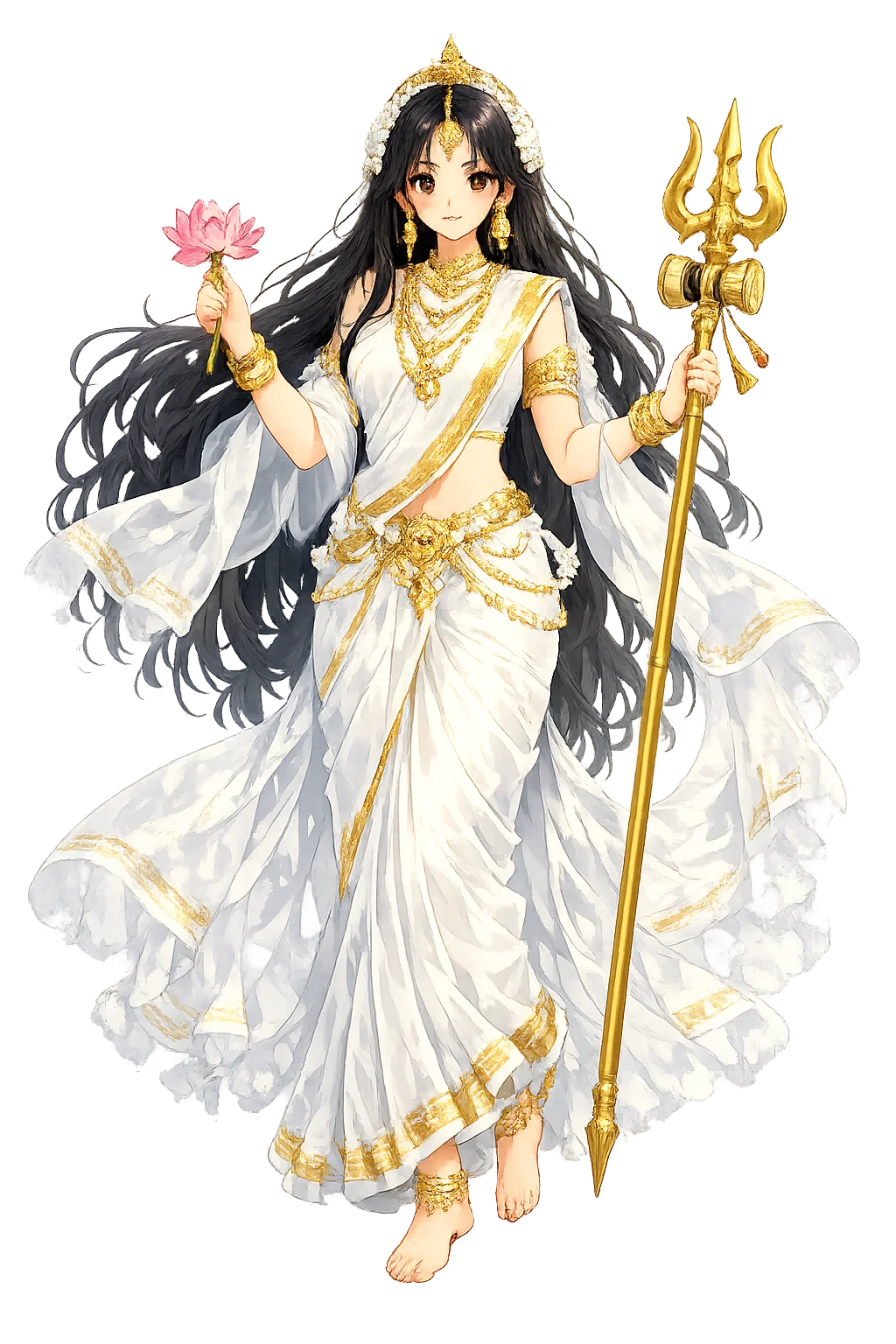
Motherhood, Beauty, Austerity · Motherhood, Beauty, Austerity · "The Golden One" — the radiant form of the Great Goddess, mother of the universe
Unicode restoration and ASCII comparison
गौरी
The name in its original Sanskrit form. Gaurī (गौरी) is attested in the source tradition — “"The Golden One" — the radiant form of the Great Goddess, mother of the universe”. Its macron-length vowels carry the full phonetic and orthographic weight of the source tradition.
gauri
Reduced to plain gauri, the name loses everything that made it specific: macron-length vowels. What remains is an ASCII string that machines can parse but that no longer speaks with its original voice.
Gaurī
The Unicode restoration recovers what ASCII flattened. Gaurī restores macron-length vowels, returning the name to its original written dignity. The domain encodes to Punycode, but the browser displays the truth.
Gaurī.com → xn--gaur-tya.com
The non-ASCII characters in Gaurī are encoded while the ASCII remains visible. To the DNS, it is Punycode. To humanity, it is Gaurī.
How Gaurī travels from ancient script to the modern URL
How Gaurī was spoken
Beauty, Austerity, Marriage, and the Gentle Śakti
Gaurī is the Great Goddess at her most benevolent: the golden-skinned Mother whose austerity won Śiva himself, whose festivals celebrate marriage and motherhood, and whose name — "the radiant one" — is the oldest word for the divine feminine in India.
Her color: turmeric and dawn — the glow that names her.
The tapas by which she won Śiva — devotion as fierce as any warrior's.
Gaurī Pūjā and the Tṛtīyā fasts — the mother's days kept by millions of women.
Mother of Gaṇeśa and Kārttikeya — the goddess behind the gods.
Stories of Gaurī
Gaurī's myths are the Great Goddess's domestic epic: the mountain-daughter who becomes the universe's mother through patience.
Born as Pārvatī, daughter of Himavat, the mountain-king, she was Satī reborn — the goddess returned after her first death to reclaim her lord. The Purāṇas call her Gaurī from the start: the golden girl of the peaks, destined from birth for the ash-covered wanderer who had forgotten how to love.
When beauty failed to move Śiva in his grief, she chose tapas: years of austerity in the forest — leaves for food, rain for bath, standing on one leg through seasons — until the ascetic god himself came disguised as a young brahmin to test her. She would not be dissuaded, and Śiva, conquered by patience, married her at Kailāsa with the whole pantheon as guests: the wedding the Purāṇas tell as the universe's own.
Of her body she shaped Gaṇeśa — the gatekeeper-son made while she bathed — and of the gods' combined fire came Kārttikeya, the war-son she raised as her own. The elephant-headed and the six-faced, the remover of obstacles and the destroyer of demons: both call her Mātā, and her lap, the texts say, is where the world's two busiest gods still rest.
Her living myth is the calendar: the Tṛtīyā fasts and the Gaurī festivals of Maharashtra and the South, where married women pray for their households and unmarried girls for good husbands, honoring the goddess who won the ideal marriage by her own effort. The golden image is made, worshipped, and immersed — the mother received and released like a daughter of the house.
Gaurī is the goddess of earned tenderness. Nothing in her story is granted: the marriage is won by penance, the sons by her own making, the goldenness by her own nature. She asks the household's hardest question — the one every patient person eventually faces: how long can you keep the faith of the golden work before anyone notices — and will you still be radiant when they do?
Enter Extended Lore