PuniCodex

Extended Lore

गौरी Gaurī

Etymology · Phonology · Orthography · Cultural Legacy · Primary Sources

Tier 1 Gaurī.com
Gaurī — Motherhood, Beauty, Austerity
01

Quick Facts

Essential information about Gaurī, Motherhood, Beauty, Austerity

Original Scriptगौरी
Unicode RestorationGaurī
Reconstructed Pronunciation/ɡɐʊ̯.riː/
PantheonSanskrit
DomainMotherhood, Beauty, Austerity
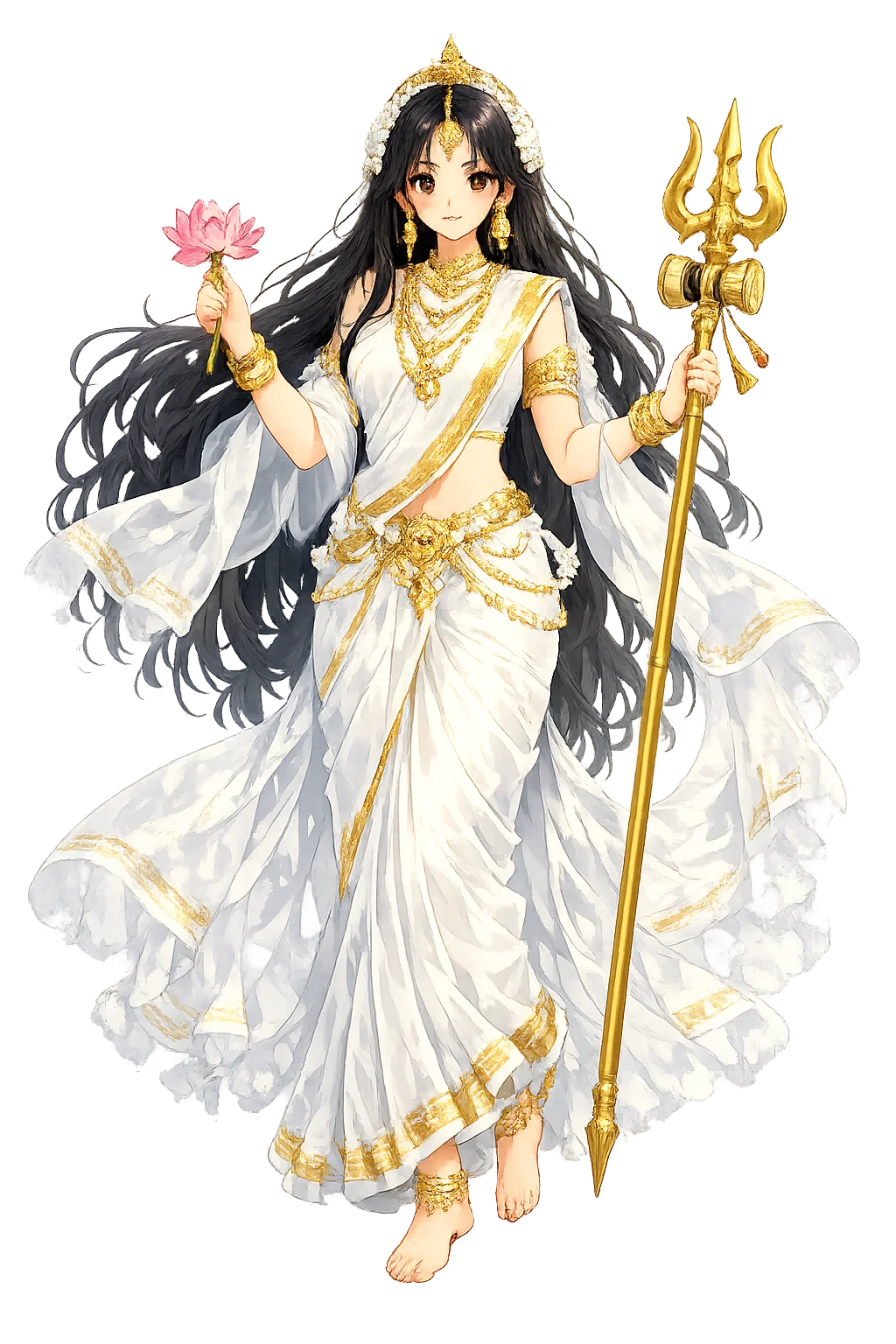
Meaning"The Golden One" — the radiant form of the Great Goddess, mother of the universe
ClassificationTier 1
Primary DomainGaurī.com
Sacred SymbolsThe golden complexion, The lotus, The bilva leaf
02

Etymology & Word Family

From original script to Unicode restoration

Original Script गौरी Gaurī — ""The Golden One" — the radiant form of the Great Goddess, mother of the universe"
Unicode Restoration Gaurī Restored stress, length, and script
Modern ASCII gauri Plain-ASCII fallback

Sanskrit gaurī — "the golden, the radiant" — carries the long ī of the feminine epithet, which the restoration keeps. The same word is the adjective "golden-complexioned": her name is her skin, the color of turmeric, ripe wheat, and morning light. The diphthong au is inherent and unmarked in IAST, like e and o — her name needs no further marks to be read exactly.

03

Unicode Character Breakdown

Character-by-character philological analysis

CharacterUnicodeNameBlockPhonetic Role
GU+0047Latin Capital Letter GBasic LatinSame
aU+0061Latin Small Letter ABasic LatinSame
uU+0075Latin Small Letter UBasic LatinSame
rU+0072Latin Small Letter RBasic LatinSame
īU+012BLatin Small Letter I with MacronLatin Extended-ALong ī

The Tier 1 classification reflects which ancient features stress, length, or script are preserved in this restoration.

04

Cultural Significance

From ancient cult to modern Unicode

Ancient Domain

Gaurī is the Great Goddess at her most benevolent: the golden-skinned Mother whose austerity won Śiva himself, whose festivals celebrate marriage and motherhood, and whose name — "the radiant one" — is the oldest word for the divine feminine in India.

Gaurī in Later Traditions

She is the gentle face of the same goddess who is Durgā in battle and Kālī in wrath — the Śākta tradition's proof that power has a domestic form. Her golden form travels: as the benevolent mother of Balinese Hinduism (Mā Gaurī), and into the syncretic Devi temples of the diaspora from Fiji to Trinidad, where her immersion-festivals (Gangā-snan of the image) kept the homeland's calendar across two oceans.

Modern Legacy

The Gaurī festivals — Gaṇeśa's mother welcomed for three days before her son's own ten — anchor the Maharashtrian religious year; the phrase "gaurī kā vivāha" (the ideal marriage) is everyday Hindi. Turmeric, her color, remains the ritual substance of Indian womanhood. She is the Śākta answer to the question of what a goddess of the home looks like when she also happens to be the energy of the universe.

Unicode Restoration as Cultural Act

Restoring Gaurī in a domain name is more than orthographic accuracy. It is a statement that the internet should recognize the full range of human writing — not only the ASCII keyboard.

05

Frequently Asked Questions

Common questions about Gaurī, Motherhood, Beauty, Austerity, and Unicode restoration

01How do you pronounce Gaurī?

In reconstructed pronunciation, Gaurī is /ɡɐʊ̯.riː/ — approximately GOW-ree — the diphthong of "cow," then a long ee..

02What does Gaurī mean?

Gaurī means "The Golden One" — the radiant form of the Great Goddess, mother of the universe in the sanskrit tradition.

03What are the symbols of Gaurī?

Gaurī is associated with The golden complexion (Radiance as nature — beauty without artifice), The lotus (Her seat and offering — purity of the household goddess), The bilva leaf (Her austerity — the tree of Śiva she tended in penance).

04Why restore Gaurī in Unicode?

Plain ASCII gauri strips the stress, length, and script that make the name specific. Unicode restoration returns the name to its original written dignity.

05What is the most important myth about Gaurī?

Born as Pārvatī, daughter of Himavat, the mountain-king, she was Satī reborn — the goddess returned after her first death to reclaim her lord. The Purāṇas call her Gaurī from the start: the golden girl of the peaks, destined from birth for the ash-covered wanderer who had forgotten how to love.

06

Scholarly Sources

The philological foundations of this restoration

Every claim on this page is grounded in established scholarship. The orthographic restorations follow disciplinary convention. The etymological chain follows the best available reference works. This is not invention — it is resurrection through scholarship.

Lexicography & Philology

  • Puranas
  • Shiva Purana
  • Devi Mahatmya
  • Monier-Williams
  • MW
  • Cambridge

Primary Texts

  • Shiva Purana

Archaeology & Art History

  • Material evidence — iconography, inscriptions, and temple archaeology — for Gaurī and related cults.
  • Her temples stand with Pārvatī's: the great Śiva-Pārvatī shrines from Elephanta's marriage-panel to the Kailāsa of Ellora — where the wedding of Gaurī and Śiva fills the whole south wall — document her in stone. The Gaurī Shankar temples of the Kathmandu valley and the festival-images of Maharashtra (made annually in the potters' quarters) carry her golden form into the present.

Religious Studies

  • Puranas
  • Monier-Williams
  • MW
  • Cambridge
  • Oxford
Return

The Surface Awaits

You have traced the name from its earliest attestation to its Unicode restoration. Now return to the myth. The story is where the name lives.

Back to Lore
Gaurī mascot