Unicode restoration and ASCII comparison
Γαῖα
The name in its original Greek form. Gaîa (Γαῖα) is attested in the source tradition — “Earth (from γαῖα)”. Its diphthongs and acute accents carry the full phonetic and orthographic weight of the source tradition.
gaia
Reduced to plain gaia, the name loses everything that made it specific: diphthongs and acute accents. What remains is an ASCII string that machines can parse but that no longer speaks with its original voice.
Gaîa
The Unicode restoration recovers what ASCII flattened. Gaîa restores diphthongs and acute accents, returning the name to its original written dignity. The domain encodes to Punycode, but the browser displays the truth.
Gaîa.com → xn--gaa-wma.com
The non-ASCII characters in Gaîa are encoded while the ASCII remains visible. To the DNS, it is Punycode. To humanity, it is Gaîa.
How Gaîa travels from ancient script to the modern URL
Greek Γαῖα; from γῆ "earth". Gaia is the primordial Earth goddess, the first being to emerge from Chaos and the ancestral mother of all life in Hesiod's Theogony.
Earth, Mother of All
The Unicode restoration Gaîa preserves Greek stress and length; the ASCII form gaia loses these features.
How Gaîa was spoken
Land, Fertility, Prophecy, and the Mother of All
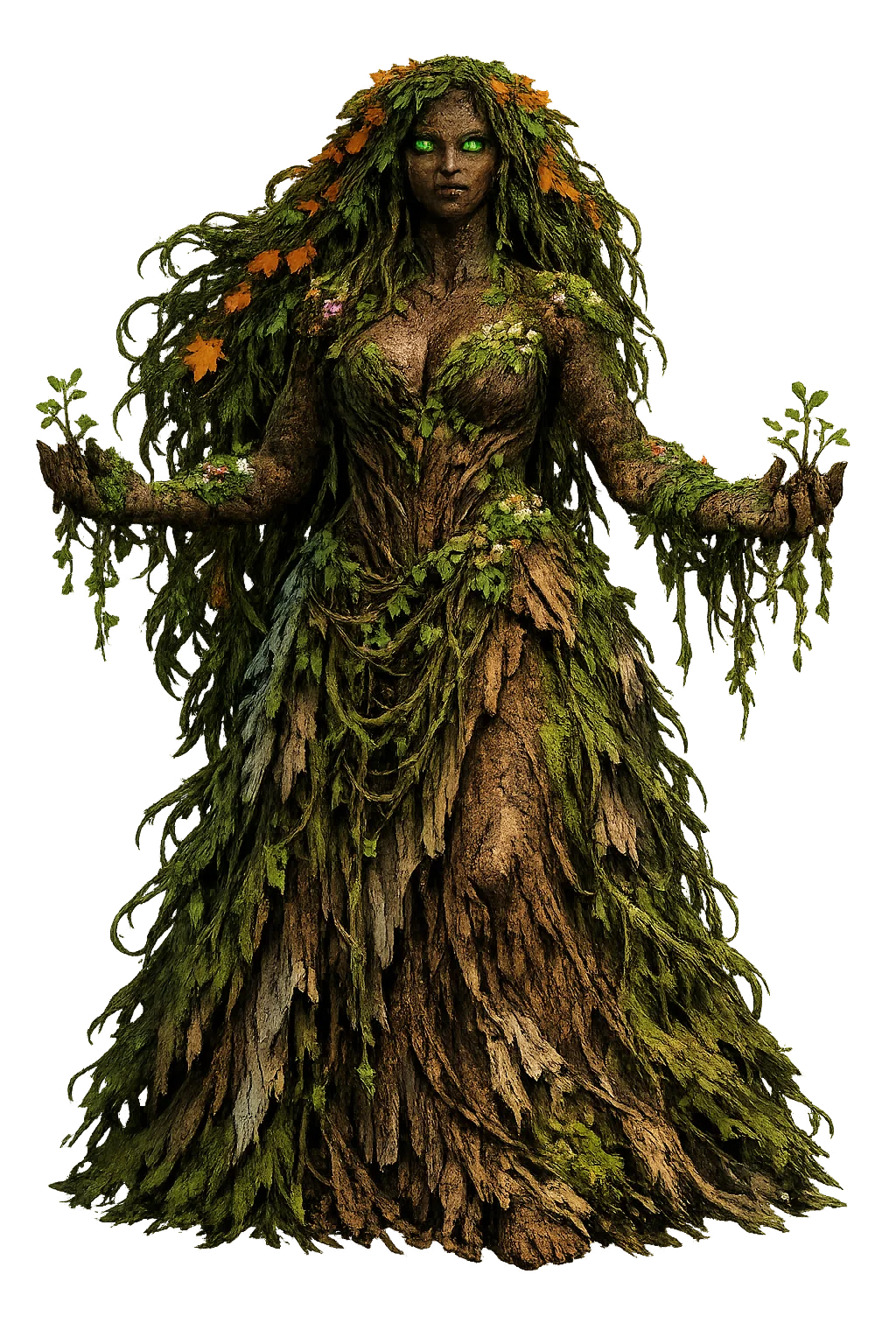
Gaia is not a goddess of the earth; she is the earth. In Hesiod's cosmogony she is the first thing to emerge from Chaos, the ever-stable foundation from which sky, sea, mountains, and gods are born. She is the original mother, the ground of being.
Mountains, plains, seas, and caves are her body; earthquakes are her movements.
She bore Ouranos, Pontos, the Titans, the Cyclopes, and the Hundred-Handers.
Her oracle at Delphi was the first; she is the voice of the earth before Apollo's arrival.
When Ouranos imprisoned her children, she forged the sickle and set Kronos against him.
The Mycenaean evidence for Gaia remains disputed: Linear B forms such as Ma-ga-ri may or may not refer to the goddess. Modern scholars also debate whether the Gaia hypothesis is a legitimate scientific theory or a metaphor for ecological interdependence. Both debates keep her name alive at the boundary of science and myth.
Stories of Gaîa
Gaia's myths are cosmogonic. She is the stage on which everything else happens, but she is also an actor who intervenes when cosmic order threatens her children.
Hesiod's Theogony (116–122) begins with Chaos, then Gaia 'broad-bosomed,' then Tartaros and Eros. Gaia immediately gives birth to Ouranos (Sky), the Ourea (Mountains), and Pontos (Sea) without mating. She is the self-generating foundation. The repetition of 'Gaia' at the opening of the cosmos makes her the first identifiable reality.
Ouranos hated the children Gaia bore him and pushed them back into her womb. In pain and anger, Gaia fashioned a great sickle of adamant and persuaded her youngest son Kronos to ambush his father. Kronos castrated Ouranos; from the falling blood sprang the Erinyes, the Giants, and the Meliai. The act establishes the pattern of Greek cosmogony: each generation overthrows the one before, and Gaia is always on the side of the next power.
Before Apóllōn, Delphi belonged to Gaia (or Themis, her daughter). The dragon Pythôn guarded Gaia's oracle until Apóllōn slew it and took the site. Pausanias (10.5.5–7) preserves the tradition that the oldest cult at Delphi was Earth's. The succession from Gaia to Themis to Phoibe to Apóllōn maps the transition from chthonic prophecy to Olympian clarity.
When the Olympians defeated the Titans, Gaia mated with Tartaros and bore the Giants to avenge her fallen children. The Gigantomachy became the great war between gods and earth-born monsters, depicted on the Pergamon Altar and countless vases. Once again, Gaia defended the old against the new — and once again, the new gods won, burying the Giants under volcanoes.
Gaia is the only Greek deity who needs no temple because she is the temple. Every mountain, every field, every cave is her body. The Greeks did not worship her by escaping nature but by recognizing that they were already inside her.
Enter Extended Lore