
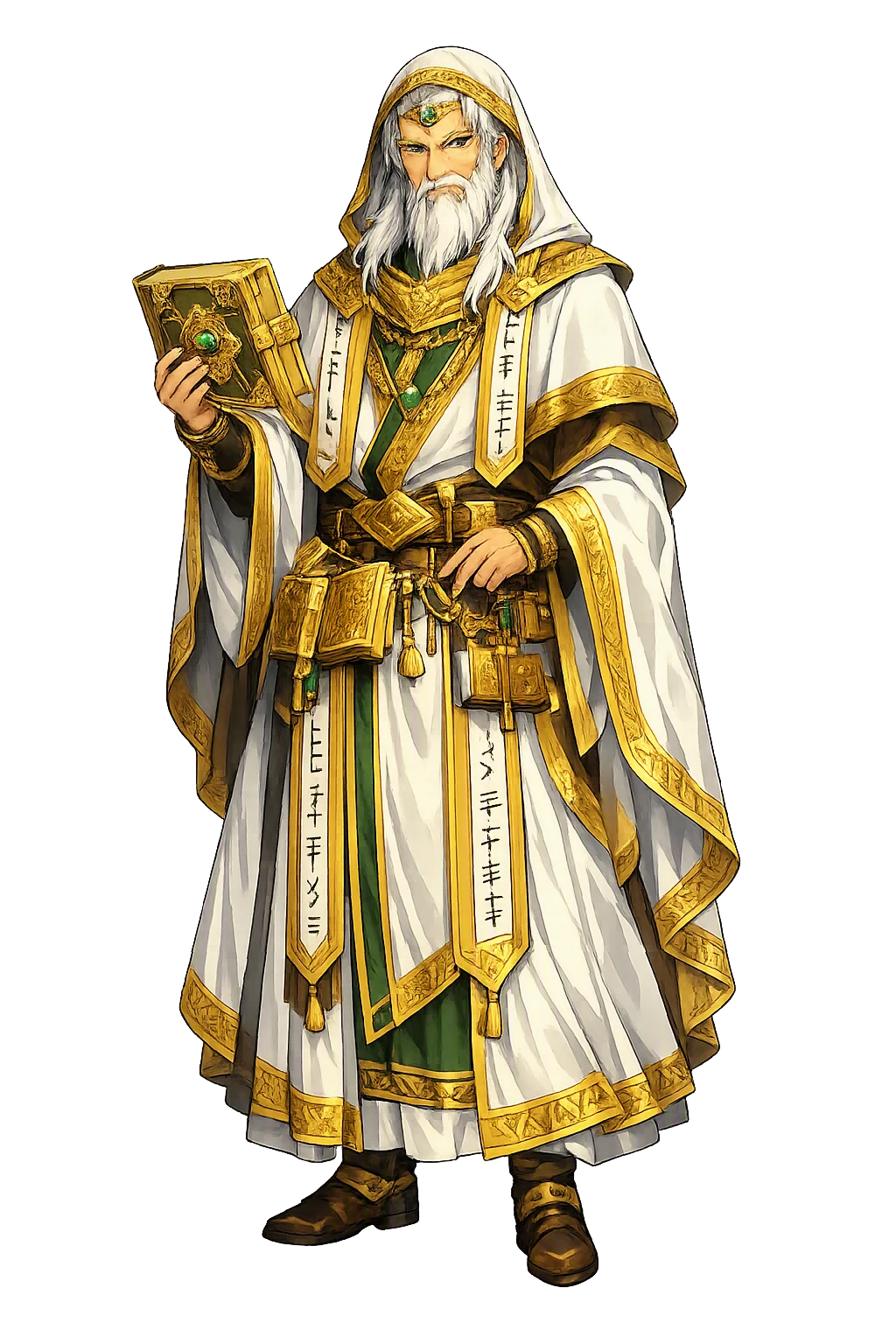
Why Ecne belongs in your address bar
Every address bar is a choice. When you type Ecne, you are not typing a novelty; you are restoring a name that the early DNS, built for English typewriters, could not carry. The plain ASCII form ecne is a leftover of that constraint, not the name itself. This post is the long version of the restoration: where the name comes from, how the Celtic transcription tradition wrote it, how it is pronounced, what the myths and the material record preserve, and why its Unicode form now lives as a working domain. The claim throughout is simple — the original spelling is not decoration. It is the name.
At a Glance
- Restored name: Ecne
- ASCII form: ecne
- Meaning: "Knowledge"
- Domain of influence: Knowledge, Wisdom
- Pantheon: Celtic
- Classification: Tier 2
Overview
Ecne (écne) — Knowledge, Wisdom — is Old Irish for knowledge itself, carried as a personal name by a poet of the Túatha Dé Danann: wisdom personified and given a seat among the divine race. No surviving tale acts the figure — no contest, no treasure, no death — and the handbooks, from the Dictionary of the Irish Language to MacKillop, record the name and then fall back on the word. The mythology of Écne is therefore the mythology of the thing the name means: the nine hazels of wisdom over Connla's well, the nuts of knowledge dropping into the water, and the salmon that feeds on them — sense that can be taken, tasted, and passed on, but never held.
Around the year 900, Sanas Cormaic folded the whole doctrine into a dictionary entry, deriving écne from cnú, 'nut' — for knowledge comes from nuts — a gloss modern philology treats as learned play, and the tradition itself clearly treated as a compressed myth. The same wisdom-complex supplies the best-known story of knowledge received in all Irish tradition: the boy Fionn, set to cook the salmon of knowledge for the poet Finnéces, burns his thumb and takes the gift the poet had waited seven years to win.
PuniCodex restores the name as Ecne — identical to the ASCII input, because the unmarked manuscript spelling of Old Irish carries no diacritic in this name (the síneadh fada of Écne is a modern dictionary normalization). The mechanical rule therefore places it in Tier 2: nothing distinctive is lost in transit, a statement about orthography and never about the figure. No domain is claimed: the plain-ASCII ecne.com is registered to a third party outside the collection and is watched for release.
The Name
The word is attested in Old and Middle Irish as écne, also spelled eicne — a common noun meaning 'knowledge, wisdom, understanding', the term the glossators reach for when they mean knowing of the deepest kind. The same form is attested as a proper name: Écne, a poet of the Túatha Dé Danann — the tradition's own personification of wisdom, listed among the divine race and otherwise left without narrative.
The medieval tradition supplied its own etymology. Sanas Cormaic, the glossary of Cormac mac Cuilennáin (c. 900), derives écne from cnú, 'nut' — knowledge comes from nuts — folding the hazel-of-wisdom doctrine into the dictionary itself. Modern philology does not accept the derivation; the word's deeper etymology remains unsettled, and this edition reports the gloss as the tradition's comment on itself, not as linguistic history.
The ASCII form ecne loses nothing, because the unmarked manuscript spelling is already plain Latin letters; the fada of the normalized Écne is an editorial length mark, Old Irish scribes having written vowel length only inconsistently. The restoration is therefore a matter of canonical reference, not rescued diacritics, and the name is classified Tier 2 by the project's mechanical rule.
The letter-by-letter transformation runs:
- e → E — Same, capitalized
- c → c — Same
- n → n — Same
- e → e — Same
The project holds no domain for this name: ecne.com is registered to a third party outside the PuniCodex collection and is watched for release. The temple lives at its canonical lexicon address.
The Original Script
The name is preserved in medieval Irish manuscripts in the Latin alphabet as écne, also spelled eicne — Old Irish in Insular script, attested from the early medieval period in the glossary tradition that gives both the common noun 'knowledge, wisdom' and the proper name of the Túatha Dé Danann poet. The earlier monumental alphabet, ogham, predates the manuscript tradition, but no attestation of this name has ever been read on an ogham stone; the manuscript form is the primary witness.
The scholarly rendering proceeds step by step:
- Old Irish was written in the Latin alphabet using Insular minuscule from the early medieval period; scribes marked vowel length only inconsistently, and the manuscripts spell the word ecne or eicne without a diacritic.
- The modern dictionaries normalize the spelling with the síneadh fada — Écne — to mark the long é; this is an editorial convention, not a manuscript feature.
- The medieval glossators already worked on the word: Sanas Cormaic derives it from cnú, 'nut' — a medieval etymology the modern dictionaries record but do not endorse.
- The temple form Ecne follows the unmarked manuscript spelling and is therefore identical to the ASCII form apart from the capital; the restoration is a canonical reference, not a rescued spelling.
One caution attaches to the record: the figure behind the name is attested with almost no narrative. This edition reports the word, the glossary tradition, and the wisdom-complex the word names — and claims no myth the sources do not give.
Pronunciation
The reconstructed pronunciation of the name is /ˈeː.ɡnʲe/ — Old Irish Reconstruction.
Phoneme by phoneme:
- É- — Long close [eː], stressed on the first syllable as in all Old Irish; the dictionaries mark the length with the síneadh fada
- -cn- — The old cn-cluster, the c voiced to a soft velar [ɡ] before the nasal — closer to a gargled g than to the hard c of 'cat'
- -ne — Slender n [nʲ], the palatalized nasal with a light y-glide, closing on a short unstressed final [e]
For the modern speaker, the closest approximation is: 'EHG-nyeh' — a long tense 'eh' like the é of French été, the c melted into a soft g before the n, and a light y-glide on the n.
Kindred and historical forms of the name:
- Old Irish — écne, also eicne, the common noun 'knowledge, wisdom'; as a proper name, the Túatha Dé Danann poet
- Sanas Cormaic — the medieval gloss: from cnú, 'nut', for knowledge comes from nuts
- The wisdom complex — the same word-family stands behind the learned tradition of the hazels, the well, and the salmon of knowledge
- Modern scholarship — MacKillop s.v. Écne: the personification of wisdom among the Túatha Dé Danann
Ecne is Tier 2 because the temple form preserves nothing ASCII loses: the unmarked manuscript spelling is already the letters of the keyboard. The capital alone marks the restored form.
Mythology
Écne has the thinnest dossier in the Irish corpus — no surviving tale acts the figure, and the tradition's honesty about this is itself instructive: when Irish myth personifies wisdom, it falls silent on purpose, and tells instead the myths of the thing the name means.
The Name on the List (eDIL; MacKillop)
Écne, a poet of the Túatha Dé Danann: the name appears in the medieval record as wisdom given a face and a seat among the divine race, and that is nearly all — no adventure, no contest, no death-tale. The dictionaries and handbooks record the figure and then fall back on the word.
Knowledge from Nuts (Sanas Cormaic)
Around the year 900, Sanas Cormaic — the first etymological dictionary in any western European vernacular — explained the word in the manner medieval Ireland loved: écne comes from cnú, the nut, for knowledge comes from nuts. Modern philology treats it as learned play; but the gloss was never really about linguistics. It was a compressed myth, invoking the hazels of wisdom and the well beneath them — the whole doctrine of wisdom folded into a dictionary entry.
The Well and the Hazels (the learned tradition)
The Irish learned tradition kept the physics exact. In the Otherworld stands a well — Connla's well, or the well of Segais — and over it grow the nine hazels of wisdom; the nuts of knowledge fall into the water, and the salmon of the well feed on them. The image never varies in its essentials: the source is hidden, the fruit drops on its own season, and the water carries the knowing outward into every river of the world.
The Salmon and the Thumb (Macgnímartha Finn)
The tradition's great story of wisdom received belongs to Fionn. The boy, still called Demne, comes to the poet Finnéces, who has waited seven years by the Boyne for the salmon of knowledge; on the day the boy arrives the fish is caught, and Demne is set to cook it with one command — eat none of it. He burns his thumb on the fish, thrusts it into his mouth, and the knowledge the poet could not win by patience passes into him by accident. Finnéces, who waited longest, surrenders the gift.
The Salmon That Remembers (The Settling of the Manor of Tara)
The oldest bearer of the tradition's knowledge is Fintan mac Bóchra, the survivor who outlived the Flood. When the nobles of Ireland disputed the divisions of Tara, the judgment was sought from memory deeper than any living man's — and Fintan was found, ancient beyond reckoning, having passed through the shapes of salmon, eagle, and hawk, remembering every wave and every king. Knowledge, the tale makes explicit, is fundamentally memory — and somewhere, in some salmon of the well, nothing is ever forgotten.
Symbols & Iconography
Écne's regalia is not a set of tools but a landscape — the tradition's complete image of how knowledge moves through the world:
- The nine hazels of wisdom — The trees over the well that blossom and fruit in a single hour: wisdom drops its fruit into the water, not into the hand, on its own season and never by demand
- The well (Connla's well; the well of Segais) — The hidden source beneath the hazels, from which the rivers of knowledge flow: every stream of knowing traced back to one spring no map holds
- The salmon of knowledge — The fish that feeds on the fallen nuts and wears their marks as spots: sense that can be caught, cooked, and tasted — never owned
- The nuts of knowledge — Cormac's Glossary read the very word as 'from nuts': the tradition's own image of wisdom cracking its shell
- Imbas, the great knowledge — The poet's sudden illumination: knowing as an event that happens to a person, not a property a person owns
Archaeology & Evidence
Écne is an entirely textual figure: no ogham stone names him, no votive inscription invokes him, and Irish paganism generally left literature rather than dedications. The witnesses are manuscripts. Sanas Cormaic, the glossary that folds the word into the hazel-and-nut doctrine, is preserved in the great late-medieval Irish codices, among them the Yellow Book of Lecan and the Book of Ballymote. The Boyhood Deeds of Finn survives in the late-medieval Irish manuscript tradition and was first put into modern print by Kuno Meyer in the opening volume of Ériu (1904).
The material afterlife of the tradition is civic rather than ancient: John Kindness's Salmon of Knowledge — the tile-clad Big Fish raised on Donegall Quay, Belfast, in 1999 — is the largest monument the wisdom complex has ever received, its scales printed with the texts and images of the city's memory.
Realm & Domain
Ecne is catalogued under the domain 'Knowledge, Wisdom' — for once the domain is not a summary of a dossier but the dictionary definition of the name itself.
Knowledge
Écne is the Old Irish word for knowledge of the deepest kind — not information but understanding, the knowing the glossators personified. The learned tradition gave that knowing a physics: the nine hazels of wisdom over the well, blossoming and fruiting in a single hour, dropping their nuts into the water so that the salmon may feed.
Wisdom
The wisdom the word names is received, never seized. The tradition's parables insist on it: Fionn takes the knowledge by the accident of a burned thumb after Finnéces' seven-year vigil; Fintan mac Bóchra holds the memory of the whole world because he alone outlived it. Wisdom flows like water — the best anyone can do is stand downstream of it.
The Poet's Craft
As a poet of the Túatha Dé Danann, Écne belongs to the company of imbas — the 'great knowledge' of the filid, the illumination that arrives unbidden and belongs to no one for long. His kin in this are Brigit, the goddess the poets worshipped, and Ogma, the honey-mouthed champion of eloquence.
Across Cultures
Écne has no cross-border attestation — no Gaulish altar, no Welsh namesake, and the handbooks claim none; the figure is Irish through and through, a word given a face. But the pattern the word belongs to crosses the Irish Sea intact. The Welsh tradition keeps its own story of wisdom arriving by accident to the wrong cook: the boy Gwion Bach, set to stir Ceridwen's cauldron of inspiration, takes the three scalding drops of awen meant for her son, and flees through shape after shape until he is reborn as Taliesin, the radiant-browed chief of poets. The parallel with Fionn and the salmon — the helper, the burn, the unmeant gift, the shape-changed transmission — is the standard comparison in the handbooks, and it maps a shared Celtic doctrine: poetic wisdom is a substance that passes from vessel to vessel, and no one can hold it by force.
Within the Irish tradition, Écne's closest kin are the other masters of knowing: Brigit, whom Cormac's Glossary calls the goddess the poets worshipped; Ogma, the honey-mouthed champion of eloquence; the Dagda, Ruad Rofhessa, the Red One of Great Knowledge; and Fionn himself, the wisdom-taster of the Boyne.
Cultural Legacy
Écne's afterlife runs through the thing the name means rather than through the name itself. The salmon of knowledge became Ireland's emblem of learning, and John Kindness's great ceramic-clad Salmon of Knowledge — the Big Fish raised on Donegall Quay, Belfast, in 1999 — carries the story in printed tiles across its scales, the most famous piece of public art in the city. The Boyhood Deeds of Finn, with the thumb and the salmon, entered every Irish schoolroom through Lady Gregory's retellings and the Fenian anthologies, so that the parable of wisdom tasted by accident is among the best-known stories in the tradition.
The old word itself faded from ordinary Irish — eolas and fios do its daily work now — but the learned tradition kept écne in the glossaries, and the revival's scholars, from Kuno Meyer onward, restored the figure to the reference books where it stands today: the Túatha Dé Danann's own personification of the sense that can be taken but not held.
The Scholarly Record
The account of Écne given in this edition rests on the witnesses and reference works listed below. The glossaries and the Dictionary of the Irish Language secure the word and the proper name; the Boyhood Deeds of Finn and the Settling of the Manor of Tara supply the wisdom-complex narrative; the Welsh material is cited for comparison only.
- Dictionary of the Irish Language (Dublin: Royal Irish Academy, 1913–76; electronic ed. eDIL 2019), s.v. écne.
- Meyer, Kuno, ed., 'Sanas Cormaic: An Old-Irish Glossary', Anecdota from Irish Manuscripts 4 (Halle: Niemeyer; Dublin: Hodges, Figgis, 1912), s.v. écne, Brigit.
- MacKillop, James, Dictionary of Celtic Mythology (Oxford: Oxford University Press, 1998), s.v. Écne; hazel; salmon of knowledge.
- Meyer, Kuno, ed. and trans., 'The Boyhood Deeds of Fionn' (Macgnímartha Finn), Ériu 1 (1904), 180–90.
- Hull, Vernam, ed. and trans., 'The Settling of the Manor of Tara', Ériu 8 (1916), 121–42.
- Koch, John T., ed., Celtic Culture: A Historical Encyclopedia, 5 vols. (Santa Barbara: ABC-CLIO, 2006), s.v. Taliesin, awen, salmon of knowledge.
- Mac Cana, Proinsias, Celtic Mythology (London: Hamlyn, 1970).
- Thurneysen, Rudolf, A Grammar of Old Irish, trans. D. A. Binchy and Osborn Bergin (Dublin: Dublin Institute for Advanced Studies, 1946).
- Gregory, Lady Augusta, Gods and Fighting Men (London: John Murray, 1904).
- McManus, Damian, A Guide to Ogam, Maynooth Monographs 4 (Maynooth: An Sagart, 1991).
A Meditation
Écne is the god of the thing that slips through the fingers — knowledge as water, as falling fruit, as the fish that must be eaten in the moment or not at all. Every other figure in the collection is measured by what it holds: a hammer, a harp, a hoard, a hall. Écne holds nothing, because the tradition understood that the highest sense cannot be warehoused. The hazels drop their nuts on their own hour; the well gives only to those who stand downstream; the salmon yields its wisdom to the burned thumb of a boy who was told to wait.
That is the doctrine's edge, and it has not blunted in twelve centuries. The poet Finnéces kept vigil for seven years and the knowledge went to his kitchen-boy — not as injustice, but as the nature of the gift. What Écne names is the difference between information and understanding: the first can be copied, stored, and owned; the second must happen to you. The word survives in the glossaries like a sign at the head of a river — this way to the water; bring nothing to carry it in.
The Unicode Restoration
Ecne is classified as Tier 2: the restoration needs no distinctive letters or diacritics its ASCII form would lose. The ASCII fallback ecne still resolves everywhere, but it is the restored form that carries the name's full information. That is the whole thesis of this temple: the marks are the message.
Why This Restoration Matters
Restoring Ecne is part of a larger effort to make the web multilingual by default. The PuniCodex project does not ask users to learn a new alphabet; it asks the infrastructure to respect the alphabets that already exist. Every section of this post — the script, the sound, the myths, the evidence — converges on the same point: the marks in Ecne are information, and information deserves an address of its own. A single Unicode domain is a small proof, but it is a proof that scales: every name restored makes the next one easier, and every visit to the temple is a vote for the restored form.
Explore Further
This post is one doorway into the temple. The home page carries the full character breakdown and the ambient canvas; the lore page tells the myths in long form; the Scholarly Edition preserves the sources, pronunciation data, and revision history; and the patron wall supports the restoration directly. For the wider map, browse the Lexicon, explore the Pantheon, or return to the PuniCodex blog.
Related Names
Sources
The full scholarly apparatus — every citation, revision, and review — lives in the Scholarly Edition. Key references for this post:
- Dictionary of the Irish Language (Dublin: Royal Irish Academy, 1913–76; electronic ed. eDIL 2019), s.v. écne.
- MacKillop, James, Dictionary of Celtic Mythology (Oxford: Oxford University Press, 1998), s.v. Écne; salmon of knowledge.
- Meyer, Kuno, ed., 'Sanas Cormaic: An Old-Irish Glossary', Anecdota from Irish Manuscripts 4 (Halle: Niemeyer; Dublin: Hodges, Figgis, 1912), s.v. écne.
- Meyer, Kuno, ed. and trans., 'The Boyhood Deeds of Fionn', Ériu 1 (1904), 180–90.
- Lexicon authorities for this entry: Irish folklore, MacKillop.