PuniCodex

Extended Lore

Χίμαιρα Chímaira

Etymology · Phonology · Orthography · Cultural Legacy · Primary Sources

Tier 1 Chímaira.com
Chímaira — Fire-Breathing Monster
01

Quick Facts

Essential information about Chímaira, Fire-Breathing Monster

Original ScriptΧίμαιρα
Unicode RestorationChímaira
Reconstructed Pronunciation/kʰí.mai.ra/
PantheonGreek
DomainFire-Breathing Monster
MeaningShe-goat
ClassificationTier 1
Primary DomainChímaira.com
Sacred SymbolsFlame, Lion forepart, She-goat's head, Serpent tail, Pegasos
02

Etymology & Word Family

From original script to Unicode restoration

Original Script Χίμαιρα Chímaira — "She-goat"
Unicode Restoration Chímaira Restored stress, length, and script
Modern ASCII chimaira Plain-ASCII fallback

Chímaira is Tier 1 because the Greek Χίμαιρα contains both stress (the acute on the iota) and length (the diphthong αι, metrically long). The restoration preserves both; the ASCII 'chimaira' and the English 'chimera' flatten the accent and melt the diphthong into a bare e.

03

Unicode Character Breakdown

Character-by-character philological analysis

CharacterUnicodeNameBlockPhonetic Role
CU+0043Latin Capital Letter CBasic LatinC uppercase
hU+0068Latin Small Letter HBasic Latinh same
íU+00EDLatin Small Letter I with AcuteLatin-1 SupplementAcute on i
mU+006DLatin Small Letter MBasic Latinm same
aU+0061Latin Small Letter ABasic Latina same
iU+0069Latin Small Letter IBasic Latini same
rU+0072Latin Small Letter RBasic Latinr same
aU+0061Latin Small Letter ABasic Latina same

The Tier 1 classification reflects how much of the original phonology this restoration preserves — stress and vowel length for Greek names, distinctive letters and diacritics for every other tradition.

04

Cultural Significance

From ancient cult to modern Unicode

Ancient Domain

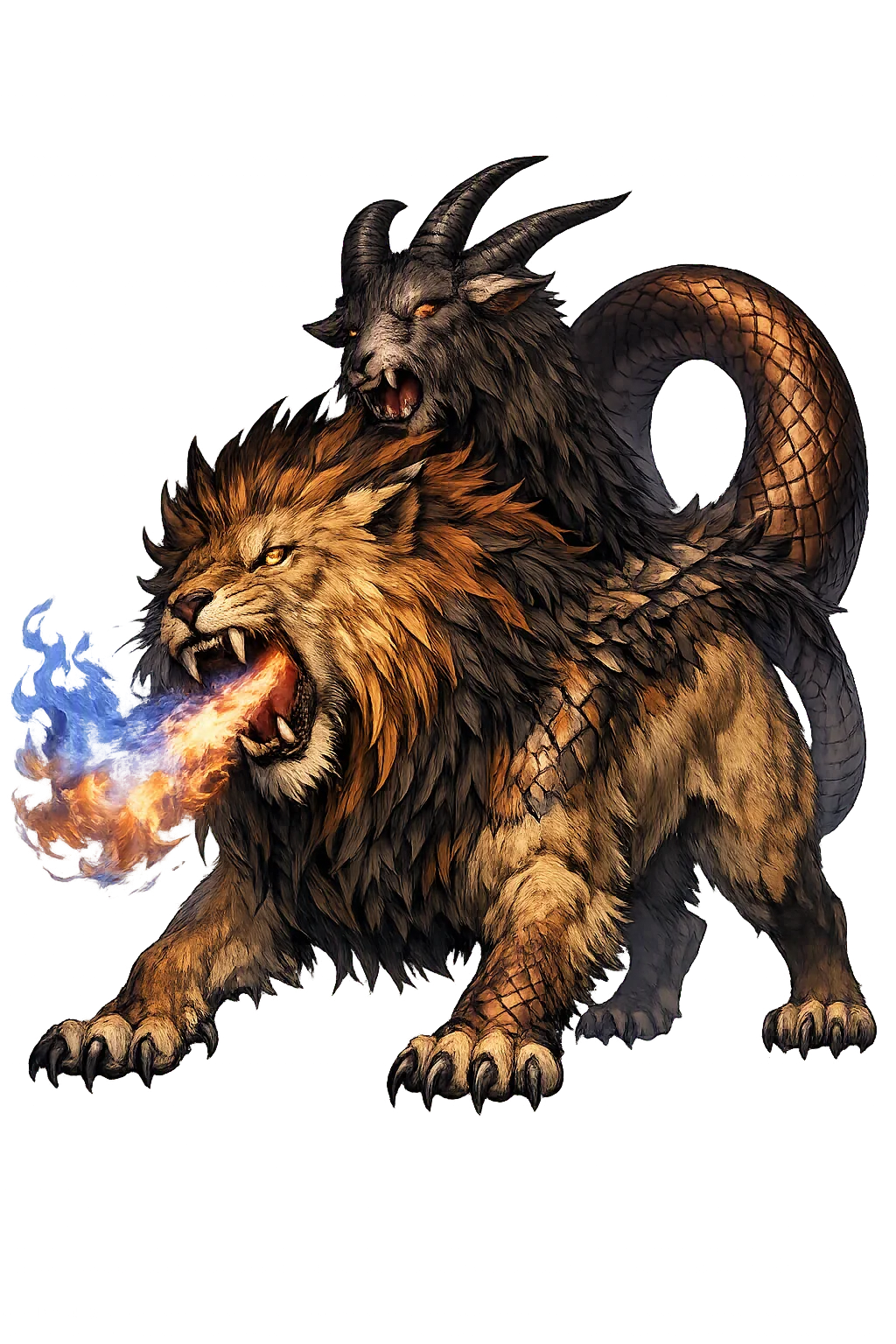
Chímaira is the monster of Lycia: lion before, serpent behind, she-goat in the middle, breathing forth the dreadful might of blazing fire (Theogony 319–325). Daughter of Typhôn and Echidna, sister to the Hydra and Kerberos, she is Homer's 'thing divine, not of mortal men' — a creature with no cult, no temple, and no pity. And yet her name is the homeliest word in the Greek barnyard: a she-goat one winter old.

Chímaira in Later Traditions

Rome received her without a cult to domesticate: the Latin Chimaera kept the Greek spelling and lost the goat. Virgil arms her with flame and posts her among the Centaurs and double-formed monsters at the gate of the underworld (Aeneid 6.288), Ovid names her among the hybrid creatures in Byblis's reckoning of unnatural things (Metamorphoses 9.646–648), and Hyginus (Fabulae 57) retells Bellerophôn's hunt for Latin schoolrooms. From there the word drifts from beast to idea: by the Renaissance a 'chimera' is any fire-breathing fancy of the mind, and the she-goat of Lycia has become the common name of impossibility itself.

Modern Legacy

English keeps her twice over. As chimera — and the adjective chimerical — she names the impossible hybrid or the vain, wild fantasy, a sense current in English since the seventeenth century. Science then recruited the monster for real composites: in genetics a chimera is an organism built from two distinct cell lineages, and the ghost-sharks of the deep sea, the family Chimaeridae, bear her name for their mismatched bodies. Every 'chimerical scheme' dismissed in a boardroom is, unknowingly, a Lycian she-goat still breathing fire.

Unicode Restoration as Cultural Act

Restoring Chímaira in a domain name is more than orthographic accuracy. It is a statement that the internet should recognize the full range of human writing — not only the ASCII keyboard.

05

Frequently Asked Questions

Common questions about Chímaira, Fire-Breathing Monster, and Unicode restoration

01How do you pronounce Chímaira?

In reconstructed pronunciation, Chímaira is /kʰí.mai.ra/ — approximately 'KHEE-mye-rah' — begin with a k followed by a sharp breath, let the middle glide like 'eye', and end on a quick tapped r..

02What does Chímaira mean?

Chímaira means She-goat in the greek tradition.

03What are the symbols of Chímaira?

Chímaira is associated with Flame (Her inextinguishable breath of fire — the one feature every source, from Hesiod to Virgil, refuses to omit), Lion forepart (The grim-eyed lion's head in front, emblem of her strength and royal ferocity), She-goat's head (The goat rising from her middle — the body part that carries her very name, χίμαιρα, 'she-goat'), Serpent tail (The dragon (δράκων) behind, her kinship with the earth-born brood of Typhôn made flesh), Pegasos (The winged horse, offspring of Poseidôn and Medousa, without whose height no mortal could reach her).

04Why restore Chímaira in Unicode?

Plain ASCII chimaira strips the stress, length, and script that make the name specific. Unicode restoration returns the name to its original written dignity.

05What is the most important myth about Chímaira?

In the Theogony (319–325), Hesiod sets Chímaira in the brood of Echidna: 'the Chímaira who breathed invincible fire, a creature terrible and great, swift-footed and strong. Three heads she had — one of a fierce-eyed lion, one of a goat, and one of a snake, a mighty dragon: lion in front, dragon behind, goat in the middle — breathing out the dreadful might of blazing fire.' Her siblings are the catalogue of beasts the heroes must undo: Orthos, Kerberos, the Lernaian Hydra. Hesiod seals her fate in the same breath as her birth — 'her did Pegasos and noble Bellerophontês slay' (325) — as if such a creature could only ever be a death postponed.

06

Scholarly Sources

The philological foundations of this restoration

Every claim on this page is grounded in established scholarship. The orthographic restorations follow disciplinary convention. The etymological chain follows the best available reference works. This is not invention — it is resurrection through scholarship.

Lexicography & Philology

  • Hesiod
  • Liddell, H. G., Scott, R., & Jones, H. S. A Greek-English Lexicon. Oxford: Clarendon Press, 9th ed. 1996.

Primary Texts

  • Homer
  • Iliad
  • Hesiod
  • Theogony
  • Pindar
  • Apollodorus
  • Virgil
  • Ovid
  • Pausanias

Archaeology & Art History

  • Material evidence — iconography, inscriptions, and temple archaeology — for Chímaira and related cults.
  • She had no sanctuary — monsters seldom do — but her landscape survives: the natural-gas flames of Yanartaş near ancient Phaselis in Lycia have burned without fuel for millennia, and ancient writers from Ctesias to Pliny (Natural History 2.111) knew the undying fire of Mount Chimaera as a landmark for sailors. In art she is among the earliest Greek monsters, attacked by Bellerophôn and Pegasos on Corinthian and Attic vases from the seventh century BC onward, and the Etruscans cast her masterpiece — the bronze Chimaira of Arezzo (c. 400 BC), a lion with the goat's head rising from its back and a serpent for a tail, dedicated to the god Tinia as its inscribed leg (tinścvil) records. Pausanias (2.4.1) still points out the spring Peirene at Corinth, where Bellerophôn was said to have seized the winged horse for the hunt.

Religious Studies

  • Hyginus
Return

The Surface Awaits

You have traced the name from its earliest attestation to its Unicode restoration. Now return to the myth. The story is where the name lives.

Back to Lore
Chímaira mascot