
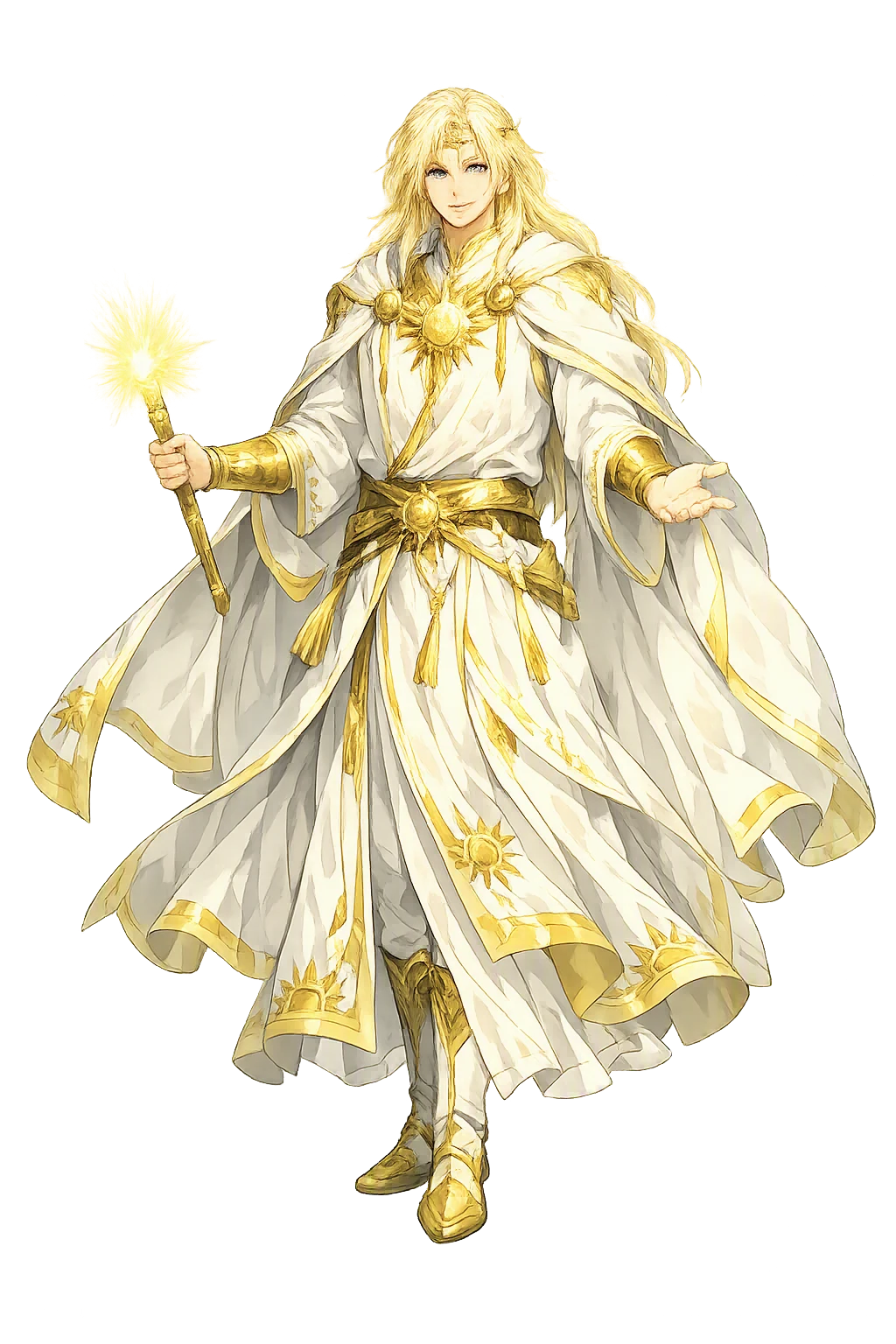
From Younger Futhark to Unicode: the journey of Baldr
Long before it was a domain, this name traveled through scripts. Baldr begins in Younger Futhark, passes through scholarly transliteration, and ends — for now — inside the punycode machinery of the global DNS. Each stage of that journey preserves some information and loses some, and the craft of restoration is knowing exactly which marks matter. This post follows the name stage by stage: the original script, the reconstructed pronunciation, the mythological record, the material evidence, and finally the Unicode form that carries all of it into the address bar. Think of it as a biography of a name, told through its spelling.
At a Glance
- Restored name: Baldr
- ASCII form: baldr
- Meaning: "Lord, prince (from *balþraz)"
- Domain of influence: Light, Beauty, Purity
- Pantheon: Norse
- Classification: Tier 2
- Original script: ᛒᛅᛚᛏᚱ (Younger Futhark)
Overview
Baldr (baldr) — Light, Beauty, Purity · The Best and Fairest of the Æsir — is the shining son of Óðinn and Frigg whose death by the mistletoe shaft is the first grief of the gods and the certain herald of Ragnarǫk. Snorri introduces him with the formula the whole tradition repeats: he is the best, and all praise him — so fair and bright that light streams from him, wisest and most gracious of the Æsir, and yet shadowed by one flaw, that none of his judgments can stand.
His attestation is thin but pivotal. The Poetic Edda knows him through prophecy rather than deed: Völuspá's seeress sees his doom, and the whole of Baldrs draumar is Óðinn's ride to wring that doom from a dead völva. The Prose Edda gives the narrative — Frigg's oath, the gods' game, Loki's hand guiding blind Höðr's throw, the burning of Hringhorni with Nanna dead of grief beside him, Hermóðr's nine-night ride, and the giantess Þökk's one refusal. Saxo's euhemerized Balderus and the Second Merseburg Charm's enigmatic Phol are the only substantial witnesses outside the Icelandic corpus.
PuniCodex restores the name as Baldr — identical to the ASCII input, because the normalized Old Norse form is itself plain ASCII: no diacritic, no distinctive letter, nothing for the ASCII alphabet to lose. The name is therefore Tier 2 by the project's mechanical rule — a property of its orthography, not of the god's standing. The plain-ASCII domain baldr.com is registered to a third party outside the collection and is watched for release; the project claims no domain for this temple.
The Name
The name is attested in Old Norse as Baldr (nominative; genitive Balders). Its etymology is genuinely disputed, and honesty requires both main lines. The stronger philological line derives it from Proto-Germanic balþraz, 'bold, lordly': Old Norse preserves baldr as a rare poetic common noun meaning 'lord, prince', and Old English bealdor 'prince, hero' is its exact cognate — the god's name would then simply be the title, 'the Lord'. The alternative, favored by scholars impressed by the god's shining character, connects the name with Baltic baltas 'white' (Lithuanian baltas), yielding 'the shining, the white one' — attractive to the myth, but philologically weaker, and Simek and Orchard both register the dispute rather than settle it.
The ASCII form is not a compromise here: normalized Old Norse Baldr is already written in plain ASCII letters. There is no diacritic, no thorn or eth, no vowel-length mark for the early domain-name system to have stripped. The name is classified Tier 2 by the project's mechanical rule — the restoration preserves nothing the ASCII form loses — which is a statement about orthography, never about the god. The final -r is the Old Norse nominative masculine ending, borne by the plain letter itself.
The letter-by-letter transformation runs:
- b → B — Same, capitalized
- a → a — Same
- l → l — Same
- d → d — Same
- r → r — Same
The project holds no domain for this name: baldr.com is registered to a third party outside the PuniCodex collection and is watched for release. The temple lives at its canonical lexicon address.
Etymology & Roots
The recorded derivation reads: Lord, prince (from *balþraz)
The reconstructed proto-form is *balþraz (proto-indo-european), glossed as "Lord, prince".
The reconstruction is classed as attested.
The Original Script
The name is preserved in medieval Icelandic manuscripts in the Latin alphabet as Baldr — Old Norse (North Germanic), attested 13th c. CE in the Codex Regius and the codices of the Prose Edda, recording material centuries older. The manuscript form is itself plain ASCII: Old Norse writes no diacritic in this name, and the restoration changes nothing but the capital. In the Younger Futhark — the sixteen-rune Viking-Age row — the name would have been carved ᛒᛅᛚᛏᛦ (b-a-l-t-R); the runic row underspecifies what the manuscripts fix, with ᛏ writing both t and d and ᛦ the final nominative -r.
The scholarly rendering proceeds step by step:
- The name is a single stem, bald- + the nominative masculine ending -r; no compound, no prefix.
- Old Norse orthography requires no accent: the a is short, and short vowels carry no mark.
- The etymology is disputed: Proto-Germanic balþraz 'bold, lordly' (with the poetic noun baldr 'lord, prince' and Old English bealdor as cognates) against the 'white, shining' line that would connect the name to the god's radiance; the handbooks register the dispute rather than settle it.
- The Unicode restoration Baldr is therefore identical to the ASCII form — a Tier 2 name by the mechanical rule, whose dignity comes from the god, not from rescued diacritics.
PuniCodex holds no domain for this name: the plain-ASCII baldr.com is registered to a third party outside the collection and is watched for release.
Pronunciation
The reconstructed pronunciation of the name is /ˈbɑl.dr̩/ — Old Norse Reconstruction.
Phoneme by phoneme:
- B- — Voiced bilabial stop [b], fully voiced in initial position, as in English 'bald'
- -a- — Short open back unrounded [ɑ], held brief; Old Norse short a, not the long á
- -ldr — Lateral [l], voiced stop [d], and the syllabic trill [r̩] of the nominative ending, which carries its own beat
For the modern speaker, the closest approximation is: 'BAHL-dur' — a short open 'ah', the l and d run together, and a light syllabic r at the end, as in modern Icelandic Baldur.
Kindred and historical forms of the name:
- Old Norse — Baldr, son of Óðinn and Frigg; also a rare poetic noun, 'lord, prince'
- Old High German — Phol, paired with Wodan in the Second Merseburg Charm, widely read as Baldr
- Old English — Bældæg, son of Woden in the Anglo-Saxon royal genealogies
- Latinized — Balderus, the form Saxo Grammaticus writes
- Modern Icelandic — Baldur, the unbroken living form
Baldr is Tier 2 because the Old Norse form is already plain ASCII: nothing distinctive is lost in transit. The god's fame vastly outruns his name's orthography.
Mythology
Baldr's mythology is a single arc — foreseen, enfolded, executed, mourned, and answered only after the end of the world — told across both Eddas with unusual agreement.
The Dreams and the Prophecy (Baldrs draumar · Völuspá)
It begins with dreams: Baldr dreams balefully for his life, and the Æsir take counsel. In Baldrs draumar, Óðinn himself saddles Sleipnir, rides down to Niflhel, and raises a dead völva from her grave east of Hel's gate. She answers what she would not: the benches of Hel are strewn and the mead brewed for Baldr; Höðr will be the slayer; Váli, born to Óðinn, will avenge him one night old, neither washing his hands nor combing his hair until Baldr's foe burns; and Þökk will weep dry tears — let Hel hold what she has. Völuspá gives the same doom to its seeress: she saw the mistletoe, slim and very fair, and from that shoot the sorrow-dart, and Höðr shooting.
The Oath and the Throw (Gylfaginning 49)
Frigg fights the prophecy with an oath, exacted from all things — fire, water, metals, stones, earth, trees, sicknesses, beasts, birds, serpents — that they will not harm Baldr. Only the mistletoe, growing west of Valhǫll, seemed too young to ask. The gods' pastime becomes shooting and hurling at Baldr, whom nothing can hurt, until Loki, in a woman's shape, learns the omission from Frigg, puts the mistletoe in blind Höðr's hand, and guides the throw. The shaft goes through Baldr and he falls — Snorri calls it the most ill-fated deed done among gods and men. The Æsir cannot even weep at first; and they cannot take vengeance, for the place is a sanctuary.
The Burning of Hringhorni
The Æsir bear Baldr to the sea and bring out Hringhorni, greatest of all ships, which they cannot move; the giantess Hyrrokkin launches it with one shove, fire flying from the rollers. On the pyre they lay Baldr, and Nanna, his wife, daughter of Nepr, dies of grief at the sight and is laid beside him. Óðinn lays the ring Draupnir on the fire; Þórr hallows the pyre with Mjölnir and kicks the dwarf Litr into the flames.
The Ransom and the Refusal
Hermóðr the Bold rides nine nights to Hel and begs for Baldr's release; Hel answers that all things, living and lifeless, must weep him out. Messengers go through the world and all things weep — men and beasts, earth and stones, trees and metals — save the giantess Þökk in her cave: 'Let Hel hold what she has.' The Æsir believed Þökk was Loki. The condition fails by one refusal, and Baldr remains with the dead.
The Vengeance and the Return
Váli, born to Óðinn for the purpose, kills Höðr when one night old, and Loki is bound until Ragnarǫk. Then comes the corpus's strangest consolation: after the fire and flood, Völuspá says, Baldr and Höðr come back together from Hel — slain and slayer reconciled — to the green earth, where the fields grow unsown.
Saxo's Counter-Tradition
Saxo Grammaticus tells the death as heroic history: Balderus, a demigod son of Odin whom no ordinary steel can wound, and the human prince Høtherus contend for Nanna's hand; Høtherus wins the sword Mimming from the satyr Mimingus, wounds Balderus, and the demigod dies after three days; Bous — Saxo's Váli — is begotten to avenge him. The euhemerized skeleton keeps the myth's bones: the invulnerable man, the one weapon, the rival's hand, the begotten avenger.
Symbols & Iconography
Baldr's iconography is the iconography of his death — the corpus gives him no regalia in life, but fixed around his pyre a set of objects no retelling can omit:
- The mistletoe — The one shoot Frigg judged too young to swear the oath: slender, fair, and fatal; Völuspá calls it high-grown and very beautiful, which is the myth's whole irony in a plant
- Hringhorni — His ship, 'greatest of all ships', which the Æsir could not launch until the giantess Hyrrokkin came riding a wolf with vipers for reins and shoved it to the sea
- Draupnir — The drip-gold ring Óðinn laid on the pyre; Baldr sent it back from Hel with Hermóðr as the token that the dead god had received the errand
- Breiðablik — The broad-gleaming hall, Grímnismál's seventh station of heaven, where the fewest evils lie
- Baldrs brá (the daisy) — The whitest of all plants, named for his eyelash: the only attribute Baldr carries in living botany
- The ring of the fire — The pyre itself, hallowed by Þórr's hammer Mjölnir, into which the dwarf Litr was kicked — the funeral as the gods' last ceremony in an unbroken world
Archaeology & Evidence
Baldr is an almost entirely textual god: no runestone invokes him, no votive deposit names him, and the place-name evidence sometimes claimed on his behalf is insecure. The material witnesses are indirect but real. Úlfr Uggason's Húsdrápa, composed about 983 and preserved in Skáldskaparmál, describes the funeral procession — Óðinn, Freyr, Heimdallr, the valkyries, and Hyrrokkin launching the ship — as carved on the panels of Óláfr pái's hall at Hjarðarholt in Iceland, proving that the Baldr myth was monumental art a generation before the conversion.
On the continent, the Second Merseburg Charm survives in a tenth-century theological manuscript from Fulda — the only Old High German text that may carry the god's name, whatever one makes of Phol. The poetic witnesses are likewise codicological: Völuspá and Grímnismál in the Codex Regius (c. 1270), while Baldrs draumar is found only in the fourteenth-century manuscript AM 748 I 4to — a reminder that the poem on which so much rests hangs by a single thread.
Realm & Domain
Baldr is catalogued under Light, Beauty, Purity — and the sources earn every term of it: light streams from his face, his eyelash names the whitest plant in the world, and his hall admits nothing impure.
Light
Snorri's portrait makes brightness a physical property: Baldr is so fair that a splendour radiates from him, and the daisy, whitest of all plants, is baldrs brá, 'Baldr's eyelash' — his brightness the standard by which whiteness itself is measured.
Beauty
'He is the best, and all praise him': the formula is repeated across the corpus as the fixed epithet of the fairest of the Æsir, most beautifully spoken and most merciful.
Purity
His dwelling is Breiðablik, the broad-gleaming, 'in the land where the fewest bale-runes lie' — Grímnismál's way of saying that nothing unclean has footing there.
Peace and Judgment
He is the mildest of judges, and Snorri adds the haunting rider that none of his judgments can stand — as if the tradition already knew his goodness was not for this world. His son Forseti inherits the office of reconciliation in full.
Across Cultures
The single continental witness is the Second Merseburg Charm, preserved in a tenth-century Fulda manuscript: 'Phol and Wodan rode to the wood; then Balder's foal wrenched its foot,' and Wodan charms the limb whole, bone to bone, blood to blood. Since Jacob Grimm, Phol has widely been read as Baldr — which would make this the god's only Old High German attestation — but the identification is argued, not proven, and modern handbooks print it with a question mark. Old English offers a genealogical shadow rather than a myth: Bældæg, 'son of Woden', stands in the West Saxon royal genealogies, his name compounding the same word with 'day'.
The larger syncretic debate is the scholarship's own. Nineteenth- and early twentieth-century readers, struck by the innocent god who dies and returns, aligned Baldr with the Christ of the Gospels or with Frazer's dying-and-rising vegetation spirits — the 'Balder the Beautiful' volumes of The Golden Bough made him the type of the slain god. Current scholarship is cooler: Lindow and Orchard observe that Baldr's return is scheduled strictly after Ragnarǫk, that his death functions as the tragedy of the gods rather than as a fertility rite, and that the myth's true company is the northern complex of fratricide, failed ransom, and prophesied loss.
Cultural Legacy
Baldr's afterlife is outsized precisely because his dossier is thin: the beautiful dead god became a vessel every age refills. Matthew Arnold's 'Balder Dead' (1855) made him the Victorian emblem of vanished perfection, and the nineteenth-century Norse revival cast him as the North's own god of light and innocence. Frazer's The Golden Bough built whole volumes — 'Balder the Beautiful' — on the mistletoe, and though the theory has faded, the phrase fixed Baldr in the English imagination as the slain god par excellence.
In the North itself the name never died: Icelandic Baldur and Danish-Norwegian Balder remain living given names, and the daisy still carries his eyelash in the Old Norse word baldrs brá. Modern Heathen and Ásatrú communities keep him at the centre of their rites of mourning and midsummer, reading his death and promised return as the tradition's theology of loss. In modern fiction, games, and comics he appears whenever a retelling needs the gods' innocence to break — his death is the standard first movement of any Ragnarǫk narrative.
The Scholarly Record
The account of Baldr given in this edition rests on the witnesses and reference works listed below. The Eddas supply the narrative and the prophecy; Saxo the counter-tradition; the Merseburg charm the continental question; the lexica the name's disputed etymology.
- Snorri Sturluson, Edda, Gylfaginning 22 and 49, ed. and trans. Anthony Faulkes (London: Everyman, 1987).
- The Poetic Edda, trans. Carolyne Larrington, 2nd ed. (Oxford: Oxford University Press, 2014): Völuspá 31–33, 62; Baldrs draumar; Grímnismál 12.
- Saxo Grammaticus, Gesta Danorum, Book 3 (Balderus and Høtherus), trans. Peter Fisher, ed. Hilda Ellis Davidson (Cambridge: D. S. Brewer, 1979).
- The Second Merseburg Charm, in Althochdeutsches Lesebuch, ed. Wilhelm Braune, rev. Ernst A. Ebbinghaus, 17th ed. (Tübingen: Niemeyer, 1994), no. II.
- Cleasby, Richard, and Guðbrandur Vigfússon, An Icelandic-English Dictionary, 2nd ed. (Oxford: Clarendon Press, 1957), s.v. baldr.
- Zoëga, Geir T., A Concise Dictionary of Old Icelandic (Oxford: Clarendon Press, 1910), s.v. baldr.
- Simek, Rudolf, Dictionary of Northern Mythology, trans. Angela Hall (Cambridge: D. S. Brewer, 1993), s.v. Baldr, Merseburg charms.
- Orchard, Andy, Dictionary of Norse Myth and Legend (London: Cassell, 1997), s.v. Balder.
- Lindow, John, Norse Mythology: A Guide to the Gods, Heroes, Rituals, and Beliefs (Oxford: Oxford University Press, 2001), s.v. Baldr, Húsdrápa.
- Frazer, James George, The Golden Bough: Balder the Beautiful, 2 vols., 3rd ed. (London: Macmillan, 1913).
A Meditation
Baldr is the god the Edda built out of an absence. He is given no adventure, no trial, no weapon of his own — only perfection, prophecy, and the one overlooked thing. The myth's engineering is merciless: Frigg's oath is nearly complete, and nearly is the whole story; the gods' game is nearly harmless, and the mistletoe is nearly a plant; the world's weeping is nearly unanimous. Each near-victory is a door closing.
What remains is the strangest consolation in the northern corpus — not rescue, but return. After the fire and the flood of Ragnarǫk, Völuspá says, Baldr and Höðr come back together from Hel, the slain and the slayer reconciled, to a green earth. The Edda does not promise that loss can be prevented. It promises that what was best is not lost from the world for good — and asks, in the meantime, what a life is worth that is lived inside a prophecy it cannot escape.
The Unicode Restoration
Baldr is classified as Tier 2: the restoration needs no distinctive letters or diacritics its ASCII form would lose. The ASCII fallback baldr still resolves everywhere, but it is the restored form that carries the name's full information. That is the whole thesis of this temple: the marks are the message.
Why This Restoration Matters
Every stage of the journey from Younger Futhark to Unicode was an act of care: the scribe who first wrote the name, the lexicographer who glossed it, the engineer who taught the DNS to carry it. The PuniCodex restoration is the latest stage, not the last word — the Scholarly Edition is revised as the evidence improves. What does not change is the principle: a name deserves to be written the way its own tradition wrote it. Baldr in the address bar is that principle, made routable.
Explore Further
This post is one doorway into the temple. The home page carries the full character breakdown and the ambient canvas; the lore page tells the myths in long form; the Scholarly Edition preserves the sources, pronunciation data, and revision history; and the patron wall supports the restoration directly. For the wider map, browse the Lexicon, explore the Pantheon, or return to the PuniCodex blog.
Related Names
Sources
The full scholarly apparatus — every citation, revision, and review — lives in the Scholarly Edition. Key references for this post:
- Snorri Sturluson, Edda, Gylfaginning 49 (Baldr's death and its aftermath), ed. and trans. Anthony Faulkes (London: Everyman, 1987).
- Snorri Sturluson, Edda, Gylfaginning 22 (Baldr the Good among the Æsir), trans. Faulkes (1987).
- The Poetic Edda, trans. Carolyne Larrington, 2nd ed. (Oxford: Oxford University Press, 2014): Völuspá 31–33, 62; Baldrs draumar.
- Saxo Grammaticus, Gesta Danorum, Book 3 (Balderus and Høtherus), trans. Peter Fisher, ed. Hilda Ellis Davidson (Cambridge: D. S. Brewer, 1979); the Second Merseburg Charm, in Althochdeutsches Lesebuch, ed. Wilhelm Braune, rev. Ernst A. Ebbinghaus, 17th ed. (Tübingen: Niemeyer, 1994).
- Lexicon authorities for this entry: Cleasby-Vigfusson, Zoëga.