Unicode restoration and ASCII comparison
Ἄτροπος
The name in its original Greek form. Átropos (Ἄτροπος) is attested in the source tradition — “Inflexible, inevitable”. Its acute accents carry the full phonetic and orthographic weight of the source tradition.
atropos
Reduced to plain atropos, the name loses everything that made it specific: acute accents. What remains is an ASCII string that machines can parse but that no longer speaks with its original voice.
Átropos
The Unicode restoration recovers what ASCII flattened. Átropos restores acute accents, returning the name to its original written dignity. The domain encodes to Punycode, but the browser displays the truth.
Átropos.com → xn--tropos-ota.com
The non-ASCII characters in Átropos are encoded while the ASCII remains visible. To the DNS, it is Punycode. To humanity, it is Átropos.
How Átropos is preserved in writing
A bespoke provenance study for Átropos is being prepared by the PUNICODEX scholarly team.
Contribute scholarly provenance →How Átropos was spoken
Fate, Necessity, and the Cut Thread
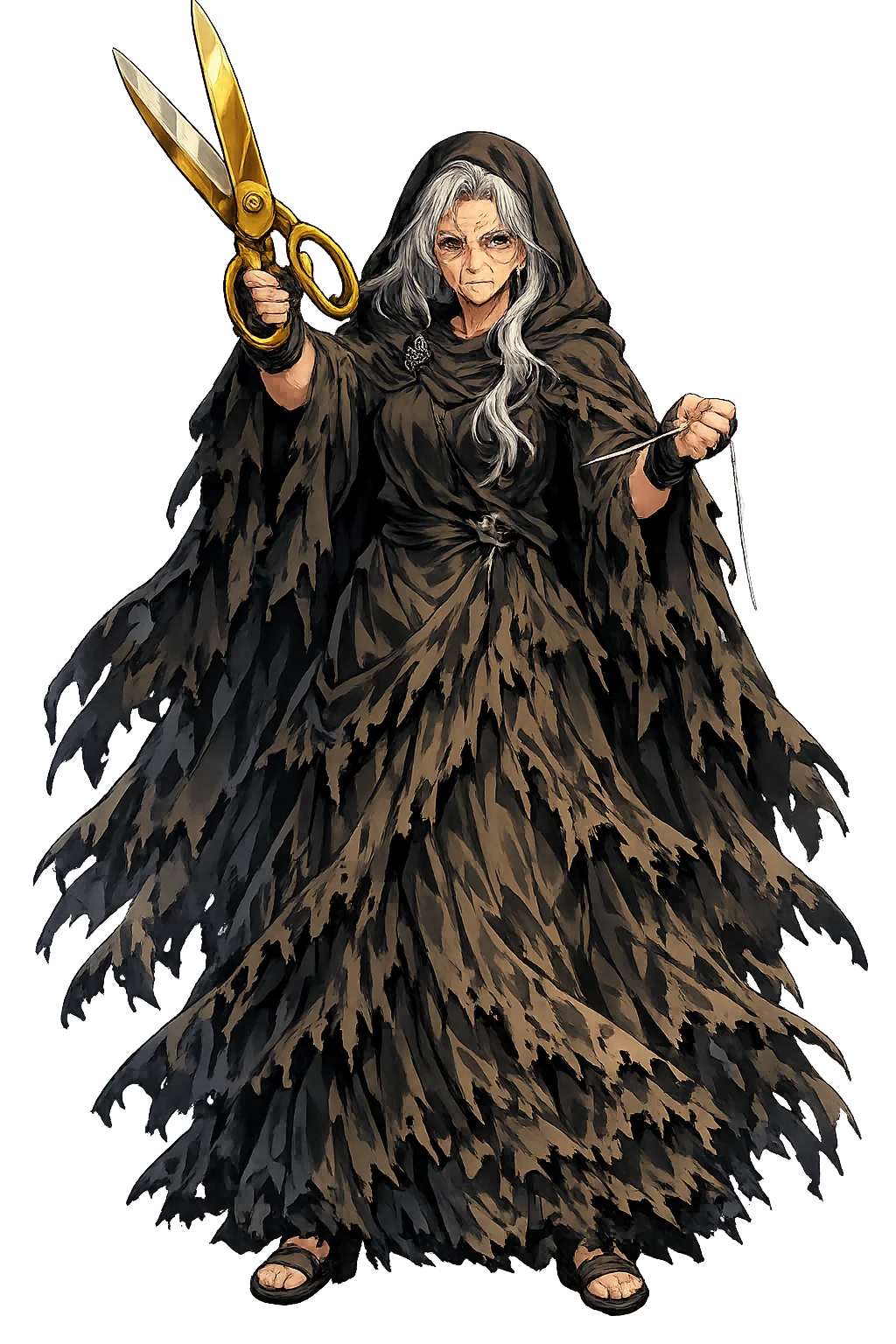
Átropos is the third of the three Moirai: Klōthṓ spins the thread, Láchesis measures it, and Átropos cuts it. Her name is a verdict — "she who cannot be turned aside" — and Greek literature treats her not as a villain but as the grammar of endings itself.
Her attribute from Hellenistic art onward: the blades that end the measured span.
In Plato's Republic she turns the future on the cosmic spindle her mother Anánkē holds.
The log whose burning measured a hero's life — her timetable written in firewood.
The alkaloid of deadly nightshade, Atropa belladonna, named for the cut she delivers.
Stories of Átropos
Hesiod names her with her sisters in the Theogony: Klōthṓ, Láchesis, and Átropos, "who give mortals good and evil." Of the three, she alone never appears as a character with dialogue — she is the act, not the actor.
In the Theogony's first account the Moirai are fatherless daughters of Nyx, Night — older than Zeús himself, and in some traditions even the king of gods bows to their decree. A second Hesiodic account makes them daughters of Zeús and Themis, law-givers by birth: the tension between fate above Zeús and fate as his instrument runs through all Greek thought.
Seven days after Méleagros' birth the Moirai appeared to his mother Althaia and declared the child would live only until the log then burning on her hearth was consumed. She snatched it from the fire and kept it for years — until, enraged at her son for killing her brothers, she thrust it back into the flames, and Átropos' sentence completed itself at once.
In the Myth of Er that closes Plato's Republic, the souls see the spindle of Anánkē, Necessity, around which all the spheres of heaven turn. Láchesis sings the past, Klōthṓ the present, and Átropos the future — the three sisters holding the music of the planets in their hands.
Átropos is the least frightening of the Fates once understood: she does not shorten the thread, she only confirms its measure. Every system that ends cleanly — a contract performed, a story resolved, a life fully spent — has passed through her hands. The terror belongs not to the cut but to the tangle.
Enter Extended Lore