
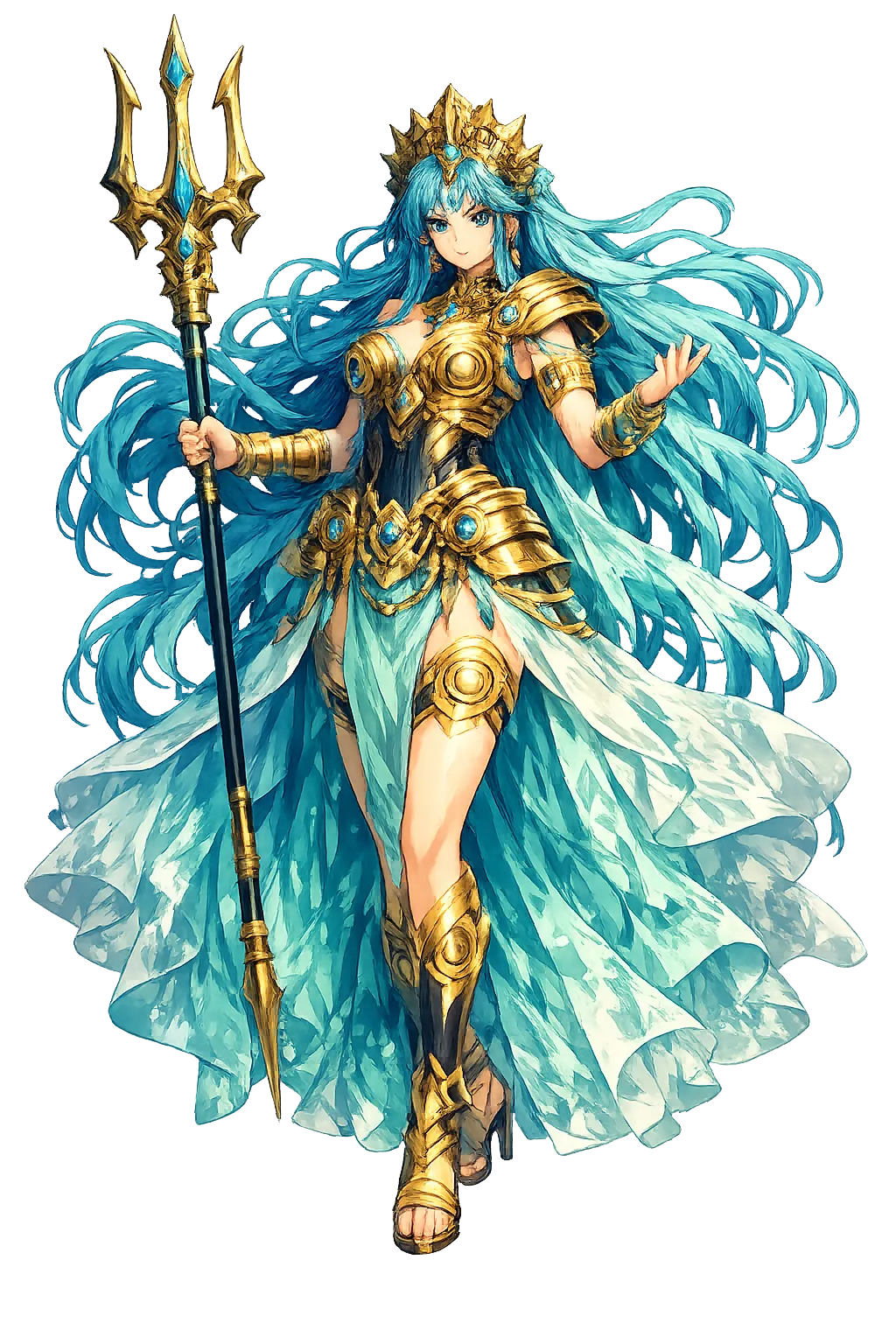
The name Atlantís and the world it opens
A name is a door. Atlantís opens onto an entire world: the domain of lost island, legendary realm, sea, a Greek Location tradition, and centuries of storytelling, worship, and scholarship. This post walks through that world room by room — the name and its roots, the original script, the sound of it, the myths, the symbols, the sites, the afterlife across cultures — and ends at the newest room of all: a Unicode domain that makes the whole structure addressable. atlantis gets you to the same building, but only the restored form tells you why it was built.
At a Glance
- Restored name: Atlantís
- ASCII form: atlantis
- Meaning: "Daughter of Atlas; the legendary lost island civilization"
- Domain of influence: Lost Island, Legendary Realm, Sea
- Pantheon: Greek Location
- Classification: Tier 2
- Original script: Ἀτλαντίς (Greek)
- Live domain: atlantís.com
Overview
Atlantís (atlantis) — 'daughter of Atlas' — is the island empire Plato sets beyond the Pillars of Heracles in the Timaeus and Critias: a naval power defeated by a prehistoric Athens and swallowed by the sea in a single day and night.
Atlantís is the legendary island civilization described by Plato, a powerful naval empire that angered the gods and sank beneath the waves. The tale functions in the dialogues as a philosophical counter-image to ideal Athens — the archetype of the golden age destroyed by its own ambition — and antiquity already debated whether it was history or parable.
PuniCodex restores the name as Atlantís and serves its temple at atlantís.com. The original preserves one prosodic feature — the acute accent on the final iota — rather than both stress and vowel length, which places the name in Tier 2. The plain ASCII form atlantis survives as a modern convenience imposed by the early domain-name system; the restoration, not the fallback, is the form the project defends as philologically complete.
The Name
The name is attested in Greek as Ἀτλαντίς. Etymologically it means "Daughter of Atlas; the legendary lost island civilization".
The reconstructed proto-form is tl̥-n-h₂ (proto-indo-european, "to bear, uphold"). From Atlas (Ἄτλας), the Titan who holds up the heavens; Atlantis is "the island of Atlas."
Cognate forms across related languages:
- Atlas (greek) — The Titan after whom the island is named
In Greek the word is a feminine patronymic adjective — the full expression is Ἀτλαντὶς νῆσος, 'the island of Atlas,' with the noun understood. Plato makes the derivation explicit: the island's first king was named Atlas, and from him both the island and the outer sea took their names (Critias 114a).
The ASCII form atlantis survives only because the early domain-name system could not carry diacritics; it is a technological compromise, not an ancient spelling. The Unicode restoration Atlantís recovers the stress accent of the original directly in the address bar. The original preserves one prosodic feature — stress or vowel length — rather than both, which places the name in Tier 2.
The letter-by-letter transformation runs:
- a → A — Same, capitalized
- t → t — Same
- l → l — Same
- a → a — Same
- n → n — Same
- t → t — Same
- i → í — Acute on iota
- s → s — Same
The project holds the domain atlantís.com (xn--atlants-dza.com) as the canonical home of this name.
Etymology & Roots
The recorded derivation reads: From Atlas (Ἄτλας), the Titan who holds up the heavens; Atlantis is "the island of Atlas."
The reconstructed proto-form is *tl̥-n-h₂ (proto-indo-european), glossed as "to bear, uphold".
The reconstruction is classed as attested.
Kindred forms recorded in the lexicon:
- Atlas (greek) — The Titan after whom the island is named
The Original Script
The name is written in Greek as Ἀτλαντίς. This original script is the form against which the ASCII fallback atlantis and the PuniCodex restoration Atlantís are measured: the restoration preserves the pitch accent of the written form, so that a reader typing the modern address still speaks the ancient name.
The word is attested almost exclusively in Plato: the Timaeus and Critias supply the ancient corpus, and the later authors who mention the island copy him. In form it is built with the regular Greek feminine patronymic suffix -ίς (genitive -ίδος), 'daughter of' — the same suffix the poets use in Ἀτλαντίδες for the daughters of Atlas. The acute on the final iota is part of the word's prosody: short iota, final stress. The restoration Atlantís carries exactly that accent into the address bar.
Pronunciation
The reconstructed pronunciation of the name is /at.lan.tís/ — Attic Greek Reconstruction.
Phoneme by phoneme:
- At- — Short alpha [a] plus voiceless dental stop [t]; the opening syllable is unstressed
- -lan- — Lateral [l], short [a], and nasal [n]; the middle syllable carries the root Átlas
- -tis — [t] plus short iota and final sigma [s]; the iota bears the acute accent, marking the final syllable as stressed
For the modern speaker, the closest approximation is: 'at-lahn-TEES' — three short syllables, the stress falling on the clipped final i.
Kindred and historical forms of the name:
- Greek — Ἀτλαντίς (Atlantís), 'daughter of Atlas,' the legendary island
- Root — Ἄτλας (Átlas), the Titan who held up the heavens
- Narrative — The word survives almost wholly through Plato's Timaeus and Critias
Atlantís is accent-preserving Tier 2: the acute on the final iota marks stress, but the vowel is short — the name is the feminine patronymic form of Átlas, 'daughter of Atlas,' turned into a place name. English 'Atlantis' flattens both the accent and the short final syllable.
Mythology
Atlantís is Plato's story, whether invented or adapted from older traditions. It serves as a philosophical allegory about the corruption of power and the fragility of civilization.
The Egyptian Priest's Tale (Plato, Timaeus)
Solon visits Egypt and hears from a priest of Saïs that Athens once defeated a great Atlantic power nine thousand years earlier. The Greeks have forgotten because catastrophes repeatedly destroy their records, while Egypt's memory is preserved by the Nile's stability.
The Island and Its Kings (Plato, Critias)
Atlantis was allotted to Poseidon, who fell in love with a mortal woman, Kleito. Their descendants — ten kings in five pairs of twins, with Atlas the eldest — built a magnificent capital of concentric harbors, temples, and walls. For generations they were virtuous; then wealth and power corrupted them.
The Cataclysm (Plato, Timaeus 25c-d; Critias 121b-c)
Zeus assembled the gods to pronounce judgment on Atlantis — and at that very moment the unfinished Critias breaks off. The Timaeus supplies the outcome: 'violent earthquakes and floods' came, 'and in a single day and night of misfortune' the Athenian army sank into the earth and the island of Atlantis 'disappeared in the depths of the sea.' Only impassable mud shoals remained where the island had been.
Symbols & Iconography
Atlantis has no ancient iconography — no vase painting, relief, or coin depicts it — so its 'symbols' are the material details Plato gives the island in the Critias: engineered concentric rings of land and water, walls faced with orichalcum that 'sparkled like fire,' and the temple of Poseidon and Kleito at the center of the rings.
- Concentric rings of land and water — The engineered geography of the Atlantean capital
- Poseidon's trident — The island's divine patron, who begot its ten kings on Kleito
- Orichalcum — The legendary precious metal of Atlantis, second in value only to gold
- Sinking temple — The modern icon of a civilization's architecture overwhelmed by the sea
Archaeology & Evidence
No archaeological site has been convincingly identified with Plato's Atlantis, and marine geology excludes a sunken landmass of continental scale in the Atlantic: the ocean floor holds no foundered continent, only volcanic islands and spreading ridges. The two serious real-world analogues are catastrophes of Plato's own world. Akrotiri on Thera, a Bronze Age town sealed by the great volcanic eruption and excavated by Spyridon Marinatos from 1967, had been proposed by Marinatos himself as early as 1939 as the disaster behind the Atlantis memory; and Helike in Achaea, destroyed by earthquake and tsunami in 373 BCE — within Plato's lifetime — was rediscovered by archaeologists only in 2001. Other candidacies — Spartel Bank, the Doñana marshes, the Azores — remain hypotheses without a single attributable artifact.
Realm & Domain
Atlantís is the legendary island civilization described by Plato, a powerful naval empire that angered the gods and sank beneath the waves in a single day and night. According to the priest of Saïs who tells Solon the story, the war between Atlantis and Athens was fought nine thousand years before Solon's day, and Athens — alone — defeated the invaders and freed the peoples within the Pillars. It is the archetype of the golden age destroyed by its own ambition.
Island Empire
A ringed island beyond the Pillars of Herakles, rich in metals, timber, and fertile soil.
Naval Power
Its fleet dominated the Mediterranean until Athens led a resistance of free Greeks.
Hubris and Fall
Its kings grew greedy and impious; Zeus punished them with earthquakes and floods.
Underwater Ruin
Sank beneath the Atlantic, becoming the template for every lost-civilization legend.
Across Cultures
Antiquity received Plato's tale with skepticism and belief in equal measure. Strabo repeats the jest — attributed through Poseidonius to Aristotle — that the man who invented the island also sank it, while Proclus reports that Crantor, Plato's first commentator, claimed the story was still inscribed on pillars in Egypt: the first of many 'confirmations.' Modern speculation began in earnest with Ignatius Donnelly's Atlantis: The Antediluvian World (1882), which recast Plato's parable as literal history and founded the genre of Atlantology. Occult, utopian, and pseudo-archaeological writers have since identified the island with Thera, Tartessos, Malta, the Azores, and the Americas — identifications the skeptical literature catalogues and dismantles. The name's genuine legacy is geographic: already Herodotus calls the outer sea beyond the Pillars 'the Atlantis,' and Plato's island borrowed its name from the same Titan.
Kindred places in the corpus include [[atlas|Átlas]], [[elysion|Ēlysion]], [[delphoi|Delphoí]], [[olympos|Ólympos]], [[aigyptos|Aígyptos]], and [[libye|Libyē]].
Cultural Legacy
Atlantis became Western culture's favorite lost world. Francis Bacon borrowed the name for his utopian New Atlantis (1627), and Jules Verne let Captain Nemo walk the drowned ruins in Twenty Thousand Leagues under the Seas (1870). Tolkien built Númenor — in Quenya Atalantë, 'the Downfallen' — on the same drowning-island pattern and acknowledged the debt in his letters. The twentieth century split the legacy in two: scholarship reads the tale as Plato's parable of imperial Athens, while occultism from Blavatsky's The Secret Doctrine (1888) onward claimed it as recovered prehistory, and cinema and comics turned it into a drowned high-tech civilization. Restoring Atlantís in Unicode ties the modern name back to Plato's Greek — the acute of the Timaeus and Critias — rather than to the Atlantis of speculation.
The Scholarly Record
The account of Atlantís given in this edition rests on the witnesses and reference works listed below. Lexica and etymological dictionaries secure the form and meaning of the name; the literary and religious texts supply the narrative evidence.
- Liddell-Scott-Jones Greek-English Lexicon, 9th ed. with 1996 supplement, s.v. Ἀτλαντίς. Full text
- Beekes, Etymological Dictionary of Greek, s.v. Ἄτλας.
- Plato, Timaeus 21e-25d.
- Plato, Critias 108e-121c.
- Strabo, Geography 2.3.6.
- Vidal-Naquet, P., The Atlantis Story: A Short History of Plato's Myth (2007).
- Feder, K. L., Frauds, Myths, and Mysteries: Science and Pseudoscience in Archaeology.
A Meditation
Atlantis is the myth that we want to be true. It promises that somewhere, once, people knew more than we do — and that their knowledge sleeps beneath the waves, waiting to be recovered. That desire says less about history than about our own dissatisfaction with the present.
But Plato's lesson is moral, not archaeological. Atlantis falls not because it lacks power but because it loses virtue. The city of rings becomes a city of greed. The myth asks every civilization: What are you becoming while you grow? If the answer is 'more like Atlantis,' the sea is already rising.
Plato never finished the story: the Critias breaks off in mid-sentence, at the very moment Zeus rises to pronounce judgment. The island is thus doubly drowned — once in the sea, and once in its author's silence.
The Unicode Restoration
Atlantís is classified as Tier 2: the original preserves at least one philological feature that ASCII cannot encode. The ASCII fallback atlantis still resolves everywhere, but it is the restored form that carries the name's full information. Across the 8 characters of the name, the restoration adjusts 1: 1 mark of stress (í). That is the whole thesis of this temple: the marks are the message.
Character by Character
The journey from atlantis to Atlantís, one character at a time:
- a → A — Same, capitalized
- t → t — Same
- l → l — Same
- a → a — Same
- n → n — Same
- t → t — Same
- i → í — Acute on iota
- s → s — Same
The Domain Name
The restored name is live as a working domain: atlantís.com, which the DNS carries in punycode form as xn--atlants-dza.com — an ASCII-compatible encoding that lets a non-ASCII name travel the global network without breaking older infrastructure. The visitor sees Atlantís; the machines see the encoding. That duality is the engineering compromise on which the entire restoration rests, and it is why a name written the way its own tradition wrote it in Greek can now be typed into any browser on earth.
The Greek Location Pantheon
Atlantís is one of 24 entries the PuniCodex lexicon catalogues under the Greek Location pantheon. The Pantheon page gathers the tradition's major figures in one place, and the Lexicon lets you filter all 895 restorations by tradition, tier, or script — the fastest way to see where this name sits among its kin.
Frequently Asked Questions
What does Atlantís mean? The traditional gloss is "Daughter of Atlas; the legendary lost island civilization."
Which tradition does Atlantís belong to? Atlantís is catalogued in the Greek Location pantheon of the PuniCodex lexicon.
Why is Atlantís classified as Tier 2? Because the original preserves at least one philological feature that ASCII cannot encode — and the marks in the restored spelling preserve exactly that evidence.
Is Atlantís a working domain? Yes — atlantís.com resolves today and routes to this temple.
What is the punycode for atlantís.com? The DNS encoding is xn--atlants-dza.com; browsers perform the translation automatically, so visitors only ever see the restored name.
Typing Atlantís
You do not need a special keyboard to use this restoration. The PuniCodex Type Tool converts the ASCII form atlantis into Atlantís as you type, and the browser extension offers the same conversion inside any text field. Copy the restored form, paste it into the address bar, and the DNS does the rest.
Sister Temples
Other temples in the Greek Location pantheon include Ēpeiros, and Ithákē — each with its own restoration story, its own scholarly record, and its own place in the lexicon.
Why This Restoration Matters
A door only matters if people walk through it. atlantís.com is open, and everything behind it — the myths, the scholarship, the canvas, the patrons — hangs on the restored spelling. The PuniCodex project bets that the web will make room for names as they were actually written, and Atlantís is one of its standing proofs. Visit, share, cite, type it yourself: each use is a small rehearsal for a web where no name has to hide its marks to be found.
Explore Further
This post is one doorway into the temple. The home page carries the full character breakdown and the ambient canvas; the lore page tells the myths in long form; the Scholarly Edition preserves the sources, pronunciation data, and revision history; and the patron wall supports the restoration directly. For the wider map, browse the Lexicon, explore the Pantheon, or return to the PuniCodex blog.
Related Names
Sources
The full scholarly apparatus — every citation, revision, and review — lives in the Scholarly Edition. Key references for this post:
- Liddell-Scott-Jones Greek-English Lexicon, 9th ed. with 1996 supplement, s.v. Ἀτλαντίς.
- Plato, Timaeus 24e-25d (the priest's tale and the sinking).
- Vidal-Naquet, P., The Atlantis Story: A Short History of Plato's Myth. Exeter: University of Exeter Press, 2007.
- Beekes, Etymological Dictionary of Greek, s.v. Ἄτλας.
- Plato, Critias 114a (the island and sea named after King Atlas).
- Lexicon authorities for this entry: LSJ, Plato.