
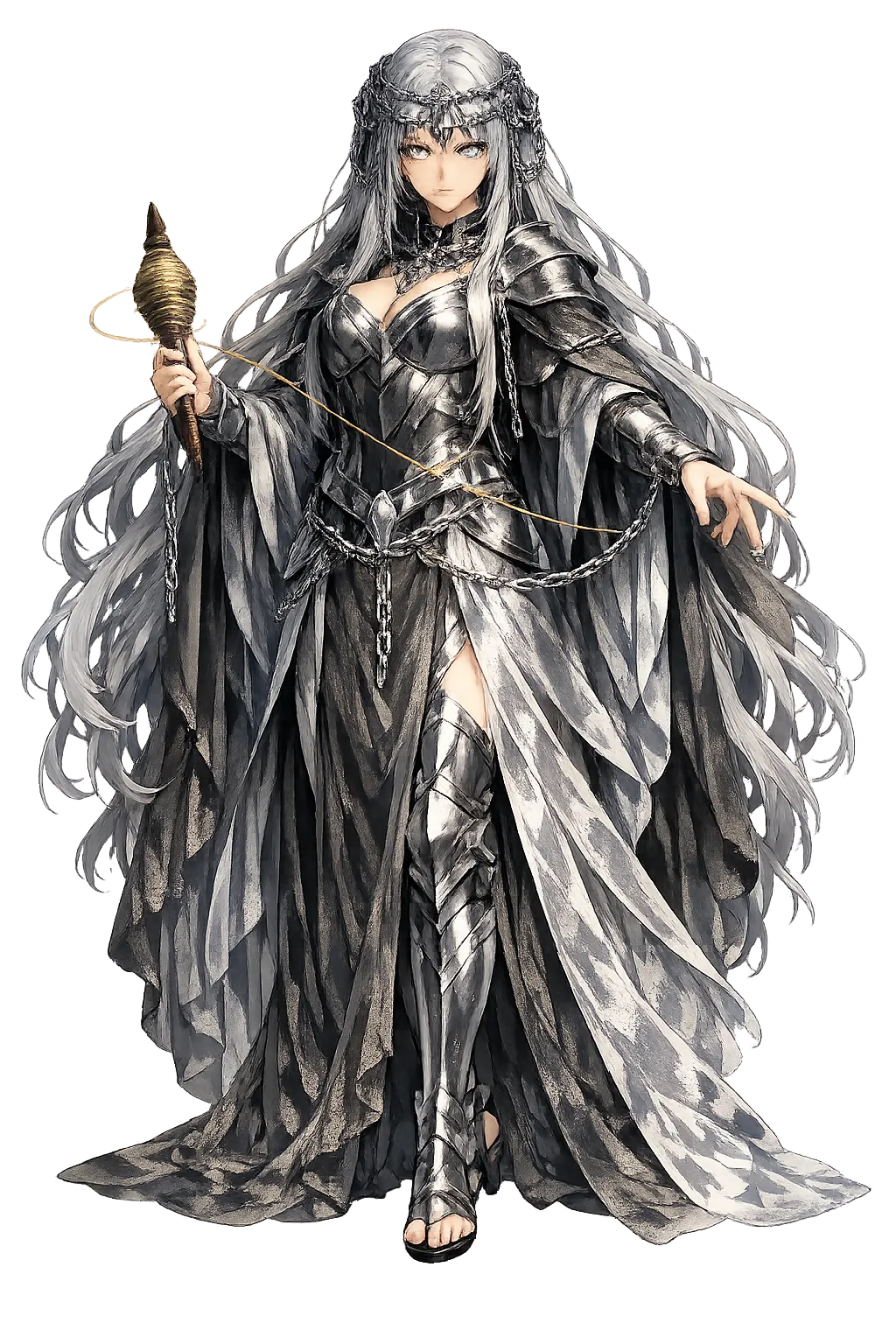
The hidden history behind Anánkē
Behind the modern ASCII form ananke hides a much longer story. Anánkē reaches back through manuscripts, inscriptions, and oral tradition long before it ever touched a keyboard, and every mark in the restored spelling is a receipt from that journey. In what follows we trace the name from its Greek attestations through its mythology, its cult, its symbols, and its afterlife in other cultures — and we show how the PuniCodex project turned that philological record into a Unicode domain that resolves today. The history was never lost. It was only waiting for the infrastructure to catch up.
At a Glance
- Restored name: Anánkē
- ASCII form: ananke
- Meaning: "Necessity, constraint"
- Domain of influence: Necessity, Compulsion
- Pantheon: Greek
- Classification: Tier 1
- Original script: Ἀνάγκη (Greek)
- Live domain: anánkē.com
Overview
Anánkē (ananke) — Necessity, Compulsion · Necessity, constraint — belongs to the Greek tradition, where it is catalogued under the domain "Necessity, Compulsion". The name means "Necessity, constraint".
Anánkē is necessity personified, the force that binds gods and mortals to what must be. She is not cruel but implacable: the cosmic law that even Zeus cannot overturn, though he directs its fulfillment.
PuniCodex restores the name as Anánkē and serves its temple at anánkē.com. The original carries both stress and vowel length, and exactly one historically valid Unicode restoration exists, which places the name in Tier 1. The plain ASCII form ananke survives as a modern convenience imposed by the early domain-name system; the restoration, not the fallback, is the form the project defends as philologically complete.
The Name
The name is attested in Greek as Ἀνάγκη. Etymologically it means "Necessity, constraint".
The ASCII form ananke survives only because the early domain-name system could not carry diacritics; it is a technological compromise, not an ancient spelling. The Unicode restoration Anánkē recovers both the stress accent and the vowel length of the original directly in the address bar. The original carries both stress and vowel length, and exactly one historically valid Unicode restoration exists, which places the name in Tier 1.
The letter-by-letter transformation runs:
- a → A — A uppercase
- n → n — n same
- a → á — Acute on a
- n → n — n same
- k → k — k same
- e → ē — Macron: long vowel
The project holds the domain anánkē.com (xn--annk-6na61a.com) as the canonical home of this name.
The Original Script
The name is written in Greek as Ἀνάγκη, a first-declension feminine (genitive Ἀνάγκης). The acute accent falls on the penult (-νάγ-), making the word paroxytone, /a.nán.kɛː/, while the final syllable carries the long eta that the PuniCodex restoration Anánkē reproduces against the ASCII fallback ananke.
The word begins as a common noun — Homer's compulsion of battle, slavery, and death — and is capitalized into a person only when classical poetry and philosophy enthrone her: the tragic superlative 'nothing is stronger than Necessity' (Euripides, Alcestis 965) and Plato's spindle of Necessity (Republic 616c–617e) are the decisive witnesses.
Its origin is unresolved. A connection with ἄγχω, 'to press tight, throttle', has been proposed on semantic grounds since antiquity; modern etymological dictionaries record no accepted Indo-European derivation and treat the word as possibly Pre-Greek.
Pronunciation
The reconstructed pronunciation of the name is /a.nán.kɛː/ — Attic Greek Reconstruction.
Phoneme by phoneme:
- a- — Short alpha, unstressed opening syllable.
- -nán- — Nu-alpha-nu with acute on the alpha [nán], the pitch peak of the name.
- -kē — Kappa-eta [kɛː], a long final syllable giving the name its weight.
For the modern speaker, the closest approximation is: 'ah-NAHN-kay' — stress the middle syllable and draw out the final 'kay'.
Kindred and historical forms of the name:
- Greek — Ἀνάγκη (Anánkē), necessity, compulsion, fate
- Etymology — Uncertain; possibly related to ἄγχω (ánkhō), 'to press tight', or a pre-Greek word
- Latin — Necessitas, the Roman personification of necessity
Anánkē is Tier 1 because the Greek Ἀνάγκη contains both stress (acute on ά) and length (η). In Orphic cosmogony she is a primal power who governs even the gods.
Mythology
Anánkē is not a narrative goddess but a cosmic principle. Her 'myths' are philosophical accounts of how the universe is ordered by what cannot be otherwise.
The Spindle of Necessity (Plato, Republic)
In the myth of Er, Anánkē holds the spindle of the cosmos on her knees, and the three Fates (Lachesis, Clotho, Atropos) turn its whorls. The celestial spheres are nested within it, and the harmony of the spheres is the music of necessity.
Mother of Time (Orphic cosmogony)
In Orphic theogonies, Anánkē is born from Hydros and Gē and becomes the mother of Chronos (Time) and Adrasteia (Inevitable Justice). She wraps the cosmos in serpents, establishing the boundless bounds of fate.
Necessity in Human Life (Tragedy)
Greek tragedy repeatedly invokes anánkē as the force that drives characters to deeds they would avoid if they could. Oedipus, Agamemnon, and Prometheus all contend with necessities they did not choose but cannot escape.
Symbols & Iconography
Anánkē was never worshipped, so her attributes are literary emblems fixed by a handful of great texts rather than a cult tradition.
- The spindle — Plato's vision in the myth of Er: a spindle lying on the knees of Necessity, its nested whorls carrying the celestial spheres, turned by her daughters the Fates (Republic 616c–617d).
- Adamant — in the same passage the spindle's shaft and hook are made of ἀδάμας, 'adamant', the unbreakable substance: necessity's equipment is the hardest material in the cosmos.
- The yokestrap — Aeschylus gives necessity her tragic emblem when Agamemnon, resolving to sacrifice his daughter, 'put on the yokestrap of necessity' (ἀνάγκας ἔδυ λέπαδνον, Agamemnon 218): the harness one cannot slip.
- The serpent — in the Orphic theogony reported by Athenagoras (Legatio 18), Chronos appears as a serpent with Anánkē joined to him, the two together encompassing the cosmos: the coiled bond that holds the world in.
No ancient image of Anánkē is securely identified: Greek art personified the agents of fate as the Moirai, spinning or reading the book of life, and left Necessity herself without face or attribute. Plato's vision — a vast female figure with the spindle of the cosmos across her knees, a Siren singing on each ring — remained literary. The Romans gave her counterpart Necessitas a vivid emblem without quite sculpting her: Horace (Odes 1.35.17–20) pictures savage Necessity striding before Fortuna, carrying the bronze wedges, clamps, and the inexorable nail with which fate is fixed. Medieval and Renaissance allegory revived her as a stern matron with chain or nail, but no classical prototype survives.
- Chains or bonds — The inescapable constraints she lays on gods and mortals
- Snake biting its tail (ouroboros) — The cyclical, self-binding nature of necessity
- Bronze adamant — The hardest substance, representing what cannot be broken
Epithets & Cult Titles
Anánkē was never worshipped, so she bears no cult epithets; her predicates are the maxims of poets and philosophers:
- οὐδὲν Ἀνάγκας κρεῖσσον (oudèn Anánkas kreîsson) — 'nothing is stronger than Necessity': the tragic superlative of Euripides, Alcestis 965.
- ἀνάγκᾳ δ᾽ οὐδὲ θεοὶ μάχονται (anánkāi d᾽ oudè theoì mákhontai) — 'against Necessity not even the gods fight': the gnome of Simonides (fr. 542 PMG), quoted by Plato in the Protagoras.
- Ἀδράστεια's partner — in Orphic theogony Anánkē is paired with Adrásteia, 'the Inescapable', who executes the decrees no power can flee; Plato knows 'the ordinance of Adrasteia' (Phaedrus 248c).
- ἡ τῆς Ἀνάγκης ἄτρακτος — 'the spindle of Necessity': Plato's image for the axis on which the cosmos turns (Republic 617c).
The Homeric Hymns
No Homeric Hymn is addressed to Anánkē, and she receives no genealogy in Hesiod: the Theogony's forces of compulsion are distributed among Styx, the Erinyes, and the Moirai, not a personified Necessity. Her earliest attestations are therefore lexical and tragic. Homer uses ἀνάγκη throughout as a common noun — the compulsion of battle, slavery, and death. Personification emerges in classical poetry: in Aeschylus's Prometheus Bound 'skill is far weaker than necessity' (PV 514), and the chorus of Euripides' Alcestis sings that 'there is nothing stronger than Anánkē' (Alc. 965), naming even the Thracian tablets of Orpheus. Plato completes the transformation, enthroning her at the cosmic spindle (Republic 617c–e).
Oracle Sites & Sanctuaries
Anánkē had no oracle, shrine, altar, or festival anywhere in the Greek world; necessity was acknowledged, never propitiated. Her presence in the religious landscape is by proxy: at Delphi and the other oracles the determining power behind Apollo's pronouncements was the decree of fate, the province of the Moirai rather than of any cult of her own. Orphic communities honored her in doctrine if not in ritual: the Orphic theogony summarized by Athenagoras (Legatio 18) makes Anánkē encompass the cosmos with outstretched arms beside Chronos. The honest record is absence — a goddess of texts, not of temene.
Archaeology & Evidence
No temple, altar, votive deposit, or cult inscription dedicated to Anánkē is attested anywhere in the Greek world: necessity was acknowledged in speech, never propitiated in ritual. Her material record is therefore a record of texts and their afterlives.
The closest antiquity comes to enshrining her is literary. Plato sets her at the axle of the cosmos in the myth of Er, spindle on her knees and a Siren singing on each whorl (Republic 616c–617e); the tragic stage makes her the one power stronger than gods, charms, and remedies (Euripides, Alcestis 962–1005); Orphic doctrine pairs her with the serpent Chronos, the two encompassing the world (Athenagoras, Legatio 18).
Rome gave her counterpart Necessitas an emblem — the wedges, clamps, and inexorable nail she carries before Fortuna (Horace, Odes 1.35.17–20) — but no temple of Necessitas is known. The honest archaeological record is absence.
Realm & Domain
Anánkē is necessity personified, the force that binds gods and mortals to what must be. She is not cruel but implacable: the cosmic law that even Zeus cannot overturn, though he directs its fulfillment.
Binder of Gods
Even Zeus is subject to Anánkē; she is the limit of divine freedom.
Cosmic Spindle
In Plato's myth of Er, she turns the spindle of the universe with the Fates.
Orphic Primordial
In some cosmogonies she is born from Hydros and Gē, mother of Chronos and Adrasteia.
Inescapable Law
The principle that what is necessary cannot be avoided by prayer or power.
Across Cultures
The Romans personified necessity as Necessitas and depicted her with a nail that fixed fate. In Stoicism, anánkē merged with heimarménē (fate) and logos (reason), becoming the rational order of the universe. Christian theology struggled with necessity: is God's will constrained by it, or does it proceed from him? Modern philosophy retains the concept in discussions of determinism, logical necessity, and moral obligation.
Within the Greek tradition, closely related names in the corpus include [[acheron|Achérōn]], [[adamas|Adámas]], [[aer|Aḗr]], [[aither|Aithḗr]], [[andromeda|Andromedē]], and [[aphrodite|Aphrodítē]].
Cultural Legacy
Anánkē's afterlife runs through logic before literature. Aristotle made necessity (τὸ ἀναγκαῖον) a technical notion and built the first modal syllogistic in the Prior Analytics, founding the formal study of what cannot be otherwise. Plato's image of the Fates as 'daughters of Necessity' (Republic 617c) fixed her place in later accounts of Greek fate, from Stoic heimarménē to the treatise On Fate transmitted under Plutarch's name.
The word still does technical work: in the logic of norms, propositions about necessary conditions are called 'anankastic' (von Wright, 1963).
In astronomy she is a retrograde irregular moon of Jupiter: Ananke was discovered by Seth B. Nicholson at Mount Wilson on 28 September 1951 and lends its name to the Ananke group of retrograde satellites; NASA's naming note recalls her as mother of Adrastea by Zeus.
The Scholarly Record
The account of Anánkē given in this edition rests on the witnesses and reference works listed below. Lexica and etymological dictionaries secure the form and meaning of the name; the literary and religious texts supply the narrative evidence.
- Liddell-Scott-Jones Greek-English Lexicon, 9th ed. with 1996 supplement, 1843. Full text
- Beekes, Etymological Dictionary of Greek.
- Plato, Republic (Myth of Er).
- Orphic Fragments.
- Aeschylus, Prometheus Bound.
- Plutarch, On Fate.
A Meditation
Anánkē is the hardest god to love because she does not negotiate. She is the answer to every 'why must this be?' — because it must. Yet there is also dignity in her. To accept necessity is to stop wasting energy on impossibility and to turn toward what can be done.
The Stoics made anánkē their ally. They did not complain about winter or death because these things were necessary. What remained was choice: how to meet the necessary. Anánkē thus becomes not an enemy of freedom but its frame. To restore her name is to remember that wisdom begins with recognizing the limits within which life is lived.
The Unicode Restoration
Anánkē is classified as Tier 1: the original carries both stress and length, and only one valid Unicode restoration exists. The ASCII fallback ananke still resolves everywhere, but it is the restored form that carries the name's full information. Across the 6 characters of the name, the restoration adjusts 2: 1 mark of stress (á); 1 mark of length (ē). That is the whole thesis of this temple: the marks are the message.
Character by Character
The journey from ananke to Anánkē, one character at a time:
- a → A — A uppercase
- n → n — n same
- a → á — Acute on a
- n → n — n same
- k → k — k same
- e → ē — Macron: long vowel
The Domain Name
The restored name is live as a working domain: anánkē.com, which the DNS carries in punycode form as xn--annk-6na61a.com — an ASCII-compatible encoding that lets a non-ASCII name travel the global network without breaking older infrastructure. The visitor sees Anánkē; the machines see the encoding. That duality is the engineering compromise on which the entire restoration rests, and it is why a name written the way its own tradition wrote it in Greek can now be typed into any browser on earth.
The Greek Pantheon
Anánkē is one of 263 entries the PuniCodex lexicon catalogues under the Greek pantheon. The Pantheon page gathers the tradition's major figures in one place, and the Lexicon lets you filter all 895 restorations by tradition, tier, or script — the fastest way to see where this name sits among its kin.
Frequently Asked Questions
What does Anánkē mean? The traditional gloss is "Necessity, constraint."
Which tradition does Anánkē belong to? Anánkē is catalogued in the Greek pantheon of the PuniCodex lexicon.
Why is Anánkē classified as Tier 1? Because the original carries both stress and length, and only one valid Unicode restoration exists — and the marks in the restored spelling preserve exactly that evidence.
Is Anánkē a working domain? Yes — anánkē.com resolves today and routes to this temple.
What is the punycode for anánkē.com? The DNS encoding is xn--annk-6na61a.com; browsers perform the translation automatically, so visitors only ever see the restored name.
Typing Anánkē
You do not need a special keyboard to use this restoration. The PuniCodex Type Tool converts the ASCII form ananke into Anánkē as you type, and the browser extension offers the same conversion inside any text field. Copy the restored form, paste it into the address bar, and the DNS does the rest.
Sister Temples
Other temples in the Greek pantheon include Meriónēs, Minṓtauros, and Moîra — each with its own restoration story, its own scholarly record, and its own place in the lexicon.
Why This Restoration Matters
The story of Anánkē did not end in antiquity; it changed medium. Names that survive for millennia do so because each generation finds a new carrier for them — clay, papyrus, print, and now DNS. The PuniCodex restoration simply makes the carrier honest: the spelling that resolves is the spelling the evidence supports. If this post showed anything, it is that ananke and Anánkē are not the same name with different styling. They are a summary and the text it summarizes. The web can now serve the text.
Explore Further
This post is one doorway into the temple. The home page carries the full character breakdown and the ambient canvas; the lore page tells the myths in long form; the Scholarly Edition preserves the sources, pronunciation data, and revision history; and the patron wall supports the restoration directly. For the wider map, browse the Lexicon, explore the Pantheon, or return to the PuniCodex blog.
Related Names
Sources
The full scholarly apparatus — every citation, revision, and review — lives in the Scholarly Edition. Key references for this post:
- Liddell-Scott-Jones Greek-English Lexicon, 9th ed. with 1996 supplement, 1843.
- NASA Science, 'Ananke' (Jupiter Moons).
- Beekes, Etymological Dictionary of Greek.
- Plato, Republic (Myth of Er).
- Euripides, Alcestis 962–1005 (the ode to Necessity).
- Plato, Republic 616c–617e (Myth of Er).
- Lexicon authorities for this entry: Plato, LSJ.