
Ancient Domain
Anánkē is necessity personified, the force that binds gods and mortals to what must be. She is not cruel but implacable: the cosmic law that even Zeus cannot overturn, though he directs its fulfillment.
Extended Lore
Etymology · Phonology · Orthography · Cultural Legacy · Primary Sources
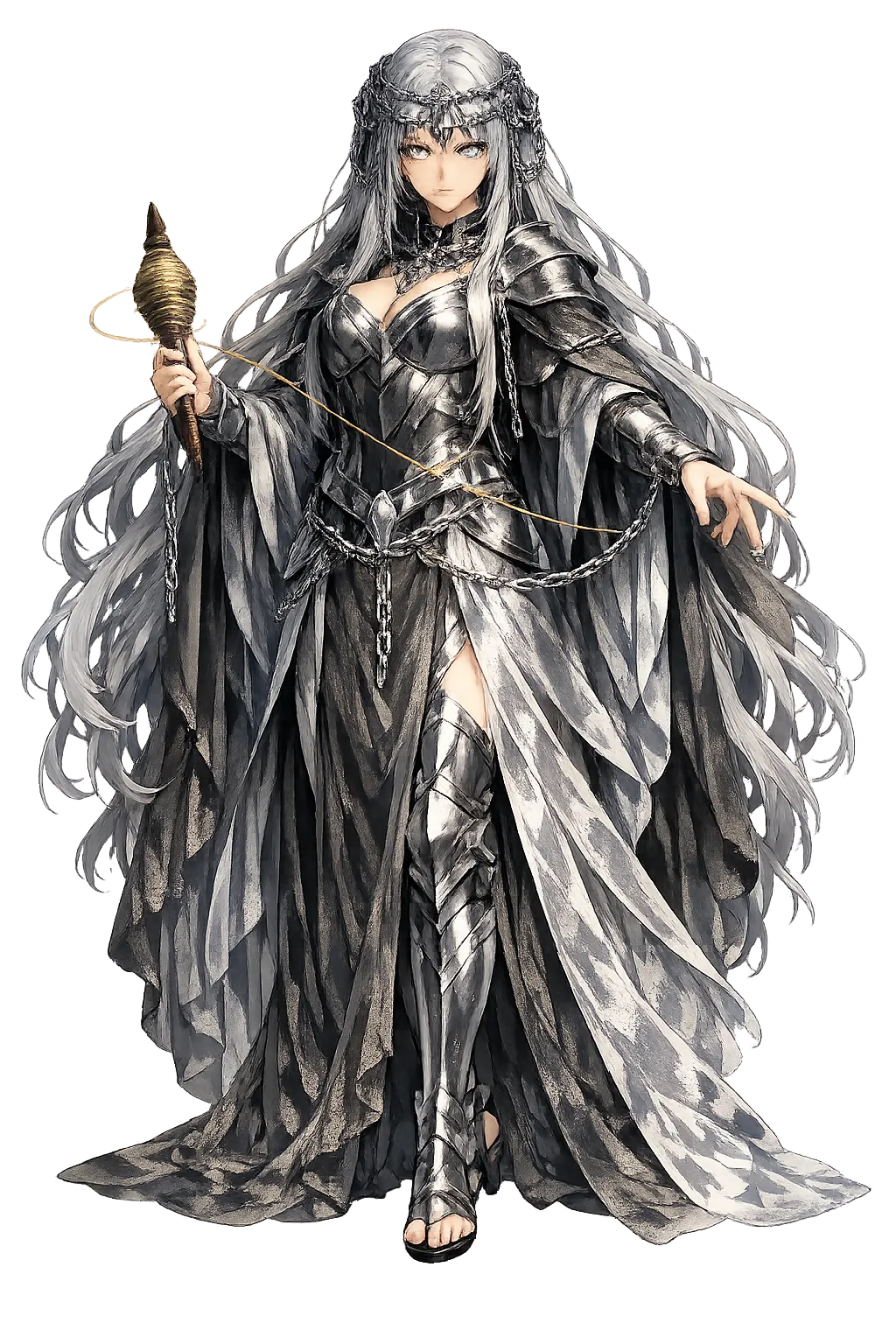
Essential information about Anánkē, Necessity, Compulsion
From original script to Unicode restoration
Anánkē is Tier 1 because the Greek Ἀνάγκη contains both stress (acute on ά) and length (η). In Orphic cosmogony she is a primal power who governs even the gods.
Character-by-character philological analysis
| Character | Unicode | Name | Block | Phonetic Role |
|---|---|---|---|---|
| A | U+0041 | Latin Capital Letter A | Basic Latin | A uppercase |
| n | U+006E | Latin Small Letter N | Basic Latin | n same |
| á | U+00E1 | Latin Small Letter A with Acute | Latin-1 Supplement | Acute on a |
| n | U+006E | Latin Small Letter N | Basic Latin | n same |
| k | U+006B | Latin Small Letter K | Basic Latin | k same |
| ē | U+0113 | Latin Small Letter E with Macron | Latin Extended-A | Macron: long vowel |
The Tier 1 classification reflects which ancient features stress, length, or script are preserved in this restoration.
From ancient cult to modern Unicode
Anánkē is necessity personified, the force that binds gods and mortals to what must be. She is not cruel but implacable: the cosmic law that even Zeus cannot overturn, though he directs its fulfillment.
The Romans personified necessity as Necessitas and depicted her with a nail that fixed fate. In Stoicism, anánkē merged with heimarménē (fate) and logos (reason), becoming the rational order of the universe. Christian theology struggled with necessity: is God's will constrained by it, or does it proceed from him? Modern philosophy retains the concept in discussions of determinism, logical necessity, and moral obligation.
Anánkē is the god of 'must.' Her name appears in philosophy, physics, and ethics whenever we speak of what cannot be otherwise. She is the ancestor of determinism, the moral imperative, and the scientific law. In literature she is the terror behind tragedy: not what happens by accident, but what must happen because it is necessary.
Restoring Anánkē in a domain name is more than orthographic accuracy. It is a statement that the internet should recognize the full range of human writing — not only the ASCII keyboard.
Common questions about Anánkē, Necessity, Compulsion, and Unicode restoration
In reconstructed pronunciation, Anánkē is /a.nán.kɛː/ — approximately 'ah-NAHN-kay' — stress the middle syllable and draw out the final 'kay'..
Anánkē means Necessity, constraint in the greek tradition.
Anánkē is associated with Spindle (The cosmic axis around which necessity turns the heavens), Chains or bonds (The inescapable constraints she lays on gods and mortals), Snake biting its tail (ouroboros) (The cyclical, self-binding nature of necessity), Bronze adamant (The hardest substance, representing what cannot be broken).
Plain ASCII ananke strips the stress, length, and script that make the name specific. Unicode restoration returns the name to its original written dignity.
In the myth of Er, Anánkē holds the spindle of the cosmos on her knees, and the three Fates (Lachesis, Clotho, Atropos) turn its whorls. The celestial spheres are nested within it, and the harmony of the spheres is the music of necessity.
The philological foundations of this restoration
Every claim on this page is grounded in established scholarship. The orthographic restorations follow disciplinary convention. The etymological chain follows the best available reference works. This is not invention — it is resurrection through scholarship.
You have traced the name from its earliest attestation to its Unicode restoration. Now return to the myth. The story is where the name lives.
Back to Lore