
Why Aithḗr belongs in your address bar
Every address bar is a choice. When you type Aithḗr, you are not typing a novelty; you are restoring a name that the early DNS, built for English typewriters, could not carry. The plain ASCII form aither is a leftover of that constraint, not the name itself. This post is the long version of the restoration: where the name comes from, how the Greek tradition wrote it, how it is pronounced, what the myths and the material record preserve, and why its Unicode form now lives as a working domain. The claim throughout is simple — the original spelling is not decoration. It is the name.
At a Glance
- Restored name: Aithḗr
- ASCII form: aither
- Meaning: "Bright upper air"
- Domain of influence: Upper Air, Light
- Pantheon: Greek
- Classification: Tier 1
- Original script: Αἰθήρ (Greek)
- Live domain: aithḗr.com
Overview
Aithḗr (aither) — Bright upper air — belongs to the Greek tradition, where it is catalogued under the domain "Upper Air, Light". The name means "Bright upper air".
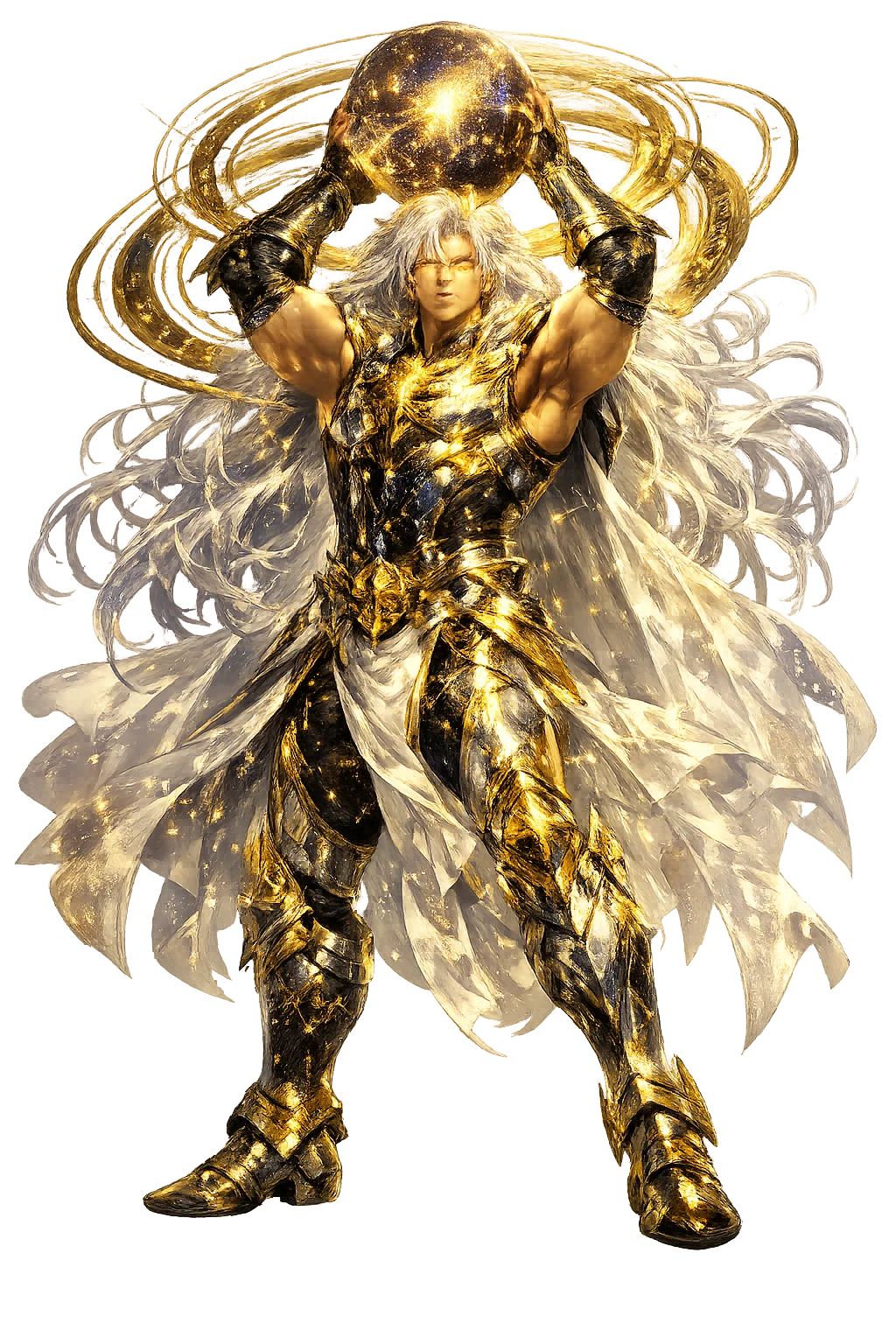
Aithḗr is not the wind that rustles leaves nor the breath mortals breathe. He is the pure, fiery medium that fills the space between the world and the stars, the realm where sun, moon, and planets move. In Hesiod's cosmos he is the son of Erebus and Nyx, the luminous antithesis of darkness.
PuniCodex restores the name as Aithḗr and serves its temple at aithḗr.com. The original carries both stress and vowel length, and exactly one historically valid Unicode restoration exists, which places the name in Tier 1. The plain ASCII form aither survives as a modern convenience imposed by the early domain-name system; the restoration, not the fallback, is the form the project defends as philologically complete.
The Name
The name is attested in Greek as Αἰθήρ. Etymologically it means "Bright upper air".
The reconstructed proto-form is h₂eidh- (proto-indo-european, "to burn, blaze"). From Greek αἰθήρ 'bright upper air', derived from αἴθω 'to burn, blaze', continuing Proto-Indo-European *h₂eidh- 'to burn'.
Cognate forms across related languages:
- αἴθω (greek) — 'to burn, blaze' (LSJ, Beekes)
- aedēs (latin) — 'hearth, temple' (Lewis-Short)
The ASCII form aither survives only because the early domain-name system could not carry diacritics; it is a technological compromise, not an ancient spelling. The Unicode restoration Aithḗr recovers both the stress accent and the vowel length of the original directly in the address bar. The original carries both stress and vowel length, and exactly one historically valid Unicode restoration exists, which places the name in Tier 1.
The letter-by-letter transformation runs:
- a → A — A uppercase
- i → i — Same
- t → t — t same
- h → h — h same
- e → ḗ — Stress + length
- r → r — r same
The project holds the domain aithḗr.com (xn--aithr-yd1b.com) as the canonical home of this name.
Etymology & Roots
The recorded derivation reads: From Greek αἰθήρ 'bright upper air', derived from αἴθω 'to burn, blaze', continuing Proto-Indo-European *h₂eidh- 'to burn'.
The reconstructed proto-form is *h₂eidh- (proto-indo-european), glossed as "to burn, blaze".
The reconstruction is classed as attested.
Kindred forms recorded in the lexicon:
- αἴθω (greek) — 'to burn, blaze' (LSJ, Beekes)
- aedēs (latin) — 'hearth, temple' (Lewis-Short)
The Original Script
The name is preserved in Greek as Αἰθήρ — Greek alphabet (Classical / Attic), attested Ancient Greek, c. 8th century BCE – present, in Greece and the Greek-speaking Mediterranean. The script is written left-to-right.
The scholarly transliteration is Aithḗr (Greek alphabet with polytonic accents), giving the normalized reading /ai̯ˈtʰɛːr/.
The rendering proceeds step by step:
- The Greek form Αἰθήρ is written in the Classical Greek alphabet.
- Letters with acute, grave, or circumflex accents preserve the pitch accent of Ancient Greek.
- Macrons and omegas (η, ω) mark long vowels, a feature lost in the plain ASCII form.
- The Unicode restoration Aithḗr encodes the scholarly spelling as a registrable domain name.
Pronunciation
The reconstructed pronunciation of the name is /aɪ.tʰɛ́ːr/ — Attic Greek Reconstruction.
Phoneme by phoneme:
- Ai- — Diphthong αι, a bright glide from [a] to [i] — the sound of kindling light.
- -thēr — Aspirated theta plus long eta plus rho — the breathy, sustained upper air.
For the modern speaker, the closest approximation is: 'EYE-thair' — the diphthong is bright, the second syllable long and held like a held breath.
Kindred and historical forms of the name:
- Greek — αἴθω (aithō), 'to burn, kindle' — the likely Greek root
- Latin — aether, borrowed as the bright upper air
- PIE — *h₂eidh- 'to burn' — possible root, though Beekes notes uncertainty
Aithḗr is Tier 1 because the Greek Αἰθήρ contains both stress (acute on the long η) and length (η). The acute on a long vowel is the ideal Attic form; Aithēr is the macron-only LSJ convention. The name means the bright, fiery upper air, distinct from the lower, moist aēr.
Mythology
Aithḗr appears at the very birth of the world, one of the first distinctions made by the yawning void. He is not a hero with a quest; he is a cosmic substance personified, the luminous layer that makes the sky sky.
Son of Darkness and Night (The Birth)
In Hesiod's Theogony (124–125), Chaos gives rise to Erebus and Nyx; their union produces Aithḗr and Hemera (Day). Where Night and Darkness are bound together, their luminous opposites are born: bright air and daylight. Aithḗr is therefore older than the Titans, older than Olympus, a primordial layer of the universe itself.
Zeus Is Aether (The Equation)
The boldest theological use of the word comes from tragedy: a fragment of Aeschylus declares 'Zeus is aithēr, Zeus is earth, Zeus is heaven; Zeus is everything and whatever is above it' (fr. 70). Euripides' characters likewise point to 'this boundless aether on high, holding the earth in its moist embrace' and call it Zeus (fr. 941). In these verses the element is not scenery but a candidate for the supreme power itself: the bright substance as god.
Hymn to Aether (The Orphic Hymn)
The Orphic Hymn to Aether (5) calls him 'the home of the sun, moon, and stars' and the dwelling of the blessed gods. The hymn addresses Aithḗr as the pure element that receives prayer and that shines with unquenchable fire, a deity both physical and transcendent.
Aithḗr in Greek Thought (Philosophy)
Aristotle made Aithḗr the fifth element, quinta essentia, the incorruptible substance of the celestial spheres. For the Stoics, it was the fiery pneuma that animates the cosmos. In Neoplatonism, Aithḗr stood just below the intelligible realm: the first body, luminous and divine. The word passed into Latin and then into modern science as 'ether.'
Symbols & Iconography
Aithḗr has no iconography in the strict sense: no ancient artist gave him a recognizable body, and no cult attached attributes to him. What the tradition offers instead is a consistent set of cosmological associations:
- Celestial fire — the name derives from αἴθω, 'to burn, blaze': the upper air is the bright, fiery element, carefully distinguished from the moist lower aḗr that mortals breathe.
- The fixed stars — the Orphic Hymn to Aither calls him the radiant home of sun, moon, and stars, the medium in which the heavenly bodies are set.
- The vault of heaven — Euripides' 'boundless aether on high, holding the earth in its moist embrace' (fr. 941), the enveloping brightness that verse identifies outright with Zeus.
- The fifth element — Aristotle's incorruptible 'first body' of the heavens, whose natural motion is circular, the quinta essentia of the medieval schools.
No secure iconographic type for Aithḗr exists in Greek or Roman art, and claims for one should be treated with caution. The other primordials acquired bodies — Nýx flies as a winged woman, Ouranos arches over the world — but Aithḗr, being the medium rather than an agent, was essentially never given human form; no vase, statue, or coin can be identified as him with confidence. What ancient art shows instead are his contents: the chariot of the sun, the stars, and the bright zone above the clouds where the gods move. The labelled personification AETHER belongs to post-antique allegory — Baroque ceilings and emblem books — where he appears as a luminous youth among the elements. For the Greeks themselves, the image of Aithḗr was simply the sky at noon, seen.
Epithets & Cult Titles
Aithḗr was never worshipped, and so never collected cult epithets; what he has are the predicates poets and philosophers pinned to him.
- ἄπειρος αἰθήρ (ápeiros aithḗr) — 'boundless aether': in Euripides' most quoted theological fragment a character points to 'this boundless aether on high, holding the earth in its moist embrace,' and names it outright as Zeús (fr. 941).
- Αἰθήρ τε καὶ Ἡμέρα — 'Aether and Day': his Hesiodic identity is as one half of a luminous couple, born from Night and Darkness (Theogony 124–125).
- τὸ πρῶτον σῶμα (tò prôton sôma) — 'the first body,' Aristotle's name for the fifth, incorruptible element of the heavens, the quinta essentia of the scholastics.
- πῦρ τεχνικόν / πνεῦμα (pŷr technikón / pneûma) — in Stoic physics the aether is the 'craftsmanlike fire,' the intelligent breath of Zeús that steers the cosmos.
The Homeric Hymns
No Homeric Hymn to Aithḗr exists; a substance, however divine, was not a hymnic addressee in the archaic corpus. The hymn he receives comes later and from another world: the Orphic Hymn to Aither (5), offered with myrrh, invokes him as the radiant home of sun, moon, and stars and the dwelling of the blessed gods.
His earliest hexameter attestations are double. As a word, Homer already uses aithḗr for the bright upper sky — 'Zeus who dwells in the aether' (Il. 2.412). As a person, Hesiod gives him birth: from [[erebus|Érebos]] and [[nyx|Nýx]] come Aithḗr and Heméra, Day, brightness answering darkness in the second generation of the cosmos (Theogony 124–125). Everything later — Aristotle's fifth element, the Stoic fiery breath — unfolds from those two usages.
Oracle Sites & Sanctuaries
No cult site, altar, or oracle of Aithḗr is known anywhere in the Greek world, and none should be expected: the personified upper air belonged to cosmology, not civic religion. His 'sites' are textual and eschatological. The Derveni papyrus (c. 340 BCE), a commentary on an Orphic theogony charred on a funeral pyre in Macedonia, names Aithḗr among the first principles of the world; and the Orphic gold tablets buried with initiates in Magna Graecia map the soul's passage toward the dwellings of the blessed. That is where Aithḗr was 'located' in Greek religion — at the beginning of the world and at the end of the soul's journey, never at a temple.
Archaeology & Evidence
No temple, altar, or votive of Aithḗr exists, and none should be expected: the personified upper air belonged to cosmology and speculation, not to civic cult. His material witnesses are therefore textual objects. The most important is the Derveni papyrus (Archaeological Museum of Thessaloniki), a carbonized scroll of c. 340 BCE — the oldest surviving European book — whose anonymous author comments on an Orphic theogony and reads its gods allegorically as physical powers in a cosmos of fire and bright air. The Orphic gold tablets buried with initiates at Hipponion, Thurii, and Petelia (fourth–third centuries BCE) do not name Aithḗr, but they map the same cosmos from the soul's side: the dead declare their kinship with 'Earth and starry Heaven' and pass from darkness toward light. Beyond these, the record is one of texts rather than finds — papyri and manuscripts of Hesiod, the Orphica, and Aristotle, the corpus in which the word lived.
Realm & Domain
Aithḗr is not the wind that rustles leaves nor the breath mortals breathe. He is the pure, fiery medium that fills the space between the world and the stars, the realm where sun, moon, and planets move. In Hesiod's cosmos he is the son of Erebus and Nyx, the luminous antithesis of darkness.
The Celestial Dome
The transparent sphere that holds the stars; Aithḗr is the medium in which heavenly bodies are embedded.
Pure Fire
The fiery radiance of the upper atmosphere, untainted by earth or sea.
The Cosmic Boundary
The wall that separates Olympus from the lower world, keeping Tartaros outside the ordered cosmos.
The Breath of the Gods
Aithḗr is the element the gods breathe; mortals live in the lower, moist air.
Across Cultures
The Romans had no exact cultic equivalent for Aithḗr; they borrowed the Greek term as aether and treated it as a philosophical concept rather than a personal god. In Stoic cosmology, Aithḗr became the pure, fiery pneuma that permeates and animates the cosmos — later Latinized as spiritus. In Neoplatonism, Aithḗr stood just below the intelligible realm: the first body, luminous and divine. The Christian Fathers debated whether the 'firmament' of Genesis was Aithḗr, and medieval scholastics placed it among the celestial spheres, where it remained until Copernicus and Galileo removed the spheres but kept the name for the invisible medium of light.
His nearest kin within the corpus are the other primordials of the second generation: his parents [[erebus|Érebos]] and [[nyx|Nýx]], his sister and luminous counterpart [[hemera|Hēméra]] (Day), and [[aer|Aḗr]], the moist lower air from which Greek writers carefully distinguished the bright upper element.
Cultural Legacy
Aithḗr outlived his mythology to become one of the most durable words in Western science. In the Opticks Newton admitted a subtle 'aethereal medium' to account for gravity and refraction; wave theorists of light then filled all space with a 'luminiferous ether' as light's carrier, until the Michelson–Morley experiment of 1887 cast it into doubt. Einstein's relativity finally made the mechanical ether unnecessary, yet the word survives in 'ether' as a solvent and in phrases like 'disappear into the ether.' In fantasy and science fiction, Aithḗr names the fifth element, the void between worlds, the fuel of starships. The name still means: the bright stuff that fills what seems empty.
The Scholarly Record
The account of Aithḗr given in this edition rests on the witnesses and reference works listed below. Lexica and etymological dictionaries secure the form and meaning of the name; the literary and religious texts supply the narrative evidence.
- Liddell-Scott-Jones Greek-English Lexicon, 9th ed. with 1996 supplement, 1843. Full text
- Etymological Dictionary of Greek, 2 vols., Brill, 2010. Full text
- Wörterbuch der griechischen Eigennamen, 3rd ed., 1863. Full text
- Hesiod, Theogony, Loeb Classical Library No. 57, 700 BCE. Full text
- Orphic Hymn 5.
- Aristotle, On the Heavens.
- Cicero, De Natura Deorum.
A Meditation
Every glance at the sky is a meeting with Aithḗr. Not the clouds, not the weather, but the transparent depth that holds the stars — that is what the Greeks named and worshipped. In an age of light pollution and screen glare, the idea of a pure, bright upper air feels almost archaeological. Yet the moment you look up on a clear night and see the Milky Way, you are touching the same substance Hesiod sang about.
Aithḗr reminds us that the cosmos is not empty darkness interrupted by points of light. It is a continuous, living medium. The stars do not hang in nothing; they swim in a sea of fire. To restore the name Aithḗr is to restore the sense that above us is not merely space, but brightness made structural.
The Unicode Restoration
Aithḗr is classified as Tier 1: the original carries both stress and length, and only one valid Unicode restoration exists. The ASCII fallback aither still resolves everywhere, but it is the restored form that carries the name's full information. Across the 6 characters of the name, the restoration adjusts 1: 1 further adjustment (ḗ). That is the whole thesis of this temple: the marks are the message.
The Domain Name
The restored name is live as a working domain: aithḗr.com, which the DNS carries in punycode form as xn--aithr-yd1b.com — an ASCII-compatible encoding that lets a non-ASCII name travel the global network without breaking older infrastructure. The visitor sees Aithḗr; the machines see the encoding. That duality is the engineering compromise on which the entire restoration rests, and it is why a name written the way its own tradition wrote it in Greek can now be typed into any browser on earth.
Why This Restoration Matters
Restoring Aithḗr is part of a larger effort to make the web multilingual by default. The PuniCodex project does not ask users to learn a new alphabet; it asks the infrastructure to respect the alphabets that already exist. Every section of this post — the script, the sound, the myths, the evidence — converges on the same point: the marks in Aithḗr are information, and information deserves an address of its own. A single Unicode domain is a small proof, but it is a proof that scales: every name restored makes the next one easier, and every visit to aithḗr.com is a vote for the restored form.
Explore Further
This post is one doorway into the temple. The home page carries the full character breakdown and the ambient canvas; the lore page tells the myths in long form; the Scholarly Edition preserves the sources, pronunciation data, and revision history; and the patron wall supports the restoration directly. For the wider map, browse the Lexicon, explore the Pantheon, or return to the PuniCodex blog.
Related Names
Sources
The full scholarly apparatus — every citation, revision, and review — lives in the Scholarly Edition. Key references for this post:
- Liddell-Scott-Jones Greek-English Lexicon, 9th ed. with 1996 supplement, 1843.
- Etymological Dictionary of Greek, 2 vols., Brill, 2010.
- Wörterbuch der griechischen Eigennamen, 3rd ed., 1863.
- Hesiod, Theogony 124–125.
- Liddell-Scott-Jones (LSJ), s.v. αἰθήρ; Beekes, Etymological Dictionary of Greek, s.v. αἴθω.
- Orphic Hymn 5 (to Aither).
- Euripides, fr. 941 (Nauck/Kannicht).
- Aristotle, On the Heavens 1.2–3.
- Lexicon authorities for this entry: Hesiod, LSJ.