PuniCodex

Extended Lore

Sigurðr

Etymology · Phonology · Orthography · Cultural Legacy · Primary Sources

Tier 1 Sigurðr.com
Sigurðr — Victory, Dragon-Slaying, Heroism
01

Quick Facts

Essential information about Sigurðr, Victory, Dragon-Slaying, Heroism

Scholarly TransliterationSigurðr
Unicode RestorationSigurðr
Reconstructed Pronunciation/ˈsiɣ.urðr̩/
PantheonNorse
DomainVictory, Dragon-Slaying, Heroism
MeaningVictory-guardian (from sigr, victory, + vǫrðr, guardian)
ClassificationTier 1
Primary DomainSigurðr.com
Sacred SymbolsGramr, Grani, Andvaranautr and the hoard, The dragon's heart-blood, The vafrlogi flame-wall
02

Etymology & Word Family

From original script to Unicode restoration

Scholarly Transliteration Sigurðr Sigurðr — "Victory-guardian (from sigr, victory, + vǫrðr, guardian)"
Unicode Restoration Sigurðr Restored stress, length, and script
Modern ASCII sigurd Plain-ASCII fallback

Sigurðr is Tier 1: the eth ð is a distinctive letter the ASCII form loses, and the final -r preserves the Old Norse nominative ending that English drops entirely. Cleasby-Vigfusson (s.v. Sigurðr) and Zoëga (s.v. Sigurðr) record the form as the name of the Vǫlsung hero; the name compounds sigr, 'victory', with -vǫrðr, 'guardian', yielding 'victory-guardian', and answers to the continental German Siegfried.

03

Unicode Character Breakdown

Character-by-character philological analysis

CharacterUnicodeNameBlockPhonetic Role
SU+0053Latin Capital Letter SBasic LatinSame, capitalized
iU+0069Latin Small Letter IBasic LatinSame
gU+0067Latin Small Letter GBasic LatinSame
uU+0075Latin Small Letter UBasic LatinSame
rU+0072Latin Small Letter RBasic LatinSame
ðrU+00F0Character U+00F0Latin-1 SupplementEth ð (voiced dental fricative) + nominative -r of Sigurðr

The Tier 1 classification reflects how much of the original phonology this restoration preserves — stress and vowel length for Greek names, distinctive letters and diacritics for every other tradition.

04

Cultural Significance

From ancient cult to modern Unicode

Ancient Domain

In the norse tradition, Sigurðr governed victory, dragon-slaying, heroism. The name encodes a sphere of power that shaped ritual, narrative, and social order.

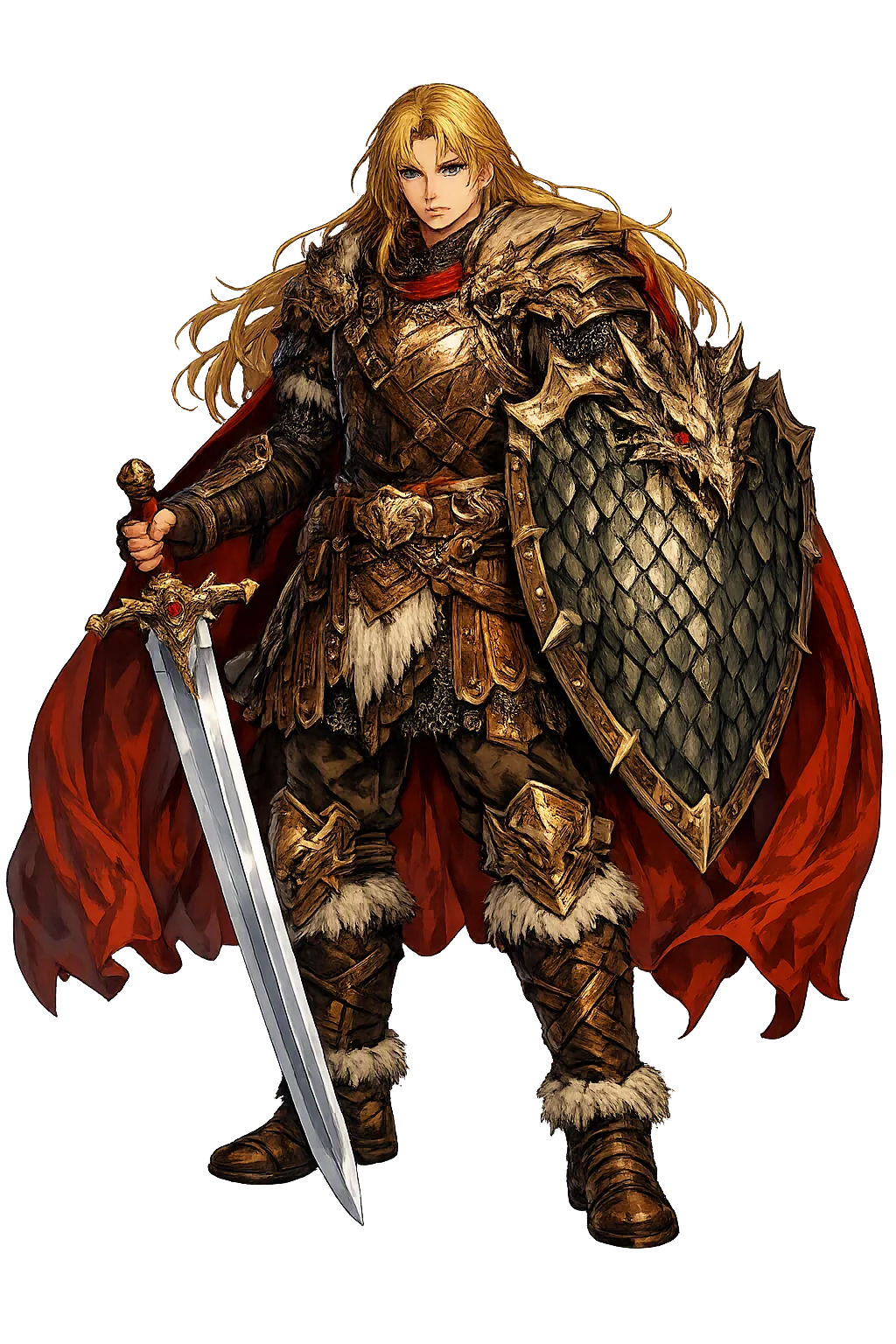
His is the northern form of the greatest heroic story the Germanic world ever told: the foster-son of a smith who reforged his father's shattered sword, the slayer of the dragon Fáfnir, the wooer of the valkyrie behind the flame, and the oath-brother destroyed by the very loyalty that made him great. What the Iliad is to Greece, the Vǫlsunga cycle is to the North.

Sigurðr in Later Traditions

Sigurðr is the northern twin of a pan-Germanic hero. The continental tradition — preserved in the Middle High German Nibelungenlied (c. 1200), the Lied vom Hürnen Seyfrid, and the Old Norse Þiðreks saga, which repatriates German material — tells of the same dragon-fight, hoard, and betrayal under the name Siegfried, with the details reworked: the valkyrie becomes a Burgundian queen, the flame-wall drops away, and the murder moves to a forest spring. Scholars have long read the cycle's skeleton against history, seeing in Gunnarr and the fall of the Gjúkings the shadow of the Burgundian kingdom destroyed by the Huns in 437 — legend crystallized around remembered catastrophe. The dragon-slaying itself belongs to a still older inheritance: the Indo-European formula of the hero who kills the serpent, traced by Calvert Watkins through Indra and Vṛtra, Herakles and the Lernaean hydra, and Beowulf's fatal last fight. In later folklore the story lived on in the Faroese Sjúrðar kvæði ballads, still sung and danced in the islands centuries after the saga manuscripts were copied.

Modern Legacy

No Norse figure has had a longer second life. William Morris retold the cycle in his epic The Story of Sigurd the Volsung and the Fall of the Niblungs (1876), which he called the great story of the North that should be to all his race what the tale of Troy was to the Greeks. Richard Wagner made it the armature of Der Ring des NibelungenSiegfried and Götterdämmerung follow the Norse sources where the Nibelungenlied had softened them, restoring the valkyrie Brünnhilde to the centre. Arthur Rackham's illustrations fixed the cycle's visual grammar for a century, and J. R. R. Tolkien, who read the Eddas closely, composed his own The Legend of Sigurd and Gudrún in Eddic metre. The dragonslayer persists in opera houses, novels, games, and film wherever a hero wins gold and is destroyed by it. In modern heathenry Sigurðr is honoured less as an object of cult than as the model of the heroic ethic — courage held fast inside a fate already written — and the runestones that depict him are among the tradition's most cited monuments. Restoring Sigurðr in Unicode keeps the eth and the nominative -r that the German Siegfried and the anglicized Sigurd alike have lost.

Unicode Restoration as Cultural Act

Restoring Sigurðr in a domain name is more than orthographic accuracy. It is a statement that the internet should recognize the full range of human writing — not only the ASCII keyboard.

05

Frequently Asked Questions

Common questions about Sigurðr, Victory, Dragon-Slaying, Heroism, and Unicode restoration

01How do you pronounce Sigurðr?

In reconstructed pronunciation, Sigurðr is /ˈsiɣ.urðr̩/ — approximately 'SIG-urthr' — stress the first syllable, soften the middle g almost to a glide, sound the ð as the soft 'th' of 'father', and let the final -r hang as a light voiced syllable; it is the Old Norse nominative ending, not a separate vowel..

02What does Sigurðr mean?

Sigurðr means Victory-guardian (from sigr, victory, + vǫrðr, guardian) in the norse tradition.

03What are the symbols of Sigurðr?

Sigurðr is associated with Gramr (The reforged sword of Sigmundr, drawn from Barnstokkr and mended by Reginn; with it Sigurðr slew Fáfnir), Grani (The grey horse of Sleipnir's line who bore Sigurðr through the flame-wall and carried the dragon's gold from Gnitaheiðr), Andvaranautr and the hoard (The dwarf Andvari's ring and gold, taken as ransom and cursed at the taking — the engine of every death in the cycle), The dragon's heart-blood (Roasting Fáfnir's heart, Sigurðr tasted the blood and understood the birds — knowledge bought from the monster he killed), The vafrlogi flame-wall (The ring of fire around the sleeping Brynhildr, crossable only by the destined rider; crossed twice, once for love and once in betrayal).

04Why restore Sigurðr in Unicode?

Plain ASCII sigurd strips the stress, length, and script that make the name specific. Unicode restoration returns the name to its original written dignity.

05What is the most important myth about Sigurðr?

At the wedding feast of his sister Signý, a one-eyed stranger — Óðinn himself — thrust a sword to the hilt into the tree Barnstokkr that grew through the hall of Vǫlsungr, and only Sigmundr of all the company could draw it. Years later Sigmundr fell in battle, the sword shattering beneath him against the same god's spear, and his widow Hjǫrdís carried the shards away for her unborn son. That son, Sigurðr, was fostered by Reginn, a smith of the dwarf-kin, who urged him against the dragon Fáfnir and forged blade after blade that broke under the boy's testing.Only the shards of his father's sword held. Reginn reforged them into Gramr, and Sigurðr clove the smith's anvil to the stock and sheared a tuft of wool drifting downstream as though it were stone. The episode binds the hero to Óðinn from birth: the god who gave the sword also broke it, and the blade that passes from father to son is the visible thread of a destiny the boy never chose.

06

Scholarly Sources

The philological foundations of this restoration

Every claim on this page is grounded in established scholarship. The orthographic restorations follow disciplinary convention. The etymological chain follows the best available reference works. This is not invention — it is resurrection through scholarship.

Lexicography & Philology

  • Poetic Edda
  • Prose Edda
  • Cleasby-Vigfusson

Primary Texts

  • The Poetic Edda, trans. Henry Adams Bellows — Reginsmól, Fáfnismól, Sigrdrífumál, Brot af Sigurðarkviðu, Sigurðarkviða en skamma, Guðrúnarkviða (Sacred Texts)
  • The Prose Edda of Snorri Sturluson, trans. Arthur Gilchrist Brodeur — Skáldskaparmál's retelling of the Vǫlsung cycle (Sacred Texts)

Archaeology & Art History

  • Material evidence — iconography, inscriptions, and temple archaeology — for Sigurðr and related cults.
  • The Sigurðr cycle is the most widely depicted heroic legend of the Viking Age. The Ramsund carving (Sö 101) in Södermanland, Sweden, shows the whole Gnitaheiðr episode in one frame — Sigurðr piercing the serpent from below, the heart roasting over the fire, the thumb in his mouth, the listening birds, the headless Reginn, and Grani laden with the gold — and the nearby Gök stone (Sö 327) quotes the same scene within a runic serpent band. The Drävle runestone (U 1163) in Uppland adds a further Swedish depiction, while across the North Sea the Manx cross-slabs, above all the Kirk Andreas cross, show Sigurðr roasting Fáfnir's heart, proof the legend travelled with Norse settlers. In Norway the carved portal of Hylestad stave church (c. 1200) narrates the cycle panel by panel, from the forging of Gramr to Reginn's death. The textual tradition is Icelandic and later: the heroic lays of the Poetic Edda survive chiefly in the Codex Regius (GKS 2365 4to, c. 1270), whose famous eight-leaf lacuna has cost us the fullest form of the Sigurðr lays — Brot af Sigurðarkviðu preserves only a fragment — while Vǫlsunga saga itself (c. 1270) survives in paper copies of the lost vellum NKS 1824 b 4to.

Religious Studies

  • Vǫlsunga saga — The Story of the Volsungs, trans. William Morris & Eiríkr Magnússon (Project Gutenberg)
  • Sigurd (encyclopedia entry)
  • Völsunga saga (encyclopedia entry)
  • Nibelungenlied (encyclopedia entry)
  • Der Ring des Nibelungen (encyclopedia entry)
  • Fáfnir (encyclopedia entry)
Return

The Surface Awaits

You have traced the name from its earliest attestation to its Unicode restoration. Now return to the myth. The story is where the name lives.

Back to Lore
Sigurðr mascot