
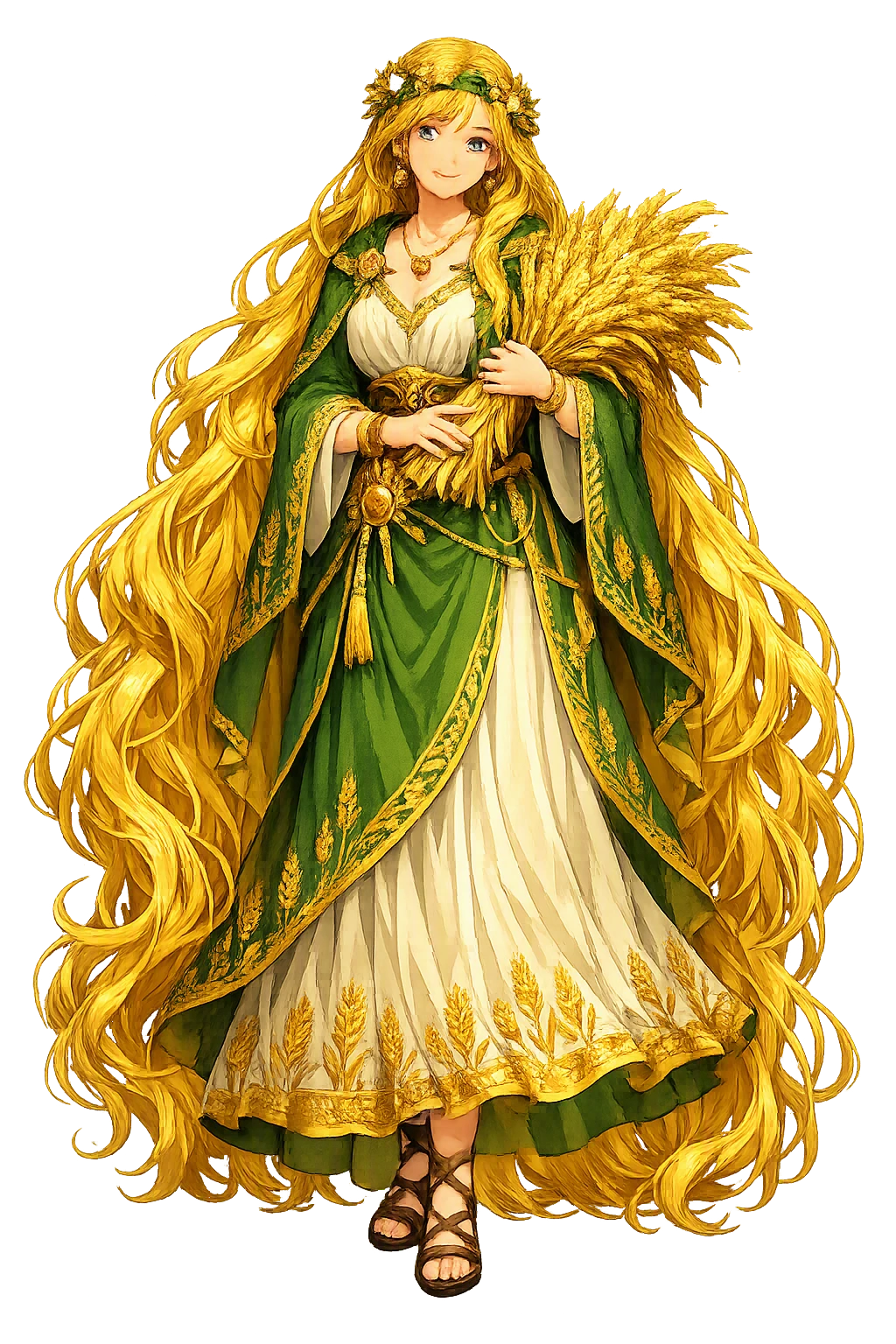
Sif: canonical, contested, and the false forms on record
Evidence dossier 446 — Sif. Every exhibit catalogued, every ruling stated with its grounds.
At a Glance
- Canonical form: Sif
- Original script: ᛋᛁᚠ
- Pantheon: Norse
- Convention: normalized Old Norse spelling — þ, ð, ǫ, æ and length marks preserved as the editions print them
- False forms on record: 0
- Contested forms: none attested
- Series: The Canonical Register, No. 446 of 548
The Evidence
Exhibit 1 — the attestation. The attested form is ᛋᛁᚠ, from the tradition's own record. The canonical transliteration is Sif.
Exhibit 2 — the flattened form. The plain form sif differs from the canonical Sif only by convention of display — case, not content. It is acceptable everywhere: in legacy systems, in plain-text citation, in the DNS itself. What is not acceptable is what follows in the register: respellings that change the letters, not just their case.
Exhibit 3 — the physical record. Sif is a wholly textual goddess: no runestone invokes her, no votive deposit names her, and no image can be securely identified with her — a silence she shares with most of the ásynjur, who appear in verse and prose but rarely, if ever, in dedications. Her attestation hangs on the manuscript witnesses of the two Eddas: the Codex Regius of the Poetic Edda for Lokasenna and Hárbarðsljóð, and the Codex Regius and related codices of Snorri's Edda for the Skáldskaparmál hair-myth and the Gylfaginning genealogy that names Ullr her son. No certain place-name contains her name, though the root sif- is bound up with ordinary words for kinship across the Germanic languages; and while the Younger Futhark rendering ᛋᛁᚠ is unambiguous, no Viking-Age carving of the theonym has ever been read. The material afterlife of her myth is real but indirect: the treasures her shearing produced — Mjölnir above all — are among the most depicted objects of the Viking Age, worn as amulets in thousands of graves, so that the consequence of her one great scene is archaeologically everywhere while she herself is nowhere.
Exhibit 4 — the continuing record. Sif's afterlife runs on two tracks, one scholarly and one popular. In the scholarly line she is the type-case of the Edda's reticence about goddesses: a figure with no cult record and one great myth, whose golden hair made her, from Grimm onward, the default Germanic corn-goddess of the comparative handbooks, and whose name — plain sif, 'affinity' — became the standing example of a theonym that is simply an abstract noun.
The Convention's Own History
The Poetic Edda survives essentially in one manuscript — the Codex Regius, c. 1270 — and normalized Old Norse spelling descends from what that manuscript and its siblings actually write. Þ and ð are not decorations: they are letters of the alphabet the skalds used (and English later abandoned), and ǫ is a nasal vowel the normalization preserves because the sources carry it. The register's rule is the manuscript's rule: spell the names the way the tradition that sang them wrote them down.
The Protocol's Position
Can the canonical form live in the address bar? Almost always, yes. IDNA 2008 admits every mark this register defends — the DNS stores them as `xn--` punycode and modern browsers render them natively. The real frictions are practical, not legal: some registrars stock only part of the IDN space, so a theoretically valid name can be temporarily unbuyable; and stacked combinations (an acute riding a macron) remain awkward to type on mobile keyboards even where the protocol accepts them.
The project's answer is a ranked ladder, not a compromise: the full restoration first, then attested fallbacks in descending order of completeness. The ladder's lowest rung, plain ASCII, is a vehicle for legacy systems — sanctioned, but never presented as the scholarly form.
The Verdict
Case closed on Sif: canonical, cited, and defended. The keyboard form sif is the same name in another register of display — always acceptable. The register's files remain open: if a source surfaces that changes any line of this entry, the entry changes. Until then, the temple at /sif/ holds the canonical form.
The docket for this ruling: no false forms on the docket; no contested forms attested; the attestation rests on 6 cited sources — Snorri Sturluson, Prose Edda: Skáldskaparmál (the shearing of Sif's hair; the sons of Ívaldi and the making of the golden hair, Gungnir, and Skíðblaðnir; Loki's wager with Brokkr and the forging of Draupnir, Gullinbursti, and Mjölnir; kennings for Þórr as 'husband of Sif'); Gylfaginning 32 (Ullr son of Sif, stepson of Þórr), trans. Anthony Faulkes, Poetic Edda: Lokasenna 53–54 (Sif pours the crystal cup; Loki's accusation); Hárbarðsljóð 48 ('Sif has a lover at home'), trans. Carolyne Larrington, Cleasby–Vigfusson, An Icelandic-English Dictionary s.v. sif, sifjar; de Vries, Altnordisches etymologisches Wörterbuch s.v. sif (the kinship etymology: Old Norse sif, Old English sibb, Old High German sippa).
The Register Continues
Entry 446 of 548 in the Canonical Register. Around it: the temple's founding dispatch, the Restoration File on the marks themselves, the Resonance File on the archetype at work, and the Rulebook behind all of it.
Continue the register — previous entry: sjꜣ (read it) · next entry: Sigurðr (read it).
The Canonical Register is written from the same canonical record as the lexicon itself. If a false form is missing from this page, it is because the evidence does not support calling it false — or because we have not seen it yet. Show us, with a citation, and the register will answer.