PuniCodex

Extended Lore

ᛋᛁᚠ Sif

Etymology · Phonology · Orthography · Cultural Legacy · Primary Sources

Tier 2 Sif
Sif — Earth, Harvest
01

Quick Facts

Essential information about Sif, Earth, Harvest

Original Scriptᛋᛁᚠ
Unicode RestorationSif
Reconstructed Pronunciation/ˈsiv/
PantheonNorse
DomainEarth, Harvest
MeaningRelation by marriage
ClassificationTier 2
Primary DomainSif
Sacred SymbolsThe golden hair, The crystal cup of mead, Mjölnir, Gungnir and Skíðblaðnir, Þrúðheimr
02

Etymology & Word Family

From original script to Unicode restoration

Original Script ᛋᛁᚠ Sif — "Relation by marriage"
Unicode Restoration Sif Restored stress, length, and script
Modern ASCII sif Plain-ASCII fallback

Sif is Tier 2 by the mechanical rule: the normalized Old Norse form is already plain ASCII — no diacritic, no distinctive letter for the ASCII alphabet to lose. The goddess of the golden hair needs no rescued glyph; only the capital distinguishes the restored form from the input.

03

Unicode Character Breakdown

Character-by-character philological analysis

CharacterUnicodeNameBlockPhonetic Role
SU+0053Latin Capital Letter SBasic LatinSame, capitalized
iU+0069Latin Small Letter IBasic LatinSame
fU+0066Latin Small Letter FBasic LatinSame

The Tier 2 classification reflects how much of the original phonology this restoration preserves — stress and vowel length for Greek names, distinctive letters and diacritics for every other tradition.

04

Cultural Significance

From ancient cult to modern Unicode

Ancient Domain

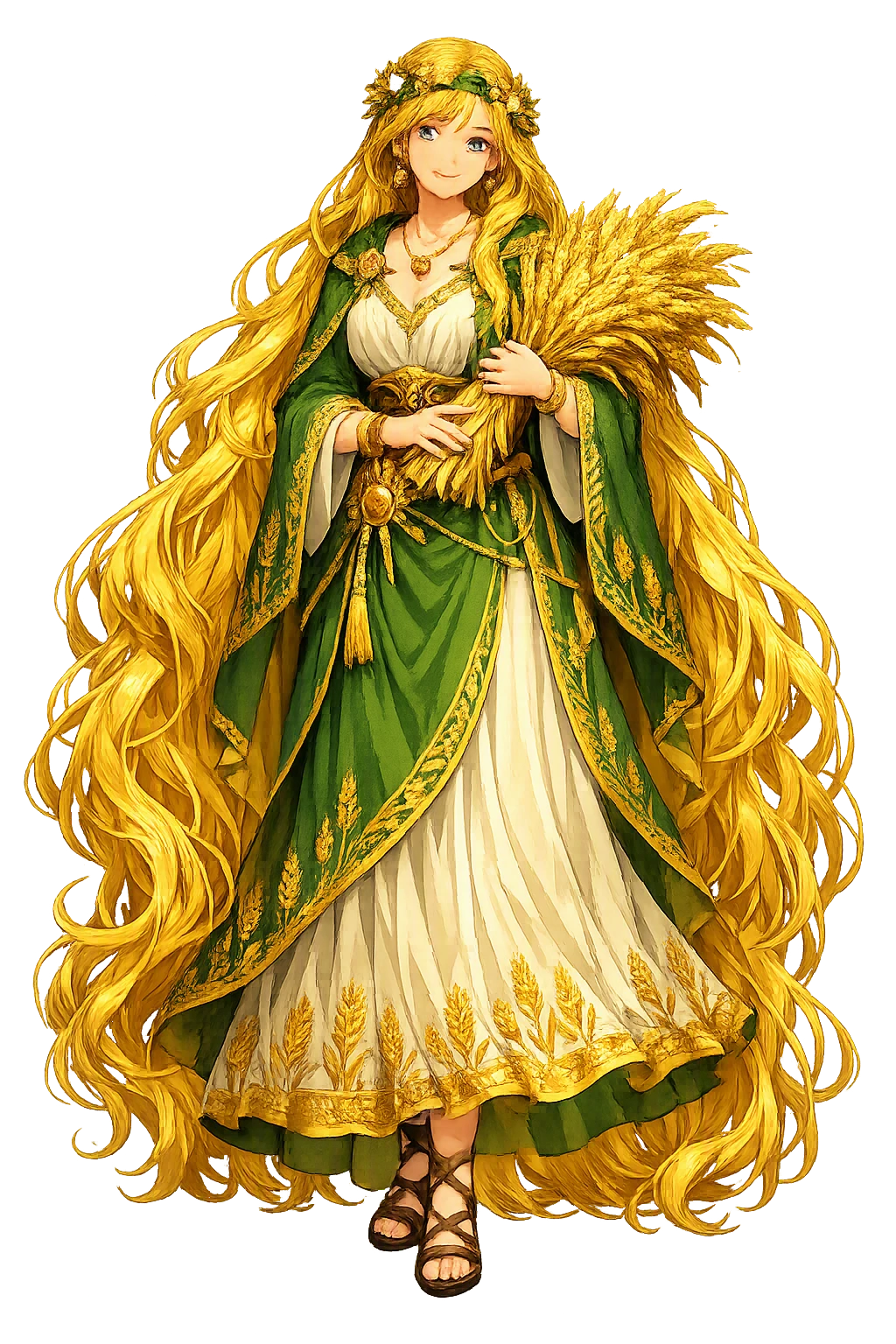
Sif, the golden-haired wife of [[thor|Þórr]], is one of the quietest figures in the Edda and one of the most consequential. When [[loki|Loki]] sheared off her hair in mischief, Þórr's rage forced the trickster down to the dwarfs — and the forges that answered made not only her new hair of living gold but Gungnir, Skíðblaðnir, Draupnir, Gullinbursti, and Mjölnir itself. Her name is the Old Norse word for kinship-by-marriage, sif, and the corpus keeps her exactly there: the bond at the centre of the thunder-god's house, mother of [[ullr|Ullr]], counted mother of Þrúðr, the one voice in Lokasenna that pours Loki mead and speaks him fair.

Sif in Later Traditions

Sif has attracted exactly one great comparative reading, and it begins with her hair. Jacob Grimm, in the Deutsche Mythologie, took the shearing and the golden regrowth as a nature myth: Sif's hair is the ripe corn, Loki's shearing the harvest or the blight, and the dwarfs' gold the field that grows back golden — a reading that made her a Germanic harvest-goddess beside Demeter and the corn-mothers of folklore, and that matches the way the corpus ties her to Þórr, the farmer's weather-god. Twentieth-century scholarship cooled on the certainty without abandoning the observation: Simek and Turville-Petre note that the sources never call her an earth or harvest goddess, that her name means only 'kinship by marriage', and that the corn-gold reading is interpretation laid over a myth that explains itself well enough as the aetiology of the gods' treasures. The clean statement is the lexicon's own: her sphere in the tradition is the household and its bonds; the harvest is what modern readers, following Grimm, have grown in her golden hair.

Modern Legacy

Sif's afterlife runs on two tracks, one scholarly and one popular. In the scholarly line she is the type-case of the Edda's reticence about goddesses: a figure with no cult record and one great myth, whose golden hair made her, from Grimm onward, the default Germanic corn-goddess of the comparative handbooks, and whose name — plain sif, 'affinity' — became the standing example of a theonym that is simply an abstract noun. In the popular line her golden hair carried her into every Victorian retelling of the gods, and modern popular culture has borrowed her outright — most visibly as the Marvel comics and film character — usually trading the wife of the sources for a swordswoman. Modern Heathen and Ásatrú communities keep the older reading, hailing her at harvest rites as the golden-haired one, patroness of grain, marriage, and household bonds. And her quietest legacy is lexical: the root of her name lives on in English, unbeknownst to its speakers, in sib, sibling, and gossip — kinship worn down into ordinary speech, which is exactly what her name always meant.

Unicode Restoration as Cultural Act

Restoring Sif in a domain name is more than orthographic accuracy. It is a statement that the internet should recognize the full range of human writing — not only the ASCII keyboard.

05

Frequently Asked Questions

Common questions about Sif, Earth, Harvest, and Unicode restoration

01How do you pronounce Sif?

In reconstructed pronunciation, Sif is /ˈsiv/ — approximately 'SEEV' — one syllable, the vowel short and bright, the final f voiced to v; never 'siff' with an English double-f hiss..

02What does Sif mean?

Sif means Relation by marriage in the norse tradition.

03What are the symbols of Sif?

Sif is associated with The golden hair (Sif's defining attribute — shorn by Loki, remade in living gold by the sons of Ívaldi; read since Grimm as the ripe corn of the harvest field), The crystal cup of mead (Her single speech in Lokasenna — hospitality offered to the one guest no one else would serve), Mjölnir (The hammer that exists because her hair was cut — the wager's greatest prize), Gungnir and Skíðblaðnir (Óðinn's spear and Freyr's ship, made in the same commission that remade her hair — her restoration underwriting the gods' whole arsenal), Þrúðheimr (The 'world of strength' where her household stands — the fields of Thrúdheimr, Þórr's realm, her home).

04Why restore Sif in Unicode?

Plain ASCII sif strips the stress, length, and script that make the name specific. Unicode restoration returns the name to its original written dignity.

05What is the most important myth about Sif?

Loki Laufeyjarson, Snorri begins, did this for mischief: he cut off all Sif's hair. When Þórr came home and learned it, he seized Loki and would have broken every bone in him, had Loki not sworn to go to the svartálfar and have them make for Sif a head of hair from gold — hair that would grow like other hair. So Loki went to the dwarfs called the sons of Ívaldi, and they made the hair, and it grew to her head the moment it was set there, as if it were her own.The episode is told in a handful of sentences, but its logic is exact: the injury is domestic, the redress is craft, and the restitution exceeds the loss. Sif does not speak in her own myth — the shearing, the oath, and the making all happen around her — and the tradition leaves her golden hair standing where nature left the first.

06

Scholarly Sources

The philological foundations of this restoration

Every claim on this page is grounded in established scholarship. The orthographic restorations follow disciplinary convention. The etymological chain follows the best available reference works. This is not invention — it is resurrection through scholarship.

Lexicography & Philology

  • Poetic Edda
  • Cleasby-Vigfusson

Primary Texts

  • Snorri Sturluson, Prose Edda: Skáldskaparmál (the shearing of Sif's hair; the sons of Ívaldi and the making of the golden hair, Gungnir, and Skíðblaðnir; Loki's wager with Brokkr and the forging of Draupnir, Gullinbursti, and Mjölnir; kennings for Þórr as 'husband of Sif'); Gylfaginning 32 (Ullr son of Sif, stepson of Þórr), trans. Anthony Faulkes
  • Poetic Edda: Lokasenna 53–54 (Sif pours the crystal cup of mead; Loki's accusation); Hárbarðsljóð 48 ('Sif has a lover at home'), trans. Carolyne Larrington
  • de Vries, Altnordisches etymologisches Wörterbuch, s.v. sif (the kinship etymology: Old Norse sif, Old English sibb, Old High German sippa)

Archaeology & Art History

  • Material evidence — iconography, inscriptions, and temple archaeology — for Sif and related cults.
  • Sif is a wholly textual goddess: no runestone invokes her, no votive deposit names her, and no image can be securely identified with her — a silence she shares with most of the ásynjur, who appear in verse and prose but rarely, if ever, in dedications. Her attestation hangs on the manuscript witnesses of the two Eddas: the Codex Regius of the Poetic Edda for Lokasenna and Hárbarðsljóð, and the Codex Regius and related codices of Snorri's Edda for the Skáldskaparmál hair-myth and the Gylfaginning genealogy that names Ullr her son. No certain place-name contains her name, though the root sif- is bound up with ordinary words for kinship across the Germanic languages; and while the Younger Futhark rendering ᛋᛁᚠ is unambiguous, no Viking-Age carving of the theonym has ever been read. The material afterlife of her myth is real but indirect: the treasures her shearing produced — Mjölnir above all — are among the most depicted objects of the Viking Age, worn as amulets in thousands of graves, so that the consequence of her one great scene is archaeologically everywhere while she herself is nowhere.

Religious Studies

  • Cleasby–Vigfusson, An Icelandic-English Dictionary, s.v. sif, sifjar; Zoëga, A Concise Dictionary of Old Icelandic, s.v. sif
  • Simek, Dictionary of Northern Mythology, s.v. Sif, Ullr, Þrúðr; Orchard, Dictionary of Norse Myth and Legend, s.v. Sif; Lindow, Norse Mythology: A Guide, s.v. Sif
  • Grimm, Deutsche Mythologie, trans. Stallybrass as Teutonic Mythology — the golden hair read as the corn of the harvest field
  • Turville-Petre, Myth and Religion of the North (1964) — attestation and the limits of the fertility-goddess reading
Return

The Surface Awaits

You have traced the name from its earliest attestation to its Unicode restoration. Now return to the myth. The story is where the name lives.

Back to Lore
Sif mascot