
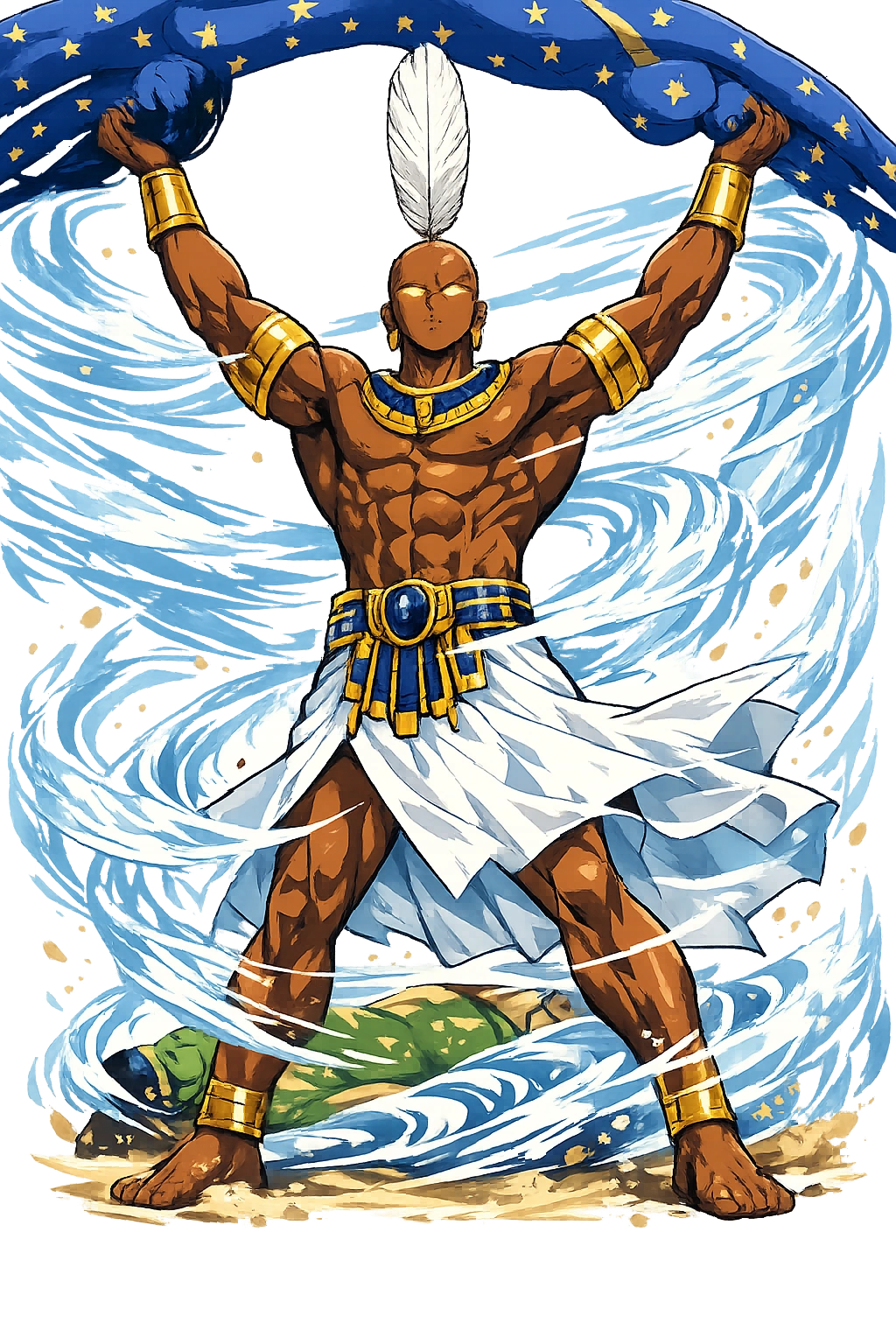
The Cult
Shu never had a town. No temple dedicated to him alone is known anywhere in Egypt, and no priesthood of Shu, no festival calendar, no votive hoard bears his name; his was a cult without a headquarters, befitting a god who is everywhere and owns nothing. His worship ran instead through the great shared liturgies: the Pyramid Texts make him the breath that transfigures the king, the Coffin Texts promise the dead they shall not thirst because of Shu, and temple cosmology seats him among the Heliopolitan Ennead in every sanctuary that raised the sky on heh-pillars. What the devout left behind is small, fitting, and portable: ostrich-feather amulets of faience and stone set on the throats and breasts of Late Period mummies, and the feather of lightness that crowns his images from the New Kingdom onward. The later solar theology adds a leonine pair — Shu with Tefnut as lion and lioness — but even there he remains the atmosphere of other gods' cults rather than master of his own.