
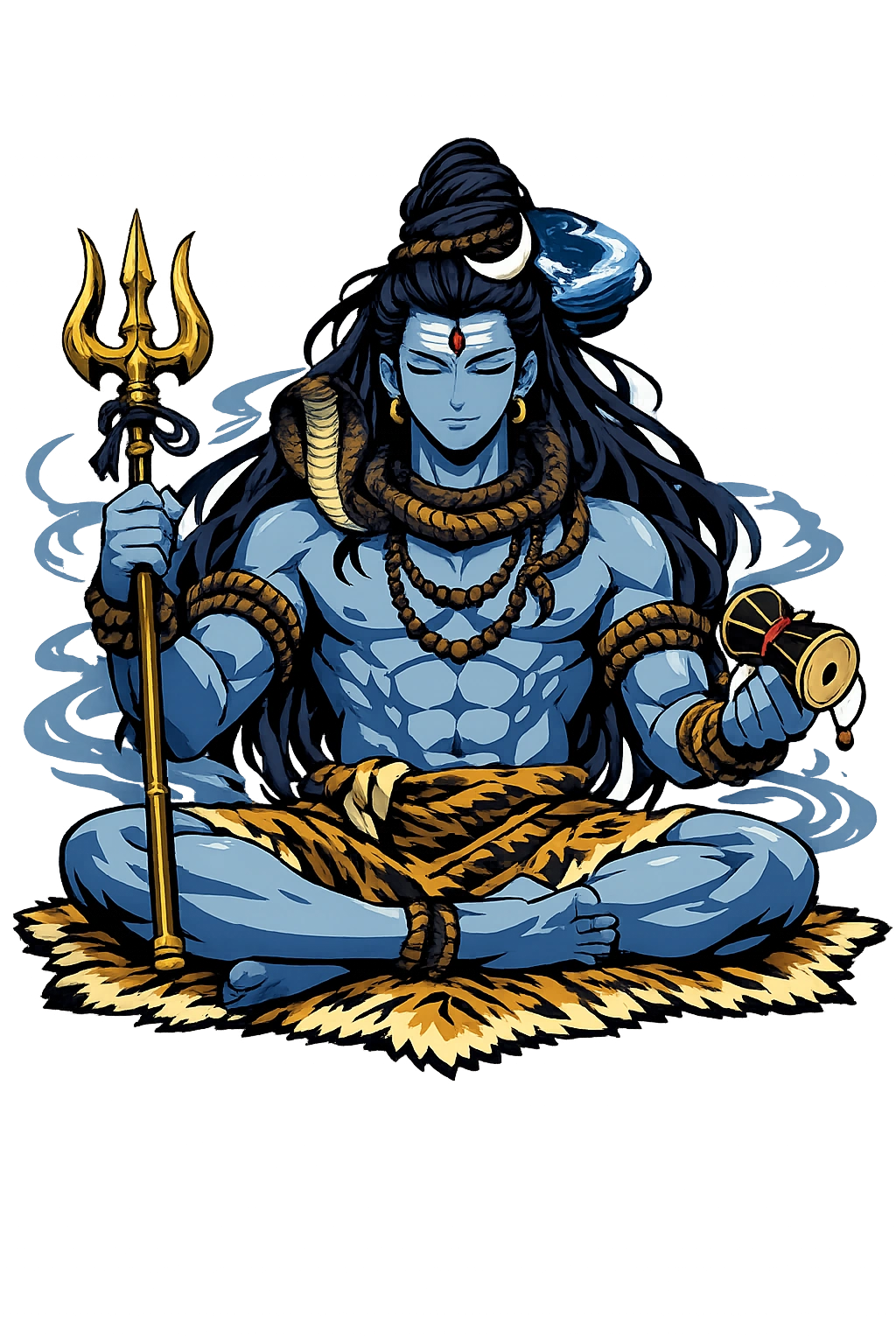
The Cult
Śiva is worshipped aniconically, and that is the heart of his cult. The liṅga — the standing pillar that is the likeness of nothing — receives the daily abhiṣeka, the bathing with water, milk, and bilva leaves, while devotees circumambulate it and mark the forehead with ash. The practice is ancient: the Gudimallam pillar in Andhra Pradesh (second–first century BCE) already carries his face on its shaft, and Kuṣāṇa coins of Kanishka name him Oesho. His festival year turns on Mahāśivarātri, the great night of fasting and vigil in Phalguna, and on the Mondays of the rains. His clergy are of two kinds: hereditary temple pūjarīs who serve the great liṅga shrines — among them the twelve Jyotirliṅgas, from Somanātha on the Gujarat coast to Kāśī Viśvanāth at Varanasi and the Natarāja temple at Chidambaram — and the ascetic orders, from the Pāśupatas founded by Lakulīśa to the Liṅgāyats of the Deccan, who wear the personal liṅga on the body and answer to no temple at all.