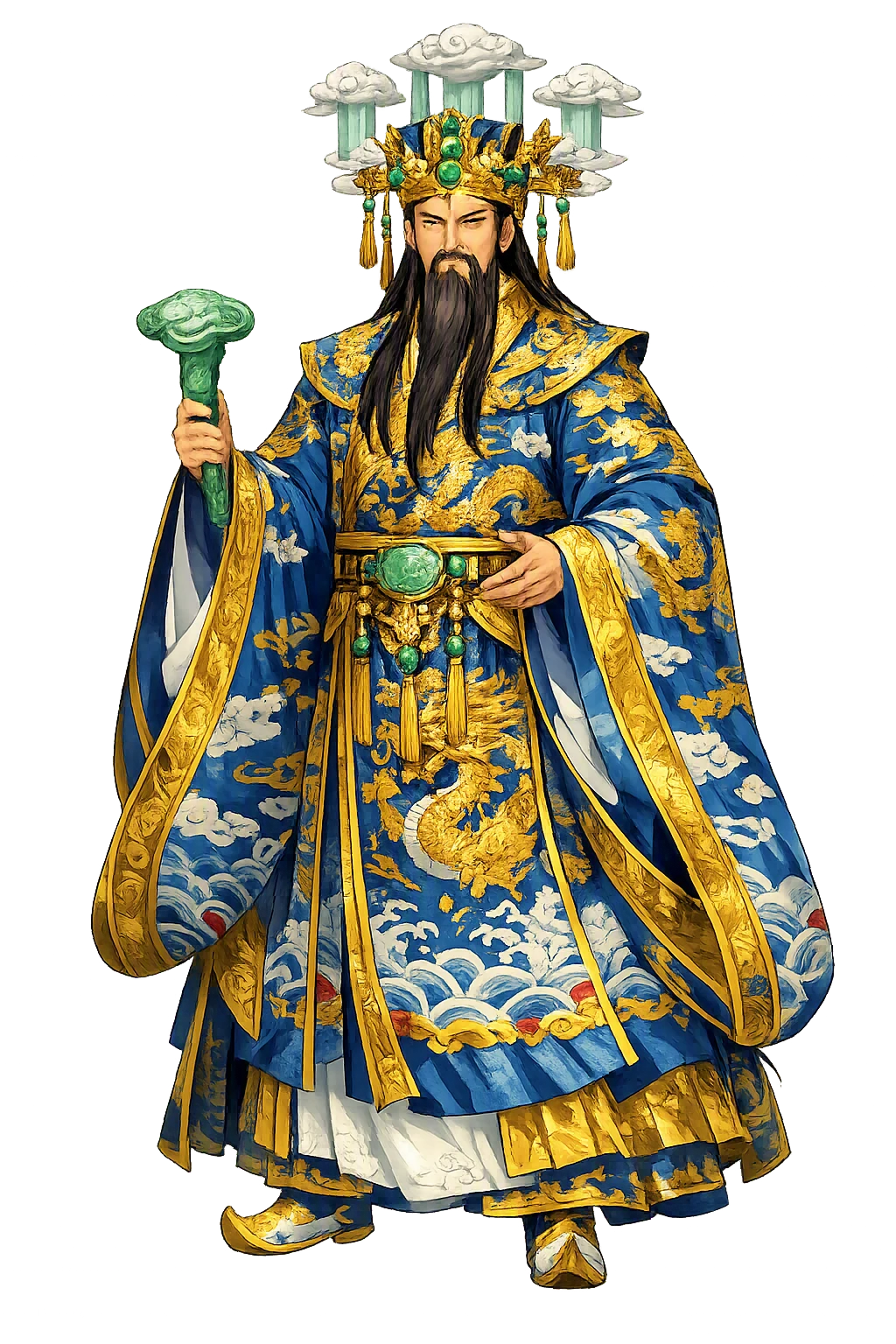
Ancient Domain
Shàngdì belongs to the Chinese tradition, where it is associated with supreme deity, heaven, sovereign.
Extended Lore
Etymology · Phonology · Orthography · Cultural Legacy · Primary Sources

Essential information about Shàngdì, Supreme Deity, Heaven, Sovereign
From original script to Unicode restoration
Shàngdì is Tier 1 because the Chinese form preserves distinctive features that ASCII loses: stress, length, or special characters.
Character-by-character philological analysis
| Character | Unicode | Name | Block | Phonetic Role |
|---|---|---|---|---|
| S | U+0053 | Latin Capital Letter S | Basic Latin | Same, capitalized |
| h | U+0068 | Latin Small Letter H | Basic Latin | Same |
| à | U+00E0 | Latin Small Letter A with Grave | Latin-1 Supplement | Grave tone mark |
| n | U+006E | Latin Small Letter N | Basic Latin | Same |
| g | U+0067 | Latin Small Letter G | Basic Latin | Same |
| d | U+0064 | Latin Small Letter D | Basic Latin | Same |
| ì | U+00EC | Latin Small Letter I with Grave | Latin-1 Supplement | Grave tone mark |
The Tier 1 classification reflects how much of the original phonology this restoration preserves — stress and vowel length for Greek names, distinctive letters and diacritics for every other tradition.
From ancient cult to modern Unicode
Shàngdì belongs to the Chinese tradition, where it is associated with supreme deity, heaven, sovereign.
Shàngdì appears within the Chinese tradition and has influenced later retellings, artistic depictions, and scholarly study. The Unicode restoration preserves the name's distinctive orthography for contemporary use.
Shàngdì continues to appear in scholarship, art, and popular reception as a significant figure of the Chinese tradition. Restoring the name in Unicode returns the original marks that ASCII removes.
Restoring Shàngdì in a domain name is more than orthographic accuracy. It is a statement that the internet should recognize the full range of human writing — not only the ASCII keyboard.
Common questions about Shàngdì, Supreme Deity, Heaven, Sovereign, and Unicode restoration
In reconstructed pronunciation, Shàngdì is /shangdi/ — approximately 'SHANGDI' — pronounce the restored form with attention to the preserved diacritics and length..
Shàngdì means Highest Emperor; the supreme god of early Chinese religion in the chinese tradition.
Shàngdì is associated with Restored Name (The Unicode form Shàngdì carries the original marks of the Chinese tradition.), Source Script (Attested in the original script as 上帝.), Domain (Supreme Deity, Heaven, Sovereign), Etymology (Highest Emperor; the supreme god of early Chinese religion).
Plain ASCII shangdi strips the stress, length, and script that make the name specific. Unicode restoration returns the name to its original written dignity.
Shàngdì is attested in the canonical Chinese sources as a figure associated with supreme deity, heaven, sovereign.
The philological foundations of this restoration
Every claim on this page is grounded in established scholarship. The orthographic restorations follow disciplinary convention. The etymological chain follows the best available reference works. This is not invention — it is resurrection through scholarship.
You have traced the name from its earliest attestation to its Unicode restoration. Now return to the myth. The story is where the name lives.
Back to Lore