
The Cult
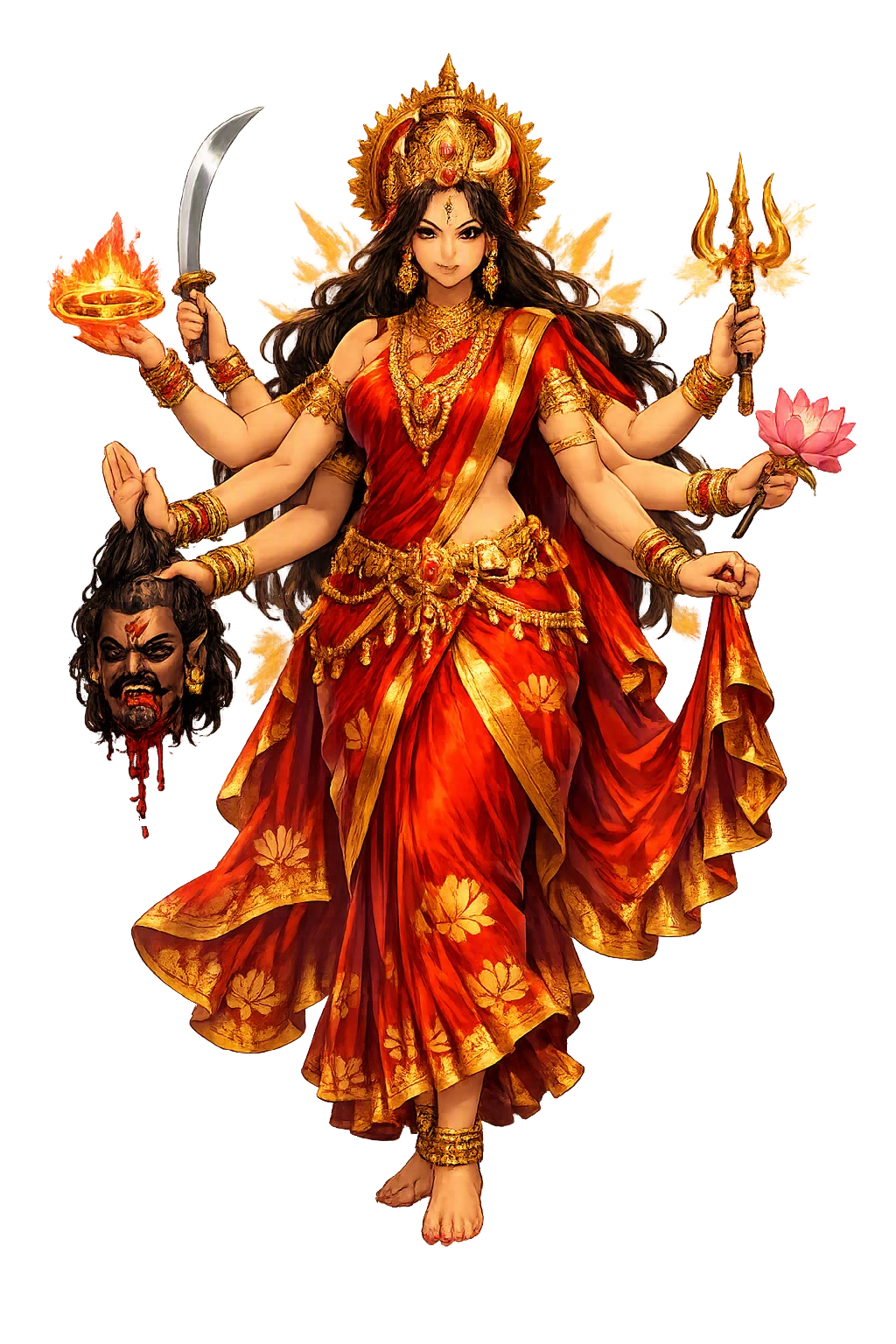
Śakti's worship runs in two registers: the temple and the circle. In the open register, pūjā offers flowers, lamps, food, and song to the goddess's image — at Kāmākhyā in Assam, raised over the yoni the tradition counts the first of fifty-one pīṭhas, and at Kālīghāṭ in Kolkata, where blood sacrifice was long part of her due. The closed register is Tantric: the initiated worship the śrīcakra, a nine-triangle diagram, with mantra and mudrā within the Kālīkula and Śrīkula lineages, and the tradition insists that only a consecrated guru may perform her liturgy correctly. The Devīmāhātmya's recitation — Caṇḍī-pāṭha — is itself the rite, chanted aloud across autumn's nine nights. The votive evidence is ancient: Kuṣāṇa-era Mathura has yielded mother-goddess plaques of the first centuries CE, the material ancestor of a cult that never since left off.