PuniCodex

Extended Lore

서낭신 (城隍神) Seonangshin

Etymology · Phonology · Orthography · Cultural Legacy · Primary Sources

Tier 2 Seonangshin
Seonangshin — Village Guardian, Boundary
01

Quick Facts

Essential information about Seonangshin, Village Guardian, Boundary

Original Script서낭신 (城隍神)
Unicode RestorationSeonangshin
Reconstructed Pronunciation/sʌ.naŋ.ʃin/
PantheonKorean
DomainVillage Guardian, Boundary
MeaningVillage spirit
ClassificationTier 2
Primary DomainSeonangshin
Sacred SymbolsSeonangdang shrine, Geumjul sacred rope, Jangseung and sotdae, Village tree
02

Etymology & Word Family

From original script to Unicode restoration

Original Script 서낭신 (城隍神) Seonangshin — "Village spirit"
Unicode Restoration Seonangshin Restored stress, length, and script
Modern ASCII seonangshin Plain-ASCII fallback

The first vowel is a mid back unrounded vowel; the second syllable contains a velar nasal. The name is the Korean reading of the Sino-Korean term for a city-moat guardian deity.

03

Unicode Character Breakdown

Character-by-character philological analysis

CharacterUnicodeNameBlockPhonetic Role
SU+0053Latin Capital Letter SBasic LatinSame, capitalized
eU+0065Latin Small Letter EBasic LatinSame
oU+006FLatin Small Letter OBasic LatinSame
nU+006ELatin Small Letter NBasic LatinSame
aU+0061Latin Small Letter ABasic LatinSame
nU+006ELatin Small Letter NBasic LatinSame
gU+0067Latin Small Letter GBasic LatinSame
sU+0073Latin Small Letter SBasic LatinSame
hU+0068Latin Small Letter HBasic LatinSame
iU+0069Latin Small Letter IBasic LatinSame
nU+006ELatin Small Letter NBasic LatinSame

The Tier 2 classification reflects how much of the original phonology this restoration preserves — stress and vowel length for Greek names, distinctive letters and diacritics for every other tradition.

04

Cultural Significance

From ancient cult to modern Unicode

Ancient Domain

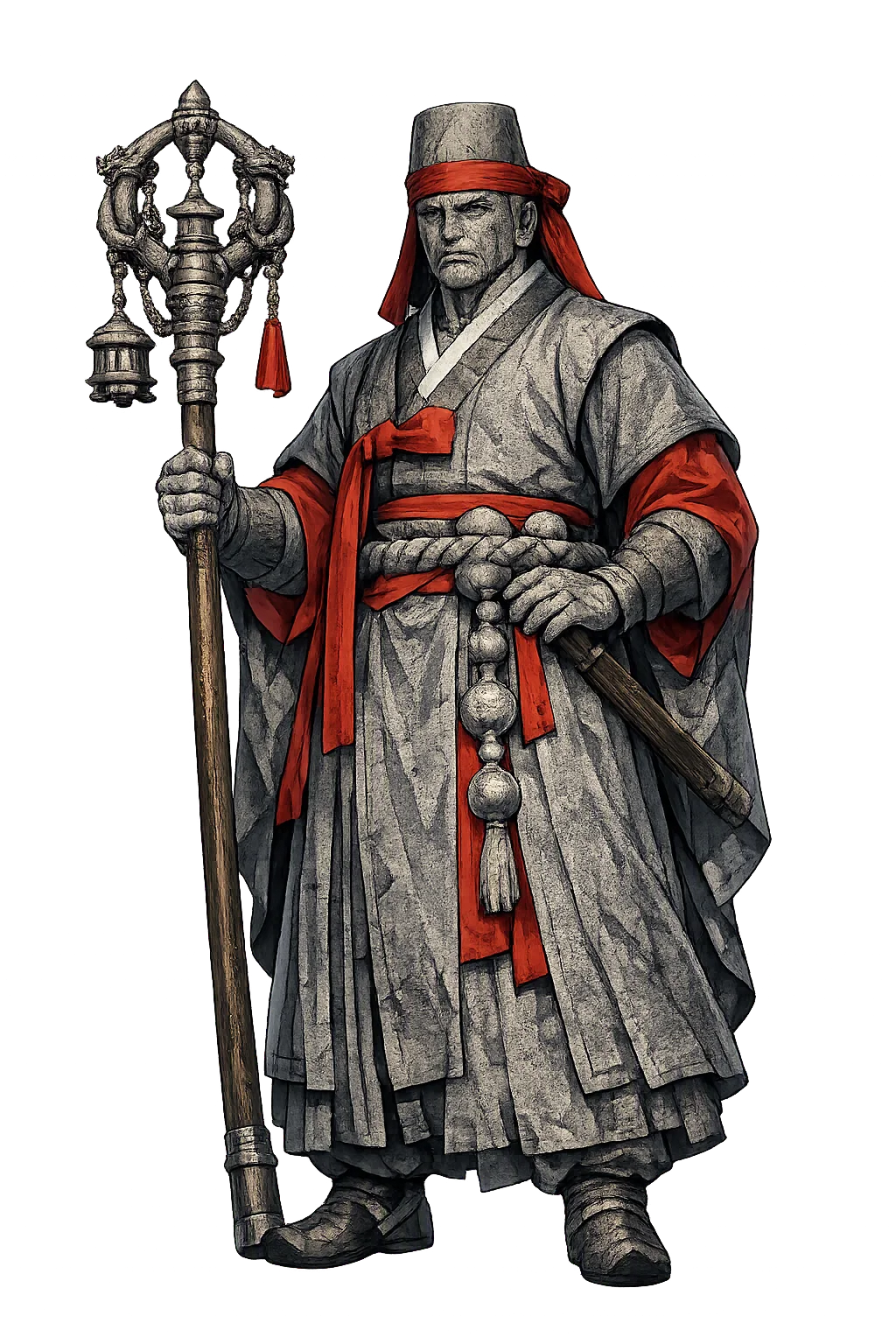
Seonangshin is the village guardian spirit who protects settlements, boundaries, and travellers from harm in Korean tradition. The name means "Village spirit" and belongs to the domain "Village Guardian, Boundary." Seonangshin is the spirit who guards the village boundary, usually honoured at a shrine near the entrance to the settlement. The deity is believed to protect the community from epidemics, disasters, war, and wandering malevolent forces.

Seonangshin in Later Traditions

Seonangshin sits at the intersection of indigenous Korean village guardian cults and the Sino-Korean city-god tradition. Confucian reformers promoted official worship of local tutelary deities, while shamanic practice preserved the older spirit cults at village boundaries. The figure also overlaps with military hero cults: generals who defended a region were sometimes posthumously honoured as seonangshin. Today the seonangdang survives as a heritage site, and the rites are sometimes revived as community festivals rather than as explicit religious worship.

Modern Legacy

Seonangshin remains visible in Korean cultural landscapes: village guardian trees, stone cairns, jangseung posts, and restored seonangdang shrines appear in heritage villages such as Hahoe and Yangdong. The figure also informs Korean ideas of community, boundary, and collective responsibility. In a digital age, Seonangshin is sometimes invoked metaphorically to discuss online community safety and the guardianship of shared spaces.

Unicode Restoration as Cultural Act

Restoring Seonangshin in a domain name is more than orthographic accuracy. It is a statement that the internet should recognize the full range of human writing — not only the ASCII keyboard.

05

Frequently Asked Questions

Common questions about Seonangshin, Village Guardian, Boundary, and Unicode restoration

01How do you pronounce Seonangshin?

In reconstructed pronunciation, Seonangshin is /sʌ.naŋ.ʃin/ — approximately 'suh-NAHNG-sheen' — The first vowel is a mid back unrounded vowel; the second syllable contains a velar nasal. The name is the Korean reading of the Sino-Korean term for a city-moat guardian deity..

02What does Seonangshin mean?

Seonangshin means Village spirit in the korean tradition.

03What are the symbols of Seonangshin?

Seonangshin is associated with Seonangdang shrine (The physical boundary shrine where the village meets the wild.), Geumjul sacred rope (A straw rope that marks sacred space and wards off pollution.), Jangseung and sotdae (Guardian posts and bird-topped poles that announce the protected boundary.), Village tree (A great tree believed to be the residence or companion of the guardian spirit.).

04Why restore Seonangshin in Unicode?

Plain ASCII seonangshin strips the stress, length, and script that make the name specific. Unicode restoration returns the name to its original written dignity.

05What is the most important myth about Seonangshin?

Every traditional village had a seonangdang, a small shrine at the boundary where the village met the wilderness. Offerings of rice wine, cloth, and prayers were made there to keep disease and disaster outside the community.

06

Scholarly Sources

The philological foundations of this restoration

Every claim on this page is grounded in established scholarship. The orthographic restorations follow disciplinary convention. The etymological chain follows the best available reference works. This is not invention — it is resurrection through scholarship.

Lexicography & Philology

  • Korean folklore
  • Shamanic texts

Primary Texts

  • Primary sources in the korean tradition for Seonangshin.

Archaeology & Art History

  • Material evidence — iconography, inscriptions, and temple archaeology — for Seonangshin and related cults.

Religious Studies

  • Academy of Korean Studies, Cultural Landscapes of Korea (2013).
  • National Folk Museum of Korea, Encyclopedia of Korean Folk Beliefs (2015).
  • Grayson, James H., Korea: A Religious and Cultural History (Routledge, 2002).
Return

The Surface Awaits

You have traced the name from its earliest attestation to its Unicode restoration. Now return to the myth. The story is where the name lives.

Back to Lore
Seonangshin mascot