PuniCodex

Extended Lore

猿田彦 Sarutahiko

Etymology · Phonology · Orthography · Cultural Legacy · Primary Sources

Tier 2 Sarutahiko
Sarutahiko — Crossroads, Guidance
01

Quick Facts

Essential information about Sarutahiko, Crossroads, Guidance

Original Script猿田彦
Unicode RestorationSarutahiko
Reconstructed Pronunciation/sa.ɾɯ.ta.hi.ko/
PantheonJapanese
DomainCrossroads, Guidance
MeaningMonkey-field prince
ClassificationTier 2
Primary DomainSarutahiko
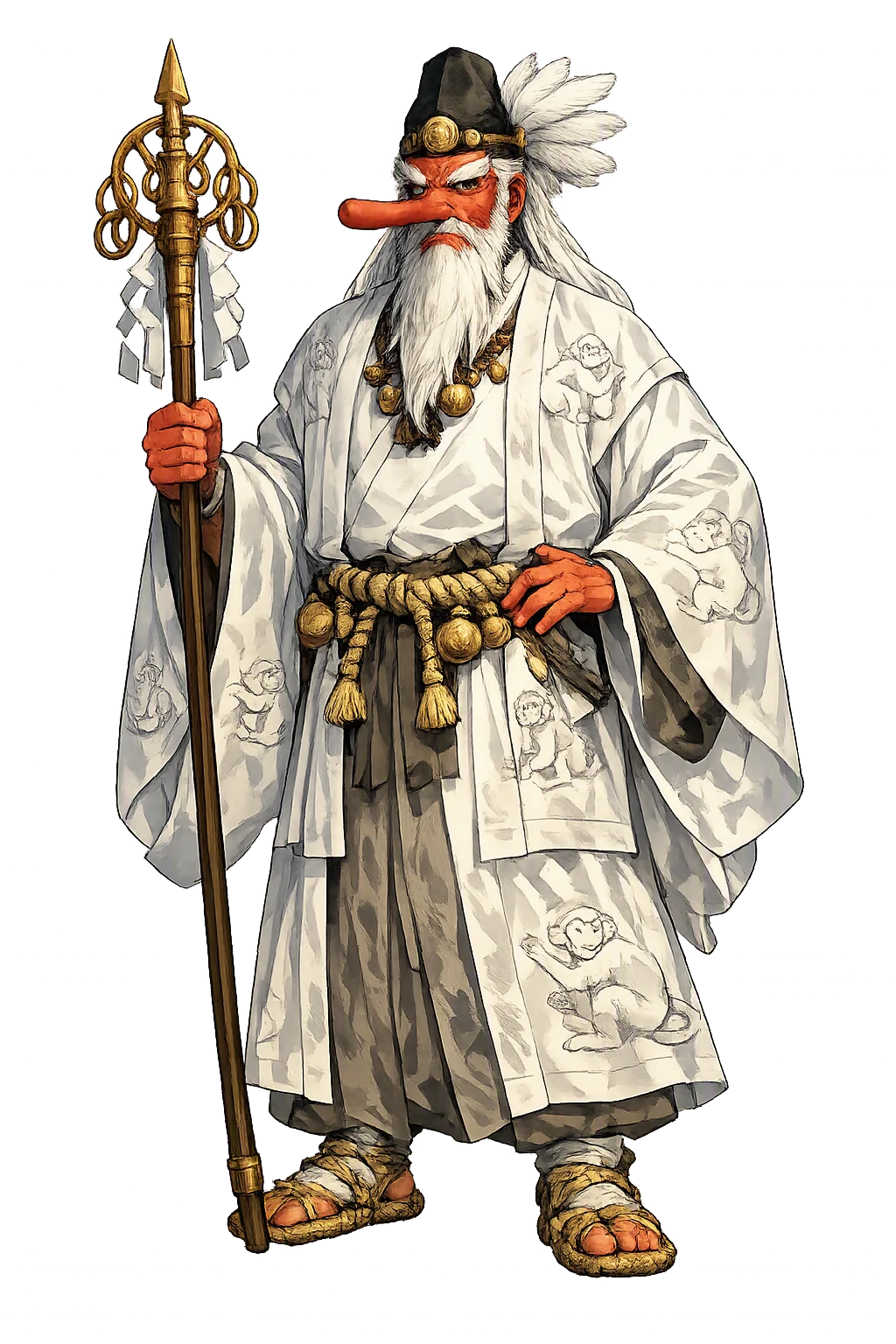
Sacred SymbolsLong nose, Red face, Jeweled spear, Crossroads
02

Etymology & Word Family

From original script to Unicode restoration

Original Script 猿田彦 Sarutahiko — "Monkey-field prince"
Unicode Restoration Sarutahiko Restored stress, length, and script
Modern ASCII sarutahiko Plain-ASCII fallback

Sarutahiko is Tier 2: plain Hepburn. He is the kami who guided Ninigi's descent and who stands at boundaries.

03

Unicode Character Breakdown

Character-by-character philological analysis

CharacterUnicodeNameBlockPhonetic Role
SU+0053Latin Capital Letter SBasic LatinSame, capitalized
aU+0061Latin Small Letter ABasic LatinSame
rU+0072Latin Small Letter RBasic LatinSame
uU+0075Latin Small Letter UBasic LatinSame
tU+0074Latin Small Letter TBasic LatinSame
aU+0061Latin Small Letter ABasic LatinSame
hU+0068Latin Small Letter HBasic LatinSame
iU+0069Latin Small Letter IBasic LatinSame
kU+006BLatin Small Letter KBasic LatinSame
oU+006FLatin Small Letter OBasic LatinSame

The Tier 2 classification reflects how much of the original phonology this restoration preserves — stress and vowel length for Greek names, distinctive letters and diacritics for every other tradition.

04

Cultural Significance

From ancient cult to modern Unicode

Ancient Domain

Sarutahiko is the kami who stands at the boundary between heaven and earth. When Ninigi descended from Takamagahara, Sarutahiko blocked the way until Ame-no-Uzume persuaded him to become the guide. With his long nose, glaring eyes, and red face, he became the model for the taikomochi and tenjin figures of Japanese folk performance and the patron of those who stand at thresholds.

Sarutahiko in Later Traditions

Sarutahiko is an earthly kami who becomes an ally of the heavenly order. His long nose and red face connect him to other boundary figures in Japanese folk religion, and his marriage to Ame-no-Uzume unites two of the most dynamic kami in the pantheon. He is also venerated in Shugendō as a guide for mountain ascetics.

Modern Legacy

Sarutahiko is worshipped at Tsubaki Grand Shrine and other shrines associated with guidance and performance. His image influences Japanese masks, festival costumes, and the design of tenjin figures. He remains the kami you call upon when standing at a threshold.

Unicode Restoration as Cultural Act

Restoring Sarutahiko in a domain name is more than orthographic accuracy. It is a statement that the internet should recognize the full range of human writing — not only the ASCII keyboard.

05

Frequently Asked Questions

Common questions about Sarutahiko, Crossroads, Guidance, and Unicode restoration

01How do you pronounce Sarutahiko?

In reconstructed pronunciation, Sarutahiko is /sa.ɾɯ.ta.hi.ko/ — approximately 'SAH-roo-tah-hee-koh' — the 'r' is a light tap, and all vowels are short..

02What does Sarutahiko mean?

Sarutahiko means Monkey-field prince in the japanese tradition.

03What are the symbols of Sarutahiko?

Sarutahiko is associated with Long nose (His most distinctive feature, symbolizing spiritual perception), Red face (The color of power and boundary-crossing deities), Jeweled spear (The weapon he brandished when blocking Ninigi's path), Crossroads (The thresholds he guards).

04Why restore Sarutahiko in Unicode?

Plain ASCII sarutahiko strips the stress, length, and script that make the name specific. Unicode restoration returns the name to its original written dignity.

05What is the most important myth about Sarutahiko?

When Ninigi prepared to descend from heaven, the earthly kami Sarutahiko stood at the Floating Bridge of Heaven and refused passage. None of the heavenly envoys could persuade him. Finally Ame-no-Uzume, the goddess of dance and laughter, went forward. She exposed herself and made him laugh, then convinced him to submit and guide Ninigi's descent.

06

Scholarly Sources

The philological foundations of this restoration

Every claim on this page is grounded in established scholarship. The orthographic restorations follow disciplinary convention. The etymological chain follows the best available reference works. This is not invention — it is resurrection through scholarship.

Lexicography & Philology

  • Kojiki
  • Nihon Shoki

Primary Texts

  • Kojiki and Nihon Shoki (Ninigi's descent)
  • Philippi, Kojiki

Archaeology & Art History

  • Material evidence — iconography, inscriptions, and temple archaeology — for Sarutahiko and related cults.
  • Tsubaki Grand Shrine in Mie is the head shrine of Sarutahiko. The iconography of crossroads and boundary kami is preserved in shrine statuary, festival costumes, and pilgrimage markers across Japan.

Religious Studies

  • Bocking, A Popular Dictionary of Shinto
Return

The Surface Awaits

You have traced the name from its earliest attestation to its Unicode restoration. Now return to the myth. The story is where the name lives.

Back to Lore
Sarutahiko mascot