
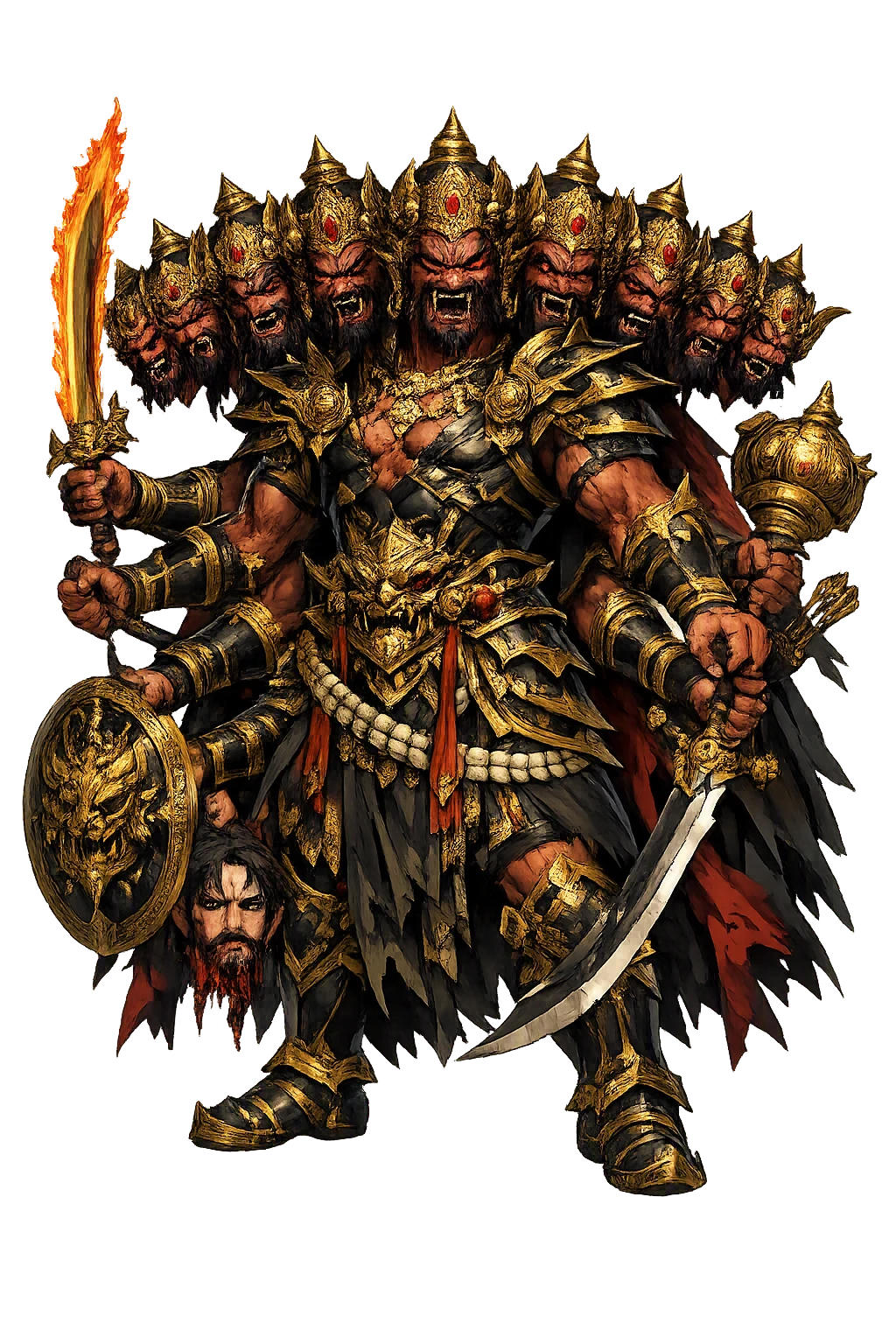
The Cult
Rāvaṇa was never given a cult — the epic saw to that. No ancient temple, priesthood, or festival calendar belongs to him; Hindu liturgy remembers him once a year precisely in order to destroy him, when the Dussehra effigy burns. What he received instead is a devotional afterlife inside his enemy's religion. Śaiva tradition kept his hymn: the Śivatāṇḍava stotra, sung with arms crushed beneath Kailāsa, still opens morning worship in Śiva temples across India, and Ayurvedic lineages name him among their legendary physician-authors. Small, modern, regional cults do honor him: a towering Rāvaṇa image is venerated at Mandasaur in Madhya Pradesh, where local legend makes him the town's son-in-law through Mandodarī, and families in Bisrakh — the village near Delhi that claims his birth — keep mourning on the burning-day. These are exceptions that prove the rule: worship of the ten-headed king is a minority devotion of the last century or so, built on the epic's own portrait of an enemy it could not make unlearned.