PuniCodex

Extended Lore

雷神 Raijin

Etymology · Phonology · Orthography · Cultural Legacy · Primary Sources

Tier 2 Raijin
Raijin — Thunder, Lightning
01

Quick Facts

Essential information about Raijin, Thunder, Lightning

Original Script雷神
Unicode RestorationRaijin
Reconstructed Pronunciation/ɾa.i.dʑiɴ/
PantheonJapanese
DomainThunder, Lightning
MeaningThunder god
ClassificationTier 2
Primary DomainRaijin
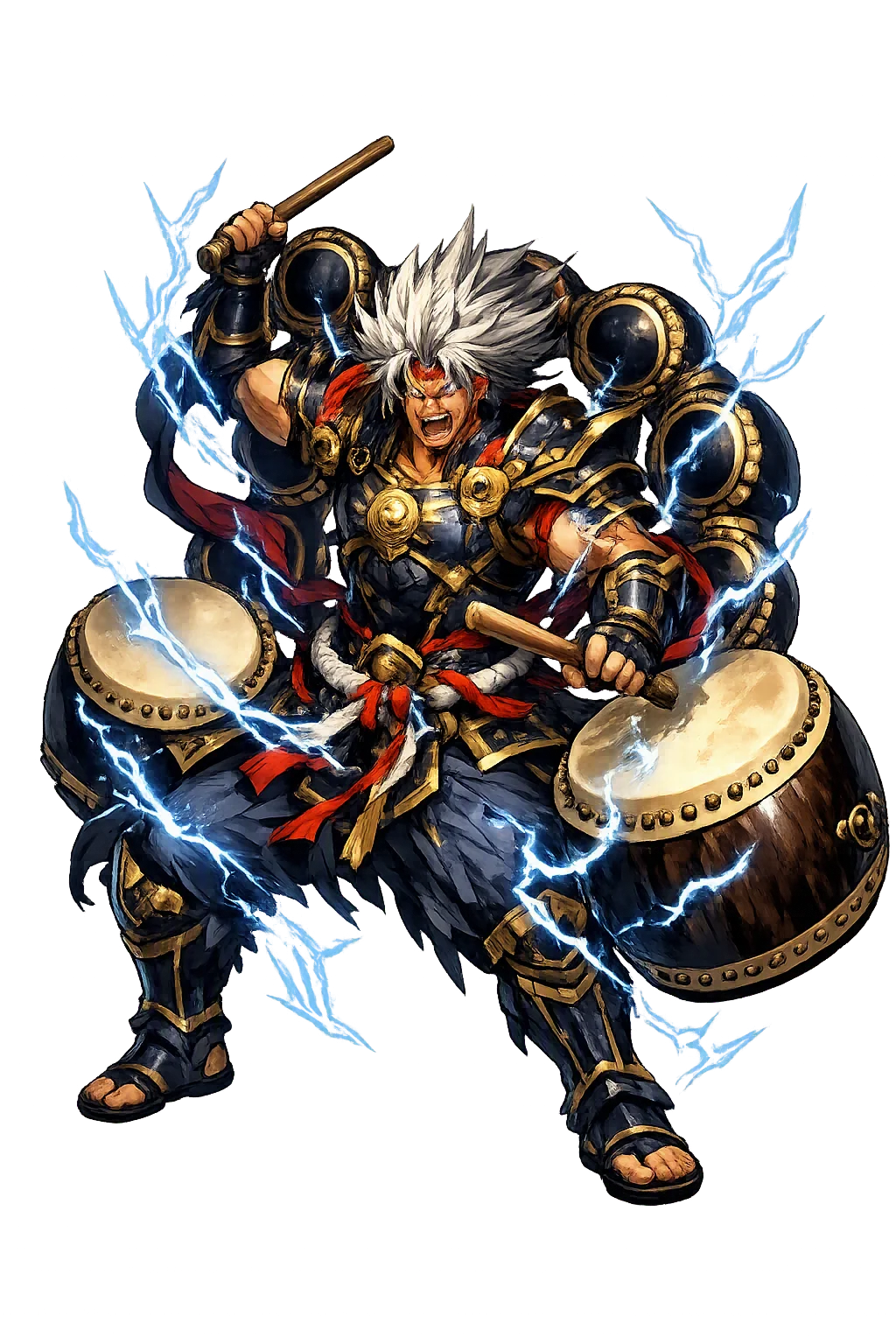
Sacred SymbolsThunder drums, Lightning bolts, Demon face, Clouds
02

Etymology & Word Family

From original script to Unicode restoration

Original Script 雷神 Raijin — "Thunder god"
Unicode Restoration Raijin Restored stress, length, and script
Modern ASCII raijin Plain-ASCII fallback

Raijin is Tier 2: plain Hepburn. He is the thunder god, often paired with Fūjin at temple gates.

03

Unicode Character Breakdown

Character-by-character philological analysis

CharacterUnicodeNameBlockPhonetic Role
RU+0052Latin Capital Letter RBasic LatinSame, capitalized
aU+0061Latin Small Letter ABasic LatinSame
iU+0069Latin Small Letter IBasic LatinSame
jU+006ALatin Small Letter JBasic LatinSame
iU+0069Latin Small Letter IBasic LatinSame
nU+006ELatin Small Letter NBasic LatinSame

The Tier 2 classification reflects how much of the original phonology this restoration preserves — stress and vowel length for Greek names, distinctive letters and diacritics for every other tradition.

04

Cultural Significance

From ancient cult to modern Unicode

Ancient Domain

Raijin is the thunder god of Japan, a fierce, demon-like kami who beats drums to create thunder and hurls lightning bolts. He is the brother or counterpart of Fūjin, the wind god, and the two are often depicted together at the gates of Buddhist temples, where their terrifying forms ward off evil.

Raijin in Later Traditions

Raijin descends from Indian Indra via Chinese Taishakuten and merges with native Japanese thunder kami. His visual form — muscular, surrounded by drums, emerging from clouds — was developed in Japanese Buddhist art and became one of the most recognizable guardian images in East Asia. The pairing with Fūjin expresses the Japanese fascination with storms as both destructive and purifying forces.

Modern Legacy

Raijin remains one of Japan's most visually striking deities. He appears in temple art, festival floats, manga, anime, and video games as a symbol of overwhelming natural power. The custom of covering one's navel during a thunderstorm is a living trace of his folk mythology.

Unicode Restoration as Cultural Act

Restoring Raijin in a domain name is more than orthographic accuracy. It is a statement that the internet should recognize the full range of human writing — not only the ASCII keyboard.

05

Frequently Asked Questions

Common questions about Raijin, Thunder, Lightning, and Unicode restoration

01How do you pronounce Raijin?

In reconstructed pronunciation, Raijin is /ɾa.i.dʑiɴ/ — approximately 'RAH-ee-jeen' — the 'r' is a light tap, and the final 'n' is a soft nasal..

02What does Raijin mean?

Raijin means Thunder god in the japanese tradition.

03What are the symbols of Raijin?

Raijin is associated with Thunder drums (The drums he beats to create thunder), Lightning bolts (The arrows or snakes of lightning he casts), Demon face (His fierce expression, typical of protective deities), Clouds (The storm clouds from which he emerges).

04Why restore Raijin in Unicode?

Plain ASCII raijin strips the stress, length, and script that make the name specific. Unicode restoration returns the name to its original written dignity.

05What is the most important myth about Raijin?

After Izanami died giving birth to Kagutsuchi, numerous kami were born from her corpse. The thunder kami emerged from her body, making them older than the wind kami born from Izanagi's later purification. The demonic Raijin of later art is a Buddhist-inflected form of these primordial thunder powers.

06

Scholarly Sources

The philological foundations of this restoration

Every claim on this page is grounded in established scholarship. The orthographic restorations follow disciplinary convention. The etymological chain follows the best available reference works. This is not invention — it is resurrection through scholarship.

Lexicography & Philology

  • Kojiki
  • Nihon Shoki

Primary Texts

  • Kojiki and Nihon Shoki (birth of thunder kami)

Archaeology & Art History

  • Material evidence — iconography, inscriptions, and temple archaeology — for Raijin and related cults.
  • Raijin is best known from Japanese painting and sculpture rather than independent archaeological sites. Famous depictions include the Fūjin-Raijin screens by Tawaraya Sōtatsu and temple sculptures across Japan.

Religious Studies

  • Buddhist iconographic texts
  • Bocking, A Popular Dictionary of Shinto
Return

The Surface Awaits

You have traced the name from its earliest attestation to its Unicode restoration. Now return to the myth. The story is where the name lives.

Back to Lore
Raijin mascot