
The Cult
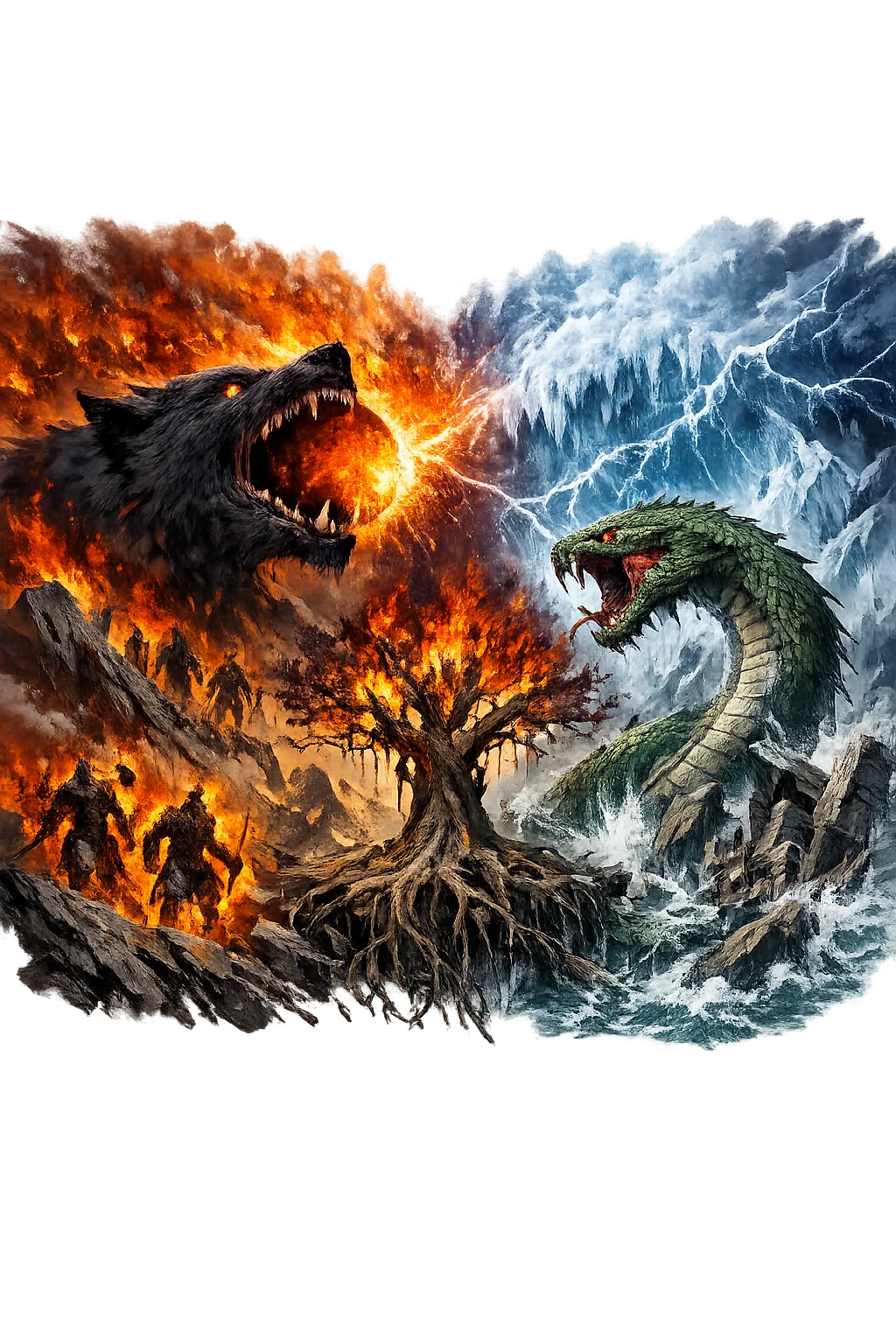
Ragnarǫk was never worshipped — a doom is not a god — so no cult, festival, or priesthood belongs to it. But the belief shaped ritual life. The same mythology that foretells the last battle staffs Óðinn's Valhöll, where the einherjar, the battle-slain gathered by valkyries, fight all day and feast all night precisely to be ready for the end (Gylfaginning 20–21); across the Viking world the dead were laid in mounds and ships with swords, boats, and horses — weapon graves that scholars have long read against this warrior eschatology, though no text ever prescribes the rite. Völuspá itself, a seeress reciting the doom to Óðinn, has often been read as a cult performance; the evidence is stylistic, not documentary. What survives materially is sculpture, not liturgy: the Gosforth Cross and the Ledberg stone set the end-time in stone in Christianizing Scandinavia. Eschatology, here, without a cult.