PuniCodex

Extended Lore

𓂋𓂝𓇳 Rꜥ

Etymology · Orthography · Cultural Legacy · Reception · Primary Sources

Tier 1 Rꜥ.com · Rá.com
Rꜥ — Sun, Creation, Kingship
01

Quick Facts

Essential information about Rꜥ, Sun, Creation, Kingship

Original Script𓂋𓂝𓇳
Unicode RestorationRꜥ
Reconstructed Pronunciation/raʕ/
PantheonEgyptian
DomainSun, Creation, Kingship
MeaningSun (from Egyptian rꜥ)
ClassificationTier 1
Primary DomainRꜥ.com
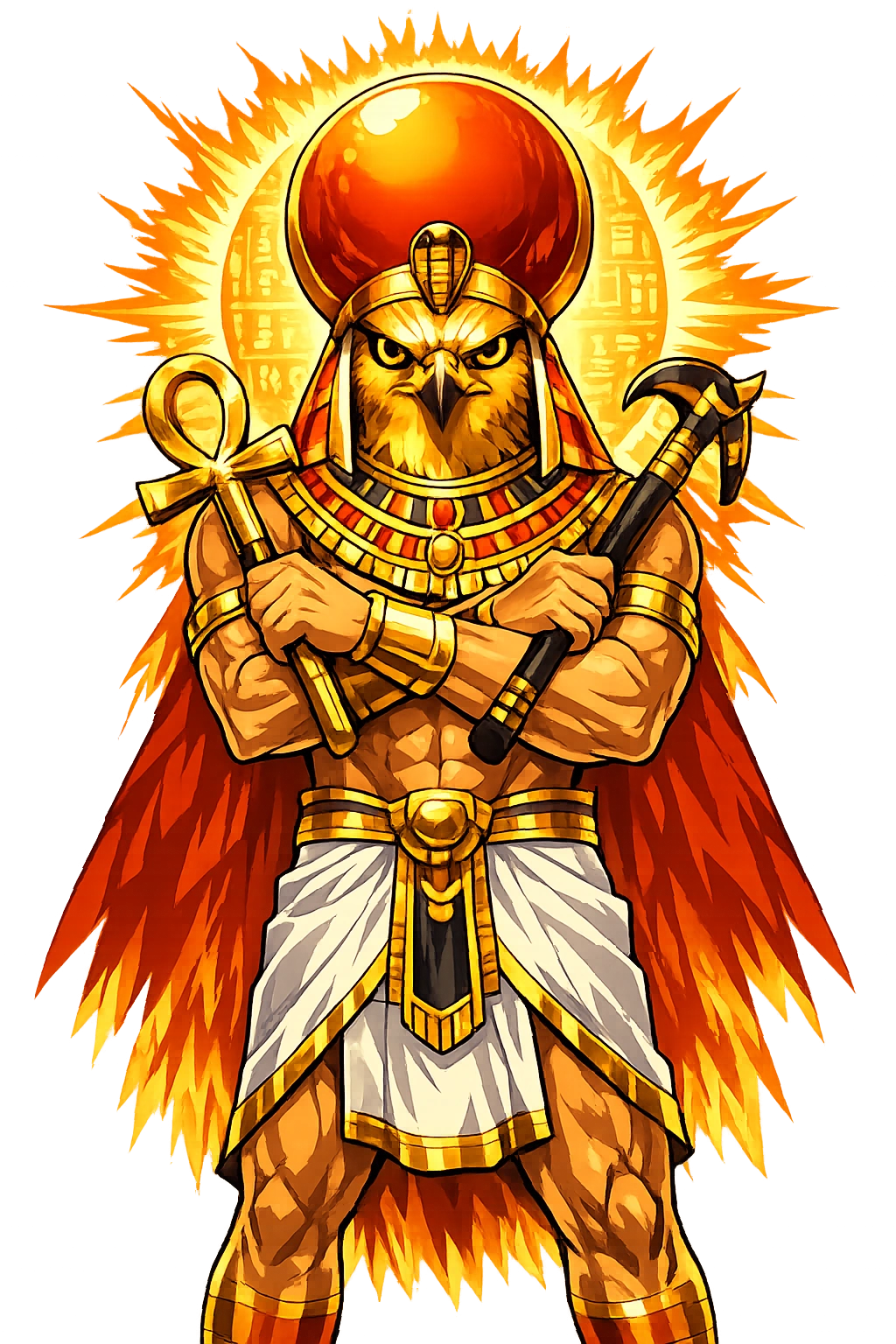
Sacred SymbolsSolar barque (Mandjet), Scarab beetle (khepri), Falcon head with sun-disk, Bennu heron, Eye of Ra (wedjat)
02

Etymology & Word Family

From original script to Unicode restoration

Proto-afro-asiatic *rꜥ sun, day
Original Script 𓂋𓂝𓇳 Rꜥ — "Sun (from Egyptian rꜥ)"
Unicode Restoration Rꜥ Restored stress, length, and script
Modern ASCII ra Plain-ASCII fallback

From Egyptian rꜥ "sun, day". The solar creator god.

03

Unicode Character Breakdown

Character-by-character philological analysis

CharacterUnicodeNameBlockPhonetic Role
RU+0052Latin Capital Letter RBasic LatinSame
U+A725Latin Small Letter Egyptological AinLatin Extended-DAyin: pharyngeal fricative

The Tier 1 classification reflects how much of the original phonology this restoration preserves — stress and vowel length for Greek names, distinctive letters and diacritics for every other tradition.

04

Cultural Significance

From ancient cult to modern memory

Rꜥ in Later Traditions

Rꜥ absorbed and was absorbed. At Heliopolis he fused with Atum, 'the All', and with the scarab Khepri; in the New Kingdom the Theban god Amun merged with him into Amun-Rꜥ, 'king of the gods', the composite patron of empire whose priests would one day rival the crown. The compound Ra-Horakhty — 'Rꜥ, Horus of the Horizon' — folded the royal sky-falcon into the sun. Greeks and Romans read him through Helios: Herodotus already treats the phoenix's visit to Heliopolis as a solar event, and Plutarch retells Rꜥ's wanderings as Greek myth in Egyptian dress. The most radical reform was also solar: Akhenaten's Aten cult of the fourteenth century BCE — one disk, no image — was a revolution carried out entirely in Rꜥ's theological vocabulary, and the swiftness of its erasure shows how tightly solar doctrine bound the state. Through it all the name held: five thousand years of theology circle the same two consonants, r and ꜥ.

Modern Legacy

Rꜥ never ceased shining on the world's capitals. Rome took his obelisks — Augustus set one up in the Circus Maximus, and its red-granite siblings from Luxor now stand in London and on the Place de la Concorde, re-erected as trophies of Egyptomania rather than of the sun. The pyramid silhouette and the solar disk became the universal shorthand for Egypt itself, deployed from Masonic iconography to Hollywood; modern Egyptology restored his theology from texts and tombs, while new religious movements claimed him as ancestor of solar monotheism and films cast 'Ra' as everything from starship tyrant to enlightened lawgiver. The common thread is appropriation: every age has repolished the sun's name for its own mirror.

In the Earth

Solar cult is visible in the pyramid complexes of the Old Kingdom, the solar temple of Nyuserre at Abu Ghurab, and the great temples of Heliopolis, Karnak and Abu Simbel — whose facade colossi face the sun's rays at the equinoxes. The colossal obelisks of Heliopolis and Luxor, single shafts of Aswan granite, stood before the sun's temples; pairs from Luxor now stand in London and Paris. The Amarna boundary stelae and the Great Hymn to the Aten preserve Akhenaten's solar theology, and tomb paintings from the Valley of the Kings show Ra in his day- and night-barks, surrounded by protective deities.

05

The Meditation

What Rꜥ means — beyond the dictionary

Egypt wrote Rꜥ without vowels — rꜥ, two consonants and the deep ayin — and asked the reader to supply the breath. That is the god in miniature: a skeleton of sound carried five millennia by faith, art and calendar. His myth encodes a complete philosophy of rule: light is a voyage, rule is a voyage, night is the price of day, and chaos is defeated nightly, not once — a theology without final victory, only an endless, disciplined morning. In that rhythm lies Egypt's deepest insight: order is not the absence of struggle but its daily success.

To restore the name as Rꜥ, ayin and all, is to refuse the museum's silence: the sun still rises, and the two-consonant name still fits it.

06

Screen & Culture

Where Rꜥ echoes through film, television, and games — and how

07

Frequently Asked Questions

Common questions about Rꜥ, Sun, Creation, Kingship, and Unicode restoration

01How do you pronounce Rꜥ?

In reconstructed pronunciation, Rꜥ is /raʕ/ — approximately 'rah-ʿA' — a rolled or tapped 'r', then a deep throaty 'ah' like the Arabic ع.

02What does Rꜥ mean?

Rꜥ means Sun (from Egyptian rꜥ) in the egyptian tradition.

03What are the symbols of Rꜥ?

Rꜥ is associated with Solar barque (Mandjet) (The morning boat in which Ra crosses the sky from east to west), Scarab beetle (khepri) (The self-begetting form of the sun at dawn, pushing the disk like dung), Falcon head with sun-disk (Ra as sky-falcon, the dominant icon of the solar god), Bennu heron (The soul of Ra and the prototype of the phoenix, rising from the Persea tree), Eye of Ra (wedjat) (The aggressive solar eye that destroys enemies and restores cosmic order).

04Why are there different spellings of Rꜥ?

Each form is a historically attested restoration rather than a mistake: is the alt-stress form (Modern stress form: the acute marks the stressed vowel in the conventional vocalization "Ra". The Egyptological spelling records only the consonants rꜥ.). PUNICODEX registers the full set so the tradition is preserved under every defensible spelling.

05Why restore Rꜥ in Unicode?

Plain ASCII ra strips the stress, length, and script that make the name specific. Unicode restoration returns the name to its original written dignity.

06What is the most important myth about Rꜥ?

“The Barque of Millions of Years” — Rꜥ's theology is Egypt's most complete vision of order (maat): the sun's daily circuit is a voyage, a kingship and a war. Each dawn the god is born in the east; each night he dies and must be defended; every royal tomb and solar temple re-stages that victory on earth. The full telling lives on the lore page.

08

Scholarly Sources

The philological foundations of this restoration

Every claim on this page is grounded in established scholarship. The orthographic restorations follow disciplinary convention. The etymological chain follows the best available reference works. This is not invention — it is resurrection through scholarship.

Lexicography & Philology

  • Faulkner, R. O. A Concise Dictionary of Middle Egyptian. Oxford: Griffith Institute, 1962.
  • Wb

Primary Texts

  • Pyramid Texts (solar ascent spells; Faulkner, The Ancient Egyptian Pyramid Texts)
  • Book of the Dead, spell 15 (hymns to Ra in the barque)
  • Book of Gates and Amduat (the nocturnal journey and the defeat of Apopis)
  • Plutarch, De Iside et Osiride 12, 20

Archaeology & Art History

  • Material evidence — iconography, inscriptions, and temple archaeology — for Rꜥ and related cults.

Religious Studies

  • Book of the Heavenly Cow / The Destruction of Mankind (Seti I tomb; shrine of Tutankhamun, Cairo JE 60754)
  • Leiden Papyrus J 395 (Isis and the secret name of Ra)
Return

The Surface Awaits

You have traced the name from its earliest attestation to its Unicode restoration. Now return to the myth. The story is where the name lives.

Back to Lore
Rꜥ mascot